Crossing a Maine Highway on an ATV
One of the most common dilemmas ATV and UTV riders face in Maine is navigating the state's intricate network of trails and roads. It's an incredible feeling to explore the vast Maine wilderness, but inevitably, your journey will bring you to a point where a trail intersects with a paved public way, often a busy highway. Knowing exactly how to cross these arteries legally and safely isn't just a courtesy; it's a critical safety measure and a legal requirement that can prevent accidents and hefty fines. This comprehensive guide is here to walk you through everything you need to know about successfully and responsibly crossing a Maine highway on your ATV or UTV.
The Maine Landscape: Understanding ATV Access on Roads
Maine's trail system is a marvel, connecting communities and wilderness areas across thousands of miles. However, unlike some states where ATVs might have broader road access, Maine maintains fairly strict rules for operating these machines on public ways. The primary purpose of an ATV in Maine is off-road recreational travel, and any interaction with public roads is generally seen as a means to an end – a way to get from one section of trail to another, not a substitute for street-legal vehicles. This fundamental understanding is key to grasping why the rules around highway crossings are so particular.
It's easy to get frustrated when you encounter a perfectly good stretch of road that would connect two trails, but you're legally prohibited from riding on it. Many riders dream of a completely integrated system, but the reality involves careful management to ensure safety for everyone, both on and off the trails. Maine's approach is about balancing the needs of ATV enthusiasts with the safety of motorists and the preservation of infrastructure.
The General Rule: Trails First, Roads as Connectors
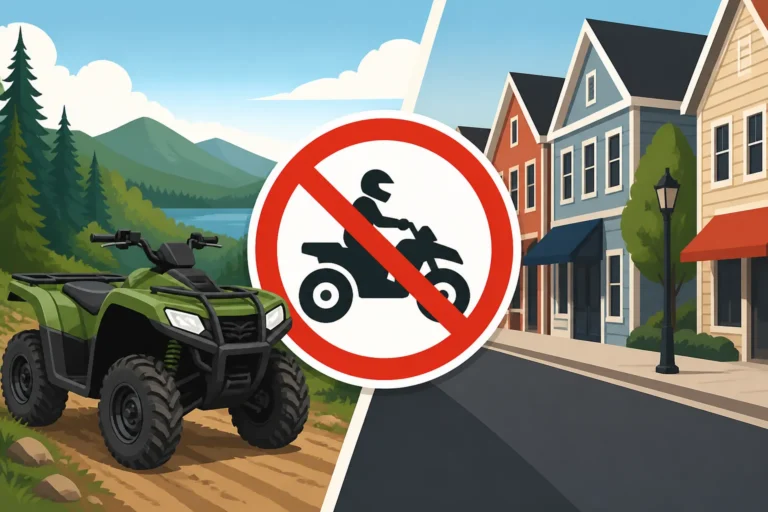
In Maine, the golden rule for ATVs is that you operate on designated trails. Public roads, particularly state-maintained highways, are not considered part of the ATV trail network for general travel. They are barriers you must navigate carefully, or very short, specifically designated connectors. The state's intent is to keep ATVs and road-going vehicles separate as much as possible, recognizing the inherent differences in speed, maneuverability, and protection offered by ATVs compared to cars and trucks.
Think of it like this: your ATV is a wilderness explorer, not a commuter. When you hit a paved road, especially a highway, you're entering a different ecosystem with its own rules and dangers. The ability to cross or use a very short section of a public way is a privilege designed to facilitate access to the expansive trail system, not to allow joyrides down Route 1 or across an Interstate. This often means dismounting, exercising extreme caution, and only proceeding where expressly permitted. [Maine's 500-Yard Limit on a Public Way] outlines the very specific conditions and distances under which you might be able to ride on a public way, which are much more restrictive than a simple crossing.
How Towns Designate ATV-Access Routes
While state highways are typically off-limits for travel, many towns have worked hard to create local ATV access routes, often on quieter town roads, unpaved ways, or designated shoulders. These routes are crucial for connecting trail systems, allowing riders to reach services like gas stations, restaurants, or lodging, or to bypass stretches of impassable private land. However, these are distinct from highway crossings.
A town access route is established through local ordinances and is clearly marked with specific signage. It means the town's select board has voted to allow ATV travel on that particular section of road, usually with specific conditions like speed limits or time restrictions. You'll see official signs indicating "ATV ACCESS ROUTE" or similar. These designated routes are typically on lower-speed roads, not major highways. Knowing the difference is paramount: just because a town has an ATV access route doesn't mean you can ride your ATV across a major state highway within that same town. You need to verify the specific type of road and the exact regulations. [How a Maine Town Designates an ATV-Access Route] can give you more insight into this process.
The Specifics of Highway Crossings: What the Law Says
Maine law is very particular about how ATVs and UTVs interact with public ways, especially highways. It's not a free-for-all, and many riders get caught off guard by the strictness of the regulations. The state aims to minimize the time ATVs spend in traffic zones, recognizing the speed differential and visibility challenges. This means you can't just pick any spot to cross a highway; there are specific rules about where, when, and how you can do it.
One of the biggest frustrations riders express is the feeling that the rules are overly complicated, or that they make simple connections difficult. But these rules are built on a foundation of safety, trying to prevent tragic accidents involving two very different types of vehicles. Understanding the letter of the law is your best defense against both danger and a ticket from a Maine Warden.
The "Complete Stop" and "Yield" Requirements
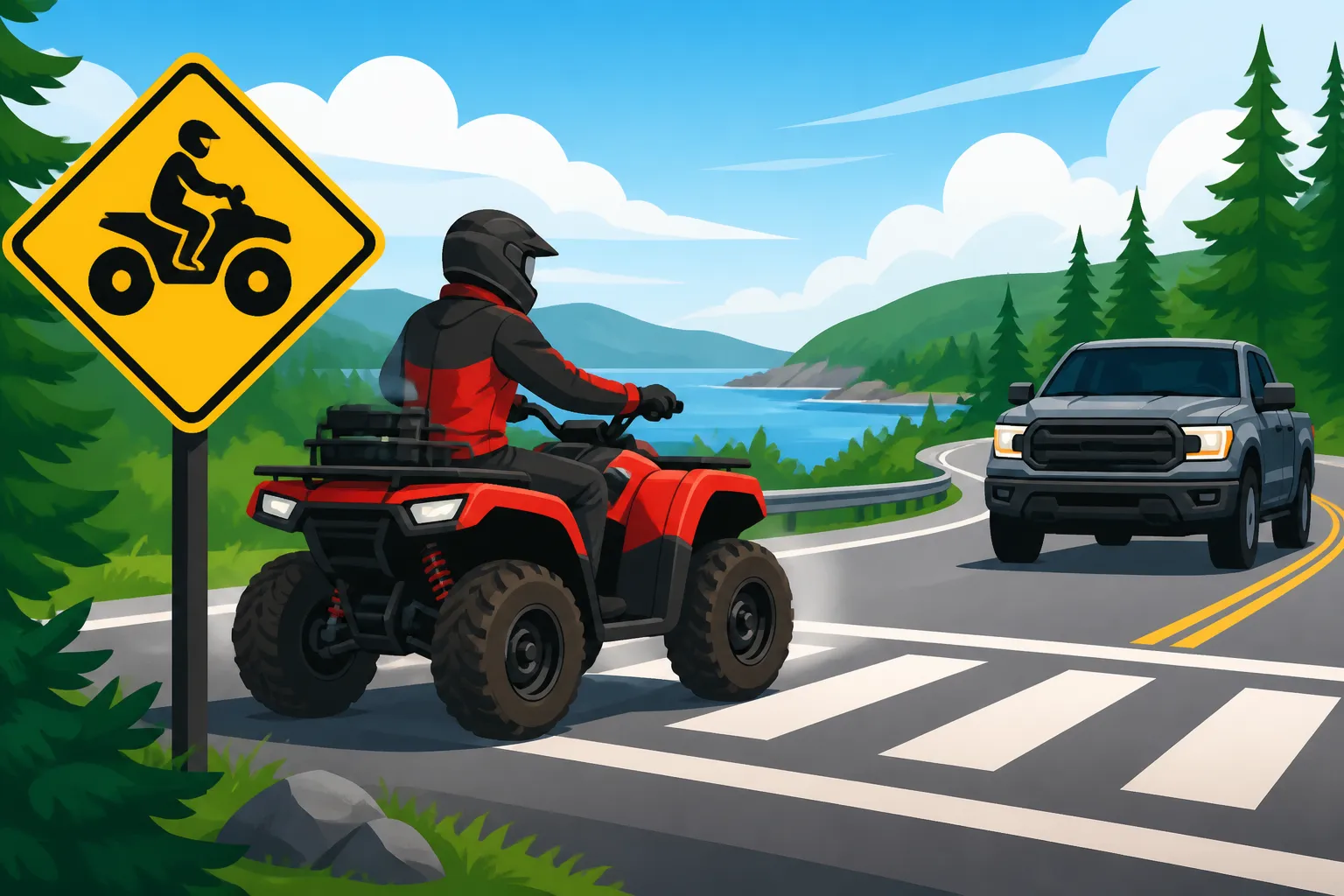
Before you even think about entering a public way to cross, Maine law requires you to bring your ATV or UTV to a complete stop. This isn't just a rolling stop; it means coming to a full, absolute halt. Imagine you're at a stop sign in your car – same principle. This critical moment allows you to fully assess traffic conditions in both directions.
After stopping, the law mandates that you yield the right-of-way to all vehicular traffic on the public way. This means traffic on the highway has priority. You cannot proceed until it is absolutely safe to do so, with no approaching traffic that would require them to slow down or alter their course because of your presence. This might mean waiting for what feels like a long time on a busy highway. Rushing this step is not only illegal but incredibly dangerous. [Maine's Stop-and-Yield Rule Before a Public Way] covers these vital requirements in detail, emphasizing the seriousness of obeying them.
Crossing at a Right Angle and Minimizing Time
When you do cross, Maine law specifies that you must cross the public way at approximately a right angle (as close to 90 degrees as practically possible) to the highway. This isn't about making a sharp turn onto the road; it's about making your crossing as direct and perpendicular as you can. The goal is to get across the pavement as quickly and safely as possible, minimizing your exposure to traffic lanes.
You are also required to cross without delay. This means no stopping in the middle of the road, no hesitating, and certainly no riding on the road except for the brief time it takes to traverse its width. The intent is clear: get across and off the public way. Lingering or traveling any distance along the highway beyond the immediate crossing puts you and motorists at significant risk and is a violation of the law. You're expected to be efficient and swift, but always prioritize safety over speed.
Interstates and Toll Roads: Absolute Prohibitions
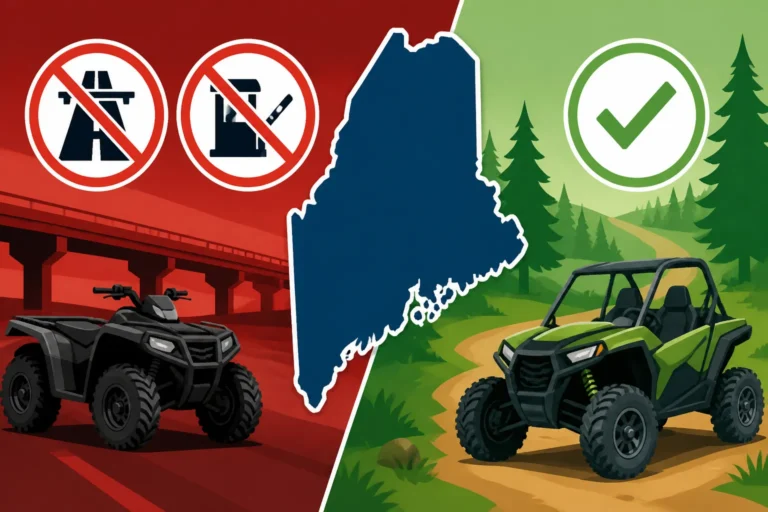
It's worth reiterating a very important point that often gets misunderstood: you absolutely cannot ride an ATV or UTV on the travel lanes or shoulders of Maine's interstate highways or toll roads, including the Maine Turnpike. There are no exceptions for crossing or limited travel. These are high-speed, controlled-access roads designed exclusively for highway-legal vehicles, and an ATV simply does not belong there.
Trying to cross or ride on an interstate or toll road is not only incredibly dangerous – putting you in direct conflict with vehicles traveling at 70 mph or more – but it will also result in severe penalties, including hefty fines and potentially your machine being impounded. If your trail map shows an intersection with an Interstate, look for designated underpasses, overpasses that include a separate trail, or other legal alternatives. Never assume you can simply zip across. [Maine Interstate and Toll Road Restrictions] explains this prohibition further, leaving no room for doubt.
Safety First: Mitigating Risks When Crossing Highways
Crossing a busy highway on an ATV is arguably one of the most hazardous maneuvers you'll perform during a ride. Unlike a car that offers protection and is designed to blend with highway traffic, an ATV is exposed, smaller, and less visible. The speed differential between an ATV and highway traffic is immense, and drivers of cars and trucks may not be expecting to see an ATV emerging from the woods or a field. Prioritizing safety is non-negotiable, and it involves more than just following the legal rules; it requires a proactive, defensive mindset.
Many riders, especially those new to Maine, underestimate the vigilance required. It's not just about avoiding a ticket; it's about avoiding a life-altering accident. Taking those extra few seconds to scan, waiting for a larger gap in traffic, and making yourself as visible as possible can literally be the difference between a safe crossing and a catastrophic event.
Enhanced Visibility: Making Yourself Seen
One of your biggest challenges as an ATV operator is visibility. Your machine is relatively small compared to a car, and you're often coming from a wooded area where you might be partially obscured until the last moment. To mitigate this, consider some key strategies:
- Wear Bright Colors: Fluorescent orange, yellow, or green clothing dramatically increases your visibility, especially against a natural backdrop or during low-light conditions. Many experienced riders choose these colors for their helmets and jackets.
- Lights On: Even in broad daylight, make sure your headlights and taillights are on. The extra illumination can make a significant difference in being noticed by an approaching motorist. If your machine has aftermarket LED light bars, use them judiciously during the day to enhance your profile without blinding drivers. Products from companies like SuperATV often offer enhanced lighting options that can significantly improve your visibility.
- Reflective Gear: If riding at dusk, dawn, or in adverse weather, reflective tape on your helmet, clothing, and even the machine itself can make you stand out when hit by headlights.
Remember, drivers are often focused on other cars, not ATVs. The more you do to break up the background and catch their eye, the safer you'll be.
Assessing Traffic and Road Conditions
Before committing to a crossing, take a moment to thoroughly assess the situation. This means more than a quick glance.
- Look Left, Right, Left Again: This classic rule applies here. Check for traffic in both directions multiple times. Don't assume. Pay attention to blind spots, curves in the road, or hills that might obscure oncoming vehicles.
- Gauge Speed and Distance: It's hard to judge the speed of an oncoming vehicle, especially one traveling at highway speeds. If there's any doubt about whether you have enough time, wait. A gap that looks sufficient for a car might be too short for an ATV to safely accelerate and cross.
- Consider Road Surface: Is the pavement wet? Gravelly where the trail meets the road? Are there potholes? These can affect your traction and ability to accelerate quickly, adding another layer of risk to the crossing.
- Anticipate Driver Behavior: Don't assume drivers will see you or slow down. Drive defensively. Be prepared for unexpected reactions from motorists, or lack thereof.
- Group Crossings: If you're riding with a group, ideally cross one at a time, or in small, manageable batches if the gap is truly large. Appoint a leader to signal when it's safe to go, and ensure everyone understands the procedure. Don't try to cross as one long parade.
Rider Experience and Youth Operators
The inherent risks of highway crossings are amplified for inexperienced riders and especially for youth operators. If you're new to ATV riding, or if you have a child operating a youth machine, extreme caution is warranted.
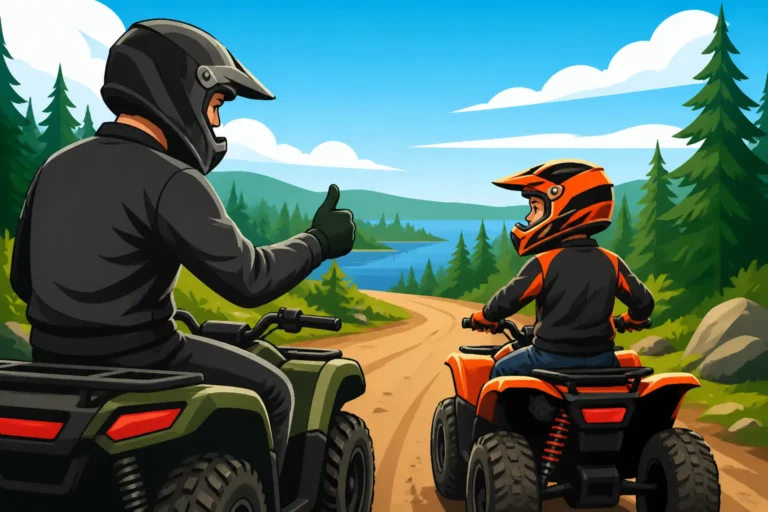
- Adult Supervision: Maine law requires adult supervision for youth riders under 16, and this is even more critical when approaching public ways. An adult should always be present and actively guiding the youth operator during any road crossing scenario. [Supervising a Young Rider on the Road] details these requirements.
- Practice Safe Crossings: Before encountering a busy highway, practice the "stop, look, yield, cross at right angle" maneuver on a quieter dirt road or less-traveled area. This builds muscle memory and confidence.
- Consider the Alternative: For very young or inexperienced riders, sometimes the safest option is to dismount the ATV, walk it across the highway, or even load it onto a trailer and drive it to the other side if a safe crossing isn't readily available. There's no shame in choosing the safest route.
Identifying Legal Crossing Points and Designated Routes
One of the biggest challenges for ATV riders in Maine is knowing where it's legal to interact with public roads, particularly for crossings. You can't just create your own crossing point wherever a trail happens to meet a highway. Maine's system relies on designated connections, and it's your responsibility as a rider to know and utilize these. Ignoring this can lead to not only fines but also dangerous encounters with traffic or upset landowners.
The frustration is real when you're deep in the woods, following a trail, and suddenly you hit a major road with no clear indication of where to go. This is where good planning and understanding Maine's system come into play.
Using Trail Maps and GPS for Pre-Planning
The most effective way to ensure a legal and safe crossing is to plan your route in advance using up-to-date trail maps and GPS systems.
- Official Club Maps: ATV clubs in Maine do an incredible job maintaining trails and often produce excellent maps that clearly mark designated road crossings and any short sections of public ways that are legal to ride. These maps are your best friend. [Maine ATV Trail Maps and Club Boundaries] highlights the importance of these resources.
- Digital Apps: Apps like onX Offroad are becoming indispensable. They overlay trails onto satellite imagery and road maps, often indicating designated crossing points or approved ATV routes. Using these in conjunction with paper maps provides a robust navigation strategy, especially in areas with limited cell service.
- Look for Cues: On maps, look for symbols indicating road crossings, "ATV permitted" sections, or specific bridges/underpasses. If a map doesn't show a designated crossing at a highway intersection, assume it's not a legal crossing point for through-traffic.
Pre-planning helps you avoid the scenario where you unexpectedly hit a highway and are left guessing how to proceed. It allows you to anticipate crossings and mentally prepare for them.
Recognizing Official Signage
When you approach a public way on an ATV, keep your eyes peeled for official signage. These signs are your authoritative guide on whether a crossing is permitted and what rules apply.
- ATV Crossing Ahead: You'll often see signs on the trail itself indicating an upcoming road crossing. These are a heads-up to slow down and prepare.
- Stop Ahead: Many crossings will have a "STOP" sign for ATV traffic, reinforcing the legal requirement to halt before entering the public way.
- Yield Ahead: Similarly, a "YIELD" sign will remind you to give way to highway traffic.
- ATV Access Route: As mentioned earlier, these signs mark sections of public road where ATVs are permitted to travel, usually for a limited distance to connect trails or access services. However, these are typically on town roads, not major highways.
- No ATV/Trespassing: Conversely, if you see "No ATV" or "No Trespassing" signs at a road junction, those areas are strictly off-limits, even for crossing.
If there are no clear signs indicating an approved crossing, and especially if the highway is a major state route, assume you cannot cross there. It's always better to err on the side of caution.
Utilizing Underpasses and Bridges (When Available)
In some fortunate instances, trail systems will utilize existing infrastructure to bypass major highways entirely. This is the safest and most convenient option.
- Underpasses: Sometimes, an ATV trail will tunnel under a highway or bridge, allowing continuous travel without interacting with vehicular traffic. These are ideal.
- Dedicated Trail Bridges: Less common but equally valuable, some trail systems have constructed dedicated bridges over highways or rivers, providing safe passage.
These solutions are usually clearly marked on maps and are a testament to the efforts of local clubs and state agencies to create a seamless and safe trail experience. Whenever possible, seek out routes that include these types of crossings. This is where you might find that extra clearance or heavy-duty components from SuperATV on your machine really help when navigating underpasses or over rugged bridge approaches.
Navigating Different Types of Public Ways
While the focus is often on "highways," it's important to recognize that not all public ways are the same, and Maine law differentiates between them. Understanding these distinctions is crucial, as the rules for crossing a quiet dirt town road are very different from those for crossing a multi-lane state highway. Misapplying the rules can lead to fines, or worse, accidents.
Many riders generalize, thinking all roads are either "trail-legal" or "off-limits." But the reality is nuanced, with specific regulations for different categories of public ways. The more you know about these categories, the better equipped you'll be to make safe and legal decisions on your ride.
Crossing State Routes and Numbered Highways
These are the major arteries you'll most commonly encounter when discussing "highway crossings." They are typically paved, have higher speed limits, and carry significant traffic volume. Examples include Route 1, Route 2, Route 9, or any other numbered state highway.
- Strict Rules Apply: For these roads, the "complete stop, yield right-of-way, cross at a right angle without delay" rules are paramount. There's usually no exception for riding on these roads, even for short distances, unless it's a very specific, clearly signed, and often short town-designated ATV access route (which are rare on major state highways).
- Visibility is Key: Given the speed of traffic, visibility becomes even more critical. Bright colors, lights, and careful observation are essential.
- Patience is a Virtue: You might have to wait for an extended period for a safe gap in traffic, especially during peak seasons or on popular routes. Impatience is a major safety risk here.
- Avoid Peak Hours: If possible, plan your crossings of busy state routes for off-peak hours when traffic is lighter. Early mornings or late afternoons during weekdays can sometimes offer better windows.
Crossing [Route 1 on an ATV in Maine] is a classic example of a challenging crossing that demands extreme caution and adherence to all legal requirements due to its heavy traffic.
Crossing Dirt Town Roads and Private Camp Roads
Many ATV trails in Maine utilize or cross quieter dirt town roads or private camp roads, especially in the more rural areas. The rules here can be a bit more flexible, but "flexible" doesn't mean "lax."
- Dirt Town Roads: Many towns allow ATVs to operate on dirt town roads, or have designated them as ATV access routes. Always check local ordinances and look for signage. Even if allowed to ride on them, you still need to exercise caution, maintain reasonable speeds, and respect other users (cars, pedestrians, logging trucks). [Maine ATV Rules on Dirt Town Roads] provides more detail.
- Private Camp Roads: These are often gravel roads maintained by associations or private landowners for access to camps and wilderness properties. ATV use is generally by permission only. If you're on an established trail that uses a private camp road, permission is usually implied by the trail system, but always be respectful, slow down, and be alert for other vehicles or pedestrians. These roads may not be as well-maintained as public roads, so watch for washouts or deep ruts. [Maine ATV Rules on Private Camp Roads] covers this in more detail.
- Yield to All: Regardless of the road type, the principle of yielding to all vehicular traffic on the public way still holds true. Even on a quiet dirt road, a logging truck or a local resident's vehicle has the right-of-way.
Crossing Under or Over a Highway Via Bridges and Culverts
When you're lucky enough to encounter a trail that crosses a highway via an underpass or an overpass, you've found the safest possible crossing method.
- Underpasses/Culverts: These allow your ATV to pass underneath the highway, completely separated from vehicle traffic. They are the ideal solution. Be aware of water levels in culverts, especially after heavy rain, and potential debris.
- Trail Bridges Over Highways: Less common, but sometimes dedicated ATV trail bridges are built over highways. These also offer complete separation and are incredibly safe.
- Shared Bridges: Occasionally, a trail might run on the shoulder or a separate pathway of a wider bridge that also carries road traffic. In these cases, you are still legally on a public way, and all rules for road travel (if permitted) or crossing rules apply. Be extra vigilant for pedestrians, cyclists, and the flow of traffic. [Crossing a Maine Highway on an ATV] talks about how these dedicated structures are a great way to avoid direct interaction with highway traffic.
Always ensure the structure is safe and legal for ATV use. If an underpass looks flooded or impassable, do not attempt to force your way through.
Consequences of Non-Compliance: What to Avoid
Riding an ATV or UTV in Maine is an incredible privilege, and it comes with the responsibility of knowing and obeying the laws. Ignoring the regulations, especially those pertaining to public roads and highway crossings, can lead to serious consequences. These aren't just minor inconveniences; they can involve significant financial penalties, loss of riding privileges, and in the worst cases, severe injury or even death. A Maine Warden isn't just looking to write tickets; they're looking to enforce safety and protect the resource for everyone.
It's tempting to think you can "just sneak across" a highway if no one's around, or that the rules are overkill. But that mindset is precisely what leads to problems, eroding public trust and potentially jeopardizing trail access for all riders. Understanding the potential repercussions should be a strong motivator for strict compliance.
Fines and Penalties for Illegal Road Use
Operating an ATV on a public way where it's not permitted, or failing to follow the crossing rules, can result in substantial fines. Maine Wardens routinely patrol and monitor trailheads and road intersections.
- Unregistered ATV: While not directly related to highway crossings, if your machine isn't properly registered, any interaction with a public way, even a legal crossing, can lead to a fine for an unregistered machine on top of any other violations. [Fines for Riding Without Maine Registration] provides more detail on this.
- Operating on a Public Way Illegally: This is the most direct violation for riding on a highway or crossing improperly. Fines can vary but are often hundreds of dollars.
- Failure to Stop/Yield: If you blow through a stop sign or fail to yield to traffic, you're looking at fines similar to those a car driver would receive, potentially with additional charges specific to ATV operation.
- Reckless Operation: If your actions are deemed reckless or endanger the public, the penalties can be much more severe, potentially including larger fines, mandatory court appearances, and even suspension of your right to operate an ATV.
These fines are often just the beginning. The hassle of court dates, potential insurance premium increases, and the stress are all part of the consequence.
Machine Impoundment and Loss of Riding Privileges
In addition to fines, more serious violations can lead to your ATV or UTV being impounded. If a Maine Warden determines you were operating your machine illegally or recklessly, they have the authority to seize it. Getting your machine back can be a costly and time-consuming process involving storage fees, fines, and legal procedures.
Furthermore, repeated or severe violations can result in the suspension of your privilege to operate an ATV in Maine. This means you could be legally prohibited from riding any ATV or UTV on any trail or public way in the state for a set period. For passionate riders, losing access to the trails is one of the most significant deterrents.
Legal Liability and Insurance Implications
This is perhaps the most serious consequence of non-compliance. If you are involved in an accident while illegally operating your ATV on a public way, the legal and financial ramifications can be catastrophic.
- Injury and Property Damage: You could be held liable for injuries to yourself, passengers, or occupants of other vehicles, as well as damage to vehicles and property. Medical bills, repair costs, and pain and suffering claims can quickly run into hundreds of thousands, or even millions, of dollars.
- Insurance Denial: Your ATV insurance policy might explicitly exclude coverage for accidents that occur while operating illegally. If you're riding where you shouldn't be, or failing to follow the law, your insurance company may deny your claim, leaving you personally responsible for all damages. [Maine ATV Insurance Cost] highlights the importance of understanding your policy.
- Criminal Charges: Depending on the severity of an accident, especially if it involves injuries or fatalities, you could face criminal charges in addition to civil liability.
The best way to avoid these dire consequences is simple: know the rules, follow them meticulously, and always prioritize safety over convenience.
Essential Gear and Machine Readiness for Road Crossings
Ensuring your ATV or UTV is properly equipped and you have the right gear isn't just about comfort; it's a fundamental aspect of safety, especially when you're interacting with public roads. The law often dictates certain equipment, and common sense demands even more to make you as visible and controllable as possible. Neglecting machine readiness or essential gear can turn a simple highway crossing into a dangerous gamble.
Many riders invest heavily in performance upgrades or trail accessories, which are great for off-road fun. But when it comes to road interactions, the focus shifts to compliance, visibility, and basic operational safety. Think of it as preparing your machine not just for the woods, but for a brief, critical encounter with the asphalt world.
Mandatory Safety Gear for Riders
Maine has specific requirements for ATV riders, particularly concerning helmets, and these rules are strictly enforced during any interaction with public ways.
- Helmets: Any rider or passenger under the age of 18 must wear a protective helmet. This is non-negotiable. While adults over 18 are not legally required to wear a helmet on private land or designated trails, it is highly recommended for all riders, especially when crossing or riding near public roads. The speed and impact forces in a collision with a road vehicle make head protection paramount. [Maine Helmet Rules for Riders Under 18] and [Maine Helmet Standards: ANSI and FMVSS 218] go into detail on this.
- Eye Protection: Goggles or a face shield are essential. Dust, debris, insects, or even rain can impair your vision, which is unacceptable when you need absolute clarity to assess traffic.
- Appropriate Clothing: Long pants, long sleeves, and sturdy over-the-ankle boots provide protection from scrapes, exhaust heat, and potential impacts. Brightly colored outer layers significantly enhance your visibility to motorists.
Machine Requirements for Public Way Interaction
Your ATV or UTV needs to meet certain basic equipment standards to be legally operated, especially when encountering public roads.
- Registration: Your ATV must be properly registered with the State of Maine, and your current registration decal must be properly affixed to the machine. You should also carry your physical registration certificate with you. A Maine Warden will certainly check this if they pull you over. [Maine ATV Registration Numbers and Where They Go] details where to place your decals.
- Lights: Your ATV must have at least one headlight and one taillight, which must be illuminated from sunset to sunrise, and at any time when conditions limit visibility to less than 200 feet. Many riders opt to keep their lights on all the time for enhanced visibility.
- Brakes: Your ATV must have a braking system that is in good working order and capable of stopping the machine safely.
- Muffler/Exhaust: Your machine must be equipped with an adequate muffler to prevent excessive noise and a spark arrestor to prevent forest fires. These are often checked during warden stops. Aftermarket exhaust systems can be a point of contention if they make your machine excessively loud. [Maine Noise Limits and Muffler Rules] provides more information.
- Tires: Ensure your tires are in good condition with sufficient tread. While knobby tires are great for mud, they can behave differently on pavement, affecting traction and braking.
- Side Mirrors (Optional but Recommended): While not universally required for ATVs, side mirrors are an excellent addition for UTVs and can significantly improve your awareness of traffic approaching from behind, especially when preparing to cross. Many SuperATV accessories include mirror options.
Carrying Essential Documentation and Supplies
Beyond the machine itself, you need to carry certain paperwork and emergency supplies.
- Registration and Proof of Ownership: Always carry your current Maine ATV registration certificate. If you don't have a title (Maine doesn't title ATVs), carry proof of ownership like a bill of sale. [Proof of Ownership for a Maine ATV Registration] explains what to carry.
- Safety Course Certificate: If you are a youth rider (10-15 years old), you must carry your ATV safety course certificate.
- Basic Tool Kit: A small kit with basic tools for minor repairs, a tire plug kit, and a small air pump can get you out of a bind.
- First Aid Kit: A compact first aid kit is always a good idea for any outdoor adventure.
- Communication Device: A fully charged cell phone (though service can be spotty) or a satellite messenger like a Garmin InReach for remote areas.
Being prepared means not only following the law but also being ready for the unexpected, ensuring a safer and more enjoyable ride. [Do You Carry Registration Papers While Riding?] is a good reminder for your next trip.
Planning Your Route: Integrating Crossings into Your Ride
Successful and safe highway crossings aren't just about reacting in the moment; they're a result of careful pre-ride planning. Integrating these critical points into your overall route strategy can transform a potentially stressful situation into a manageable and even routine part of your adventure. Think of it as strategic navigation, where you anticipate obstacles and have a clear plan for overcoming them.
This proactive approach not only enhances safety but also improves the overall enjoyment of your ride. You won't be caught off guard, scrambling to figure out what to do at a busy intersection. Instead, you'll approach it with confidence, knowing exactly what to expect and how to proceed legally and safely.
Utilizing Online Resources and Club Information
Before you even load your ATV onto the trailer, hit the internet and connect with local ATV clubs. They are a treasure trove of current information.
- ATV Maine Website: The official ATV Maine website often has links to club maps, trail conditions, and general regulations. This is a great starting point.
- Club Websites and Social Media: Most local ATV clubs maintain websites and active social media pages where they post trail updates, closures, designated access points, and planned group rides. They often highlight problematic road crossings or provide alternative routes. [Maine ATV Clubs and the Trails They Keep Open] are your best resources for local knowledge.
- Online Mapping Tools: As mentioned, digital mapping services are invaluable. Spend time tracing your planned route, identifying every road crossing, and zooming in to see if there's signage or designated ATV access. If a crossing looks questionable, consider adjusting your route.
Don't underestimate the power of local knowledge. A few minutes of research can save you hours of backtracking or a potentially dangerous encounter.
Planning for Fuel, Food, and Lodging Connections
Often, the reason you need to cross a highway or use a short section of a public way is to access amenities. When planning your route, integrate these stops thoughtfully.
- Designated Access Points: Look for gas stations, restaurants, or lodging that are specifically advertised as "ATV friendly" or located directly on a designated ATV access route. These businesses often understand the rules and might even have specific ATV parking. [Maine ATV Trails That Reach a Restaurant] is an excellent resource for this.
- Shortest, Safest Route: If you must use a public way to get to a service, identify the shortest and safest legal route. Minimize your time on the pavement. Avoid routes that involve navigating complex intersections or heavy traffic if a simpler alternative exists.
- Off-Peak Planning: If your destination requires a crossing of a busy highway, try to plan that leg of your journey during off-peak traffic hours to reduce stress and increase safety.
Remember, the goal is always to use public ways as little as possible, and only where legally permitted, to facilitate your trail riding experience.
Pre-Ride Briefing for Group Rides
If you're riding with a group, a pre-ride briefing is absolutely essential, especially if your route includes highway crossings. Everyone needs to be on the same page regarding the rules and procedures.
- Discuss Each Crossing: Go over each planned road crossing on your map. Point out the specific location, what the group leader expects, and any potential challenges.
- Review Crossing Procedure: Remind everyone about the "stop, yield, cross at right angle" rule. Emphasize patience and waiting for a clear gap.
- Communicate Signals: Establish clear hand signals or radio communication for when it's safe to cross, or if there's an issue. The lead rider should signal clearly when it's time for the next machine to go.
- Staggered Crossings: Generally, it's safer for riders to cross one at a time, or in pairs if the gap is very large and traffic is light. This prevents a long line of ATVs from blocking the road and gives each rider their own safe window.
- Youth Rider Strategy: If youth riders are present, confirm who will supervise them, ensuring they are positioned safely and have clear guidance during crossings.
A well-briefed group is a safe group, and clear communication is paramount when navigating shared spaces with other vehicles. With careful planning and adherence to Maine's specific rules, you can safely integrate highway crossings into your incredible ATV and UTV adventures across the state.
| Action | Applies To | Description | Key Legal Requirement | Safety Tip |
|---|---|---|---|---|
| Complete Stop | All Public Ways | Bring machine to a full, absolute halt before entering the travel lane. | Mandatory by law. | Look multiple times: left, right, then left again. |
| Yield Right-of-Way | All Public Ways | Give priority to all vehicular traffic on the public way. Proceed only when safe. | Mandatory by law. | Wait for a clear and significant gap, don't rush. Assume drivers don't see you. |
| Cross at Right Angle | All Public Ways | Cross the highway as close to 90 degrees (perpendicular) as possible. | Mandatory by law. | Minimize time on the pavement; accelerate smoothly across. |
| Minimize Time on Way | All Public Ways | Only be on the public way for the shortest time necessary to complete the crossing. | Mandatory by law. | No lingering, stopping, or riding along the shoulder. |
| Travel on Designated Access Routes | Specific Town Roads | Ride on public roads only where towns have officially designated and signed them for ATV use. | Must be clearly marked by municipal ordinance. | Adhere to posted speed limits and be vigilant for other vehicles/pedestrians. |
| Interstate/Toll Road Travel | Interstates/Turnpike | Prohibited from riding on any part of an interstate highway or toll road. | Absolute prohibition. | Find an underpass, overpass, or alternative trail. Never attempt a crossing. |
| Visibility | All Road Encounters | Make yourself as easy to see as possible by other motorists. | Not always specific law, but implied safety. | Wear bright colors, use headlights/taillights even in daylight. |
Disclaimer
This article is for general informational purposes only and does not constitute professional advice. Laws, prices and regulations vary by location and change over time. Consult a qualified professional for guidance on your specific situation.