Maine Towns That Banned ATVs on Public Ways
Navigating Maine's vast network of ATV and UTV trails can feel like unlocking a secret world of adventure, but many riders get tripped up when those trails spill onto public ways. It's frustrating to plan a perfect route, only to find a "No ATVs" sign where you least expect it, especially when state laws seem to allow some road use. This guide will shine a light on why certain Maine towns have chosen to ban or heavily restrict ATVs and UTVs on their public ways, how you can identify these areas, and what you can do to ensure your ride stays legal and enjoyable.
The Shifting Landscape of ATV Access in Maine Towns
The dream of endless miles of interconnected trails often bumps into the reality of local town ordinances. While Maine state law offers some general guidelines for ATV use on public ways—like the well-known [Maine's 500-Yard Limit on a Public Way] for crossing or accessing trails—it also grants individual towns significant power to create their own rules. This means that what's perfectly legal in one municipality might land you a hefty fine just a few miles down the road. It's a patchwork quilt of regulations that can be incredibly confusing and frankly, a real headache for riders just trying to enjoy the outdoors.
The core of the issue is that Maine's public ways are, well, public. They're for everyone, and local communities have the right to decide how they're used to best serve their residents. Sometimes, that means making tough choices that aren't popular with the ATV community. These local decisions often stem from a blend of concerns, ranging from safety to quality of life for those living along the roads. As a rider, you feel the frustration of these seemingly arbitrary lines in the sand, but understanding the local perspective can help you plan better and even advocate for more access down the line.
Why Towns Opt for Bans or Strict Restrictions
It's easy to feel targeted as an ATV rider when a town puts up those "No ATV" signs, but towns usually have specific reasons for making these decisions. It’s rarely about hating powersports enthusiasts; it's often about balancing diverse community needs and maintaining peace and safety. Understanding these concerns can help riders be better ambassadors for the sport.
Noise Concerns and Community Peace
One of the most frequently cited reasons for town-level restrictions, and even outright bans, is noise. Let's be honest, many ATVs and UTVs, especially those with aftermarket exhaust systems, can be pretty loud. While the rumble of an engine might be music to a rider's ears, it can be a significant disturbance for residents whose homes are close to public roads or trail access points. Imagine trying to enjoy a quiet Sunday morning on your porch, only to have a procession of loud machines pass by constantly. Even responsible riders with proper mufflers, perhaps even those looking to upgrade their vehicle with quality parts from a brand like SuperATV, can contribute to overall noise levels in an area if there’s a high volume of traffic. Town officials hear these complaints from their constituents, and sometimes, the easiest solution they see is to restrict or ban access. [Maine Noise Limits and Muffler Rules] are often at the forefront of these discussions.
Safety Issues and Traffic Concerns
Another major factor is safety. Many public ways, particularly in more populated village centers or along busy state routes, were simply not designed with ATV and UTV traffic in mind. The sight of ATVs sharing the road with cars, especially around blind corners, intersections, or residential areas where children play, can make residents and town officials nervous. There are concerns about speed differentials, the visibility of smaller machines compared to cars, and the potential for serious accidents. While riders often feel confident in their abilities and their machines, the perception of danger can be enough for a town to enact bans. This is especially true in areas with a high volume of tourism where many unfamiliar drivers are on the roads, adding another layer of complexity to traffic safety. [Riding an ATV on the Road in Maine] can be quite different in a busy village than on a remote logging road.
Environmental Impact and Dust Abatement
While less common for outright bans on paved roads, environmental concerns and dust abatement can play a role, especially on dirt or gravel public ways. Regular ATV and UTV traffic on unpaved roads can kick up significant amounts of dust, which not only affects air quality for nearby residents but also contributes to road degradation and erosion. Towns often face the cost of dust control and road maintenance, and excessive ATV traffic can exacerbate these issues. Additionally, some towns may have concerns about ATVs accessing sensitive ecological areas, even unintentionally, leading to broader restrictions aimed at protecting natural resources.
Preserving "Quiet Enjoyment" and Local Character
For many small Maine towns, a significant part of their appeal lies in their quiet, rural, or historic character. Residents and visitors alike often seek out these areas for their tranquility and escape from urban hustle. When ATV and UTV traffic becomes prevalent on public ways, some communities feel that this "quiet enjoyment" is threatened. It can impact the pedestrian experience, the atmosphere of village centers, or the overall aesthetic that a town works hard to maintain. These are often subjective concerns, but they carry considerable weight with local governing bodies who are tasked with preserving the unique identity and quality of life within their communities.
Identifying Towns with Bans or Strong Restrictions
It's a frustrating reality that there isn't one single, regularly updated statewide list of every Maine town that bans ATVs on public ways. The rules can change, sometimes without much fanfare, and what was open last year might be closed this year. This makes pre-trip research absolutely critical. Showing up unprepared can lead to disappointment, or worse, a citation. Getting familiar with [Maine Town Ordinances That Restrict ATVs] is key to a hassle-free ride.
The Importance of Checking Local Ordinances (and How To Do It)
Relying on old information or hearsay is a recipe for trouble. The most effective way to know where you can and cannot ride on public ways is to go straight to the source for each town on your planned route. This might sound like a lot of work, but it's far better than facing a fine or causing a disruption.
Your Best Bet: The Town Clerk's Office
Without a doubt, the town clerk's office is your single most reliable source for current local ordinances. They are the keepers of all official town records, including specific rules about ATV and UTV use on public roads. Before you trailer your rig hundreds of miles, make a quick phone call to the town clerk in any municipality you plan to traverse on public ways. Be polite, explain your intentions, and ask specifically about ATV and UTV access on public roads, designated access routes, and any specific bans. Some towns might even have printouts or brochures of their local ATV rules.
Checking Town Websites and Local Resources
Many Maine towns, even the smaller ones, now have official websites where they post their local ordinances and bylaws. While not always perfectly up-to-date, these can be a good starting point. Look for sections on "Ordinances," "Bylaws," or "ATV/OHV Regulations." Be aware that some towns might only list the ordinances and not necessarily highlight specific ATV routes. Also, local ATV club websites are invaluable. Clubs often work directly with towns to establish and maintain trails and access routes, so they're usually the first to know about changes to local rules or designated ATV-friendly roads. They might even have maps of approved routes, sometimes even highlighting areas where components like robust skid plates or lift kits from SuperATV could improve your experience on varied terrain, while still respecting town rules.
Don't Just Rely on Signage
While "No ATV" signs are a clear indicator, don't assume that the absence of such a sign means you're in the clear. Signage can be stolen, damaged, or simply not present everywhere it should be. Always treat signs as a confirmation of rules, but not the sole source of information. A lack of visible restriction doesn't automatically grant permission.
Examples of Common Restrictions Beyond Outright Bans
Even if a town doesn't have a blanket ban, they often implement a host of other restrictions that can significantly impact your riding experience on public ways. These are designed to minimize conflict and enhance safety without completely prohibiting access.
Time of Day Restrictions
Many towns, seeking to reduce noise complaints, will restrict ATV and UTV use on public ways to specific hours. For example, you might be allowed to ride from sunrise to sunset, but not after dark or before a certain morning hour. This is especially common in residential areas where quiet enjoyment during evening and early morning hours is highly valued. Always check these specific times; riding outside the allowed window, even on an otherwise approved route, can lead to a ticket. [Maine Lighting Requirements for Night Riding] are essential if night riding is permitted, but local ordinances can still override state permissions.
Strict Speed Limits and Designated Routes Only
When towns do allow ATV access on public ways, it's almost always accompanied by very strict speed limits, often much lower than the posted speed limit for cars. These limits are typically 10 to 20 miles per hour, especially in village centers or near residences. The goal is to ensure safety and minimize noise and dust. Furthermore, many towns only permit ATVs on specific designated public ways, often called "ATV-Access Routes." You can't just ride on any public road; you must stick to the marked routes. Look for signs indicating these routes; they are your golden ticket. [Maine ATV-Access Routes and How Towns Post Them] will guide you on how to identify these critical paths.
Seasonal Closures and Muffler Requirements
Mud season is a huge deal in Maine, and many towns will institute [Maine Mud Season Road Restrictions for ATVs] on their public ways to prevent damage to unpaved roads. These closures protect both the roads and the environment. It's crucial to respect these, as violations can lead to heavy fines and further restrictions. Beyond season-specific rules, towns often have strict muffler and noise ordinances. Even if your machine's exhaust is legal for trail riding, it might still exceed local noise thresholds on public roads, especially if you've got an aftermarket system. Be aware of your machine's sound output and consider quieter alternatives if you plan to frequently ride on town roads.
Navigating Restricted Areas and the Consequences of Violations
So, you've done your research and found that a town on your planned route has an ATV ban or some really tight restrictions on its public ways. What do you do? The answer is simple: respect the rules. Trying to sneak through or ignoring the signs is not only illegal but also detrimental to the future of ATV riding in Maine. This is where your planning and responsible riding come into play. Maine's wardens are out there, and they know the rules better than anyone. [Maine Warden Service ATV Patrols] are not shy about enforcing local ordinances.
Planning Your Ride to Avoid Trouble
Navigating around restricted zones successfully requires a bit of forethought, but it's entirely doable and ensures a stress-free trip. Think of it as part of the adventure!
Smart Route Planning with Up-to-Date Maps
Invest in good mapping tools. Apps like onX Offroad or dedicated GPS units loaded with local trail maps from ATV Maine or specific clubs are invaluable. These resources often highlight designated ATV routes and, just as importantly, areas where ATVs are not permitted. When planning, zoom in on town centers and residential areas. If your intended trail route uses a public way through a restricted town, look for alternative bypasses. Sometimes, a trail might run parallel to a town, offering a way around without touching prohibited roads. These maps can also show you where to find fuel or other amenities, perhaps even where a well-equipped UTV with SuperATV accessories might make certain sections more manageable.
Trailer and Stage: Your Best Bypass Strategy
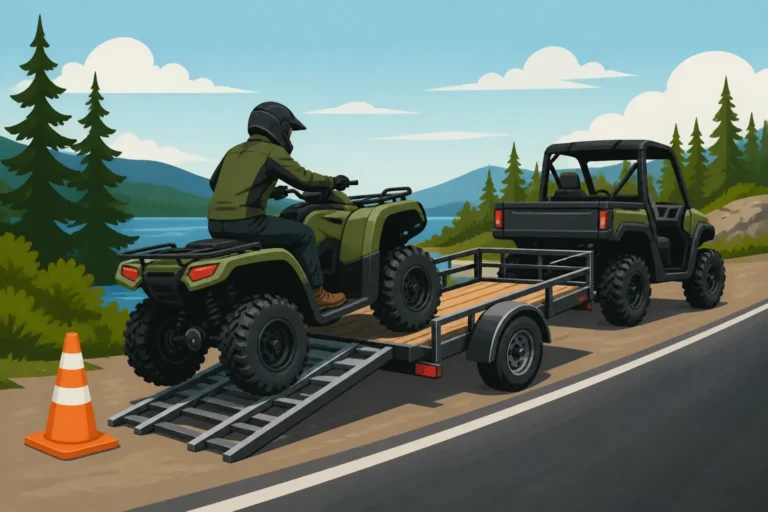
Sometimes, the simplest solution to avoiding a town's public way ban is to trailer your ATV or UTV around the restricted area. This means you drive your truck and trailer, with your machine loaded up, to a designated trailhead outside the prohibited zone. You then offload your machine and start your ride from there. Many towns that restrict ATVs on their public ways will still have ample parking for trucks and trailers at the trailheads on their outskirts. This strategy allows you to access the trails you want without violating local ordinances and keeps you in good standing with the community.
Respect the Rules: For the Good of All Riders
It cannot be stressed enough: respect local ordinances, even if you find them inconvenient or unfair. Every time a rider ignores a "No ATV" sign, rides too fast through a village, or kicks up excessive dust, it fuels the arguments against ATV access. Communities that feel their rules are being flouted are far less likely to consider opening up new routes or relaxing existing restrictions. Your individual actions reflect on the entire ATV community. Being a good ambassador means following the rules, setting a positive example, and demonstrating that riders can be responsible members of the community.
What Happens If You Get Caught
Ignoring local ATV restrictions on public ways can have immediate and lasting negative consequences, both for you and for the wider riding community. It's not just a slap on the wrist.
Fines, Impoundment, and Worse
The most immediate consequence is typically a fine. These aren't usually cheap; [Fines Maine Wardens Write Most Often] can range from moderate to substantial, especially for repeat offenses or egregious violations like reckless operation. In some cases, particularly for severe or dangerous infractions, law enforcement can even impound your ATV or UTV, meaning you'll face additional fees to retrieve it, on top of the initial fine. Continual disregard for rules can also lead to more serious legal repercussions, potentially affecting your ability to register machines in the future. Remember, these are not just suggestions; they are enforceable laws.
Impact on Future Trail Access and Landowner Relations
Beyond the personal penalties, getting caught riding where prohibited has a ripple effect on the entire ATV community. When residents see ATV riders breaking rules, it erodes trust. This makes landowners—who voluntarily allow trails across their private property—more likely to revoke permission, leading to trail closures. It also makes town officials far less receptive to future proposals for expanding ATV access or creating new routes. Every ticket written for a violation on a public way in a restricted town makes it harder for ATV clubs and advocates to work with communities to secure and maintain precious trail miles. Responsible riding is an investment in the future of the sport.
Advocating for Responsible ATV Access in Your Community
Just because a town has a ban or strict rules doesn't mean the situation is permanent. Many communities are open to dialogue, especially if it's presented respectfully and with a focus on solutions. As a rider, you have the power to advocate for responsible access and help shape a more ATV-friendly future. This often means working hand-in-hand with existing organizations and being an active participant in local governance. [How to Petition Your Town for an ATV Route] is a process worth learning.
Engaging with Local Officials and Community Members
The key to changing hearts and minds, and ultimately regulations, is engagement. Sitting back and complaining won't get results; active, positive participation will.
Attend Town Meetings and Be Heard
One of the most effective ways to influence local policy is to attend town meetings. These open forums are where ordinances are discussed, debated, and voted upon. Show up, listen respectfully to all sides, and when appropriate, voice your perspective in a calm, constructive manner. Explain the economic benefits that responsible ATV tourism can bring to a town—riders buy gas, eat at local restaurants, stay in local lodging, and purchase supplies, perhaps even buying parts for their machines from companies like SuperATV. Present solutions, not just complaints. Propose specific, well-thought-out routes that minimize impact on residential areas and address concerns like noise or safety.
Join or Form an ATV Club
Local ATV clubs are the backbone of trail access and advocacy in Maine. These clubs work tirelessly with landowners, local officials, and state agencies to maintain trails, secure new access, and promote responsible riding. By joining a club, you lend your voice, your support, and potentially your volunteer hours to a cause that directly benefits you and all riders. If there isn't a club in your area, consider forming one! An organized group has far more influence and credibility than individual riders, allowing for more structured proposals and consistent communication with town leadership.
Educate and Be an Ambassador
Many people who oppose ATV access do so out of a lack of understanding or negative past experiences. Take the opportunity to educate them about the positive aspects of the sport, the economic benefits, and the responsible practices of most riders. Lead by example: always ride respectfully, follow all rules, and keep your machine well-maintained to minimize noise and environmental impact. When you see others riding irresponsibly, speak up (safely and constructively). Being a positive ambassador for the sport can slowly but surely chip away at negative perceptions and build bridges within communities.
Summary of Common Town-Level ATV Restrictions
| Restriction Type | Description | Rider Impact |
|---|---|---|
| Outright Ban | No ATV/UTV use allowed on any public ways within town limits. | Must trailer around the entire town; no riding on any roads. |
| Designated Routes Only | ATVs/UTVs only permitted on specifically marked public roads or sections. | Requires careful route planning; must stick to signed access routes. |
| Time of Day Limits | Riding on public ways restricted to certain hours (e.g., sunrise to sunset, 7 AM to 9 PM). | No early morning or late-night riding on town roads. |
| Speed Restrictions | Lower speed limits (e.g., 10-20 mph) on public ways, often regardless of posted car speed limits. | Slower travel through towns; requires constant awareness of speed. |
| Muffler/Noise Rules | Strict enforcement of noise limits; aftermarket exhausts may be scrutinized more heavily. | May require quieter exhaust systems; be mindful of your machine's sound output. |
| Seasonal Closures | Public ways (especially unpaved) closed to ATVs/UTVs during specific periods, like mud season. | Plan rides to avoid these periods or find alternative routes when closures are in effect. |
| Insurance Requirements | Some towns may require proof of liability insurance for ATV use on public ways, beyond state requirements. | Always carry proof of insurance; verify local requirements beforehand. |
| Helmet Rules | Stricter helmet rules for all riders, not just those under 18, when on town public ways. | Always wear a helmet; consider a DOT/ANSI approved helmet for all road sections. |
| Driver's License | Some towns may require a valid driver's license for ATV/UTV operation on public ways, even for older youth riders. | Crucial for youth riders to know [Maine ATV Rules for Riders Without a Driver's License] and check local specifics. |
Disclaimer
This article is for general informational purposes only and does not constitute professional advice. Laws, prices and regulations vary by location and change over time. Consult a qualified professional for guidance on your specific situation.