Maine ATV Club Membership and Dues
Joining a Maine ATV club can feel confusing when dues, trail access, volunteer expectations, and machine registration all get discussed together. They are related, but they are not the same thing. This guide explains what membership commonly supports, what to ask before paying, how to choose a club for your riding area, and how to make your dues count.
What Maine ATV Club Membership Usually Means
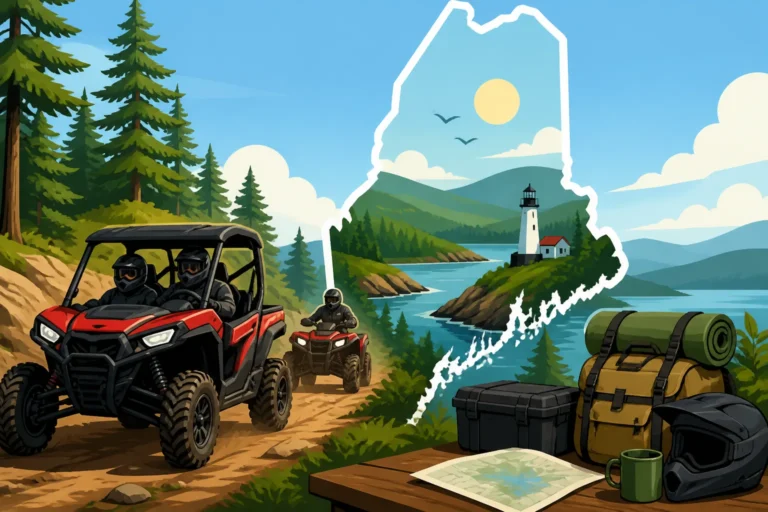
Membership supports local trail access
In Maine, many ATV trails depend on permission from private landowners. A club can help maintain those relationships by keeping trails in usable condition, communicating with riders, and responding when a landowner raises a concern. When you join, your dues may help support that work in the club’s area.
That local focus matters. A club based near Presque Isle may maintain or coordinate access to a different trail network than one based near Greenville or Rangeley. Membership in a nearby club can connect you with people who know which routes are suitable for your machine, where access has changed, and which local rules or expectations riders should understand.
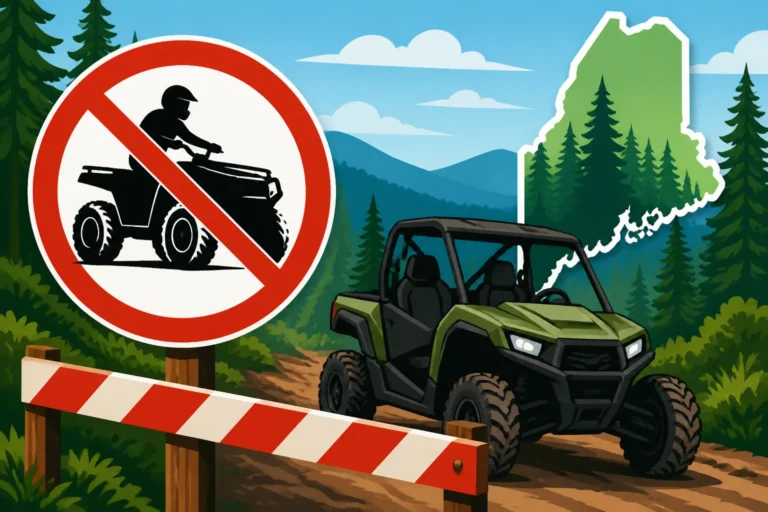
Membership does not automatically grant permission to ride every trail in the area. A club may maintain a route, but access can depend on landowner approval, seasonal conditions, posted notices, and local trail rules. Before heading out, check with the club and review Maine Landowner Permission Rules. Respecting a closure is part of protecting access for everyone.
A club membership is not vehicle registration
Joining a club does not replace registering your ATV or UTV. Registration is a separate requirement, and the rules that apply can depend on where and how you ride. A club card or membership confirmation is not a substitute for your registration documents or any other required paperwork.
The distinction can be easy to miss when you are preparing for your first Maine ride. You might sign up with a local club because you want a trail map, then assume that membership makes the machine ready to ride. It does not. Check the registration requirements for your situation, and keep the necessary proof available while riding. For a broader overview, see What Maine Riders Need Before They Ride.
Membership also does not make every route open to every machine. A narrow trail may not suit a wide side-by-side, and a route that appears on a map may have restrictions or a temporary closure. Treat your membership as a way to connect with the local trail community, not as a blanket pass.
What Dues May Pay For
Trail work, signs, and upkeep
Club dues may help pay for practical trail needs such as signs, tools, maintenance supplies, bridge work, and other improvements. The exact work and budget vary by club. A small club managing a limited local network may have different priorities from a larger organization coordinating routes across several towns.
A trail can look simple when you ride it, but keeping it passable takes ongoing effort. Volunteers may clear branches, check drainage, repair damaged sections, install or replace signs, and report problems. When a bridge needs attention or a storm leaves debris across a route, the club may need supplies, equipment, coordination, and permission before work can begin.
Dues are only one part of trail support. Volunteer labor, fundraising, grants, event income, and cooperation with landowners or municipalities may also contribute. If you want to understand what a particular club’s dues support, ask how it describes its priorities and whether it shares updates about recent trail work. You can also learn more about the wider volunteer role in Maine ATV Club Membership and Dues is the subject of this guide, while Maine ATV Trail Grooming and Bridges explores the kinds of maintenance that can make a route rideable.
Events, communication, and local knowledge
Some clubs organize rides, meetings, work days, fundraisers, or community events. Others may focus more heavily on maintaining access and sharing local trail information. Do not assume every club offers the same calendar or level of member communication.
Local knowledge can be especially valuable if you are new to the area. A club member may be able to explain where riders stage trailers, which routes are appropriate for a family outing, or how a town’s posted route connects with a larger trail network. Those details can save a long detour or help you avoid arriving at a trailhead that cannot accommodate your trailer.
Membership may also make it easier to hear about changes that are not obvious from an older map. Still, club updates are only one part of trip planning. Check trail status close to your ride, follow signs on the ground, and confirm access when details are unclear. A mapping tool such as onX Offroad can help you plan and orient yourself, but it should not be treated as proof that a trail is open or that you have permission to use it.
Comparing Clubs and Understanding Dues
Find the club that matches your riding area
Start with where you expect to ride most often, not simply the club name that sounds familiar. If your usual trips are around Aroostook County, look into clubs connected to the towns and routes you plan to use. If you ride near Moosehead Lake, Greenville, or Rockwood, check which local organizations are active in those areas and what they currently cover.
Examples from different parts of Maine include Star City ATV Club, Madawaska Valley ATVenture Club, and Knowles Corner ATV Club. These names can give you a starting point for researching local riding communities, but do not assume that any one club’s membership covers every nearby route. Ask where the club’s work is concentrated and whether it coordinates with neighboring clubs.
It can be useful to compare a club’s area with your actual riding plans. A rider who mostly takes short day trips from a home base may value local trail updates and work days. Someone planning a longer trip across several towns may need information from more than one club. For broader route planning, see Maine ATV Clubs and the Trails They Keep Open and Maine ATV Trail Maps and Club Boundaries.
Ask what the dues cover before joining
Dues differ between clubs, so there is no single amount or benefit package to assume. Check the club’s own membership information for current fees and renewal details. If the information is unclear, ask whether dues are individual or household-based, whether there are different membership categories, and what is included.
A useful question is how the club explains its spending. Some organizations may describe trail upkeep, signs, landowner outreach, or events as priorities. Others may have particular projects underway. Asking what the club is working on can help you decide whether its focus matches what you care about as a rider.
| Question to ask | Why it matters |
|---|---|
| Which towns or trail areas does the club focus on? | Helps you see whether membership aligns with where you ride |
| What does the current membership fee support? | Clarifies the club’s priorities and how dues contribute |
| Are there different membership types? | Helps you choose the right option for an individual or household |
| Are volunteer hours expected or optional? | Sets realistic expectations about participation |
| How are trail updates shared? | Shows how you can learn about access changes or closures |
| Does membership include maps or event access? | Helps you understand practical member benefits |
| Who should I contact about a specific route? | Gives you a point of contact when plans are uncertain |
A club’s value is not measured only by the number of perks it lists. For many riders, the biggest benefit is helping maintain a local trail network and being part of a community that takes access seriously. The right choice depends on your riding habits, budget, and willingness to participate.
Getting the Most From Your Membership
Use club information alongside current trail checks
After joining, learn how the club communicates. It might share updates through meetings, email, social media, a website, or direct contact with members. Choose a routine that helps you catch changes before you load the machine and drive to a trailhead.
Maps are useful, but they can become outdated as conditions and permissions change. You can use onX Offroad to help orient yourself and plan a route, then confirm access and status through the relevant club or other reliable local information. Do not use a line on a map as a reason to pass a closed gate, ignore a sign, or cross land without permission.
If you are planning a ride in a less familiar area, prepare a backup route. A bridge repair, storm damage, seasonal restriction, or landowner decision can change your plans. Check Where Maine Trail Closure Notices Are Posted before you leave, and pay attention to notices and signs once you are on the trail.
Participate in ways that fit your schedule
You do not have to be a trail crew regular to be a helpful member. If you have limited free time, you might attend a meeting, help at an event, share a closure update, or pass along a report about a downed tree. Ask the club what kinds of help are useful and what safety or permission rules apply before taking on trail work.
If you can volunteer, be realistic about the commitment. A work day may involve tools, uneven ground, weather, or tasks that require coordination with landowners. Do not cut, move, or repair anything on your own simply because it appears to block a trail. The club or land manager can tell you who is authorized to handle the problem.
Small choices on ordinary rides also support a club’s work. Ride at a considerate pace near homes, keep to the marked route, avoid creating new tracks around muddy sections, and leave gates as instructed. If you notice damage, report it rather than trying to improvise a repair. For more on the relationship behind access, read Maine Trail Etiquette With Landowners.
Common Membership Questions and Planning Mistakes
Does one membership cover a whole riding trip?
Not necessarily. A club’s area may be local, and a longer trip can cross routes maintained or coordinated by multiple organizations. Ask which trail sections the club covers and whether you need information or membership from another club for the rest of your itinerary.
This matters when planning a multi-town ride. A route that looks connected on a map may cross a section with different access conditions, club boundaries, or seasonal status. Use club contacts and current trail information to check the route in parts, especially if you are traveling from a staging area far from home.
Membership is also different from a trail permit or registration requirement where one applies. Do not assume that paying club dues settles every obligation. Review the rules that apply to your machine, your residency, and the places you plan to ride. Riders visiting from outside Maine can start with Maine ATV Registration for Non-Residents.
What should new members avoid assuming?
The most common mistake is treating club membership as permission to ride anywhere. It is better understood as participation in a local organization that may help maintain access and support riders. Route access can still depend on current permission, posted rules, closures, and suitable machine size.
Another mistake is relying on a map without confirming current conditions. Digital maps, including onX Offroad, can help with navigation and preparation, but local verification matters. A map cannot tell you that a landowner has withdrawn permission unless that information has been updated and made available through the relevant channel.
Finally, do not join only to collect a map and then ignore the club’s trail guidance. If the club asks riders to avoid a soft section, respect a temporary closure, or keep speed down near homes, following that advice helps protect access. A club’s work depends not just on dues and volunteer hours, but also on members riding in a way that landowners and communities can live with.
Disclaimer
This article is for general informational purposes only and does not constitute professional advice. Laws, prices and regulations vary by location and change over time. Consult a qualified professional for guidance on your specific situation.