Riding a Rail Trail With Kids
A rail trail can look like an easy first ride with children: mostly level, wide enough to keep your space, and free of steep mountain terrain. The tricky part is that not every rail trail is open to ATVs, and even a suitable route can become tiring or uncomfortable for young riders. This guide covers how to check access, choose a kid-friendly outing, and prepare for the ride.
Make sure the rail trail is open to ATVs
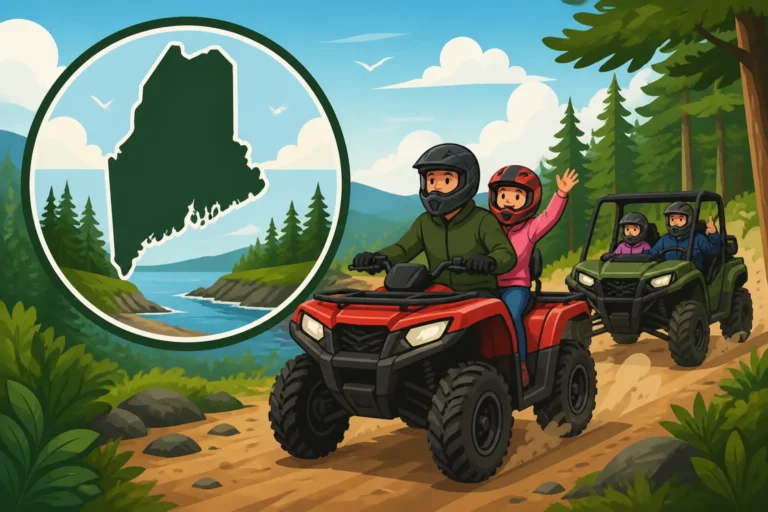
“Rail trail” describes a former railroad corridor, not a promise that every kind of user can ride it. Some Maine rail trails allow ATVs on designated sections; others may be limited to walking, biking, horseback riding, snowmobiles, or particular uses at particular times. Access can also change from one segment to the next.
Before you load the machines, check the trail’s current status with the local ATV club, land manager, municipality, or another official source responsible for that section. Look for closures, seasonal restrictions, detours, and rules about how ATV traffic shares the corridor. A route shown on a general map may not show a temporary closure or a local restriction.
Check access for the exact section you plan to ride
Choose a specific starting point and destination, then confirm that ATVs are permitted along the entire route between them. Don’t assume that because one end of a trail is open, the whole corridor is open. A trail may pass through several towns or parcels with different rules, and a short stretch can be the part that determines whether your planned trip works.
This matters especially when riding with kids. If you discover a closure after starting, turning around may mean a long ride back for a child who is already tired. Ask whether the route has any ATV-restricted segments, road crossings, or places where users need to leave the rail corridor. If your route depends on a connecting trail, check that connection separately.
For broader background on which corridors may allow ATV use, see [Maine Rail Trails Open to ATVs]. If you’re considering a ride in northern Maine, [Maine Rail Trail Riding in Aroostook] can help you explore that area, but still verify the specific segment before setting out.
Check conditions again close to ride day
A trail that was open when you planned your outing may be closed later because of mud, maintenance, weather damage, or a landowner request. In spring, soft surfaces can rut easily, and many trails remain closed until conditions are firm enough to protect the route. Riding a closed or muddy section can damage the trail and strain relationships with the people who keep access available.
Check for recent notices before leaving home, and again if the trip is several days away. Local ATV clubs are often useful sources for club-maintained routes and current notices. An app such as onX Offroad can help you orient yourself and plan around mapped routes, but treat map information as a planning aid rather than permission to ride. Confirm access and closures with the people responsible for the trail.
Choose a route that fits your child
The best family route isn’t necessarily the longest or most scenic one. For a first outing, success might mean a short ride, a snack break, and a child who wants to come back next weekend. A rail trail’s gentle grade can be helpful, but distance, surface, noise, weather, and the child’s comfort on the machine still matter.
When comparing options, look for a route with straightforward navigation, safe places to stop, and a realistic turnaround point. A child who is confident at home may feel differently after an hour of engine noise, dust, bumps, or passing traffic. Plan conservatively and leave room to change your mind.
Start with a short out-and-back
An out-and-back route gives you control over the ride length. You can turn around when the child’s energy drops, the weather changes, or the trail feels rougher than expected. A loop can be appealing, but it may leave you committed to a longer ride if there is no easy way to shorten it.
Before setting out, choose a turnaround point based on time and comfort rather than trying to reach a particular landmark. Explain that turning back early is part of the plan, not a failure. For example, you might say, “We’ll ride to the bridge, take a break, and decide together whether to continue.” That helps a child speak up when they’re tired without feeling they are disappointing the group.
It also helps to ride at a pace that lets the youngest or least experienced rider stay comfortable. Keep stops frequent enough for water, a stretch, and a quick check of helmets and gloves. A family ride should not become a test of how far everyone can push through discomfort.
Look at the surface and surroundings
Rail trails can vary from firm, smooth gravel to loose stone, washboard, mud, or uneven sections. A wide path may still have drainage cuts, ruts, soft shoulders, or debris. If you’re unfamiliar with the route, ask local riders what the surface is like and whether recent rain has changed it.
Think about what your child will experience from their seat. Dust from the machine ahead can make a ride unpleasant, especially in a group. If there are frequent road crossings or shared-use areas, your child may need to stay alert for other trail users and stop-and-yield situations. A route that feels easy to an adult may feel busy or intimidating to a younger rider.
Look for a place to pause away from traffic and trail junctions. Don’t stop where you block the corridor or create a surprise for riders coming around a bend. If a trail has a narrow bridge or a rough section, discuss how you’ll approach it before reaching it, and be prepared to turn back if it doesn’t feel appropriate for your group.
Prepare young riders for a safe outing
A child’s readiness depends on more than age. Experience, maturity, ability to follow instructions, machine size, and conditions all matter. Maine has specific rules for younger ATV operators, including requirements that can depend on the rider’s age and where they are riding. Review the rules before the trip rather than relying on what another family remembers.
For a closer look at youth requirements, read [Maine ATV Age Rules for Riders Under 16] and [Maine ATV Safety Course for Riders 10 to 15]. If a child is riding, also review [Adult Supervision Rules for Maine Youth Riders]. The responsible adult should be able to supervise actively, not simply ride somewhere ahead and assume the child will follow.
Match the machine and role to the child
A child should ride only a machine they can control safely and legally. Don’t let a young rider use an adult-sized ATV simply because they can reach the controls, and don’t assume that a child who has practiced in a yard is ready for a longer trail ride. Terrain, other riders, and the need to make quick decisions can make trail riding much more demanding.
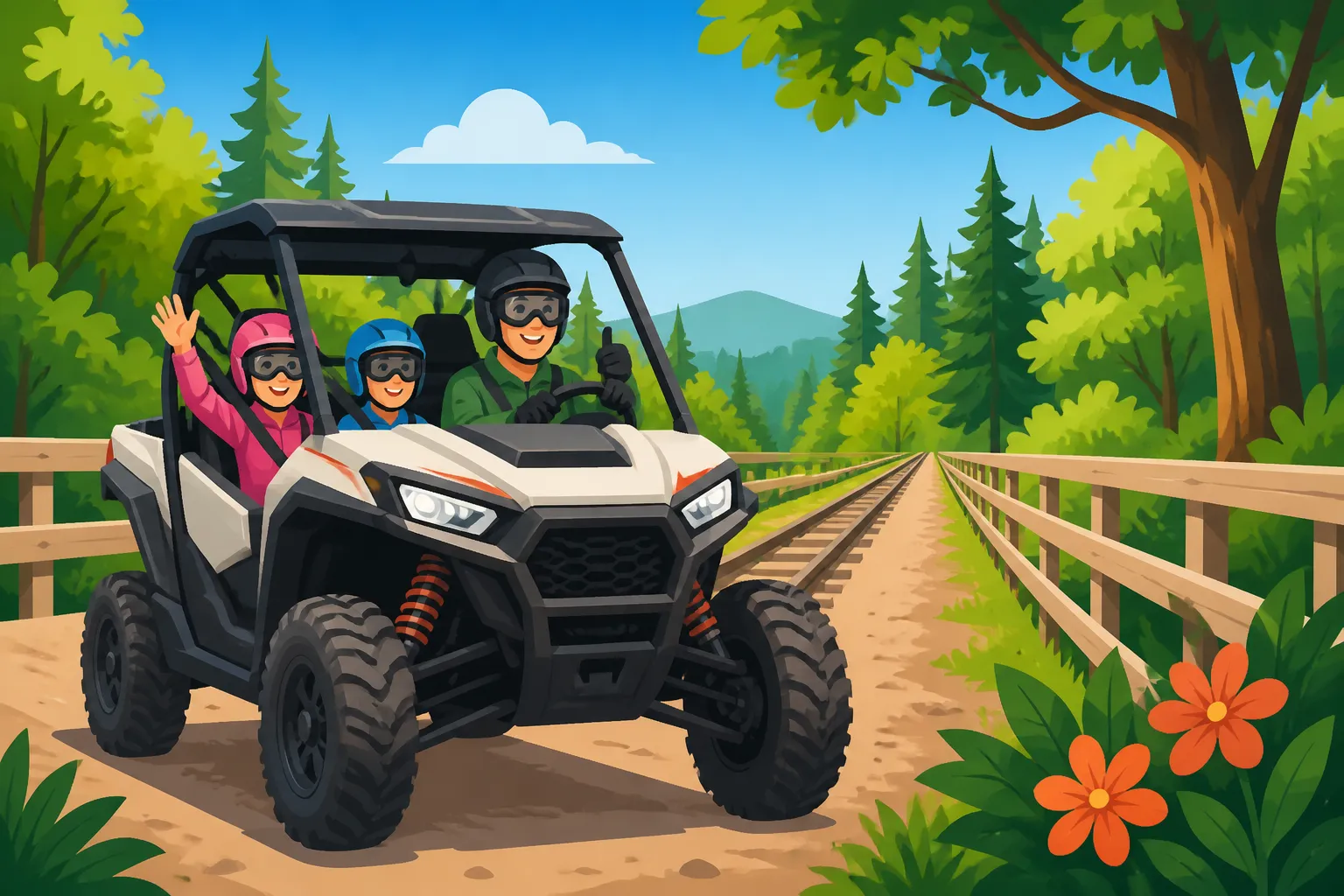
If a child is a passenger, check that the machine is designed and equipped to carry a passenger, and that the child can sit securely and follow instructions. A passenger should never be squeezed onto a single-rider quad. In a side-by-side, review seat belts, doors or nets, and the manufacturer’s guidance before leaving the staging area. Keep children seated and secured whenever the machine is moving.
Set simple rules before starting: stay with the group, don’t pass, stop when the adult signals, and speak up if anything feels wrong. Explain what to do if the group gets separated. A child should know to stop in a safe place and wait rather than trying to catch up alone.
Use protective gear and take comfort seriously
Helmets and other protective equipment should fit properly and be appropriate for the activity. Maine has helmet requirements for younger riders; see [Maine Helmet Requirements by Age] for details. Don’t rely on a helmet that is loose, damaged, or borrowed without checking its fit. Eye protection, gloves, sturdy clothing, and footwear that covers the feet can also make a ride more comfortable and help protect against debris.
Weather can change how a child experiences the trail. A cool morning, wind, dust, and light rain can turn an otherwise pleasant ride into a miserable one. Dress in layers, bring water, and avoid assuming that a child will stay comfortable just because the adults do. A child who is cold, thirsty, or overwhelmed may not describe the problem until they’re already upset.
Build in breaks before anyone is exhausted. Check in with each child directly instead of asking only, “Are you okay?” A more useful question might be, “Are your hands cold?” or “Would you like to stop before the next junction?” Children sometimes say they’re fine because they want to keep up.
Plan logistics before you leave home
A relaxed family ride usually starts with a little unglamorous preparation. Confirm parking, unloading space, route access, fuel needs, and how you’ll get help if a machine has a problem. Think through the return trip too: a child who enjoys the first half may still be tired on the way back.
Make navigation simple
Download or carry the information you need before entering an area with weak cell service. Mark your starting point, intended turnaround point, and any junctions that could be confusing. onX Offroad can be useful for viewing mapped routes and keeping track of your position, but don’t use an app as your only source for access rules or current trail conditions. Save local club or land-manager contact details where you can reach them.
A paper map can provide a useful backup, especially if a phone battery runs low or service disappears. Explain the route in simple terms to older children so they know what to expect: where you’ll stop, how long the ride may feel, and what to do if the group pauses. For a broader family route-planning perspective, see [Family-Friendly Maine ATV Trails].
Pack for delays, not just the planned ride
Even a short outing can take longer than expected. A slow section, a child needing a break, or a minor machine issue can shift your schedule. Bring water and snacks, basic first-aid supplies, a charged phone, and any essentials you need for the weather. Carry only what you can secure safely, and don’t let loose gear interfere with the driver or passenger.
A simple checklist can make the departure less stressful:
| Before you leave | What to confirm |
|---|---|
| Trail access | ATVs are allowed on the exact section, and there are no current closures |
| Youth requirements | Riders meet applicable age, supervision, training, and helmet rules |
| Route plan | Starting point, turnaround point, crossings, and likely break spots |
| Machine setup | Correct passenger capacity, secure gear, and suitable protective equipment |
| Family comfort | Water, layers, snacks, and a plan to shorten the ride |
| Backup plan | Navigation saved, phone charged, and someone knows your route |
If the route is remote, consider what you’ll do if a machine breaks down or someone gets hurt. [What to Carry on a Remote Trail Ride] offers additional preparation ideas. For parking and unloading, [Trailhead Parking That Fits a Trailer] can help you think through the practical side of getting the machines safely to the trail.
Keep the ride enjoyable for everyone
Riding with kids goes better when the goal is a comfortable outing, not a certain number of miles. The child’s pace, the trail’s condition, and the group’s energy should decide how far you go. If a child is anxious, cold, tired, or unhappy, stopping early is a reasonable choice.
Set expectations and ride considerately
Tell children what they may see on a shared trail: walkers, cyclists, horses, other ATV riders, and occasional road crossings. Slow down when approaching other users, give them room, and follow posted signs and local rules. Keep the group orderly and avoid crowding the rider ahead, especially where dust or loose gravel could affect visibility.
Adults set the tone. If you ride patiently, stop where it’s safe, and respect closures, children learn that trail access depends on responsible behavior. If you encounter a closed section or a sign you don’t understand, don’t guess. Turn around or contact the local club or land manager for clarification.
Finish while the day still feels manageable
A useful family habit is to end the ride before a child is completely spent. That might mean skipping the final spur or turning around earlier than planned. Leave time to load the machines without rushing, check that everyone has their belongings, and discuss what went well while the experience is still fresh.
Afterward, ask what the child liked and what felt difficult. They may mention a rough surface, too much dust, or a break that came too late. Those details can help you choose a more suitable route next time. If you want to explore other options, [Maine ATV Trail Difficulty by Region] can help frame the questions to ask when comparing areas.
A good first rail-trail ride with kids is one where the access is confirmed, the route suits the least experienced rider, and the family can turn back without pressure. Keep the plan flexible, follow the local rules, and let the children’s comfort—not the mileage—set the pace.
Disclaimer
This article is for general informational purposes only and does not constitute professional advice. Laws, prices and regulations vary by location and change over time. Consult a qualified professional for guidance on your specific situation.