Maine Trails With Short Family Loops
A family ride can go sideways when a “quick loop” turns into hours on unfamiliar trails, with tired kids, low fuel, or a route that’s too rough for a new rider. This guide explains how to choose and plan a shorter Maine ATV ride, where to look for suitable trail networks, and what to check before loading up.
What makes a Maine ATV ride family-friendly
Short means predictable, not just low mileage
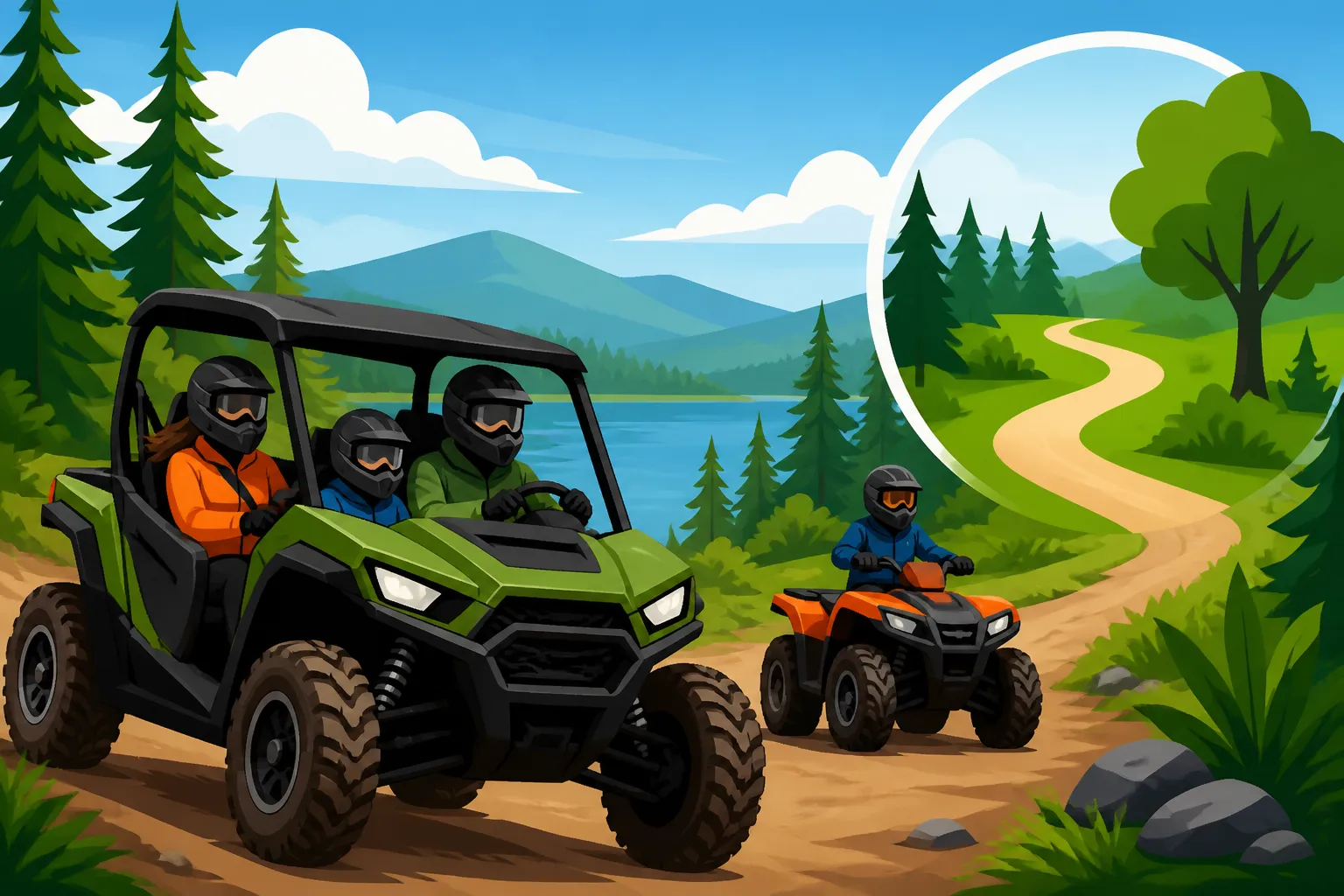
A short ride is easier to manage when you know where it starts, where it ends, and how you can turn back if someone gets tired. A simple out-and-back or clearly marked loop near a trailhead is often less stressful than a longer route that depends on several junctions. Keep the first trip modest: the goal is to learn how your family handles trail time, not to cover as much ground as possible.
Distance alone can be misleading. A few miles on a rough, wet, or heavily rutted trail may take longer than expected, while a smoother trail can feel much easier. Add in stops for water, a snack, a gear adjustment, or a bathroom break, and even a short ride can fill much of a morning. When you’re planning, allow extra time rather than trying to fit the ride into a tight schedule.
Before you go, look for a trailhead that makes it easy to park, unload, and get organized without rushing. Confirm that the route you’re considering is open to your type of machine and suitable for your riders’ experience. A trail that looks appealing on a map may include terrain or connections that aren’t a good fit for a young or inexperienced rider. For ideas on what to look for, start with Family-Friendly Maine ATV Trails and Maine ATV Trail Difficulty by Region.
Choose terrain your least-experienced rider can handle
A family route should be planned around the person who needs the most support, not the most confident rider in the group. That might mean avoiding steep grades, deep mud, narrow bridges, or sections where a rider has to make quick decisions around other trail users. If one person is new to riding, choose forgiving terrain and leave complicated intersections for another day.
Talk through the route before you start. Point out where you’ll stop, what you’ll do if the group gets separated, and how everyone should respond when approaching a road crossing or another machine. For younger riders, keep instructions simple and specific: stay with the group, follow the leader’s pace, and stop where the adults stop. Don’t assume a child can follow a more experienced rider through a difficult section just because they’re comfortable on a machine in the yard.
Family-friendly trails can still demand attention. Roots, loose gravel, standing water, and washouts can change the feel of a route, especially after rain. If you arrive and the conditions look tougher than expected, it’s fine to shorten the ride or turn around. A good family outing is one where everyone finishes feeling comfortable enough to want to ride again.
Where to look for shorter loops in Maine
Start with established trail networks and local information
Maine riding opportunities often depend on trail networks maintained with help from local clubs and landowners. Instead of picking a line on a map and assuming it is rideable, begin with information from the club or organization responsible for the area. Ask whether there’s a suitable short route from the trailhead, whether the trail is open, and whether there are any temporary closures or conditions families should know about.
Different parts of the state offer different kinds of riding, and the best choice is usually the place that matches your group’s comfort level and practical needs. For example, a family staying near Greenville may want to investigate the local Moosehead Lake area network, while visitors in Aroostook County may look at routes connected to towns such as Presque Isle or Caribou. These are starting points for research, not promises that a particular short loop will be open or appropriate on the day you visit. Check local trail details before making the drive.
A trail map can help you understand distances and junctions, but it doesn’t replace current local guidance. Tools such as onX Offroad can help you review routes and orient yourself, while a club map or direct update can help clarify what is open and usable. Keep a second way to navigate, too: cell service can be unreliable in some riding areas, and a screen is not a substitute for knowing your route.
Compare trail areas before you commit
When you’re choosing between possible trail areas, compare more than the number of miles. A nearby trailhead with easy parking and a simple route may be better for a first family ride than a famous network that requires a long drive and several hours on the machine. Think about how long it takes to reach the trail, where you’ll unload, whether there are services nearby, and how easy it will be to stop or turn around.
| Planning question | Why it matters for families | What to check |
|---|---|---|
| Is there a clear starting point? | A straightforward start reduces confusion and keeps unloading calmer. | Trailhead directions, parking space, and club information |
| Can the ride be shortened? | Tired riders need an easy way to return without committing to a long route. | Out-and-back options, nearby junctions, and exit points |
| Is the terrain suitable? | A short route can still be difficult if it is muddy, steep, or narrow. | Trail difficulty, recent conditions, and local guidance |
| Is the route open to your machine? | Trail access and width can vary by route. | Local rules, posted signs, and current club notices |
| Can you navigate without cell service? | Families need a plan if a phone loses signal or battery. | An offline map, paper map, and agreed route |
| Are there road crossings or shared sections? | Crossings and mixed use call for added attention and careful supervision. | Route descriptions, signs, and local guidance |
For broader planning, Maine ATV Trail Maps and Club Boundaries can help you understand how networks are organized. Before heading out, check Checking Maine Trail Status Before You Drive and confirm details with the local club where possible. Trail access can change when landowners close a section, maintenance is needed, or conditions make riding unsuitable.
Planning the ride around kids and newer riders
Set expectations before you leave home
A short family ride is easier when everyone knows what the day will look like. Tell the group how long you expect to be on the trail, where the planned stops are, and what might cause you to turn around early. Avoid promising a particular destination unless you’ve confirmed that the route is open and that the distance and conditions are appropriate for your riders.
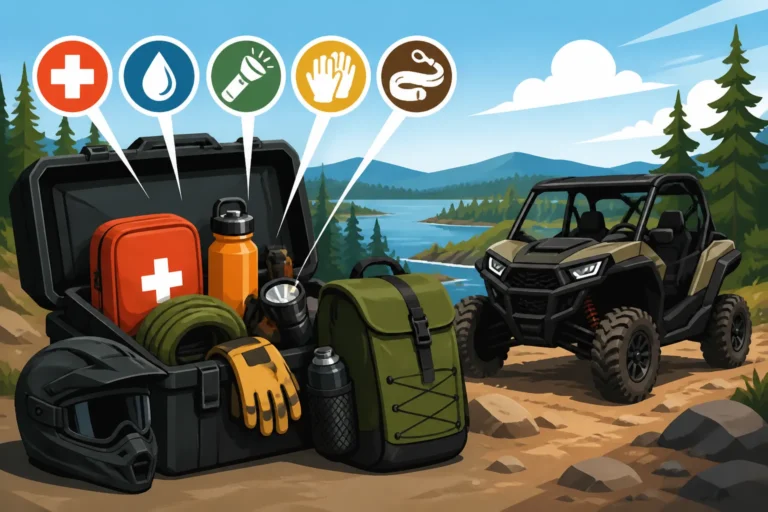
Pack for the possibility that the ride takes longer than planned. Bring drinking water, snacks, weather-appropriate layers, and any personal items your family needs. Check that helmets and other required equipment fit properly before leaving the parking area; it’s frustrating to discover a loose strap or uncomfortable fit once everyone is ready to ride. Review applicable age, supervision, and equipment rules as part of your planning. The guides on [Maine ATV Age Rules for Riders Under 16] and Maine Helmet Requirements by Age are useful places to start.
Give children a chance to ask questions before the engines start. A youngster who understands where the group is going and what to do at a stop is less likely to feel overwhelmed. If a rider is nervous, don’t treat that as a reason to push harder. Let them watch, take a break, or end the ride early. Getting home safely and keeping the experience positive matter more than completing a planned route.
Build in breaks and a simple turnaround plan
Decide in advance how the group will handle a stop. Choose a safe place off the active trail where machines can be positioned without blocking other riders. Keep the group together, check how everyone is feeling, and make sure riders are ready before moving on. A short pause can prevent a small problem—such as thirst, discomfort, or a loose glove—from becoming a reason someone wants to quit suddenly.
Agree on a turnaround rule before the ride begins. For example, the group might turn back if a trail becomes too muddy, a rider feels uncomfortable, or the planned time is running short. The important thing is that everyone knows the decision is allowed. Families sometimes feel pressure to finish because they’ve already driven to the trailhead, but continuing into conditions that don’t suit the group usually makes the outing less enjoyable.
Also plan for ordinary delays. Someone may need to adjust a helmet, a machine may need attention, or a junction may take a moment to sort out. If you’re using a digital map, download or save the route details before leaving reliable service, and carry a backup map where practical. Navigating Trails Without Cell Service offers additional planning ideas for areas where a phone connection may be limited.
A practical checklist for a short family loop
Before you load the machines
Use the day before the ride to confirm the basics rather than trying to solve everything in the parking lot. Check that the trail network is open, identify the correct trailhead, and make sure your chosen route suits every rider. Look for any posted restrictions, including rules about machine size or trail access. If the route crosses private land, respect posted signs and the permissions that allow trails to exist. Maine’s trails often depend on landowner cooperation, so riders should follow signs, stay on marked routes, and avoid treating an unmarked woods road as public access.
If you’re unfamiliar with the area, contact the local club or check its trail information before driving out. Ask direct questions: Is there a short option? Is it appropriate for a beginner? Are there any conditions or closures to know about? For more on the role of landowners and access, see [Landowner Permission on Maine ATV Trails]. It’s also worth reviewing Maine Trails With Short Family Loops while comparing ideas for a manageable outing.
Make a simple plan that someone else can understand. Write down the trailhead, intended route, approximate turnaround point, and the time you expect to check in with someone at home. Share that plan with another adult. This is especially useful if the riding area is remote or your phone may not work well.
At the trailhead and on the trail
Before setting off, give everyone a moment to get comfortable with the machine and controls. Review the route one last time and agree on who leads and who stays at the back. Keep the pace within the comfort level of the least-experienced rider, leaving enough space between machines for everyone to respond safely. Don’t let the group stretch out so far that the last rider can’t see the person ahead at important turns.
Follow trail markers and posted instructions, and slow down where visibility is limited or other users may be nearby. If you reach a confusing junction, stop in a safe place and check the map rather than guessing. If trail conditions are rougher than expected, pause and reassess. A short family ride doesn’t have to be a loop at all costs; retracing a familiar route can be the sensible choice.
When the ride is over, take a few minutes to check that everyone is okay and that no gear has been left behind. Ask each rider what felt comfortable and what they’d change next time. That feedback helps you choose a better distance, pace, and type of terrain for your next outing. A modest first ride can turn into a family tradition when the route fits the people riding it—not just the map.
Disclaimer
This article is for general informational purposes only and does not constitute professional advice. Laws, prices and regulations vary by location and change over time. Consult a qualified professional for guidance on your specific situation.