Commercial Use of a Club Trail
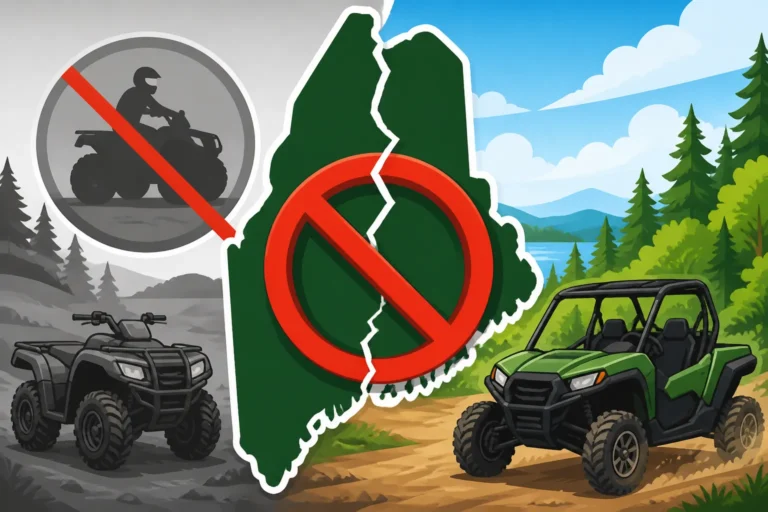
A Maine ATV club trail may be open to recreational riders without being available for a paid tour, rental route, or business event. Commercial use can affect landowner agreements, trail conditions, insurance, and other riders. Before advertising a trip or sending customers out, identify who controls the route and get clear permission for the specific activity.
What counts as commercial use
Commercial use generally means using a trail as part of a business or paid activity, rather than riding for personal recreation. Examples include a guided trip, a rental company’s route, a paid group outing, or a business event that brings customers onto club-maintained trails.
The label alone does not settle whether an activity is allowed. A business may use a trail to reach a destination, or a guide may lead a small group without charging a separate “trail fee.” Those details do not automatically make the use noncommercial. If customers pay for the ride, equipment, guiding, lodging package, or another service tied to trail access, ask the club and relevant landowners how they classify it.
A club’s role also needs to be understood. A club may maintain a route and coordinate access, but that does not necessarily mean it owns the land or can grant permission for every kind of use. Many Maine trails cross private property, and access may depend on agreements with individual landowners. The club may be able to explain the route and its rules, while the landowner retains authority over how their property is used.
Commercial trail use can include more than guiding:
- Guided rides: Customers follow a guide on a club trail, whether they bring their own machines or use rented ones.
- Rental routes: A rental business directs customers onto a trail network, even if no employee accompanies the group.
- Organized outings: A business, lodge, or other operator plans an event or group ride connected to a club route.
- Repeated business traffic: A route becomes part of a regular service, rather than occasional personal riding.
- Promotional use: A business uses the trail for a customer experience, tour, or activity that supports a paid package.
These examples are reasons to ask, not a complete legal definition. The details can change what approvals, insurance, or permits are relevant. For a guided service, check the requirements described in Maine Commercial ATV Guide Licensing and Maine Permits for Guided ATV Trips. A club’s approval does not replace any separate business, guide, or event requirements that apply.
A regular rider’s registration is not commercial permission. Registration applies to the machine and its operation under the relevant rules; it does not grant a business the right to use a club route for paid activity. Likewise, a landowner’s general permission for recreational riding may not cover a recurring tour, a rental operation, or a large organized group.
| Activity | Why permission may need extra clarification |
|---|---|
| Occasional personal ride | Usually falls under the trail’s posted access rules and any conditions set by the club or landowner |
| Paid guided ride | A guide is conducting a service on the route; confirm commercial access and any guide or permit requirements |
| Rental business route | Customers may ride repeatedly, so the club and landowners should understand the route’s business use |
| Club or business event | Group size, timing, parking, staffing, and insurance may require separate event approval |
| Business travel on a trail | Even a short connection between locations may count as business use; do not assume ordinary access covers it |
Get permission from the right people
Start with the club that maintains or manages the trail section. Explain the business activity plainly. Do not ask only whether “ATVs are allowed” or whether the trail is open to the public. Ask whether the club allows the specific commercial use you plan to offer.
Share enough detail for the club to assess the impact:
- Describe the service. Say whether you are guiding customers, renting machines, hosting an event, or using the trail as part of a larger package.
- Identify the route. Provide trail names, access points, connecting roads, and any areas where the route crosses private property.
- Estimate frequency and group size. One occasional outing may differ from repeated trips with several machines each day.
- Explain the machines and riders. Note whether customers bring machines or use yours, and whether passengers or youth riders may take part.
- Ask about conditions. Find out whether there are restrictions on dates, hours, machine size, speed, noise, parking, or group spacing.
- Request written terms. Keep a record of what the club approved, who approved it, which trails are covered, and how long the permission lasts.
If the club says the route crosses land managed by someone else, ask who must be contacted. Do not assume a club can approve access on behalf of every landowner. Permission is only useful if it comes from the person or organization with authority over the land and covers your actual operation. For broader background, see Landowner Permission on Maine ATV Trails and Maine Trail Rules Clubs Set Beyond State Law.
Be specific about the commercial arrangement. A request for permission to conduct a guided ride should not be treated as approval to rent machines for unsupervised use. Permission for a one-day event should not be taken as consent for weekly customer trips. If the business changes its route, group size, schedule, or service, return to the club and landowners to confirm that the original terms still fit.
Written permission is especially important where access depends on a landowner relationship that could be limited or withdrawn. It should identify the route or property, the approved activity, any operating conditions, and the contact for reporting problems. A short email can be useful, but it is not a substitute for any formal agreement required by the parties or by applicable rules.
Ask about trail status and seasonal limits
Permission to use a route does not mean the route is open every day. Trails may close because of mud, maintenance, landowner requests, weather, or other conditions. Confirm how the club announces temporary closures and how a business should respond when a route is unavailable. A commercial operator should have an alternate plan rather than sending customers onto an unapproved road or trail.
Trail access can also change during a season. Check before each scheduled outing, not just when the business first arranges access. A club may have current information about closures, but the operator remains responsible for ensuring customers follow the rules and stay on authorized routes.
Check permits, registration, and insurance separately
Trail permission is one part of the compliance picture. It does not answer whether the business needs a guide license, an event permit, machine registrations, or insurance. Confirm each item independently with the appropriate organization or official source, because requirements depend on what the business does.
For a guided activity, ask whether the service falls under Maine’s guide rules and whether any trip-specific permit applies. A guided trip, an organized event, and a rental operation are not necessarily treated the same way. If you are planning an event rather than ordinary customer rides, review Maine Permits for an Organized Trail Ride and Club Event Insurance Requirements. Ask the club whether it has additional event procedures.
The machines also need to meet applicable registration and operating requirements. A business should not assume that one registration covers a fleet, a customer’s machine, or every type of use. If the company owns or operates the machines, review Maine ATV Registration for Clubs and Businesses. Rental operations have their own practical questions, including who is responsible for registration and what customers must carry; see Renting ATVs and Maine Registration Rules.
Insurance deserves a direct conversation with the insurer and the club. A policy that covers ordinary recreational riding may not cover paid guiding, customer rentals, or organized business activity. Ask the insurer to confirm coverage in writing for the actual operation, including the machines, guides, customers, and trail use. Ask the club whether it requires proof of insurance, specific coverage language, or additional insured status. Do not rely on a verbal assumption that a customer’s personal policy will cover an incident connected with a paid service.
| Check | Questions to resolve before operating |
|---|---|
| Club permission | Is this exact activity allowed on the named trail sections? Are there limits on dates, group size, frequency, or machine type? |
| Landowner permission | Does the club control every relevant section, or is separate approval needed? |
| Guide or event rules | Does the service require a license, permit, or additional approval? |
| Machine registration | Are all business and customer machines properly registered for their use? |
| Insurance | Does coverage explicitly include commercial guiding, rentals, events, or other planned services? |
| Operating conditions | What applies to trail closures, parking, noise, speed, rider age, and customer behavior? |
| Recordkeeping | Who keeps the permission, insurance documents, permits, and route updates? |
The order matters. Do not book customers first and treat trail approval as a final detail. Confirm access, permits, and coverage before advertising a route as available. If you cannot get a clear answer, pause the plan and seek clarification rather than relying on a general statement that “the trails are open.”
Protect access while the business operates
Commercial traffic can put extra pressure on a trail system. A single group may be larger than a typical family ride, and customers may be unfamiliar with local conditions or etiquette. A business that uses a club trail should help protect the access it depends on, not simply pass trail rules to customers and hope for the best.
Give customers a clear briefing before they ride. Explain where they may travel, how to handle road crossings, how to behave around homes and other trail users, and what to do if they become separated or encounter a closure. Keep groups manageable and avoid blocking access points. Riders should stay on the authorized route, yield where required, and avoid creating new tracks around wet or damaged sections.
Build a closure and incident plan into the operation. Customers should know whom to contact if a machine breaks down, someone is injured, or a trail is blocked. Guides should have a way to communicate with the group and should not improvise a detour across private land. If a landowner or club representative asks the group to leave a section, follow that direction and report the issue through the agreed contact.
Good operating practices include:
- Check trail conditions and access before departure.
- Keep a current route map or instructions with guides and customers.
- Set expectations for speed, spacing, noise, and stopping.
- Keep customers away from closed trails and unauthorized shortcuts.
- Respect gates, signs, private property, and requests to avoid sensitive areas.
- Report damage, hazards, and access problems promptly.
- Keep business records of approvals, insurance, training, and customer briefings.
Some clubs set requirements beyond general state rules, including conditions for group rides and road sections. Ask for the current club rules and make sure they reach every guide and customer. The trail may be open to other riders at the same time, so a paid group should not treat it as a private course unless that arrangement has been expressly approved.
Finally, review permission periodically. A business may grow, change equipment, add a second route, or increase the number of customer trips. Those changes can affect the landowner’s decision even if the original activity was approved. Renew or update written permission when the route, frequency, season, or nature of the service changes. If the club or landowner withdraws access, stop using that section and update customer plans and marketing promptly.
Commercial use is workable when the parties understand what is being proposed. The safest approach is to secure route-specific club and landowner approval, verify separate permit and insurance requirements, and operate within the agreed conditions. That process takes more effort than relying on ordinary trail access, but it helps avoid a canceled trip, an uninsured claim, or damage to the relationships that keep Maine trails available.
Disclaimer
This article is for general informational purposes only and does not constitute professional advice. Laws, prices and regulations vary by location and change over time. Consult a qualified professional for guidance on your specific situation.