The Montana LLC Route and What Maine Owners Risk
It's a common dilemma, isn't it? You love the freedom and adventure of ATV and UTV riding here in Maine, but the costs can feel like they’re stacking up faster than firewood in November. Between sales tax, excise tax, and registration fees, it's easy to look for ways to lighten the load. That’s where the idea of a "Montana LLC" often surfaces, promising a loophole to save a bundle. But before you hitch your wagon to that star, let's pull back the curtain and talk about the significant risks and very real consequences Maine owners face when considering this route. This guide is all about giving you the straight facts so you can make an informed decision and avoid a heap of trouble.
The Allure of the Montana LLC for ATV/UTV Owners
Maine is a beautiful state, no doubt, but it's also a state with its fair share of taxes and fees, and that includes your beloved off-road machines. It's perfectly natural for folks to seek out ways to legally reduce these costs, especially when you're investing in a new side-by-side or a high-performance quad. The perceived savings from a Montana LLC can look incredibly tempting on paper, creating a strong pull for owners who just want to enjoy their machines without feeling the financial pinch quite so much.
Why Maine Residents Look for Alternatives
Let's be honest, the cost of entry for ATV and UTV ownership in Maine can be substantial. When you purchase a new machine, you're looking at Maine's state sales tax, which applies to the purchase price. Then, many towns levy an annual excise tax, calculated based on the machine's age and manufacturer's suggested retail price, which can feel like another sales tax every single year. Finally, there are the annual registration fees to consider for both residents and non-residents, ensuring your machine is legally allowed on the trails. When you add all these up, particularly on a brand new, higher-end UTV, the figures can be eye-watering.
Many of us look at these costs and think, "There has to be a better way." Especially when you hear whispers about how other states, like Montana, have different tax structures that might seem more favorable. The frustration is real, and it's fueled by the desire to put more money towards trail riding adventures rather than government coffers. The idea of somehow side-stepping these recurrent expenses is what makes the Montana LLC concept so appealing to Maine residents who are simply trying to be smart with their money.
How the Montana LLC Scheme Works (in Theory)
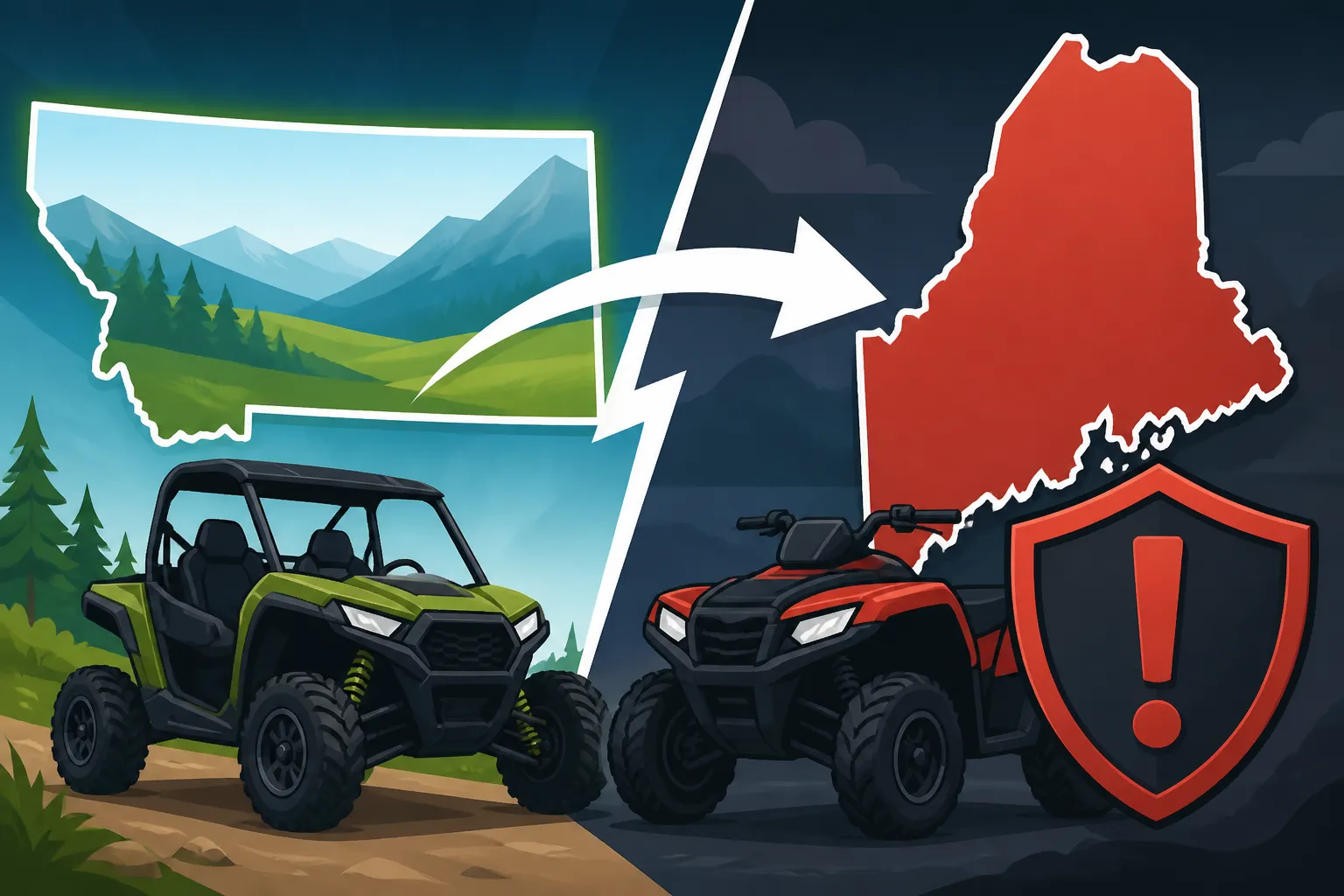
At its core, the Montana LLC scheme is based on a simple premise: Montana does not have a state sales tax. For vehicles, this means if you buy a machine and register it in Montana, you don't pay sales tax on the purchase there. The idea, then, is that a Maine resident would form a Limited Liability Company (LLC) in Montana, purchase their ATV or UTV through that LLC, and register it in Montana under the LLC's name. Because the vehicle is technically owned and registered by a Montana entity, the owner hopes to avoid paying Maine sales tax, use tax, and potentially even annual excise taxes.
The assumption is that since the LLC is a separate legal entity and the vehicle is registered to it in Montana, Maine has no claim to sales or use tax, or annual excise tax. The vehicle might even have Montana license plates or registration stickers. People considering this route imagine they can then bring the ATV or UTV to Maine, ride it here, and simply point to the Montana registration if ever questioned. It sounds like a clever workaround, a way to benefit from another state's tax laws while still enjoying your machine in your home state. However, the reality of this strategy is far more complex and fraught with peril than it appears on the surface.
The Legal Realities and Risks for Maine Residents
While the Montana LLC route might sound like a brilliant hack, the legal system in Maine, and indeed in most states, is designed to prevent such tax avoidance. What might look like a clever loophole to some, is often seen as tax evasion by state authorities, and they have clear laws and enforcement mechanisms in place to address it. This isn't a minor oversight; it carries significant legal and financial risks for anyone attempting to exploit it while residing in Maine.
Maine's Use Tax and Domicile Rules
Here’s where the rubber meets the road. Maine has something called a "use tax." This tax is essentially a sales tax by another name, applied when you purchase tangible personal property outside of Maine (where you might not pay sales tax) and then bring that property into Maine for use, storage, or consumption. The intent of the use tax is to ensure that Maine residents pay the equivalent of Maine sales tax, regardless of where they purchased an item. So, if you buy an ATV through a Montana LLC and bring it to Maine, even if it's registered to the LLC, the state can and will argue that you, as a Maine resident, are using that machine in Maine, thereby triggering the Maine use tax. This is covered in more detail in articles like [Maine Use Tax After an Out-of-State ATV Purchase].
The key factor here is domicile. Your domicile is where you primarily live, vote, and generally consider your home. If you're a Maine resident, your domicile is Maine. While an LLC might be legally formed in Montana, if the physical asset (the ATV/UTV) is primarily garaged, stored, and operated in Maine by a Maine resident, the state will typically consider it subject to Maine's taxes. The idea that merely registering a vehicle to an out-of-state LLC shields it from your home state's tax laws is a common misconception that has led many owners into hot water.
The "Permanent" vs. "Temporary" Distinction
State motor vehicle departments and law enforcement agencies are well aware of the Montana LLC strategy. They don't simply look at where a vehicle is registered; they look at where it's permanently garaged and primarily operated. If your ATV or UTV, despite its Montana registration, spends 360 days a year in your garage in Bangor or on your trailer in Presque Isle, and you're regularly riding it on Maine trails, it's pretty clear it's not "temporarily" in Maine.
Authorities, including the Maine Warden Service and State Police, have experience identifying these situations. They'll consider factors like your driver's license address, where you vote, where your other vehicles are registered, and where the ATV is actually located and used most of the time. If the vehicle's primary home is Maine, then the Montana registration is simply a paper shield that doesn't hold up under scrutiny. The state's position is that if the benefit of ownership is primarily realized in Maine, then Maine's taxes apply. They distinguish between someone genuinely visiting Maine with an out-of-state registered machine, and a Maine resident trying to avoid taxes on a machine permanently kept here.
Penalties and Enforcement
The consequences of attempting to use a Montana LLC to avoid Maine taxes can be severe. The Maine Revenue Services, in conjunction with enforcement agencies like the Maine Warden Service, actively investigate cases of suspected tax evasion. If they determine that your ATV or UTV should have been subject to Maine sales and use tax, you're not just looking at paying the original tax amount. You will likely face significant penalties, often a percentage of the unpaid tax, and interest on the unpaid amount, accruing from the date the tax was originally due. These can add up quickly, far exceeding any perceived savings. You can find more information about these types of issues in [Penalties for Riding an Unregistered ATV in Maine] – though in this case, the penalty would relate to the tax issue, not just registration.
Beyond financial penalties, there could be legal repercussions. While rarely leading to jail time for a first offense on an ATV, intentional tax evasion can be considered a criminal offense. The state takes its revenue collection seriously, and trying to defraud the system is not taken lightly. Imagine facing a large bill for back taxes, penalties, and interest, along with potential legal fees, all for trying to save a few hundred or a few thousand dollars. It’s a gamble with very high stakes, and the house (the State of Maine) usually wins.
| Feature | Perceived Benefit of Montana LLC | Actual Risk for Maine Residents |
|---|---|---|
| Sales Tax | Avoid Maine sales tax on purchase. | Maine use tax likely applies, plus penalties and interest. |
| Excise Tax | Avoid annual Maine excise tax. | Maine excise tax likely due, plus penalties. |
| Registration | Montana registration seems valid. | Maine domicile makes Montana registration a red flag for fraud. |
| Enforcement | Low chance of being caught. | High scrutiny from Maine Warden Service/Revenue Services. |
| Insurance | Standard insurance under LLC. | Potential denial of claims, invalid coverage if domicile hidden. |
| Legal Status | Legitimate business practice. | Can be considered tax evasion, potentially criminal charges. |
| Cost Savings | Significant savings on taxes. | Legal fees, back taxes, penalties, interest often far exceed savings. |
| Convenience | Simple, one-time setup. | Ongoing LLC maintenance, registered agent fees, legal exposure. |
Practical Complications of a Montana LLC
Even if you were to somehow bypass Maine's tax enforcement (which is highly unlikely for a resident operating a machine primarily in Maine), the Montana LLC route introduces a host of other practical headaches and potential pitfalls that many owners don't fully consider. These issues can turn what seems like a simple money-saving maneuver into a bureaucratic nightmare or an expensive liability.
Insurance Hurdles
One of the biggest practical hurdles with a Montana LLC for a Maine resident is insurance. When you go to insure your ATV or UTV, the insurance company will ask for the registration address and the primary garaging location of the machine. If your LLC is in Montana, but you tell your insurer the vehicle is primarily garaged in Maine, it raises immediate questions. If you don't disclose the actual garaging location and primarily use the machine in Maine, you run the risk of committing insurance fraud. This is a serious offense that can lead to the cancellation of your policy, denial of claims, and even legal action by the insurance company.
Imagine you're out on the trails near Moosehead Lake, and you get into an accident. Your UTV is damaged, and you or a passenger are injured. You file a claim, and the insurance company starts investigating. When they discover that the vehicle is registered to a Montana LLC, but you're a Maine resident and the machine has never truly been in Montana, they could deny your claim entirely. This means you'd be solely responsible for repair costs, medical bills, and any liability claims from others involved. The supposed savings on taxes would pale in comparison to the financial devastation of an uninsured accident. It's a risk most responsible riders wouldn't want to take.
Financing and Loan Issues
If you've financed your ATV or UTV, adding a Montana LLC into the mix can create significant complications with your lender. When you take out a loan, the lender typically wants the collateral (the vehicle) to be registered in your name and in your state of residence. This simplifies the process of securing their lien and, if necessary, repossessing the vehicle. If you register the vehicle under a Montana LLC while you reside in Maine, it can complicate the lender's ability to protect their interest.
Some lenders might outright refuse to finance a vehicle under such a structure, or they might require specific waivers or higher interest rates due to the increased perceived risk. If you've already financed the machine and then attempt to transfer ownership to a Montana LLC without informing your lender, you could be in violation of your loan agreement. This could trigger clauses that demand immediate repayment of the full loan balance, or even lead to repossession. It's crucial to understand that lenders are primarily concerned with minimizing their risk, and a complex multi-state ownership arrangement like this often raises red flags for them.
Maintaining the LLC
Setting up an LLC in Montana isn't a one-and-done deal. It requires ongoing maintenance, which incurs both time and money. You'll need to pay annual registration fees to the State of Montana to keep the LLC active. You'll also likely need to maintain a registered agent in Montana, which is typically a service you pay for annually. This agent is the legal contact for your LLC in Montana, receiving official correspondence and legal notices on behalf of your company.
While a service like LawDepot can assist with the initial formation of an LLC and provide templates for necessary documents, the responsibility for maintaining compliance, paying annual fees, and understanding the legal implications rests squarely with you. These recurring costs can eat into any perceived tax savings over time. Furthermore, if you fail to maintain the LLC properly—missing annual reports or fees, for instance—the state of Montana could dissolve the LLC, leaving the ownership of your ATV or UTV in legal limbo and potentially exposing you to personal liability that the LLC was supposed to prevent. It adds an unnecessary layer of administrative burden and expense for something that might not even provide the intended tax benefits in Maine. If your primary goal is simply to own and ride your ATV in Maine, this administrative overhead is simply not worth the trouble.
What Happens When You Get Caught?
The truth is, state authorities, especially here in Maine, are not naive. They understand these schemes and are equipped to deal with them. The idea that you can fly under the radar indefinitely with a Montana-registered ATV in Maine is a dangerous misconception. When the State of Maine suspects tax evasion, the investigation and subsequent penalties can be far more costly and disruptive than simply paying the taxes you were trying to avoid in the first place.
The Warden Service and State Police Scrutiny
Imagine you're pulled over by a Maine Warden or a State Trooper while riding your "Montana-registered" UTV on a trail here in Maine. Perhaps you're involved in a minor incident, or maybe they're just conducting a routine check. They'll ask for your registration, and when they see a Montana registration for a machine being actively used by a Maine resident, their antennae will go up. They might ask for your driver's license, which will show your Maine address. They might inquire about where the machine is primarily stored. They are trained to spot discrepancies. [Maine Warden Stops and ATV Paperwork] is a good read for what they typically ask for.
This isn't just about a simple ticket. If they suspect tax evasion, they can flag your information and forward it to the Maine Revenue Services. This could lead to a deeper investigation, potentially involving interviews, requests for purchase documents, and even a review of your personal tax records. The enforcement agencies are not just looking for registration violations; they're looking for systematic attempts to bypass state tax laws. They often work together across state agencies to identify such cases.
Financial Repercussions
If the Maine Revenue Services determines that your ATV or UTV should have been subject to Maine sales and use tax, the financial hit can be substantial. First, you'll be assessed the full amount of the Maine sales tax that was originally due on the purchase price. Then, they will likely add interest, calculated from the original date of purchase until the date you pay. This interest can accrue over several years if the machine was purchased a while ago, significantly increasing the total.
On top of the tax and interest, there will be penalties. These penalties can vary but are often a percentage of the unpaid tax, sometimes quite hefty. For instance, there could be penalties for failure to pay, for substantial understatement of tax, or for civil fraud. These can quickly escalate the total amount owed into the thousands of dollars, easily eclipsing any initial savings. And remember, these are just the state taxes. Depending on your town, they might also come after you for unpaid excise taxes for every year the machine was in Maine without proper payment. This is often an expensive lesson learned the hard way.
Reputational and Legal Consequences
Beyond the financial penalties, there are broader legal and reputational consequences. While it might start as an administrative issue with the tax department, if the state believes there was intentional misrepresentation or fraud, it could lead to more serious legal action. While less common for ATV ownership than, say, luxury cars, the potential for being labeled a tax evader can have a lasting impact. It could affect your credit, make it harder to secure loans in the future, and generally cause a lot of stress and hassle.
Moreover, the time and emotional energy spent dealing with state investigations, potentially hiring lawyers, and navigating the legal system is a huge burden. What started as an attempt to save a few dollars can turn into a protracted legal battle that drains both your finances and your peace of mind. It's a high-stakes gamble where the odds are stacked against the individual trying to circumvent established tax laws. Maine residents should seriously consider the potential personal and legal fallout before pursuing such a risky strategy. The Montana LLC Route and What Maine Owners Risk is a direct warning against these very consequences.
Legitimate Ways to Save Money on ATV/UTV Ownership in Maine
The good news is that while the Montana LLC route is fraught with peril, there are legitimate, legal, and stress-free ways to be smart about your ATV or UTV ownership costs in Maine. It's all about understanding the rules and making informed decisions upfront, rather than trying to find a workaround that could lead to trouble down the line.
Understanding Maine's Sales and Use Tax Exemptions
Maine does have specific sales and use tax exemptions that might apply in certain situations, though they are usually quite specific. For instance, agricultural machines used directly and exclusively in commercial farming might be exempt. If you're genuinely using your ATV or UTV primarily for farm or woodlot work, you might qualify for certain exemptions or reduced fees. It's worth researching [Maine ATV Registration for Farm and Woodlot Use] to see if your specific situation fits these criteria. These are not broad exemptions for personal recreational use, but they can be significant for eligible commercial operations.
Another common exemption relates to trade-ins. If you trade in an older ATV or UTV when purchasing a new one, the sales tax is generally calculated on the net difference (the price of the new machine minus the trade-in value), not the full price of the new machine. This can provide a legitimate and often substantial reduction in the sales tax you pay. It's always a good idea to discuss any potential exemptions with the dealer or with the Maine Revenue Services directly to ensure you meet all the requirements.
Buying Used and Negotiating
One of the most straightforward ways to save money and reduce your tax burden is by purchasing a used ATV or UTV. The sales tax calculation is based on the purchase price, so a lower-priced used machine will naturally incur less sales tax than a brand-new one. When buying from a private seller, the sales tax is still due, but the overall cost can be considerably less. Always get a clear [Maine ATV Bill of Sale: What to Include] when buying privately to accurately document the purchase price for tax purposes.
Furthermore, negotiation is your friend. Whether buying new or used, always try to negotiate the price down. Every dollar you save on the purchase price is a dollar less that's subject to sales tax. While a dealer might have documentation fees and other charges, you can often negotiate these as well. Taking the time to shop around, compare prices, and hone your negotiation skills can lead to significant savings that are completely legal and transparent.
The Real Costs of Ownership
Ultimately, registration and taxes are just a piece of the puzzle when it comes to ATV and UTV ownership. The true costs include fuel, maintenance, parts, accessories, gear, insurance, and potential repairs. Investing in proper maintenance can prevent costly breakdowns, and buying quality gear (like a good helmet that meets standards, as explored in [Maine Helmet Standards: ANSI and FMVSS 218]) ensures your safety and comfort.
Instead of focusing on risky tax avoidance schemes, a more sustainable approach is to budget realistically for all the costs associated with owning and enjoying your machine. Consider the long-term value, the joy of hitting the trails, and the peace of mind that comes from knowing your ownership is fully legal and above board. A well-maintained, properly registered, and insured ATV or UTV is a source of enjoyment, not a source of legal headaches. Embrace the trails and adventures Maine has to offer, and do so responsibly, ensuring all your ducks are in a row from the start.
Disclaimer
This article is for general informational purposes only and does not constitute professional advice. Laws, prices and regulations vary by location and change over time. Consult a qualified professional for guidance on your specific situation.