Registering a Guide Service ATV Fleet
If you're running an ATV or UTV guide service here in Maine, you know the immense joy that comes from sharing our incredible wilderness trails with others. But you also know that behind every scenic vista and thrilling ride lies a mountain of paperwork and regulations. One of the biggest hurdles, and frankly, one of the most confusing, is figuring out how to properly register your fleet of machines so you stay legal, keep your clients safe, and avoid hefty fines. This comprehensive guide will walk you through the ins and outs of getting your commercial ATV and UTV fleet registered in Maine, ensuring your operation runs smoothly from the first spring ride to the last fall foliage tour.
Understanding Commercial ATV Use for Guide Services in Maine
Running an ATV or UTV guide service isn't just about knowing the trails and keeping your clients entertained; it's a legitimate business, and that comes with specific legal obligations. Maine's laws distinguish between recreational use and commercial use, especially when it comes to registration and licensing. This distinction is crucial for guide services, as your machines aren't just for personal fun – they're tools of your trade, generating income.
What Defines a "Commercial" ATV or UTV in Maine?
For the purposes of registration, a commercial ATV or UTV is any machine primarily used to generate revenue. This includes machines owned by a licensed guide service, an outfitter, or even an individual who regularly uses their ATV for hire, such as leading paid tours or conducting paid instructional sessions. If you're charging clients to experience Maine's vast trail network on your machines, or even providing them as part of a package deal, those ATVs and UTVs fall under the commercial umbrella.
It's not just the act of guiding, either. If you rent out ATVs as part of your business, even if you're not personally guiding the trip, those rental units are also considered commercial and require specific registration. This is where many new guide services can stumble, thinking a regular recreational registration will suffice. Trust me, it won't. The state sees it as a business asset, and they have different rules for business assets to ensure public safety, proper insurance, and tax compliance. Neglecting this distinction can lead to significant headaches, including fines and operational shutdowns, which no one wants, especially when you have a calendar full of bookings.
Why Commercial Registration Matters for Your Business
Beyond just staying on the right side of the law, commercial registration offers several benefits and, more importantly, prevents serious repercussions. First and foremost, it signifies that your operation meets the state's standards for commercial ventures. This can actually boost your credibility with potential clients, showing them you're a legitimate, professional outfit. Think of it as a stamp of approval from the state that says, "Yes, this business is operating legally and responsibly."
Another critical aspect is insurance. Standard recreational ATV insurance often won't cover incidents that occur during a commercial operation. A commercial registration typically goes hand-in-hand with commercial insurance policies designed to cover guided tours, rentals, and other business activities. Imagine the nightmare scenario of a client getting injured on one of your unregistered, uninsured machines. The financial and legal ramifications could be devastating, not just for your business but personally. Proper registration is a foundational piece of your liability protection. You can learn more about [Maine ATV Insurance and When You Need It] for broader context.
Finally, proper registration ensures you're contributing to the very trails your business depends on. Registration fees, especially for commercial machines, often help fund trail maintenance, signage, and other infrastructure improvements that directly benefit your guide service. It's a small investment that supports the longevity and quality of Maine's incredible ATV and UTV trail system.
The Step-by-Step Process for Registering Your Guide Fleet
Navigating the registration process for a fleet of commercial ATVs and UTVs can feel like a maze, especially if you're doing it for the first time. It's not quite the same as popping down to your town office to register your personal quad. There are a few extra layers involved, primarily due to the commercial nature of your operations. But don't despair – with a clear understanding of the steps, it's totally manageable.
Initial Business Setup and Licensing
Before you even think about individual machine registrations, your guide service itself needs to be properly established and licensed in Maine. This means you should already have your business entity registered with the Secretary of State (e.g., LLC, Corporation), obtained your Employer Identification Number (EIN) from the IRS if applicable, and secured any necessary state or local business licenses.
Crucially, anyone acting as a guide in Maine needs to be a [Maine Registered Guide Requirements]. This isn't just a suggestion; it's a legal necessity. Your guide license and commercial business registration lay the groundwork for everything else, including getting your fleet properly registered. You wouldn't build a house without a foundation, and you shouldn't run a guide service without these foundational business elements in place. These steps often involve working with the Department of Inland Fisheries and Wildlife (IF&W) and potentially the Maine Department of Economic and Community Development, so make sure all your ducks are in a row there first.
Gathering Your Fleet Documentation
Once your business is legally established, it's time to gather the specific paperwork for each ATV and UTV in your fleet. For every single machine, whether it's brand new or a seasoned trail veteran, you'll need proof of ownership. This typically means a bill of sale, a previous registration, or a title if Maine began titling ATVs for some reason (which it generally doesn't, but always check current laws).
If you bought your machines from a dealer, they should provide you with a Manufacturer's Certificate of Origin (MCO) for new vehicles, or a bill of sale for used ones. If you purchased machines privately, you'll need a clear, comprehensive [Maine ATV Bill of Sale: What to Include] signed by both parties. This document is your golden ticket for proving ownership. Make sure it includes the VIN, make, model, year, and purchase price. Without solid proof of ownership, you simply cannot register the machine.
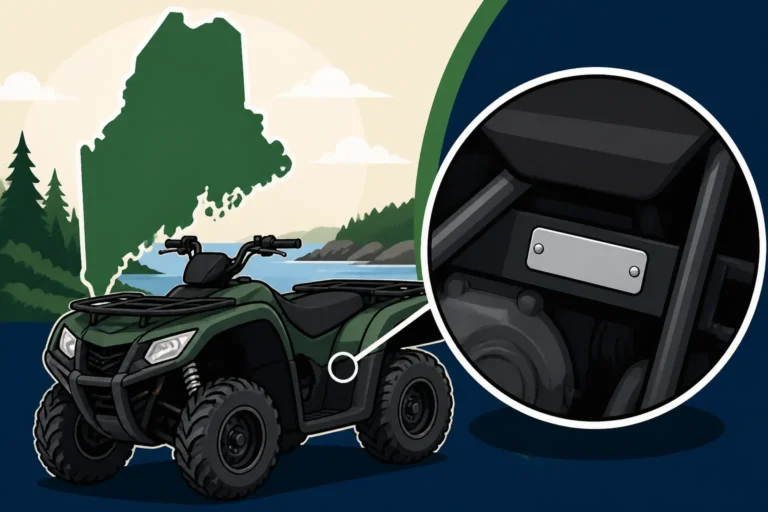
You'll also need to ensure that the VIN (Vehicle Identification Number) for each machine is clearly legible. The VIN is like the machine's social security number, unique to that specific ATV or UTV. If a VIN is damaged or unreadable, it can cause significant delays. Take the time to clean any grime or mud off the VIN plate before you head to register.
Registering at the Maine Department of Inland Fisheries and Wildlife (IF&W)
Unlike personal ATV registrations which can often be handled at your local town office, commercial registrations, especially for fleets, are typically processed directly through the Maine Department of Inland Fisheries and Wildlife (IF&W). While some town offices might handle individual commercial registrations, for a fleet, it's usually more efficient to go straight to IF&W or use their online system if available for commercial renewals. [Maine IF&W Online Registration Walkthrough] can give you a general idea of the online process, but always confirm if commercial fleet registrations have specific online portals or requirements.
When you register, you'll be filling out a specific commercial ATV/UTV registration form. This form will ask for your business name, your Maine Guide License number (if applicable), and detailed information about each machine. You'll need to indicate that the machine is for "commercial use" or "guide service use" as this often triggers a different fee structure and decal. The fees for commercial registrations are generally higher than for recreational ones, reflecting the business use and contribution to the trail system. You can find out more about [Maine Resident ATV Registration Fee] and how it might differ for commercial use.
Prepare to bring all your proof of ownership documents, your business registration paperwork, and your guide license information. It's often helpful to call IF&W ahead of time to confirm exactly what documents they require for a multi-machine commercial fleet registration, just to save yourself a trip.
Essential Documentation and Ongoing Compliance for Commercial Registrations
Getting your fleet registered is a huge step, but it's not a "one and done" deal. Maintaining proper documentation and understanding your ongoing compliance responsibilities are just as crucial for a successful and legal guide service. This means keeping meticulous records and being prepared for questions if a Maine Game Warden ever stops you on the trail.
Required Documentation to Carry While Guiding
When you're out on the trails with your clients, whether you're leading the charge or following behind, you need to have specific documentation readily accessible for each machine. This isn't just good practice; it's the law. For every ATV or UTV being used commercially, you must carry:
- The machine's current commercial registration certificate: This proves the machine is legally registered for commercial use.
- Proof of ownership: While you might not need the original bill of sale, a copy is advisable, especially for new machines in their first year of registration.
- Proof of commercial insurance: This is absolutely vital. A copy of your commercial liability insurance policy, or an insurance card specifically for the ATV/UTV, should be on hand.
A common question is where to keep these papers. While some folks stash them in a waterproof bag under the seat, or in a glove box, the key is accessibility. You can find more practical tips on [Storing Registration Paperwork on the Machine]. Imagine a warden stop – fumbling around for ten minutes can give the wrong impression, even if everything is perfectly legal. Keep it organized and readily available.
Commercial Registration Renewals and Fees
Just like your personal vehicle, commercial ATV and UTV registrations need to be renewed annually. Maine's ATV registration year typically starts on July 1st and runs through June 30th of the following year. It's wise to set up a system to track renewal dates for your entire fleet. Many guide services find it helpful to create a spreadsheet or use a reminder system so they don't miss a single renewal.
The renewal process for commercial machines often mirrors the initial registration, though it can sometimes be streamlined online if your business information hasn't changed. Be prepared for commercial registration fees, which, as mentioned, are usually higher than recreational fees. These fees are an operating cost for your business, so factor them into your budget. For more details on business-specific registration, check out [Registering an ATV Under a Business Name] and [Maine ATV Registration for Clubs and Businesses].
Neglecting renewals can lead to serious consequences. Riding an unregistered ATV, especially for commercial purposes, can result in significant [Penalties for Riding an Unregistered ATV in Maine]. This could include fines for each machine, potential seizure of vehicles, and even a temporary suspension of your guiding license, which would obviously cripple your business.
Utilizing Online Resources for Forms and Compliance
The good news is that many of the forms and templates you need for commercial operations are available online. Beyond IF&W, sites like LawDepot can be invaluable resources. For instance, if you're frequently buying and selling used machines to update your fleet, or need to draft clear agreements with clients, LawDepot offers customizable legal documents such as bills of sale or liability waivers. These professionally drafted forms can help ensure all the necessary legal language is included, protecting your business from common pitfalls.
For your internal record-keeping, consider digitizing your documents. Scan all bills of sale, registration certificates, and insurance policies, then store them securely in the cloud. This provides a backup in case physical copies are lost or damaged and makes it easier to access them from anywhere. However, remember to always have physical copies or easily accessible digital copies (e.g., on a phone or tablet) on hand when operating your machines on the trails.
Best Practices for Managing and Maintaining Your Registered Fleet
Once your guide service fleet is properly registered and all your paperwork is in order, the next challenge is ongoing management and maintenance. This isn't just about keeping your machines running smoothly; it's about operating your business efficiently, legally, and safely year after year.
Implementing a Robust Maintenance Schedule
For a guide service, your ATVs and UTVs are your most critical assets. Downtime due to mechanical issues not only costs you money in repairs but can also lead to cancelled tours and disgruntled clients. Therefore, a proactive and robust maintenance schedule is non-negotiable. This goes beyond simple oil changes. Think about:
- Regular inspections: Before and after every tour, conduct a thorough visual inspection. Check tire pressure, fluid levels, brakes, lights, and any signs of damage.
- Scheduled servicing: Follow manufacturer recommendations for mileage or hour-based servicing. This includes oil changes, filter replacements, spark plug checks, and suspension lubrication.
- Wear item replacement: Keep an eye on wear items like brake pads, tires, belts (for UTVs), and bushings. Replace them before they fail catastrophically.
- Repair logs: Maintain a detailed log for each machine, noting all services performed, parts replaced, and any issues encountered. This helps track history, identify recurring problems, and proves due diligence in maintenance if ever needed for an insurance claim.
By staying on top of maintenance, you minimize surprises on the trail, enhance client safety, and extend the lifespan of your valuable fleet. A well-maintained fleet also reflects positively on your professionalism as a guide service.
Leveraging Technology for Fleet Management
In today's world, there are numerous technological solutions that can streamline fleet management for a guide service. While you might not need a full-blown commercial trucking fleet software, even simpler digital tools can make a huge difference:
- Digital checklists: Use tablet or smartphone apps for pre- and post-ride inspections. This ensures consistency and provides a digital record.
- Maintenance tracking software: Simple spreadsheet programs or specialized apps can help you track service intervals, repair costs, and parts inventory for each machine.
- GPS tracking: For your more expensive UTVs, GPS tracking can offer security against theft and help you monitor machine usage, especially if you have multiple guides operating simultaneously. This also provides peace of mind when clients are out on their own during a rental period.
- Document management: As mentioned earlier, keeping digital copies of all registrations, bills of sale, and insurance policies in a cloud storage system makes them accessible and provides redundancy. For creating new forms or updating existing ones for your business, services like LawDepot can again be a helpful resource, providing templates for things like equipment rental agreements or incident reports.
Ensuring Safety and Client Preparedness
Your responsibility as a guide extends far beyond just having registered machines. Client safety is paramount. This means making sure not only your ATVs and UTVs are in top condition but also that your clients are properly prepared and equipped.
- Safety briefings: Conduct a thorough safety briefing before every tour. Cover operating procedures, trail etiquette, hand signals, and what to do in an emergency.
- Proper gear: Ensure clients have appropriate helmets (mandatory for riders under 18 in Maine, but highly recommended for all), eye protection, and suitable clothing. You might want to stock extra helmets and goggles for clients who don't have their own.
- Client waivers: Always have clients sign a liability waiver before they get on a machine. This is where a service like LawDepot can be incredibly useful, providing clear, legally sound waiver templates tailored to recreational activities. This document clarifies the inherent risks and protects your business in case of an incident.
- Emergency preparedness: Your guides should be certified in first aid and CPR. Carry a comprehensive first-aid kit, a satellite messenger (for areas without cell service), and tools for minor trailside repairs. Always have a clear emergency action plan.
By focusing on these best practices, you'll not only maintain your legal compliance but also build a reputation as a safe, reliable, and professional guide service, ensuring clients return year after year for more Maine ATV adventures.
Disclaimer
This article is for general informational purposes only and does not constitute professional advice. Laws, prices and regulations vary by location and change over time. Consult a qualified professional for guidance on your specific situation.