Maine ATV Liability Coverage Limits
Navigating the world of ATV and UTV insurance in Maine can feel like trying to find your way through a dense patch of woods without a map. Many riders mistakenly believe that because Maine doesn't always require ATV insurance for recreational use, it's something they can skip. However, understanding Maine's specific liability coverage limits and why they're critical for protecting yourself and your assets is absolutely essential. This guide will help you unpack those often-confusing numbers and provide clarity on what you truly need to ride with peace of mind.
Understanding Maine's Approach to ATV Insurance
It's easy to get caught up in the excitement of hitting the trails, especially with all the incredible riding opportunities Maine offers. But ignoring the potential financial fallout of an accident is a mistake that could cost you everything. While it's true that the state of Maine doesn't mandate liability insurance for every single ATV or UTV operating on its trails, the implications of not having it can be devastating.
Why Liability Matters So Much in Maine
Imagine this scenario: you're enjoying a beautiful day on the trails, maybe out exploring near the [Moosehead Lake Region by ATV], when an unforeseen incident occurs. Perhaps you swerve to avoid a deer, lose control, and collide with another rider or damage their property. Without adequate liability coverage, you could be personally responsible for the medical bills, lost wages, and property damage of anyone involved. Given Maine is an "at-fault" state, the person deemed responsible for the accident is on the hook financially. This isn't just about covering minor bumps and bruises; we're talking about potentially life-altering injuries and massive repair costs. The financial burden could include legal fees, medical expenses that run into hundreds of thousands of dollars, and compensation for pain and suffering. This isn't just theoretical; it's a very real risk that every rider faces, making proper coverage less of an option and more of a necessity for sound financial planning.
Think about the sheer peace of mind that comes with knowing you're protected. Riding through the vast [Aroostook County's 1,300-Mile Trail Network] is a joy, but that joy shouldn't come with the anxiety of potential financial ruin. While Maine generally doesn't require insurance for recreational trail riding, asking " [Does Maine Require ATV Insurance to Ride?] " is the first step, and the answer, for most recreational riders, is "no, not strictly." However, that doesn't mean you're immune to the consequences of an accident. The state's general stance on mandatory insurance doesn't shield you from legal action or the hefty price tag associated with unforeseen incidents.
When Maine Law Does Require ATV Insurance
Even though many recreational riders aren't legally required to carry insurance, there are very specific circumstances where Maine law mandates it. If you're using your ATV or UTV for commercial purposes – perhaps as part of a guide service, for logging, or any other business operation – you absolutely must have insurance. The liability associated with commercial use is significantly higher, and the law reflects that. Lenders are another common trigger; if you've financed your ATV through a bank or credit union, they will almost certainly require you to carry full coverage, including liability, to protect their investment.
Another scenario involves riding on specific leased or private properties where the landowner or lease agreement explicitly states that insurance is required. While less common than commercial use or financing, it's crucial to check any agreements before you ride. If you're involved in an [ATV Crash Injury Claims] or [Who Pays After an ATV Road Collision] while in violation of these terms, you could face not only civil penalties but also additional legal troubles. These exceptions transform liability coverage from a smart choice into a non-negotiable legal requirement, emphasizing that even in a state with relatively relaxed ATV insurance laws, there are situations where you're simply not allowed to operate without it.
Common Liability Coverage Limits and What They Mean
When you look at an insurance policy, you'll often see numbers like "25/50/25" or similar variations. These aren't just random figures; they represent the core of your liability protection. Understanding what each part means is crucial to ensuring you have adequate coverage.
The "Split Limit" System for Bodily Injury
The most common way liability coverage is structured is through a "split limit" system. Let's use a hypothetical example: if you see limits listed as $25,000/$50,000/$25,000, here's how it typically breaks down (please remember these are examples and not specific, current figures from any provider):
- First number (e.g., $25,000): This is the maximum amount your insurance company will pay for bodily injury liability per person in a single accident. So, if one person is injured, this is the most your policy will cover for their medical bills, lost wages, and other related costs, no matter how high their actual damages are.
- Second number (e.g., $50,000): This is the maximum amount your insurance company will pay for total bodily injury liability for all people injured in a single accident. So, if two or more people are injured, the policy won't pay more than this combined total, even if each individual's damages exceed the per-person limit.
- Third number (e.g., $25,000): This is the maximum amount your insurance company will pay for property damage liability for all damage caused in a single accident. This covers damage to another person's ATV, vehicle, fence, building, or any other physical property.
Consider an accident where you injure two people, and their combined medical bills, lost wages, and other damages total $70,000. With a $25,000/$50,000 policy, your insurance would pay up to $50,000, leaving you personally responsible for the remaining $20,000. This example clearly shows why opting for higher limits can save you from a substantial out-of-pocket expense. Even if you're riding a machine that meets [Youth Machine Size Limits for Maine Riders], the potential for significant bodily injury claims is still very real, regardless of the machine's size.
Property Damage Liability: Protecting Your Wallet
While bodily injury often gets the most attention, property damage liability is equally important. Think about the value of modern ATVs and UTVs. A collision with another machine can easily result in thousands of dollars in repairs or even a total loss. Beyond other vehicles, you could inadvertently damage someone's fence, a barn, or even trail infrastructure. That third number in the split limit – the property damage limit – is what protects you from these costs.
Let's say you misjudge a turn on a trail and veer off, smashing into a newly installed trail sign and a small shed on private land. The sign alone could be hundreds to replace, and the shed might require thousands. If your property damage limit is only $25,000, and the total damage comes to $35,000, you're responsible for that $10,000 difference. It's not hard to imagine how quickly property damage costs can add up, especially if you impact something valuable or require extensive clean-up and repair. Always consider the potential value of what you might accidentally damage when choosing your property damage limits. While [Maine ATV Insurance Cost] can seem like an extra expense, the protection it offers against such incidents is invaluable.
Factors Influencing Your ATV Liability Coverage Needs
Deciding on the "right" amount of liability coverage isn't a one-size-fits-all answer. It depends heavily on your individual circumstances, riding habits, and financial situation. What works for one rider might leave another dangerously exposed.
Your Riding Habits and Exposure to Risk
How often you ride, where you ride, and how you ride all play a significant role in your risk exposure. Are you someone who takes their ATV out every weekend, logging hundreds of miles on busy club trails, or do you only use it a few times a year on your private woodlot? The more time you spend on trails, especially those open to the public and shared with other riders, the higher your chances of being involved in an incident. Riding in popular areas like [Jackman to Pittston Farm by ATV] or any of the hundreds of miles in [Aroostook County's 1,300-Mile Trail Network] means more interactions with other riders, hikers, or even wildlife, increasing your overall risk profile.
Consider also the type of riding you do. Are you a leisurely rider who sticks to groomed paths, or do you enjoy pushing your machine's limits on challenging terrain? Aggressive riding, even if you're highly skilled, inherently increases the potential for accidents. Furthermore, if you often ride with a group, the chances of being involved in a multi-vehicle incident also rise. Thinking realistically about your personal riding style and frequency will help you gauge how much potential exposure you have to situations that could lead to a liability claim.
Asset Protection and Peace of Mind
Ultimately, the primary purpose of liability insurance is to protect your financial assets. If you own a home, have significant savings, investments, or even a solid income stream, you have more to lose in a lawsuit. A judge can award damages that far exceed minimum insurance limits, and if your policy doesn't cover the full amount, your personal assets could be seized to satisfy the judgment. This is where the true value of higher liability limits comes into play.
Many financial advisors recommend purchasing enough liability coverage to protect your net worth. For those with substantial assets, an umbrella insurance policy, which provides additional liability coverage beyond your standard ATV, auto, and homeowners policies, is often a wise investment. Don't underestimate the long-term impact of a significant judgment; it could affect your credit, future earnings, and overall financial stability for years to come. Investing in robust coverage, even if it feels like a higher premium, is a proactive step towards safeguarding your future and ensuring true peace of mind on the trails. It's about preventing a single accident from derailing your entire financial life.
Understanding Deductibles and Premiums
When you're comparing insurance options, you'll encounter the terms "deductible" and "premium." While they don't directly relate to liability limits, they impact the overall cost and your out-of-pocket expenses if you have a claim. The premium is the regular amount you pay for your insurance policy – whether it's monthly, quarterly, or annually. The deductible, on the other hand, is the amount you agree to pay out of pocket before your insurance coverage kicks in for certain types of claims, like damage to your own machine (comprehensive or collision coverage).
Generally, there's an inverse relationship between your deductible and your premium. Choosing a higher deductible typically results in a lower premium, because you're agreeing to take on more of the financial risk yourself in the event of a claim. Conversely, a lower deductible means you'll pay less out of pocket if something happens, but your regular premiums will likely be higher. It's a balance you need to strike based on your financial comfort level and how much risk you're willing to absorb. Remember that liability coverage itself typically doesn't have a deductible that you pay for damages to others; the deductible usually applies to claims for damage to your ATV. When considering your overall [Maine ATV Insurance Cost], evaluating this balance is important.
Steps to Securing the Right ATV Insurance in Maine
Finding the right insurance can feel like a chore, but it's a vital step in protecting your investment and your financial future. Taking a systematic approach will help you ensure you're adequately covered.
Gathering Your ATV Information and Riding Profile
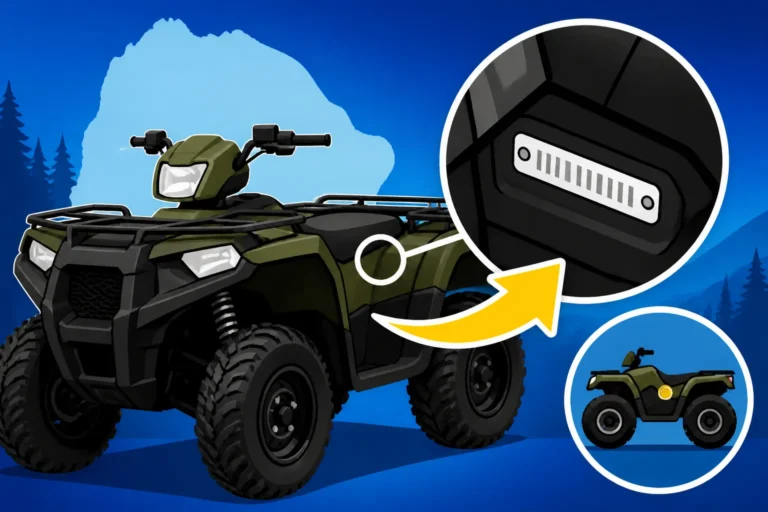
Before you even start contacting insurance providers, have all your pertinent information ready. This includes the Vehicle Identification Number (VIN) for your ATV or UTV, which is crucial for identification. If you're wondering [Where the VIN Is Stamped on a Quad], it's typically found on the frame, often near the steering column or on the left-hand side. You'll also need the make, model, year, and engine size of your machine. Be prepared to accurately describe how you use your ATV: is it strictly for recreational trail riding, or do you use it for farm work, commercial purposes, or perhaps a combination?
Insurers will also ask about your riding history, any past claims, and even your driving record, as these can influence your premium. Be honest and thorough; providing accurate information from the start helps ensure you get a quote that truly reflects your situation and that your policy will be valid if you ever need to file a claim. If you've recently purchased your ATV, make sure you have your [Maine ATV Bill of Sale: What to Include] or other proof of ownership handy, as this may also be requested.
Shopping Around and Comparing Policies
Just like you wouldn't buy the first ATV you see without comparing options, you shouldn't settle for the first insurance quote you get. It's highly recommended to shop around and get quotes from several different insurance companies. Not all insurers offer the same rates or even the same coverage options for ATVs, so comparing helps you find the best value. Look beyond just the premium; scrutinize the liability limits offered, any additional coverages (like comprehensive or collision for your own machine), and exclusions.
Ask plenty of questions: What exactly is covered? Are there any specific exclusions for certain types of riding or modifications? What is the claims process like? What discounts are available? Many insurers offer discounts if you bundle your ATV policy with your existing auto or homeowners insurance, so be sure to inquire about [Does Homeowners Insurance Cover an ATV in Maine?] or other bundling options. Understanding these details upfront can prevent unpleasant surprises down the road, especially if you ever need to file an [Maine ATV Accident Reporting Rules].
Regularly Reviewing and Updating Your Coverage
Life is constantly changing, and your insurance coverage should evolve with it. Don't just set it and forget it. It's a good practice to review your ATV insurance policy at least once a year, or whenever you experience a significant life event. Did you buy a newer, more powerful ATV? Did a new, younger rider in the family start using the machine? Have your financial assets grown, meaning you need higher liability limits to protect them?
Perhaps you've moved to a new area with different riding opportunities, or you've decided to participate in organized events that might have specific insurance requirements. Any changes in how you use your ATV, who uses it, or what you have to protect financially should prompt a review of your policy. Keeping your insurance up-to-date ensures that you're always adequately protected. If you're involved in any transactions like buying or selling an ATV, using resources like LawDepot can assist in drafting important documents like a [Maine ATV Bill of Sale: What to Include] to ensure clarity of ownership, which is a foundational element for accurate insurance policies. LawDepot can provide template documents that clearly outline these sales, ensuring that when ownership changes, the insurable interest is also clearly defined for new policyholders.
| Liability Coverage Level | Per-Person Bodily Injury Limit | Per-Accident Bodily Injury Limit | Per-Accident Property Damage Limit | Potential Risk Exposure |
|---|---|---|---|---|
| Minimum | Low (e.g., ~$25,000) | Moderate (e.g., ~$50,000) | Low (e.g., ~$25,000) | High personal financial risk for severe injuries or significant property damage; often insufficient for real-world accident costs. |
| Standard | Medium (e.g., ~$50,000) | High (e.g., ~$100,000) | Medium (e.g., ~$50,000) | Reduced, but still potential for out-of-pocket costs if multiple serious injuries or extensive property damage occurs. A good starting point for many. |
| Enhanced | High (e.g., ~$100,000) | Very High (e.g., ~$300,000) | High (e.g., ~$100,000) | Significant protection for most scenarios, greatly reducing personal financial risk. Recommended for those with moderate assets or frequent riding. |
| Comprehensive | Very High (e.g., ~$250,000+) | Extremely High (e.g., ~$500,000+) | Very High (e.g., ~$250,000+) | Optimal protection, often coupled with an umbrella policy, to safeguard substantial assets. Offers maximum peace of mind. |
Disclaimer
This article is for general informational purposes only and does not constitute professional advice. Laws, prices and regulations vary by location and change over time. Consult a qualified professional for guidance on your specific situation.