Do You Carry Registration Papers While Riding?
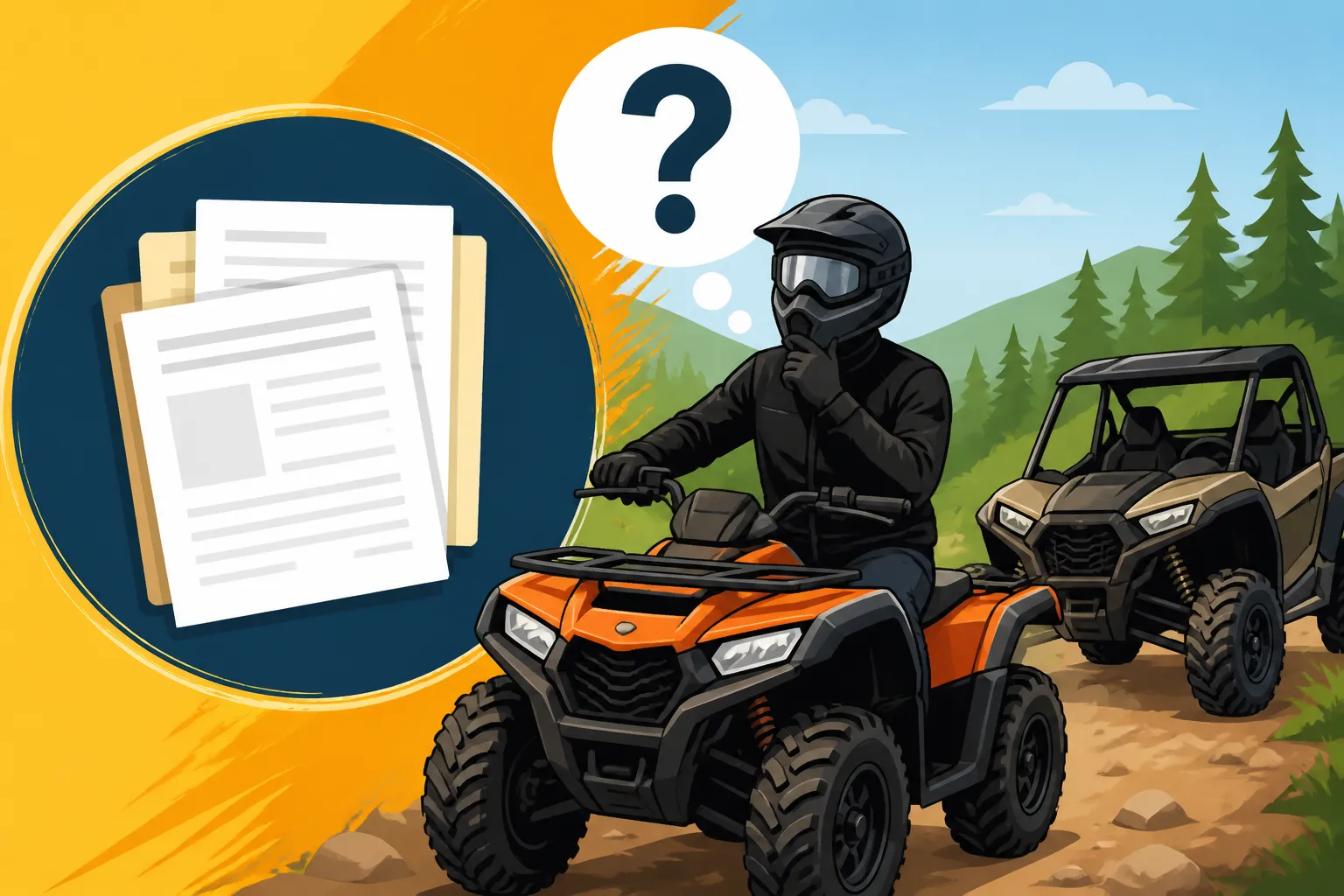
There's nothing quite like the freedom of exploring Maine's vast network of ATV trails, but before you hit the throttle, there's a crucial question many riders grapple with: do you need to carry your ATV's registration papers with you while you're out on the trails? This guide will dive deep into Maine's requirements, practical advice for keeping your documents safe, and what other essential paperwork you might want to have on hand for a smooth and lawful ride.
The Maine Law on Carrying ATV Registration
Understanding the specific legal requirements in Maine is your first step to a worry-free ride. The state's laws are designed to ensure responsible use of its extensive trail system and to make sure that wardens can easily verify that all machines are properly registered. It's not just about having a sticker; it's about having the proof to back it up.
What the Statute Actually Says
Maine law is pretty clear on this point: when you're operating an ATV or UTV, you must have the certificate of registration for that machine in your possession. This isn't just a suggestion; it's a legal obligation. The purpose behind this rule is straightforward—it allows any law enforcement officer, particularly a Maine Warden, to immediately verify that your machine is legally registered for operation on public land and trails. If a warden stops you, one of the first things they'll ask for, right after your safety certificate if you're a youth, is your registration. They need to see that the machine is current, that it matches the sticker on your ATV, and that you are authorized to operate it. This helps prevent unregistered machines from tearing up trails and ensures that those riding are contributing to the trail fund that maintains the network.
While the law typically refers to the "certificate of registration," which implies a physical document, enforcement can sometimes vary. However, it’s always safest to have a physical copy. Relying solely on a digital photo on your phone can be risky. What if your phone battery dies? What if you're in an area with no signal and the screen isn't visible in bright sunlight? These aren't excuses that will generally fly with a warden who needs to confirm your compliance quickly and efficiently. Having a tangible document removes all doubt and potential delays.
Immediate Proof of Registration vs. Sticker Arrival
One common point of confusion for riders, especially those who've just registered their ATV, is the period between registering and receiving the physical sticker and registration card in the mail. Maine understands that you want to get out on the trails right away. That's why, when you register your ATV, particularly if you do it online through the Maine IF&W system or at your local town office, you'll receive a temporary confirmation page. This page serves as your immediate proof of registration. [Printing a Registration Confirmation Page]
The critical thing to remember is that this confirmation page is legally sufficient for you to ride. It states that your registration is valid, even if the physical sticker hasn't arrived yet. Think of it as a temporary license plate for your ATV. You're encouraged to print this page out and carry it with you in a waterproof container, or at the very least, have a clear, easily accessible digital copy on your phone. However, don't forget that the physical sticker is what permanently identifies your machine as registered, and you'll need to affix it properly once it arrives. [Where Maine ATV Stickers Go and When They Arrive] Until that time, that confirmation page is your golden ticket. For more details on this, check out [Riding Before Your Stickers Arrive].
Penalties for Not Carrying Your Papers
Being stopped by a Maine Warden without your physical registration papers can lead to an uncomfortable situation, even if your ATV is, in fact, registered. The exact penalties can vary, but generally, not having your registration certificate in your possession can result in a citation. This is different from operating an entirely unregistered ATV, which carries a much heftier penalty, as detailed in [Fine for an Unregistered ATV in Maine].
If you are stopped and you don't have the papers on you, a warden might be able to look up your registration information via their patrol vehicle's computer system or through dispatch, provided they have your VIN and personal details. However, this takes time and can delay you significantly. It's also at the warden's discretion whether to issue a warning or a fine. They might be more lenient if they can quickly verify your registration, but they are absolutely within their rights to issue a summons for non-compliance with the "in possession" rule. It's a hassle you definitely want to avoid. The best practice is simply to have the papers securely stowed on your person or your machine.
Practical Strategies for Storing Your ATV Documents
So, you know you need to carry your registration papers. Now, how do you do it in a way that keeps them safe, dry, and accessible on the rugged Maine trails? There are several effective strategies, ranging from dedicated on-machine storage to leveraging technology.
Physical Storage Solutions on Your Machine
One of the most straightforward ways to carry your registration and other essential documents is to keep them directly on your ATV or UTV. The key here is protection from the elements and security. Water, mud, and jostling are constant threats on the trail.
For ATVs, small, waterproof hard cases or dry bags designed for outdoor use are excellent choices. These can often be strapped to a rack, tucked into a storage compartment if your machine has one, or even placed in a sturdy tank bag. Look for cases that are genuinely waterproof, not just water-resistant, and ensure they are securely fastened to prevent them from bouncing off on rough terrain. Saddlebags, if your ATV is equipped, can also work, but always place your documents inside an additional waterproof pouch within the saddlebag to guard against leaks.
UTVs often offer more built-in storage, such as glove compartments or under-seat bins. While these provide a degree of protection, they are rarely fully waterproof. Again, a waterproof pouch or small dry box within these compartments is a must. The goal is to keep your paper documents crisp and legible, not a soggy, illegible mess. Consider where you place them so they are easy to retrieve quickly if a warden stops you, but not so obvious that they could be easily stolen if you step away from your machine.
Digital Alternatives and How to Use Them
In this digital age, many riders wonder if a picture of their registration on their smartphone is enough. While Maine law typically implies a physical document, a clear digital copy on your phone can serve as a backup and might be accepted in some situations. However, it's crucial to understand the limitations.
If you opt to carry a digital copy, ensure it's easily accessible even without cell service. Take a high-resolution photo or scan of your registration card and save it directly to your phone's photo gallery or a secure cloud service that allows offline access. Consider using an app designed for document storage. Crucially, your phone needs to be charged, and your screen needs to be visible in bright sunlight or at night. A dead battery or a cracked screen makes a digital copy useless. Furthermore, investing in a waterproof and shockproof phone case is non-negotiable for trail riding, as phones are susceptible to damage from drops, dust, and water.
The general recommendation is to treat a digital copy as a convenient secondary option, not a primary one. Always aim to have a physical copy as your main form of documentation, even if it's just a laminated photocopy, because wardens are equipped to deal with physical documents, and a digital image might require them to go out of their way to verify.
Making Your Own Waterproof Pouch or Kit
You don't need fancy gear to protect your documents. A simple, effective waterproof solution can be made at home. Start with a sturdy, heavy-duty Ziploc bag or a dedicated small dry bag designed for kayaking or camping. Place your registration card, confirmation page, and any other vital documents inside. For extra protection, you can laminate a photocopy of your registration card (never the original!). This makes it completely impervious to water and much more durable against tearing or creasing.
Consider creating a small "document kit." This kit could include:
- Your current ATV registration card (or a laminated photocopy)
- A photocopy of your bill of sale or other proof of ownership
- Your ATV safety certificate (if required for your age)
- Emergency contact information
- A small, durable pen and a piece of waterproof paper
This kit should be compact enough to fit into a small, secure place on your machine or even a pocket in your riding jacket. Think about using a brightly colored dry bag so it's easy to spot. For creating a comprehensive bill of sale, especially if you've bought your ATV privately, resources like LawDepot offer customizable templates that ensure you have all the necessary legal language. You can then print and protect this crucial document within your kit.
Beyond Registration: Other Important Documents to Carry
While your registration is paramount, there are other documents that, while not always legally required to be "in possession," are incredibly useful to have on hand. These can save you headaches, confirm compliance, and even help in an emergency.
Proof of Ownership and Insurance
Imagine you've just bought a shiny new (to you) ATV. You're riding it for the first time, and a warden stops you. They see your new registration sticker, but if there's any doubt about recent ownership or if the machine looks significantly different from its registered state, they might ask for proof of ownership. Having a copy of your bill of sale is crucial in these situations. It proves the machine is yours and can clear up any questions about where it came from. [Maine ATV Bill of Sale: What to Include] is a great resource for what needs to be on that document. Tools like LawDepot can help you generate a professional and legally sound bill of sale.
Similarly, while Maine does not explicitly require ATV liability insurance to operate on its trails, having proof of insurance can be incredibly beneficial. [Maine ATV Insurance and When You Need It] details the situations where insurance might be necessary or highly recommended. If you're involved in an accident, especially one involving another party or property damage, having your insurance card readily available can expedite the exchange of information and clarify coverage. While not a "must-carry" by law, it's a "highly recommended carry" for your own peace of mind and protection.
Safety Course Certificates for Youth Riders
This is a non-negotiable for young riders. In Maine, anyone between the ages of 10 and 16 operating an ATV must possess a valid ATV safety course certificate. [Maine ATV Safety Course Requirements] is an excellent resource for parents. This isn't something that can be left at home. If a youth rider is stopped without this certificate, they can face penalties, and their ride might be cut short.
For parents or guardians supervising youth riders, it's a good practice to carry copies of all your children's safety certificates with your own documents. This ensures that even if a child somehow misplaces theirs or their storage solution fails, you have a backup readily available. Again, a laminated copy in your waterproof kit is the ideal solution. It’s an essential piece of paper that confirms a young rider has been educated on safe and responsible ATV operation.
Landowner Permission and Trail Maps
While not legal documents in the same vein as registration, having written landowner permission and current trail maps are invaluable. Much of Maine's extensive trail system crosses private land, maintained through the generosity of landowners. It's always best practice to have documented permission if you're riding on private land that isn't part of the established, signed trail network. [Getting Written Permission to Ride Private Land] can guide you through this process. If you need a formal agreement, LawDepot can provide customizable templates for landowner permission forms.
For general trail riding, especially in remote areas where cell service is non-existent, a physical, up-to-date trail map is a lifesaver. GPS apps are great, but batteries die, and signals drop. A paper map doesn't need power and can always guide you back to civilization. Many local ATV clubs offer detailed maps of their trail systems, often showing amenities like gas stations, restaurants, and lodging. Having this information on hand not only enhances your ride but also demonstrates responsible trail use.
Best Practices for ATV Documentation and Warden Stops
Being prepared isn't just about having the right documents; it's also about knowing how to present them and handle interactions with law enforcement. A little preparation and politeness go a long way.
What to Do When Stopped by a Warden
A stop by a Maine Warden Service officer might feel a bit intimidating, but remembering a few key points can make the experience smooth and respectful. First and foremost, if a warden signals you to stop, do so immediately and safely. Turn off your engine and keep your hands visible. Be polite and cooperative.
When asked for your registration, calmly retrieve your waterproof document kit. Present your registration card clearly. The warden will typically check the date, the machine's VIN, and ensure it matches the sticker on your ATV. They may also ask for your driver's license or other identification. Answer all questions truthfully and respectfully. Do not argue or become defensive. If you don't have a document they ask for, simply explain why. [Maine Warden Stops and ATV Paperwork] offers more insight into what to expect during such an interaction. Your cooperation can significantly influence the outcome of the stop.
Keeping Originals Safe at Home
This is a golden rule for any important document: never carry your original title certificate or any irreplaceable papers on the trail. The risk of loss, damage, or theft is simply too high. Your title proves absolute ownership and is essential for selling or formally transferring your ATV. Losing it on the trail would be a major headache to replace.
Instead, always carry high-quality photocopies or laminated copies of your registration, bill of sale, and safety certificates. Keep your original title, a master copy of your registration, and any other vital documents securely stored at home in a fireproof safe or safety deposit box. It's also a good idea to create digital scans of these originals and store them securely in the cloud, separate from your phone, as an additional backup. This way, if anything happens to your on-trail copies, or even the originals at home, you have another layer of protection.
Regular Document Checks and Updates
Before each riding season, or certainly before any major multi-day trip, make it a habit to check all your ATV-related documents. This simple routine can prevent a lot of potential problems.
Confirm that your ATV registration is current and has not expired. [When a Maine ATV Registration Expires] is important to know. Maine ATV registrations generally run from July 1st to June 30th of the following year, regardless of when you initially registered. So, even if you registered in January, it will still expire on June 30th. Make sure your physical sticker is still securely attached to your machine and isn't peeling or faded. If your registration is lost or damaged, make sure to replace it promptly. [Replacing a Lost ATV Registration] walks you through that process. If you've moved, ensure your address on file is updated.
Beyond registration, check that any safety certificates for youth riders are still valid for their age group and that your proof of insurance (if you carry it) is current. This quick check takes only a few minutes but provides immense peace of mind, knowing that you're fully compliant and prepared for whatever the Maine trails throw your way.
Here's a quick comparison of physical vs. digital document storage:
| Feature | Physical Documents | Digital Documents (on phone) |
|---|---|---|
| Legality | Generally preferred/implied by Maine law | May be accepted, but often at warden's discretion |
| Durability | Susceptible to water/tear without protection | Dependent on phone durability and waterproofing |
| Accessibility | Immediate if in a designated spot | Immediate if phone is charged/working |
| Security | Can be lost/stolen, but originals are safe at home | Phone can be lost/stolen, data can be compromised |
| Reliability | Always works (no battery dependency) | Dependent on battery life, signal, screen functionality |
| Best Practice | Essential for primary proof | Excellent for backup/convenience |
Disclaimer
This article is for general informational purposes only and does not constitute professional advice. Laws, prices and regulations vary by location and change over time. Consult a qualified professional for guidance on your specific situation.