Reading an ATV VIN Model Year Code
Trying to figure out the true age of a used ATV can feel like you're trying to solve a puzzle with half the pieces missing. Many folks out there selling machines might not even know the exact year themselves, or worse, some might conveniently "forget" when it suits them. This guide is here to walk you through the straightforward process of deciphering your ATV's Vehicle Identification Number (VIN) specifically to pinpoint its model year, saving you from guesswork and potential headaches down the trail.
What an ATV VIN Is and Why It Matters
When you’re looking at an ATV, especially a used one, that seemingly random string of letters and numbers etched into the frame, that’s your Vehicle Identification Number, or VIN. Think of it as your ATV’s unique fingerprint – no two machines will have the exact same one. It’s a crucial piece of information that tells you a whole lot about the machine, from where it was made to, most importantly for this discussion, its specific model year. Ignoring this critical detail can lead to a host of frustrations, from buying the wrong parts to facing unexpected issues during registration.
The Importance of Knowing Your ATV's Age
Knowing the exact model year of your ATV goes far beyond simple curiosity; it's fundamental to responsible ownership and smart purchasing. First off, parts compatibility is huge. An exhaust system or a specific brake caliper from a 2015 model might not fit a 2016 model, even if they look similar on the surface. Ordering the wrong part is a waste of time and money, leaving your machine laid up when you'd rather be out riding the scenic trails around Moosehead Lake. Beyond that, the model year directly impacts the machine's resale value. A 2018 model will naturally command a different price than a 2008 model, and knowing the true year helps you avoid overpaying or underselling.
Furthermore, an ATV's age is often linked to potential mechanical issues or common wear points. Older machines might have known issues that were addressed in later model years through design changes or manufacturer recalls. If you're considering a used ATV, knowing its age allows you to research specific problems for that year, helping you make a more informed decision. It also plays a role in insurance costs and coverage, as older machines might have different valuation or risk profiles. When you're dealing with a private sale, especially, confirming the model year through the VIN is a non-negotiable step to ensure transparency and prevent any unfortunate surprises down the road.
Where to Find Your ATV's VIN
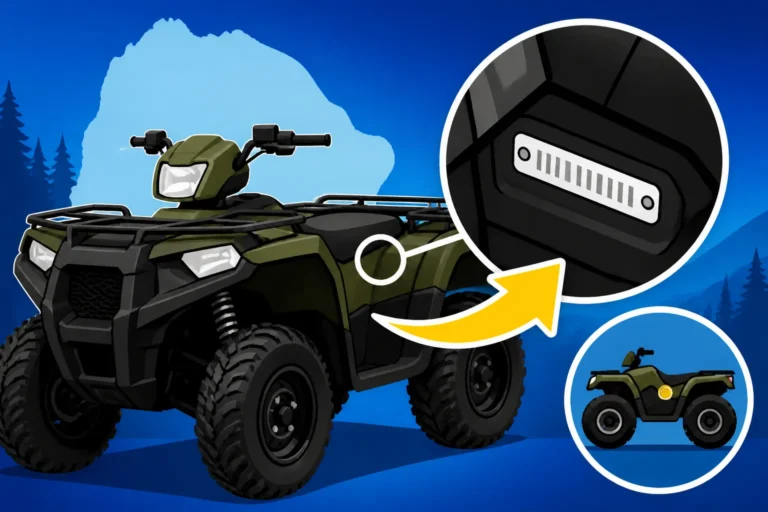
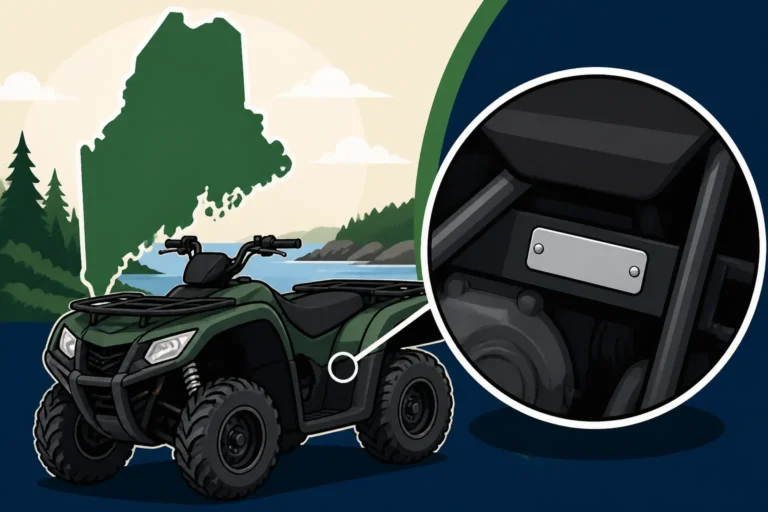
The good news is that manufacturers are required to stamp the VIN in specific, easily accessible locations on the ATV. The most common spot, and usually the easiest to find, is on the frame itself. Often, you’ll find it stamped on the left-hand side of the frame, near the front wheel well or beneath the handlebars. Sometimes it might be on a cross-member near the engine, or even on a manufacturer's compliance sticker that's typically affixed to the frame. For some models, especially older ones, it might be on the engine casing or other major components.
Before you start looking, it's a good idea to have a wire brush or some cleaner handy. Over years of trail dust, mud, and general Maine weather, the VIN can become obscured by grime or even light rust. Take your time to carefully clean the area. You might need a flashlight and even a magnifying glass to clearly read all 17 characters. Once you locate it, write it down accurately, double-checking each character. This number will be essential for everything from registering your machine to ordering parts. If you’re having trouble, checking the owner's manual for your specific make and model can often provide precise diagrams of where the VIN is located. Remember, this is the first crucial step in understanding your machine's identity, and you can get more specific details on common locations by looking at [Where the VIN Is Stamped on a Quad].
Decoding the VIN: Focusing on the Model Year
Now that you’ve found that all-important VIN, let's break down how to actually use it to determine your ATV's model year. The VIN isn’t just a random string; it’s a globally standardized code, meaning each character holds specific information. While the entire VIN can tell you where the ATV was manufactured, its engine type, and more, we’re going to zero in on the single character that reveals the model year. This is the part that will empower you with concrete facts, whether you’re buying, selling, or just trying to get the right part.
The Standard 17-Character VIN Structure
All modern ATVs manufactured for sale in North America use a 17-character VIN, a standard that has been in place since 1981. This standardized format ensures consistency across manufacturers, making it easier to track and identify vehicles. The 17 characters are divided into three main sections:
- World Manufacturer Identifier (WMI): The first three characters identify the country of origin and the manufacturer. For example, a "1" or "4" often indicates the U.S., while a "J" points to Japan, and a "Z" typically signifies Italy. The next two characters identify the specific manufacturer.
- Vehicle Descriptor Section (VDS): Characters four through nine describe the general attributes of the vehicle, such as the body type, engine type, platform, and model series. The specific codes used here vary greatly by manufacturer, but they provide a wealth of information about the machine’s design and capabilities.
- Vehicle Indicator Section (VIS): Characters 10 through 17 are the vehicle's unique identifier. This section includes the model year, the assembly plant, and a unique sequential production number. This is where your quest to find the model year really pays off.
While all 17 characters tell a comprehensive story, for our immediate purpose of determining the model year, we only need to focus on one specific position. Understanding this basic structure, however, helps you appreciate the depth of information contained within that seemingly simple number.
Pinpointing the Model Year Character
The key to unlocking your ATV's model year lies in the 10th character of the VIN. This character is universally reserved for the model year across all vehicles using the 17-character VIN standard. It uses an alphanumeric code that cycles through letters and numbers. It’s important to note that the letters I, O, and Q are never used in VINs to avoid confusion with the numbers 1 and 0.
Here's a breakdown of the typical codes for common ATV model years you're likely to encounter:
| 10th VIN Character | Model Year | 10th VIN Character | Model Year | 10th VIN Character | Model Year |
|---|---|---|---|---|---|
| A | 1980 | L | 1990 | Y | 2000 |
| B | 1981 | M | 1991 | 1 | 2001 |
| C | 1982 | N | 1992 | 2 | 2002 |
| D | 1983 | P | 1993 | 3 | 2003 |
| E | 1984 | R | 1994 | 4 | 2004 |
| F | 1985 | S | 1995 | 5 | 2005 |
| G | 1986 | T | 1996 | 6 | 2006 |
| H | 1987 | V | 1997 | 7 | 2007 |
| J | 1988 | W | 1998 | 8 | 2008 |
| K | 1989 | X | 1999 | 9 | 2009 |
| A | 2010 | L | 2020 | ||
| B | 2011 | M | 2021 | ||
| C | 2012 | N | 2022 | ||
| D | 2013 | P | 2023 | ||
| E | 2014 | R | 2024 | ||
| F | 2015 | ||||
| G | 2016 | ||||
| H | 2017 | ||||
| J | 2018 | ||||
| K | 2019 |
Simply find the 10th character in your ATV's VIN and match it to this table. For instance, if the 10th character is 'H', your ATV is a 2017 model. If it's '7', it's a 2007 model. This chart is your secret weapon for quickly and accurately determining the age of any ATV.
Verifying the Model Year with Other VIN Data
While the 10th character is your primary and most reliable indicator for the model year, sometimes, for older machines or specific manufacturers, you might want a secondary confirmation. The 8th character, which often denotes the engine type, can sometimes offer subtle clues, though it's rarely a direct year indicator. For example, if a specific engine configuration was only used for a certain period, it can reinforce your 10th-character finding. However, this level of detail usually requires manufacturer-specific VIN decoders, which aren't always readily available to the public.
Another way to verify, especially if you have any doubts, is to use online VIN lookup tools. Many of these services will pull up manufacturer data associated with the full VIN, providing not just the model year but also other specifications. While you typically won't need to do this for simply finding the year, it's a useful resource for cross-referencing all the vehicle details, including its reported model. Just remember, these tools rely on databases, and while generally accurate, directly reading the 10th character yourself from the machine's frame is the most fundamental and empowering step. Ultimately, for the average ATV owner, trusting that 10th character is perfectly sufficient for confirming the model year.
Practical Implications of Knowing Your ATV's Model Year
Now that you're a VIN decoding pro, let's talk about why this knowledge is so powerful and how it directly impacts your experience as an ATV owner, particularly here in Maine where trail riding is a way of life. Knowing the exact model year is about more than just a number; it's about protecting your investment, ensuring safety, and navigating the practicalities of ownership with confidence. From maintenance to legal requirements, this simple piece of information underpins many critical decisions you'll make regarding your off-road machine.
Parts, Maintenance, and Recalls
Imagine your throttle cable snaps when you're deep in the woods near the Katahdin region, miles from anywhere. When you call the dealer or search online for a replacement, the first question they'll ask is, "What year is it?" Get that wrong, and you'll likely end up with the incorrect part, extending your downtime and costing you extra in shipping or return fees. The model year dictates the exact specifications for nearly every component on your ATV, from engine filters and spark plugs to suspension components and body plastics. Proper routine maintenance, like oil changes and belt replacements, often follows schedules based on the machine's age and mileage, making an accurate model year crucial for keeping your ATV running smoothly and reliably.
Beyond routine upkeep, knowing your ATV’s model year allows you to quickly check for any manufacturer recalls. Recalls are often issued for specific model years or production ranges to address safety defects or performance issues. Websites like the Consumer Product Safety Commission (CPSC) database or manufacturer sites allow you to search by VIN or model year. Discovering a pending recall for your specific machine could mean free repairs or upgrades that improve safety and performance, ensuring your quad is safe for Maine's diverse terrain. This proactive approach to maintenance and safety can literally save you from breakdowns, accidents, and costly repairs down the line.
Resale Value and Purchase Decisions
When you're looking to buy a used ATV, knowing how to decode the VIN for the model year is your ultimate safeguard against misrepresentation. A seller might casually mention it's a "newer model" or guess at the year, but the VIN doesn't lie. This verifiable data allows you to accurately assess the machine's market value. Websites like Kelley Blue Book or NADAguides often provide value estimates based on make, model, and year, giving you a strong negotiating position. It’s disheartening to find out after the fact that you paid a premium for a machine that's two or three years older than you thought.
Conversely, if you're selling your ATV, accurately stating the model year can instill confidence in potential buyers. Transparency builds trust, and being able to show them the VIN and explain how to read it demonstrates honesty. When you're [Buying an ATV From a Private Seller in Maine], the model year, confirmed by the VIN, should always be included on the bill of sale. For this reason, many buyers and sellers in Maine turn to resources like LawDepot to draft a comprehensive bill of sale, ensuring all details, including the verified VIN and model year, are clearly documented. This helps protect both parties, making for a smoother transaction and providing clear [Proof of Ownership for a Maine ATV Registration]. This documentation becomes especially important when you’re dealing with [Maine ATV Registration After a Private Sale].
Registration, Insurance, and Legalities
In Maine, just like with cars, accurately identifying your ATV's model year via the VIN is a non-negotiable step for registration and insurance. When you go to [What It Takes to Register an ATV in Maine], the registration clerk will ask for the VIN and often the model year. Having this information correctly stated on your registration documents ensures that your machine is properly cataloged by the state. An incorrect model year on your paperwork could lead to issues down the road, making it harder to prove ownership or deal with law enforcement.
From an insurance perspective, the model year directly impacts your premium and coverage options. Insurance companies use this data to assess the risk associated with your ATV, considering its age, potential for theft, and cost of replacement parts. Having accurate information ensures you get the right coverage for your machine, whether it's basic liability or comprehensive protection to cover you while you're exploring the remote trails. For more on this, check out [Maine ATV Insurance and When You Need It].
Perhaps most critically, the VIN is a vital tool in preventing and recovering stolen ATVs. Law enforcement agencies use VINs to identify stolen property. If you're buying a used ATV, you absolutely want to verify the VIN against databases to make sure it hasn't been reported stolen. Knowing how to read the VIN and confirm the model year is a crucial step in ensuring you're not inadvertently purchasing a hot machine, which could lead to severe legal repercussions. Being able to cross-reference the VIN and model year can also help you determine [How to Check If a Used ATV Is Stolen] and ensure you're making a legitimate purchase.
Common Pitfalls and Troubleshooting VIN Issues
Even with the best intentions, you might run into some roadblocks when trying to read or verify an ATV's VIN. Things like rust, tampering, or even simple wear and tear can obscure this crucial identifier. It's important to be aware of these potential issues, as they can have significant implications for your ownership experience, especially when it comes to legalities and registration here in Maine. Knowing how to approach these problems can save you a lot of grief and ensure you don't inadvertently get involved in a problematic situation.
Unreadable or Missing VINs
One of the most frustrating situations is encountering an ATV where the VIN is simply unreadable or appears to be missing. This could be due to heavy corrosion, a thick layer of paint, or even deliberate grinding. If you can't clearly read all 17 characters, it's a major red flag, especially if you're considering purchasing the machine. A legitimate seller should be able to provide a clear, readable VIN, and if they can't, it raises questions about the machine's history and legality.
In some cases, especially with very old machines or those that have undergone extensive repairs, the VIN might legitimately be difficult to find. However, if the VIN plate or stamp appears to be tampered with or completely ground off, walk away immediately. This is a strong indicator of a stolen vehicle or one with a highly suspicious past. Trying to register a machine with an unreadable or missing VIN in Maine will be an uphill battle, if not impossible. The state requires a clear VIN for registration, and you might find yourself in a situation described in [Buying an ATV With a Missing VIN Plate] or [Maine ATV Registration for a Machine Without Paperwork], which can involve costly and time-consuming inspections to verify ownership and legitimacy. Don't put yourself in that position if you can avoid it.
VIN Discrepancies and Errors
Another challenging scenario arises when the VIN on the machine itself doesn't match the VIN on the paperwork, such as a bill of sale or a previous registration document. This could be an innocent mistake, a typo made during a previous sale, or something far more nefarious. Always compare the VIN on the machine directly with any accompanying paperwork before finalizing a purchase. If there's a discrepancy, no matter how minor, demand clarification from the seller. If they can't provide a satisfactory explanation or proof of the correct VIN, it's best to reconsider the purchase.
Deliberately altered or "cloned" VINs are a tactic used by thieves to disguise stolen ATVs. These are sophisticated attempts to make a stolen machine appear legitimate by swapping VIN plates or altering characters. While rare, it's why [VIN Verification Before Registering in Maine] is such an important step. If you suspect tampering, you should contact local law enforcement or the Maine Warden Service. Attempting to register or ride a machine with a fraudulent VIN can lead to severe legal penalties, including fines, confiscation of the ATV, and even criminal charges. Always trust your gut instinct; if something feels off about the VIN or the paperwork, it likely is. Protecting yourself starts with careful scrutiny and a commitment to operating within legal boundaries.
Disclaimer
This article is for general informational purposes only and does not constitute professional advice. Laws, prices and regulations vary by location and change over time. Consult a qualified professional for guidance on your specific situation.