Spark Arrestor Requirements in Maine
It's a familiar scenario for many ATV and UTV enthusiasts here in Maine: you've spent weeks planning the perfect ride through the vast trails of Aroostook County or exploring the dense woods around Moosehead Lake. Your machine is fueled, your gear is packed, and you're ready to hit the dirt. But then a little voice in the back of your head pipes up: "Is everything really up to code? What about that spark arrestor thing everyone talks about?" It's a valid concern that can quickly put a damper on your excitement, especially when you consider the unique challenges and responsibilities of riding in our beautiful, forested state. This guide is designed to cut through the confusion and give you a clear, comprehensive understanding of Maine's spark arrestor requirements, why they exist, and how to ensure your ride is always legal and safe for our precious wilderness.
Understanding What a Spark Arrestor Actually Is
Before we dive into the nitty-gritty of Maine's regulations, let's get on the same page about what a spark arrestor is and why it's so incredibly important for off-road vehicles. It might sound like a technical, intimidating piece of equipment, but at its heart, it's a simple, life-saving device.
The Core Function and Design
Think of your ATV or UTV's engine like a miniature inferno. Inside, fuel and air combust at incredibly high temperatures, creating exhaust gases that are then expelled through your exhaust pipe. Sometimes, tiny, superheated particles of carbon or metal — effectively, sparks — can be ejected along with these gases. In a densely forested state like Maine, where dry leaves, pine needles, and brush are common, even a single one of these rogue sparks can be enough to ignite a devastating wildfire.
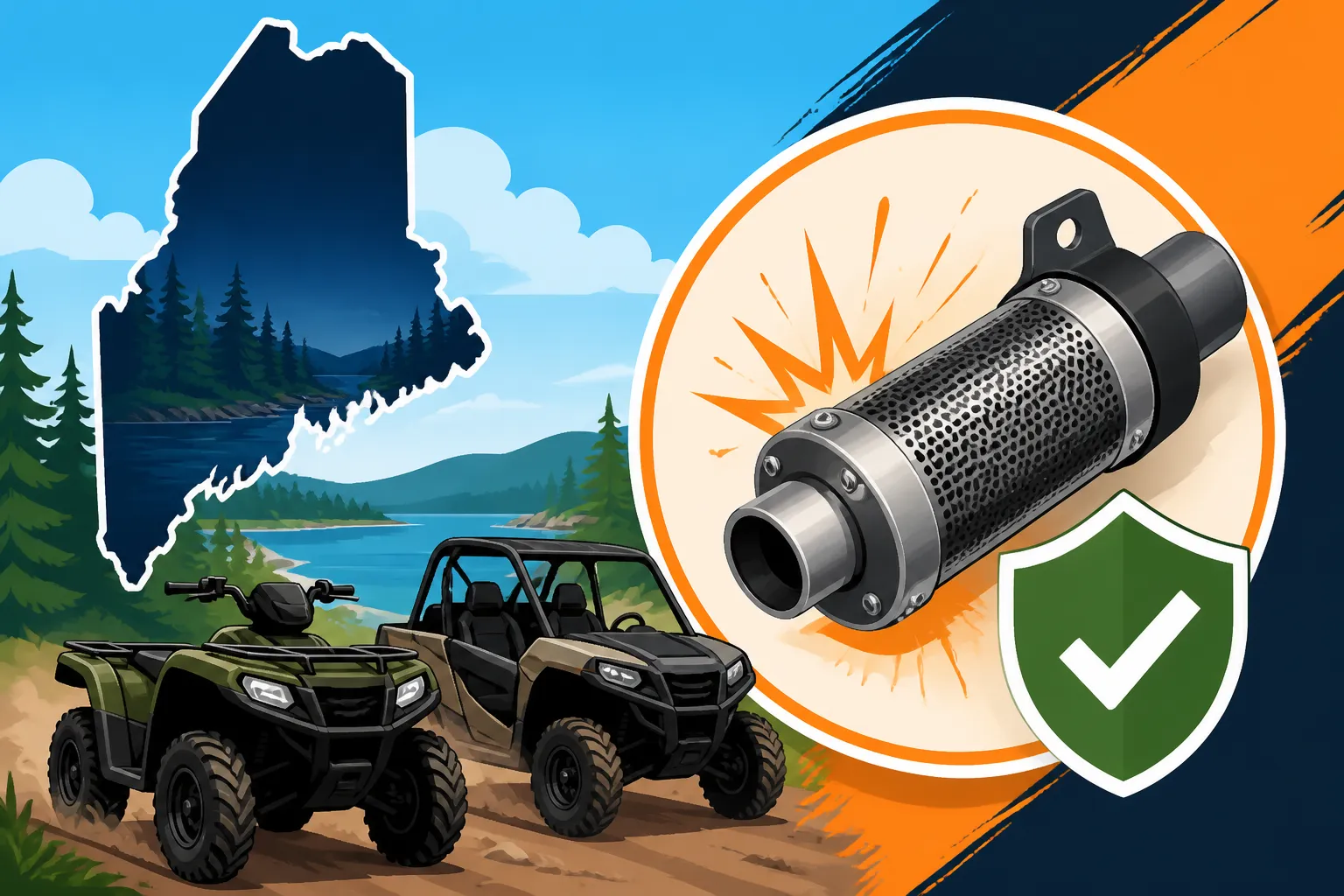
This is where the spark arrestor comes in. It's a device typically integrated into or attached to the muffler of your vehicle's exhaust system. Its primary job is to "arrest" or capture these hot carbon particles before they have a chance to escape into the environment. Most spark arrestors work by using a series of baffles or a fine-mesh screen that forces the exhaust gases to change direction rapidly. The heavier, incandescent particles, unable to make these quick turns, collide with the internal surfaces of the arrestor and are extinguished or trapped, while the gases continue to flow out. It’s essentially a tiny, sophisticated firewall built right into your exhaust, designed to safeguard our forests from an unseen danger.
How to Identify if Your ATV/UTV Has One
You might be thinking, "Well, my quad has an exhaust pipe, so it must have one, right?" Unfortunately, that's not always the case, especially with older machines or those that have had aftermarket modifications. The best way to tell if your ATV or UTV is equipped with a compliant spark arrestor is to perform a visual inspection.
First, look for a stamp on your muffler or exhaust pipe that says "USFS Approved" or "USDA Forest Service Approved." This marking indicates that the device has been tested and certified to meet federal standards for spark arrestors, which Maine generally adopts. This stamp is your clearest indicator of compliance. If you don't see this stamp, it doesn't automatically mean you're out of luck, but it does mean you need to dig a little deeper.
Next, you can often physically inspect the very end of your exhaust pipe. Many spark arrestors incorporate a screen or series of screens that you can see by peering into the tailpipe. If your exhaust pipe is just a wide-open hole, chances are you do not have a spark arrestor, or it's been removed. Be cautious, though: some exhausts integrate the arrestor further inside, making it less visible. If you're unsure after a visual check, consult your owner's manual or a qualified technician. Never just assume; the consequences of being wrong are too high.
Maine's Legal Mandate for Spark Arrestors
The beautiful trails and vast woodlands of Maine are a privilege, and with that privilege comes a responsibility to protect them. The state of Maine takes this responsibility very seriously, especially when it comes to fire prevention. That's why spark arrestors aren't just a suggestion; they are a firm legal requirement for nearly all ATV and UTV operation within the state.
The Letter of the Law: What Maine State Statute Says
Maine law is quite explicit: "An all-terrain vehicle operated on land other than land to which the operator has a legal right or written permission to use must be equipped with a spark arrester approved by the United States Department of Agriculture, Forest Service." While the wording might seem to imply it's only for specific types of land, the spirit and enforcement of the law typically cover virtually all riding areas, including club trails, private lands with permission, and public reserved lands. The key takeaway is that if you're riding in Maine, your machine needs a USFS-approved spark arrestor. This isn't just about public trails maintained by local clubs or the state; it extends to almost any area where you might be riding, whether it's a local access route or a private camp road where a stray spark could still cause significant damage.
This regulation isn't just a technicality; it's a foundational element of responsible recreation in our state. It acknowledges that even the most careful rider can inadvertently start a fire if their equipment isn't properly fitted and maintained. The law reflects Maine's proactive stance on preventing wildfires, understanding that an ounce of prevention is worth a pound of cure, especially when it comes to protecting our natural resources and rural communities.
Why the Law is So Strict: Fire Prevention in Maine
Anyone who has spent time in Maine knows its landscape is dominated by forests, from the coastal pines to the vast timberlands of the interior. While we love our green trees, these same forests, especially during dry spells in spring and late summer/early fall, can become extremely susceptible to wildfires. A single spark from an ATV or UTV can quickly escalate into an uncontrolled blaze, threatening homes, wildlife habitats, and the very trails we cherish.
Maine's strict spark arrestor law is a direct response to this inherent risk. It's a common-sense measure born from a deep understanding of our environment and the potential for devastating consequences. Wardens and land managers aren't trying to make your life difficult; they're trying to prevent tragedies. The law is also a critical tool for maintaining positive relationships with private landowners, on whose property 80 percent of Maine's ATV trails actually sit. If landowners see that riders are taking fire prevention seriously, they are far more likely to continue granting access. Ignoring this simple requirement not only puts the land at risk but also jeopardizes the future of trail riding for everyone in the state. [Landowner Relations on Maine ATV Trails] is a crucial topic for understanding this symbiotic relationship.
Consequences of Not Complying with Spark Arrestor Rules
You might be tempted to think that a missing or non-compliant spark arrestor is a minor detail, easily overlooked. However, in Maine, where fire safety is paramount, non-compliance can lead to severe consequences, ranging from hefty fines to potentially catastrophic environmental damage and legal liability.
The Immediate Risk: Causing a Wildfire
Let's imagine a scenario: You're riding your UTV on a beautiful, sunny afternoon in late May. The spring rains have passed, and the forest floor is covered in dry, brittle leaves and twigs. You've installed a flashy aftermarket exhaust that you think sounds cool, but it lacks a USFS-approved spark arrestor, or perhaps your old one is clogged with carbon and no longer effective. As you pull off the main trail to admire a scenic overlook, your hot exhaust pipe, expelling unarrested sparks, rests momentarily on a patch of dry pine needles. You don't see it, but a tiny ember smolders, then catches. By the time you ride off, a small flame is already licking at the underbrush.
This isn't just a hypothetical nightmare; it's a very real danger. A single spark, invisible to the naked eye against the daylight, can escalate rapidly. In Maine's dry conditions, a small fire can quickly become a raging inferno, destroying vast tracts of forest, threatening homes, and endangering lives. The personal liability for starting a wildfire, even accidentally, can be immense, including the costs of fire suppression, property damage, and potential criminal charges. This is precisely why the spark arrestor law exists – to prevent such calamities before they ever begin.
Fines and Penalties from Maine Wardens
The Maine Warden Service is highly visible on our trails, especially during peak riding seasons and dry periods, and they take spark arrestor compliance seriously. If a warden stops you and your ATV or UTV is found to be operating without a USFS-approved spark arrestor, you're looking at more than just a stern warning.
While specific fine amounts can vary, you can expect a significant financial penalty. This isn't a small parking ticket; it's a violation tied directly to environmental protection and public safety. A typical fine can range into the hundreds of dollars, and that's just the start. Beyond the immediate fine, you might also face orders to cease riding until the issue is rectified, which could ruin your planned trip. Repeated offenses or operating in egregious conditions could lead to more severe penalties, including potential suspension of registration privileges. It's truly a scenario where an ounce of prevention (installing and maintaining a spark arrestor) is worth a pound of cure (avoiding fines and potential legal action). It's far cheaper and less stressful to ensure your machine is compliant than to deal with the aftermath of a warden stop. For a broader understanding of what to expect, you might want to review [Fines Maine Wardens Write Most Often] and [Maine Warden Service ATV Patrols].
Maintaining and Verifying Your Spark Arrestor
Even if your ATV or UTV came equipped with a USFS-approved spark arrestor, your responsibility doesn't end there. Like any part of your machine, spark arrestors require regular inspection and maintenance to ensure they remain effective and compliant with Maine law. Over time, they can become clogged or damaged, rendering them useless and putting you at risk.
Regular Inspection and Cleaning
Just because you have a spark arrestor doesn't mean it's always working perfectly. Over time, especially if you ride frequently or have an older machine, carbon deposits can build up on the screen or baffles of the arrestor. This buildup can reduce its effectiveness, making it harder for the device to trap sparks, and it can also restrict exhaust flow, potentially impacting your machine's performance.
That's why regular inspection and cleaning are absolutely essential. It's a good practice to check your spark arrestor a few times a season, or more frequently if you notice any unusual exhaust sounds or a drop in power. To clean it, you'll typically need to remove a screw or two to access the screen. Once you have the screen out, use a wire brush or a similar tool to carefully remove any carbon buildup. Some riders even soak the screen in a solvent designed to break down carbon, but always follow the manufacturer's recommendations for your specific exhaust system. After cleaning, inspect the screen for any tears, holes, or damage. If it's compromised, it needs to be replaced. A damaged screen is as good as no screen at all, as sparks can easily pass through. Putting it back together is usually the reverse of disassembly. This simple maintenance step takes only a few minutes but can save you from a major headache and protect our forests.
Aftermarket Exhausts and Spark Arrestor Compliance
This is a common pitfall for many riders. The allure of a throaty rumble or a perceived performance boost often leads ATV and UTV owners to install aftermarket exhaust systems. While many of these systems offer aesthetic or auditory improvements, a significant number of them either do not come with a spark arrestor at all, or the one they do have is not USFS-approved. This can put you squarely outside of Maine's legal requirements.
Before you even think about installing an aftermarket exhaust, do your homework. Check the product specifications carefully to confirm that it explicitly states "USFS Approved Spark Arrestor" or "Meets USDA Forest Service standards." Don't assume that a "racing" exhaust or one designed purely for sound enhancement will be compliant. Reputable aftermarket manufacturers, like SuperATV, often offer specific spark arrestor inserts or entire exhaust systems that are designed to be compliant while still offering performance benefits. If you're looking at a new exhaust, ask the seller directly about its spark arrestor status and look for that crucial USFS stamp.
If you already have an aftermarket exhaust and you're unsure if it's compliant, treat it as non-compliant until you can verify otherwise. You might need to purchase a separate USFS-approved spark arrestor insert that fits your specific exhaust, or in some cases, you might even need to replace the entire system. Understanding [Aftermarket Exhaust and Trail Access] is key here, as non-compliant exhausts can not only lead to fines but also contribute to trail closures if they cause problems for landowners.
| Exhaust Type | Spark Arrestor Status Check | Common Issues |
|---|---|---|
| Stock/OEM Exhaust | Usually comes with a USFS-approved spark arrestor from the factory. Look for "USFS Approved" stamp on muffler. | Can become clogged with carbon over time, requiring cleaning or replacement of screen. |
| Performance Aftermarket Exhaust | Often does not include a spark arrestor, or it's not USFS-approved. Must verify product specs. | Many are "race-only" and illegal for trail use. May require separate insert purchase. |
| Slip-On Muffler | Varies widely. Some come with USFS-approved arrestors, others do not. Critical to check manufacturer details and stamp. | Similar to performance exhausts; can easily be non-compliant if not specified. |
| Dedicated Spark Arrestor Insert | These are specifically designed to be added to non-arrestor exhausts. Must be USFS-approved and correctly sized for fit. | Incorrect sizing can lead to poor fit or reduced effectiveness. |
What to Do If Your ATV/UTV Lacks a Spark Arrestor
Discovering your ATV or UTV doesn't have a compliant spark arrestor can be a moment of frustration, especially if you had plans to hit the trails soon. However, it's a problem with straightforward solutions, and addressing it immediately is far better than risking a fine, a fire, or losing trail access.
Options for Installation or Replacement
If your machine is missing a spark arrestor, or if the one you have isn't USFS-approved, you have a few clear paths forward. The most common solution is to purchase a universal spark arrestor or a specific one designed for your machine's make and model. Companies like SuperATV and other reputable off-road parts suppliers offer a range of USFS-approved spark arrestors, from internal inserts that fit into your existing muffler to full exhaust systems that come pre-equipped with a compliant arrestor. When buying, always confirm that it explicitly states "USFS Approved" and ensure it's the correct size for your exhaust pipe.
Installation can often be a DIY project for those comfortable with basic tools. It typically involves removing a few bolts, inserting the arrestor, and reassembling. However, if you're not mechanically inclined, or if your exhaust system is particularly complex, it's always wise to take your machine to a qualified ATV/UTV service shop. They can ensure the correct part is installed properly, giving you peace of mind that you're fully compliant with Maine's regulations. Don't procrastinate on this; get it sorted before your next ride.
Avoiding Trail Rides Until Compliant
This might be the hardest pill to swallow, especially if you're eager to ride, but it's critically important: do not operate your ATV or UTV on any public or private lands (other than your own property where you have full control) until it is equipped with a properly functioning, USFS-approved spark arrestor. The temptation to "just quickly run down the road" to a gas station or "only ride this little loop" can be strong, but it's a gamble with severe potential consequences.
Even a short ride on a public way to connect to a trail, which [Riding an ATV on the Road in Maine] details the rules for, still requires your machine to be fully compliant. Wardens are out there, and they are vigilant. Beyond the risk of fines, the greater concern is the potential for starting a wildfire. A single incident could lead to massive trail closures, negatively impacting the entire riding community and our relationships with landowners who graciously provide access. By ensuring your machine is compliant, you're not just protecting yourself from penalties; you're doing your part to preserve Maine's trails, protect our forests, and uphold the good reputation of ATV and UTV riders across the state. Taking an [Maine ATV Safety Course Requirements] can help instill a deeper understanding of all safety and compliance rules.
Disclaimer
This article is for general informational purposes only and does not constitute professional advice. Laws, prices and regulations vary by location and change over time. Consult a qualified professional for guidance on your specific situation.