Who Yields at a Maine ATV Road Crossing
Picture this: you're out enjoying Maine's incredible trail system on your ATV or UTV, cruising along a wooded path, when suddenly, the trail opens up onto a paved road. Your heart might do a little skip as you wonder, "Who exactly has the right-of-way here?" This is a common moment of confusion for many riders, and honestly, the rules around ATV road crossings in Maine can feel a little murky. But don't worry, friend, you're not alone. This comprehensive guide is here to clear up all that uncertainty, specifically focusing on who yields at a Maine ATV road crossing, so you can ride safely and confidently.
The Golden Rule: Always Yield to Oncoming Traffic
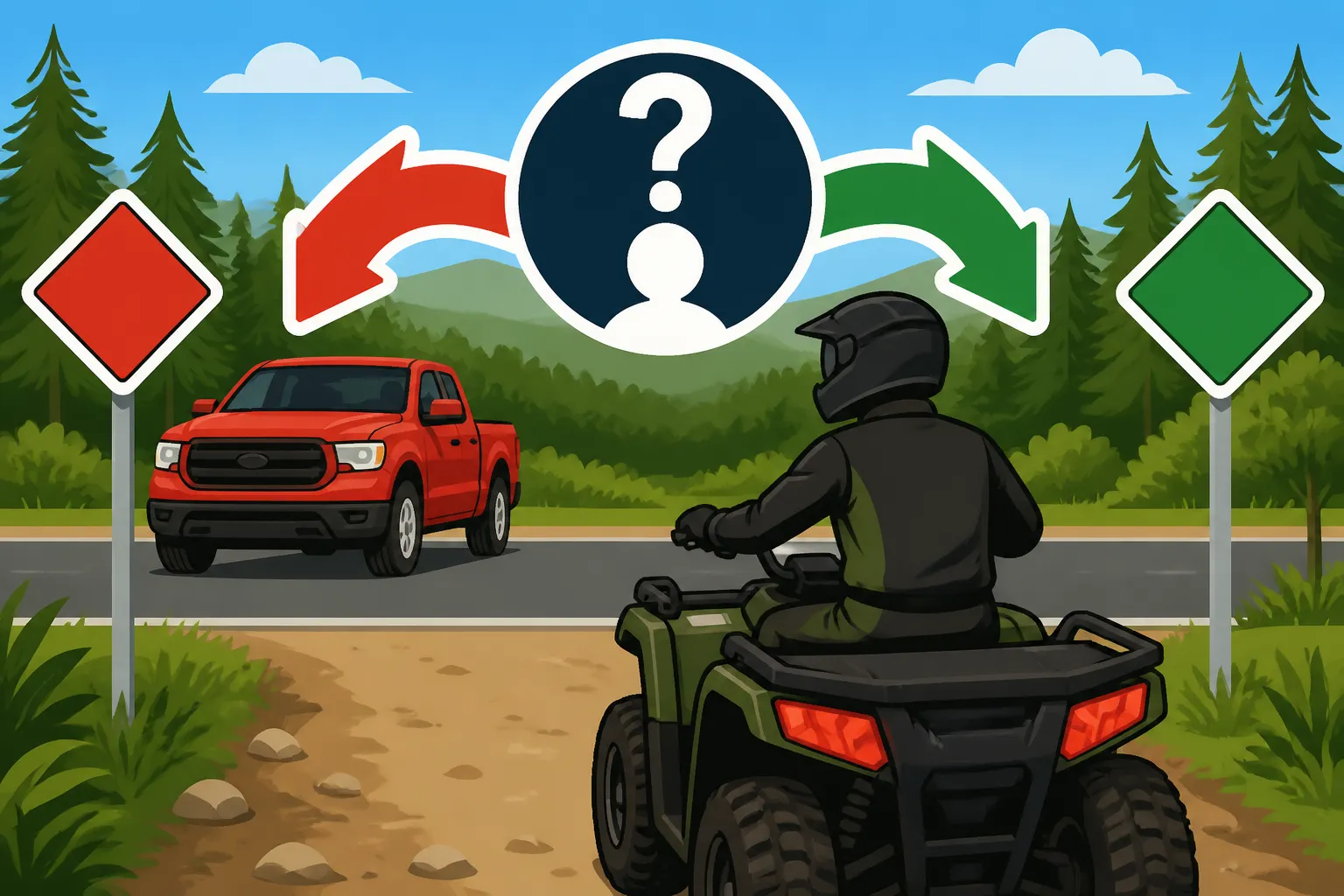
When it comes to ATV road crossings in Maine, there's one overarching principle that every rider needs to engrave in their mind: ATVs and UTVs always yield to road traffic. This isn't just a suggestion; it's a fundamental safety and legal requirement designed to protect everyone on and near Maine's public ways. Whether you're crossing a major state highway or a quiet town road, the responsibility to ensure the path is clear rests squarely on your shoulders.
This rule exists for some very practical and critical reasons. Motor vehicles on public roads are operating under a different set of expectations, often at higher speeds, and they aren't anticipating an ATV to suddenly appear in their path. For an ATV operator, having the right-of-way in a road crossing scenario is almost never assumed. Always prepare to stop, wait, and only proceed when it is unequivocally safe to do so.
Why Maine Prioritizes Road Traffic
Maine's legal framework for ATV and UTV operation is quite clear: these are recreational vehicles designed primarily for off-road use. When they interact with public roadways, they do so under strict conditions that prioritize the safety and uninterrupted flow of traditional vehicular traffic. Think about it from a risk perspective: a car traveling at 45 mph has a much greater stopping distance and impact force than an ATV pulling out from a trail. The potential for serious injury or even fatality to the ATV operator and passengers is significantly higher in a collision with a motor vehicle.
The state’s laws are crafted to minimize these inherent risks. Motorists typically have the expectation of continuous right-of-way on established roads, and introducing an ATV into that flow requires extreme caution from the ATV operator. It’s about more than just avoiding a ticket; it's about making sure everyone goes home safely at the end of the day.
Understanding "Oncoming Traffic" in Practice
So, what exactly constitutes "oncoming traffic" that you need to yield to? In short, it's pretty much everything else that could be using the road. This includes cars, trucks, SUVs, motorcycles, and even bicycles. These vehicles are operating under their own rules of the road, and when you approach a crossing, they generally hold the superior right-of-way. It's not just about what's coming directly at you from left or right, either. You need to consider vehicles approaching from behind that might be turning onto the road you're crossing, or even pedestrians utilizing crosswalks or walking along the shoulder.
A good way to think about it is that if it's not another ATV on an approved trail, it likely has the right-of-way over you when you're making a crossing. You should assume that any vehicle on the public way is not expecting you to dart out. This means patiently waiting for a clear lane, allowing multiple vehicles to pass if necessary, and not trying to squeeze into a gap that might suddenly disappear. Even on designated [Maine ATV-Access Routes and How Towns Post Them], where ATVs are allowed to share a portion of the public way, the rules for crossing an intersecting road still mandate yielding to all traffic on that intersecting road.
Specific Scenarios for Yielding at Crossings
While the golden rule is "always yield," understanding the nuances of different crossing scenarios can help you apply it more effectively and safely. Not all roads are created equal, but your responsibility to yield remains constant. Let's break down some common situations you'll encounter on Maine's vast trail network.
Approaching a Paved Public Way
This is perhaps the most common and critical scenario. When your trail exits onto a paved road, Maine law dictates a very specific procedure. You must come to a complete stop before entering or crossing the public way. This isn't a rolling stop or a hesitation; it's a full, unequivocal halt. Think of it like a stop sign at an intersection – you wouldn't just creep through. This "stop-and-yield" rule is your first line of defense against potential accidents.
Once stopped, you then need to look both ways, multiple times. Look left, then right, then left again. Consider looking over your shoulder for any unexpected turning vehicles. You're assessing the traffic flow, judging speeds, and waiting for a gap that is not just safe, but generously safe. Don't rush it. It's far better to wait an extra minute for absolute clarity than to risk a life-altering collision. For example, if you're on a dirt trail that suddenly breaks out onto a busy Route 201, your obligation is to stop completely and wait until the highway is totally clear in both directions, or there's a very large, predictable gap in traffic.
Crossing Dirt Roads or Private Ways
It's easy to think that if you're crossing a dirt road or a private way, the rules might be more relaxed. This is a dangerous assumption. Many town-maintained dirt roads are still considered public ways, even if they see less traffic than a paved highway. While you might not encounter as many vehicles, you still have the legal and moral obligation to yield to any and all traffic. This could mean yielding to a local resident heading home, a delivery truck, or even heavy equipment like a logging truck. The mass and speed of these vehicles still far outweigh your ATV.
Even when crossing private camp roads, which are often shared by multiple landowners and sometimes see heavy use, common courtesy dictates yielding. In many cases, these roads are maintained by local associations or even logging companies, and they expect vehicles on the road to have the right-of-way. Disregarding this not only creates a safety hazard but can also lead to strained landowner relations, potentially jeopardizing future trail access. Always assume you need to yield, even on roads that feel "less official." This goes hand-in-hand with understanding [Maine ATV Rules on Private Camp Roads], which often emphasizes respectful use.
Designated ATV-Access Routes and Yielding
Maine has done a fantastic job establishing [Maine ATV-Access Routes and How Towns Post Them] in many areas, allowing riders to connect trails by using portions of public ways. These routes are a real gift to the riding community, but they come with their own set of responsibilities, especially regarding yielding. While riding along these routes, you're usually required to operate on the extreme right shoulder or travel lane, often limited by speed. However, when these designated routes cross an intersecting public way, the yielding rules kick back into full force.
Even if you're technically on an approved ATV access route, when you come to a junction with another public way, you must still stop and yield to traffic on that intersecting road. The designation as an "ATV access route" typically pertains to where you can ride along the road, not your right-of-way when crossing it. Think of it this way: you're temporarily becoming part of road traffic, but you're still the lowest priority in the hierarchy of right-of-way. Understanding [Riding With Traffic on a Maine Access Route] is vital, but always remember that the rules for crossing remain distinct and require extreme caution and yielding.
| Scenario | Your Action (ATV/UTV Rider) | Traffic to Yield To | Legal Basis / Principle |
|---|---|---|---|
| Trail to Paved Public Road | Come to a complete stop, look left-right-left, proceed only when clear. | All vehicles (cars, trucks, motorcycles, bikes). | Maine Law: Stop and Yield at Public Ways |
| Trail to Dirt Town Road | Come to a complete stop, look left-right-left, proceed only when clear. | All vehicles, including logging trucks and residents. | Maine Law: Applies to all Public Ways |
| ATV-Access Route Crossing Paved Road | Come to a complete stop before intersecting road, look, proceed when clear. | All vehicles on the intersecting road. | Safety & Priority of Road Traffic |
| Crossing a Private Camp Road | Slow down, look, yield to any vehicles present. | Any vehicles using the private road. | Common Courtesy & Landowner Expectations |
The Consequences of Failing to Yield
Ignoring Maine's yielding rules at ATV road crossings isn't just a minor oversight; it can have severe repercussions. Beyond the immediate danger to life and limb, there are significant legal and financial penalties that can impact your ability to enjoy the trails for years to come. It’s crucial to understand that Wardens and local law enforcement take these rules very seriously.
Safety Risks and Accident Liability
The most immediate and terrifying consequence of failing to yield is a collision. ATVs offer very little protection in a crash with a motor vehicle, leading to a high potential for serious injuries or fatalities for riders. Even at low speeds, the forces involved can be devastating. Beyond personal injury, a collision will inevitably result in significant damage to both your ATV and the motor vehicle, not to mention potential property damage to signs, fences, or other roadside infrastructure.
Legally, if you fail to yield and cause an accident, you will almost certainly be found at fault. This can lead to citations, hefty fines, and potentially even criminal charges depending on the severity of the incident and any injuries involved. Furthermore, your liability for damages could be substantial. Dealing with insurance claims and potential lawsuits after an accident is a nightmare you absolutely want to avoid. While accessories from brands like SuperATV might offer robust protection for your machine in the event of an off-road bump, no bumper or skid plate can protect you from the legal and personal fallout of a serious road crossing collision. Understanding [Who Pays After an ATV Road Collision] becomes critically important in such a scenario.
Legal Penalties and Enforcement
Maine Wardens are vigilant when it comes to ATV safety, and road crossing violations are a common target for enforcement. They understand the inherent dangers and are tasked with upholding the laws designed to protect both ATV riders and the general public. If you are caught failing to stop or yield at a public way crossing, you can expect a citation. The fines can be significant, and repeated offenses could lead to the suspension of your ATV registration or even your right to operate an ATV in Maine.
Wardens don't just look for blatant violations; they also observe rider behavior. A rolling stop, or pulling out into traffic with insufficient clear space, can still result in a ticket. This is why [Maine Warden Stops and ATV Paperwork] often include a check on your general riding behavior, not just your registration. They might also check for other compliance issues, like helmet use (especially for younger riders), registration stickers, or spark arrestors. The penalties can add up quickly, making a simple failure to yield an expensive and frustrating experience. Familiarize yourself with [Fines Maine Wardens Write Most Often] to understand the common violations they encounter.
Best Practices for Safe ATV Road Crossings
Riding an ATV in Maine is an incredible experience, offering access to breathtaking natural beauty. To ensure you continue to enjoy these privileges safely and without incident, mastering safe road crossing techniques is paramount. It’s about being proactive, hyper-aware, and disciplined every single time.
The "Complete Stop, Look, and Listen" Method
This is your mantra for every road crossing: STOP. LOOK. LISTEN. WAIT. You must bring your ATV or UTV to a complete and undeniable halt before the edge of any paved surface, shoulder, or intersection. This isn't just good practice; it's the law, often referred to as [Maine's Stop-and-Yield Rule Before a Public Way]. Once stopped, take the time to really look. Scan left, then right, then left again. Check over your shoulder for any vehicles that might be signaling a turn.
And don't forget to listen. Engine sounds, tire noise, or even the faint hum of a distant vehicle can give you crucial early warning. Sometimes it’s helpful to lift your visor or remove your helmet for a moment to improve auditory awareness, especially in quiet areas. Finally, wait. Be patient. There’s no prize for the fastest crossing. Wait for a clear, safe window of opportunity. If there’s any doubt, err on the side of caution and wait longer. A few extra seconds of patience are infinitely better than a split-second decision that leads to an accident.
Visibility and Equipment
Making yourself as visible as possible is a critical component of safe road crossings. Assume that motor vehicle drivers might not be actively looking for an ATV. Wear bright, contrasting clothing, especially if riding in low-light conditions, fog, or during hunting season. Consider a reflective vest or bright helmet. Even during the day, ensure your ATV's headlights and taillights are functioning correctly and turned on. This additional illumination significantly increases your profile and makes you easier to spot from a distance.
For even greater visibility, especially if you frequently ride near roads or in areas with mixed traffic, consider aftermarket lighting accessories. LED light bars or enhanced taillights from manufacturers like SuperATV can dramatically improve your visibility to other motorists. These aren't just for illuminating the trail at night; they serve as a crucial safety feature during the day too. Also, ensure your eye protection, whether goggles or a face shield, is clean and free of scratches, providing you with an unobstructed view of the road ahead and oncoming traffic. Clear vision is non-negotiable for safe crossings. Always refer to [Maine Lighting Requirements for Night Riding] to ensure your machine is compliant.
Riding with a Group
When riding with a group, the rules for road crossings become even more important, and each rider carries individual responsibility. It's a common mistake for riders to simply follow the lead machine across a road, assuming the path is clear. This is extremely dangerous. Each ATV in the group must stop and yield individually. Do not create a "follow the leader" situation. The gap that was safe for the first rider might have closed by the time the second or third rider attempts to cross.
It’s a good practice to designate a clear leader who can safely assess crossing conditions and signal to the rest of the group when it's safe for each individual machine to proceed. Communication is key, whether through clear hand signals or helmet-mounted communicators. If your group is large, consider breaking it into smaller segments to cross a busy road, allowing traffic to flow more easily between crossings. This demonstrates respect for other road users and significantly reduces risk. Remember that [Group Ride Etiquette on Town Roads] always emphasizes safety and consideration.
Disclaimer
This article is for general informational purposes only and does not constitute professional advice. Laws, prices and regulations vary by location and change over time. Consult a qualified professional for guidance on your specific situation.