UTV Roll Cage and Net Requirements
Riding a UTV in Maine, whether you're tackling rugged trails in Aroostook County or just crossing a paved road to get to the next section of trail, means keeping safety at the forefront. One of the biggest concerns for UTV owners is occupant protection, especially when rollovers or impacts occur. While the thrill of the open trail is undeniable, the reality is that accidents can happen, and understanding the role of your UTV's roll cage and safety nets is absolutely crucial for protecting yourself and your passengers. This guide will dive deep into why these components are so vital, what considerations you should make, and how they fit into the broader picture of safe UTV operation in Maine.
The Indispensable Role of a UTV Roll Cage
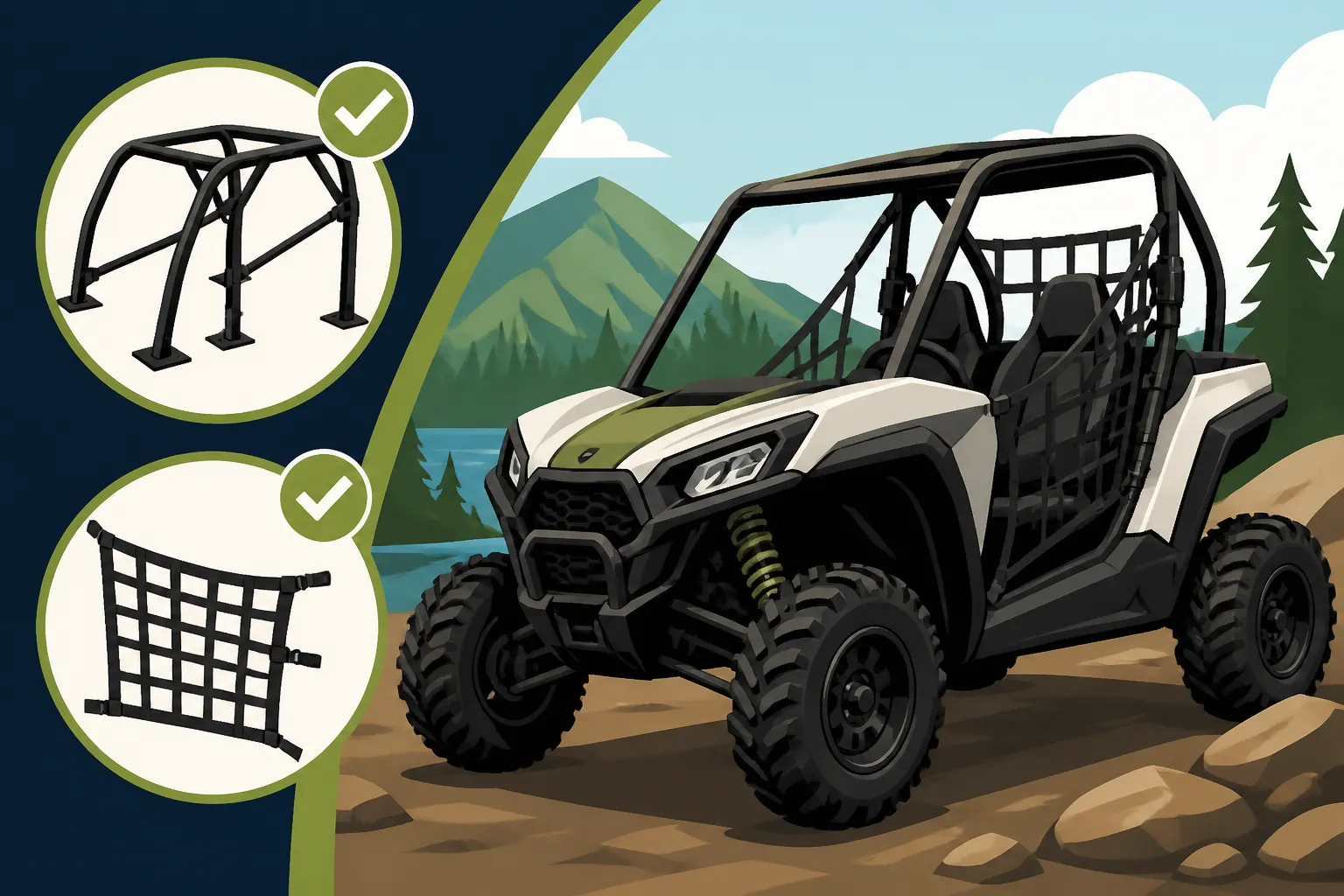
When you think about the safety features on a UTV, the roll cage is probably the first thing that comes to mind, and for very good reason. This robust structure, often made of steel tubing, forms the protective "shell" around the passenger compartment. Its primary job is to maintain a survivable space for occupants in the event of a rollover or collision. Without a properly designed and intact roll cage, a UTV rolling onto its side or roof could crush the cabin, leading to severe injuries or fatalities.
The importance of a roll cage isn't just about extreme accidents, either. Even a low-speed tip-over on an uneven trail can subject the UTV's structure to considerable force. The cage is designed to absorb and distribute these forces, preventing the main impact from reaching the occupants. Think of it as your UTV's personal fortress, ensuring that if the machine goes sideways or upside down, you and your passengers have a clear zone to ride it out.
Factory-Installed Cages: What to Know
Most UTVs come from the factory equipped with a roll-over protective structure, or ROPS, that meets industry standards for basic safety. These factory cages are designed to protect occupants under a specific set of circumstances, typically involving rollovers at reasonable speeds on off-road terrain. They are engineered as part of the vehicle's overall safety system, working in conjunction with seat belts and often nets or doors.
However, it's vital to remember that "standard" doesn't always mean "indestructible" or "one-size-fits-all." Factory cages are built to a certain specification to pass tests and provide a baseline level of protection. For many riders exploring Maine's vast trail network, this is perfectly adequate. But for those who push their machines harder, engage in competitive riding, or venture into more extreme terrain, a factory cage might not offer the enhanced protection some desire. It's always a good idea to inspect your factory cage regularly for any signs of damage, cracks, or deformation, especially after any minor incident. Even small bends can compromise the structural integrity when it truly matters.
Aftermarket Upgrades and Enhanced Protection
For many UTV enthusiasts, the factory roll cage is just the starting point. The aftermarket industry offers a huge range of roll cage upgrades, from stronger materials and thicker tubing to entirely custom designs. These upgrades are often sought by riders looking for increased safety, especially if they're installing larger tires, lifting their machines, or tackling particularly aggressive trails. Companies like SuperATV, for instance, offer heavy-duty cages and reinforcement kits designed to provide a higher level of protection than standard OEM setups.
An aftermarket cage might feature additional cross-bracing, gussets, or a completely different geometry to improve impact resistance and energy absorption. Some are designed specifically to integrate with other safety accessories, such as full doors or racing seats. When considering an upgrade, think about your riding style, the terrain you frequent, and how many passengers you typically carry. Investing in a more robust cage can be a significant decision, but for many, the peace of mind it offers is well worth the cost. Always ensure any aftermarket cage you choose is from a reputable manufacturer and is installed correctly, ideally by a professional.
Maine's Stance on UTV Roll Cages for Road Use
Now, let's talk about Maine specifically. While Maine doesn't have a broad "street legal UTV" classification in the way some other states do, it does allow UTVs (and ATVs) limited access to public ways under specific conditions, such as crossing a road or riding on designated ATV-access routes. This means that, yes, your UTV will inevitably encounter paved or gravel roads, even if only for short distances. So, what are Maine's requirements for roll cages and nets in these scenarios?
The reality is that Maine's current regulations for UTVs, as overseen by the Department of Inland Fisheries and Wildlife (IF&W), primarily focus on off-road operation. Unlike passenger cars, there aren't explicit state-mandated design standards for UTV roll cages or safety nets beyond what the manufacturer provides for a typical off-road machine. The law generally expects that if you're operating a UTV, it should be in safe working condition, which implies the factory-installed safety features, including the ROPS and seat belts, are intact and functional.
This lack of specific "street legal" cage requirements doesn't diminish the importance of having a robust and well-maintained roll cage and nets when you're on a public way. In fact, it arguably makes it more important, as you're now sharing space with larger, faster vehicles. If your UTV is involved in an incident while on an access route or crossing a road, the integrity of your roll cage could be the difference between a minor scare and a serious injury. Always ensure your UTV's safety features are in top condition, regardless of whether you're deep in the woods or briefly on a town road. You should also be aware of [Maine's 500-Yard Limit on a Public Way] and other specific rules for road access.
Seat Belts and Occupant Retention
Closely tied to the effectiveness of a roll cage are the UTV's seat belts and occupant retention systems. A roll cage provides the safe space, but it's the seat belts that keep you within that safe space during a dynamic event like a rollover. Maine law is very clear on seat belt usage: if your UTV is equipped with seat belts, all occupants must wear them while operating the machine. This applies whether you're off-road or on a designated access route. Neglecting to wear a seat belt effectively negates much of the protection offered by even the strongest roll cage.
Many UTVs come with standard automotive-style three-point seat belts. For enhanced safety, especially in aftermarket cages or for more aggressive riding, some owners upgrade to four-point or even five-point harnesses. These harnesses do a much better job of securing an occupant to the seat, preventing them from being jostled around or ejected during violent impacts or rollovers. When you're considering [Street-Legal UTV Equipment Lists], remember that occupant retention is paramount.
The Role of Safety Nets and Doors
Beyond the roll cage and seat belts, safety nets and doors play a crucial role in occupant retention. While a seat belt keeps you in your seat, nets or doors are designed to keep your limbs (and your entire body) inside the protected area of the roll cage. During a rollover, even with a seat belt on, arms and legs can flail outside the cage, leading to severe injuries if they come into contact with the ground or other obstacles.
Factory UTVs often come with half doors or nets that serve this purpose. These are generally sufficient for preventing incidental ejection or keeping debris out. For those seeking more robust protection, especially when traversing faster trails or rocky terrain, aftermarket full doors or heavier-duty nets are a popular upgrade. These can not only offer better limb retention but also provide a greater sense of security and protection from the elements. Consider brands like SuperATV, which also offers a variety of door and net options that integrate seamlessly with their roll cage systems, enhancing overall occupant safety.
What Makes a Roll Cage and Nets Truly Effective?
Understanding the components is one thing, but knowing what contributes to their effectiveness is another. It's not just about having any roll cage or any net; it's about having the right ones, in the right condition, for your specific use. When you're [Riding an ATV on the Road in Maine] or hitting the trails, you want to be confident in your protection.
Design and Material Considerations
The effectiveness of a roll cage largely comes down to its design and the materials used in its construction. Factory cages are typically made from steel tubing, which offers a good balance of strength and flexibility. Aftermarket cages might use higher-grade steel alloys or even chromoly, which offers superior strength-to-weight ratios. The diameter and thickness of the tubing are also critical; thicker, larger diameter tubing generally provides more strength.
Beyond material, the design of the cage is crucial. How the tubes are bent, how they intersect, and where reinforcement plates (gussets) are placed all contribute to the cage's ability to withstand and distribute impact forces. A well-designed cage will have triangulated sections, meaning three tubes form a triangle at stress points, which is inherently stronger than simple square or rectangular joins.
For nets, the material and attachment points are key. Heavy-duty nylon webbing is common, designed to withstand significant force without tearing. The nets should be securely fastened to the roll cage at multiple points, and the mesh should be small enough to prevent limbs from passing through. Poorly designed or installed nets can be more of a hindrance than a help, so proper selection and installation are paramount.
Compatibility with Other Safety Features
A roll cage and nets don't operate in a vacuum. They are part of an integrated safety system that includes seat belts, helmets, and even your UTV's frame. For instance, [Seat Belt Rules in a Side-by-Side] are there for a reason – they keep you secure within the protective zone of the cage. If you upgrade your roll cage, consider if your existing seat belts are still adequate or if they need to be replaced with longer, stronger, or multi-point harnesses that securely anchor to the new structure.
Similarly, helmets are a non-negotiable safety item. While a roll cage protects the cabin, a helmet protects the most vital part of your body: your head. [Maine Helmet Rules for Riders Under 18] mandate helmets for younger riders, but honestly, all riders should wear a DOT-approved helmet every time they ride. A roll cage can prevent your head from impacting the ground, but a helmet protects against impacts with the cage itself or other objects within the vehicle during a jostle or minor bump. All these components work together to provide comprehensive protection.
Modifications, Inspection, and Maintenance
Just like any other part of your UTV, roll cages and nets require attention and care. They're not "set it and forget it" components, especially if you're taking your UTV on various terrains, including occasional road sections. Regular inspection and maintenance are key to ensuring they provide the protection you expect.
Inspecting Your Roll Cage for Damage
After every significant ride, or at least once a month if you're riding regularly, take the time to thoroughly inspect your UTV's roll cage. Look for:
- Bends or kinks: Even minor bends can indicate structural fatigue or damage that might compromise its integrity in a future incident.
- Cracks: Pay close attention to welds and stress points where the tubing connects. Hairline cracks can quickly grow into major structural failures.
- Rust: While steel cages are often coated, rust can weaken the metal over time. Address any rust spots promptly.
- Loose bolts or mounting points: Ensure all bolts securing the cage to the frame are tight and free from corrosion.
- Deformation: If your UTV has been in a rollover or serious impact, even if it looks okay from a distance, closely inspect the cage for any signs of twisting or compression.
If you find any significant damage, it's crucial to address it immediately. Do not ride a UTV with a compromised roll cage. Depending on the severity, this might mean repair (by a qualified welder/fabricator) or full replacement.
Maintaining Safety Nets and Doors
Safety nets and doors also need regular inspection. Check nets for:
- Tears or fraying: Even small tears can propagate quickly, rendering the net ineffective.
- Damaged buckles or attachment straps: Ensure all buckles function correctly and straps are free from cuts or excessive wear.
- UV degradation: Over time, sunlight can weaken nylon webbing. Check for discoloration or a brittle feel.
For doors, inspect hinges, latches, and the overall integrity of the door panel. Make sure they close securely and don't rattle excessively. If your UTV uses soft doors or canvas panels, check for tears, broken zippers, or snapped straps. Keeping these components in good repair ensures they'll perform their job of keeping you securely inside the UTV's protective envelope.
When Maine Wardens conduct [Maine Warden Checks and What They Ask], they are looking for a machine in safe operating condition. This includes functional safety equipment. Taking the time to properly maintain your roll cage, nets, and seat belts is not just about personal safety; it's also about compliance and being a responsible rider on [Maine ATV-Access Routes and How Towns Post Them].
| Feature | Purpose | Key Considerations | Maintenance Needs |
|---|---|---|---|
| Roll Cage (ROPS) | Protects occupants from crush injuries during rollovers | Design, material, thickness, connection points | Regular inspection for bends, cracks, rust, loose bolts |
| Seat Belts | Secures occupants within the protective cage | Number of points (3, 4, 5-point), condition of webbing | Check for cuts, fraying, proper latching, mounting integrity |
| Safety Nets/Doors | Prevents ejection of limbs/body from the cage | Material strength, attachment security, mesh size | Inspect for tears, fraying, buckle/latch function, UV damage |
Disclaimer
This article is for general informational purposes only and does not constitute professional advice. Laws, prices and regulations vary by location and change over time. Consult a qualified professional for guidance on your specific situation.