Group Ride Etiquette on Town Roads
Picture this: you and your riding buddies are finally hitting the trails, the sun is out, and the anticipation is high. But then you hit that section of town road, and suddenly the camaraderie shifts to a mix of confusion and anxiety. Group rides on public ways in Maine can feel like a minefield of unspoken rules and wary glances from residents, making what should be a fun connection between trails stressful. This guide is all about equipping you with the essential etiquette and practical tips to ensure your ATV and UTV group rides on Maine's town roads are safe, respectful, and keep those vital trail connections open for everyone.
Understanding the Stakes: Why Road Etiquette is Crucial for ATV/UTV Groups in Maine
Let's be real, riding ATVs and UTVs offers an incredible sense of freedom and adventure, especially when you're exploring the vast trail networks Maine has to offer. But that freedom comes with a significant responsibility, particularly when your group hits a town road or a designated access route. Unlike the quiet solitude of a wooded trail, public ways are shared spaces, and how your group conducts itself directly impacts how the wider community perceives all ATV and UTV riders. It’s not just about following the law; it’s about being a good neighbor and an ambassador for the sport.
The Perception Problem: Winning Over the Public
One of the biggest challenges we face as ATV and UTV enthusiasts is the perception held by some members of the public. Noise complaints, dust, perceived recklessness, or simply the sight of a large group of machines can quickly create tension with residents, drivers, and even local officials. When a group rolls through a town, every rider's action contributes to the overall impression. If one person speeds, kicks up too much dust, or acts inconsiderately, it often paints all riders with the same brush. This isn't just frustrating; it can lead to tangible consequences, like towns restricting or even banning ATV access, making it harder for all of us to enjoy the trails we love. We've seen it happen in communities where negative perceptions have gained traction, sometimes leading to [Maine Town Ordinances That Restrict ATVs]. Our goal is always to demonstrate that we are responsible, respectful members of the community, committed to sharing the roads safely.
Safety First: Minimizing Risks on Shared Roads
Beyond public perception, the most critical aspect of road etiquette for group rides is safety. Town roads are designed for cars and trucks, and while we're often permitted to use specific sections or designated routes, ATVs and UTVs handle very differently. A group of machines introduces additional complexities: varying speeds, dust clouds that reduce visibility, and the challenge of communicating with multiple riders in traffic. Even the most experienced rider in a group can be caught off guard by an unexpected vehicle, a pedestrian, or a child playing near the roadside. By adhering to strict safety protocols and clear communication within your group, you dramatically reduce the risk of accidents and ensure everyone makes it home safely. Remember, the goal is always to connect trails, not to create hazards.
Protecting Trail Access: Every Rider's Responsibility
Maine's extensive ATV trail system, often described as [Maine's 6,000 Miles of ATV Trails], relies heavily on the goodwill of private landowners and local communities. Many trails cross private property, and countless others connect via town roads or specially designated [Maine ATV-Access Routes and How Towns Post Them]. When an ATV group behaves poorly on a public way, it jeopardizes these vital connections. A single incident can sour landowner relations, leading to trail closures, or prompt town councils to reconsider their ATV access policies. Every time your group rides respectfully through a town, you're not just enjoying the moment; you're actively contributing to the sustainability of the entire trail network for future generations. This collective responsibility means that thoughtful behavior is an investment in the longevity of our sport in Maine.
Before You Roll: Essential Group Prep for Town Road Sections
A successful and respectful group ride on town roads doesn't happen by accident. It requires careful planning and coordination before your tires ever touch the pavement. Think of it like a carefully choreographed dance: everyone needs to know their part, understand the cues, and be ready to move as a unified entity. This pre-ride preparation is the foundation for a safe and positive experience, both for your group and for the communities you pass through.
Appointing a Ride Leader and Tail Gunner
For any group ride on town roads, designating a clear leader and a tail gunner is non-negotiable. The ride leader is the navigator, setting the pace, making decisions about turns and stops, and ensuring the group stays together. This person should be experienced, knowledgeable about the planned route, and comfortable communicating. They are the eyes and ears at the front. The tail gunner is equally critical; their role is to stay at the very back of the group, ensuring no one gets left behind, communicating any issues (like a breakdown or a rider falling behind) to the leader, and often carries a basic first-aid kit or tools. Having a strong leader at the front and a vigilant tail gunner at the back provides a critical buffer and ensures continuous oversight of the entire group. This clear structure prevents confusion and helps manage unexpected situations on the road.
Communication is Key: Hand Signals and Radios
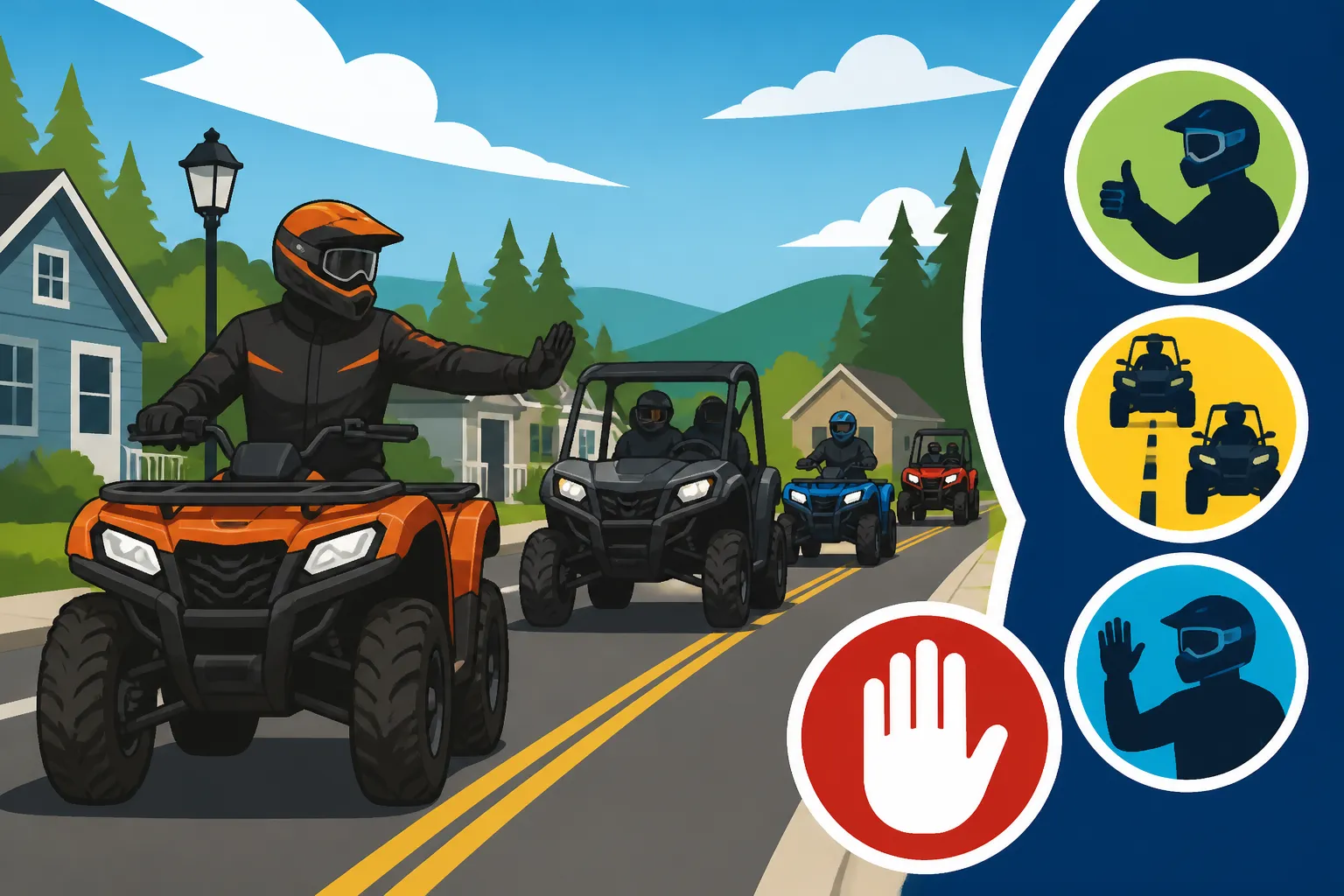
Effective communication is the lifeline of a group ride, especially when you're dealing with road noise and traffic. While radios (CB, GMRS, or FRS) are fantastic for direct communication between riders, they aren't always available or practical for everyone. That's where standardized hand signals come in. Before every ride, review a set of clear, agreed-upon hand signals that every member understands. These signals can convey important information like "stopping," "turn left/right," "hazard ahead," or "slow down." The leader initiates the signal, and each rider passes it back down the line to the tail gunner. This ensures everyone in the group is aware of changing conditions or intentions. For those who invest in communication systems, reliable helmet communicators or two-way radios from brands like SuperATV (who also offer various electrical accessories) can be invaluable for real-time updates without having to yell over engine noise.
Here's a basic table of common group ride hand signals:
| Signal Action | Description |
|---|---|
| Stop | Left arm bent at elbow, fist pointed up. |
| Slow Down | Left arm extended out and down, palm down, waving hand gently up and down. |
| Turn Left | Left arm extended straight out, palm open. |
| Turn Right | Left arm bent at elbow, forearm up, fist pointed right (or right arm extended straight out). |
| Hazard Ahead (Left) | Left arm extended, pointing at the ground with fingers of left hand, arm slightly to the left of machine. |
| Hazard Ahead (Right) | Right leg extended, pointing at the ground with foot, leg slightly to the right of machine. |
| Single File | Left arm raised, index finger pointing up. |
| Double File | Left arm raised, two fingers pointing up. |
| Follow Me | Left arm extended forward and up, palm open, waving backward. |
Machine Readiness and Rider Preparedness
Before any wheel touches a public way, every machine in the group needs to be in tip-top shape. This means checking tires, brakes, lights (headlights, taillights, and brake lights are often mandatory for road sections, especially at dusk or dawn, even if not for daytime trail use), and fluid levels. A breakdown on a town road can be far more disruptive and dangerous than on a remote trail. Encourage riders to carry basic tools, a tire repair kit, and enough fuel for the planned route. For safety and compliance, remind everyone about personal protective equipment. While [Maine Helmet Rules for Riders Under 18] are strict, many adults choose to wear helmets for their own safety on roads.
Furthermore, ensure all machines are legally compliant. This means having current [What It Takes to Register an ATV in Maine] and visible registration stickers. For non-residents, understanding [Maine's Non-Resident ATV Registration Options] is crucial. An inspection by a Maine Warden Service officer will check for these basics, and you don't want a single unregistered machine to hold up your entire group or draw negative attention. A quick pre-ride check for any loose gear (like cargo bags, coolers, or even aftermarket parts like a SuperATV windshield) that could become a projectile or cause distraction is also a good habit.
Navigating Public Ways: Etiquette in Action for Your Group Ride
Once your group is organized and ready, the real test of etiquette begins as you merge onto town roads. This is where your collective behavior shines – or falters. The key is to ride as a cohesive, predictable unit, minimizing your impact on other road users and the environment. Every action your group takes on a public way is a public statement about ATV and UTV riders in Maine.
Sticking to the Right: Single File and Spacing
When riding on a town road or designated access route, the most important rule of thumb is to ride single file and as far to the extreme right as safely possible. This is not just a suggestion; it's often a legal requirement, reinforcing [Riding the Extreme Right of a Maine Road]. Riding single file makes your group more predictable to oncoming traffic and allows other vehicles to pass more easily. Resist the urge to ride two abreast, even if the road seems wide enough; it can be perceived as hogging the road and reduces the safety margin for everyone.
Maintain a safe and consistent distance between machines. This isn't a parade where you want to be bumper-to-bumper. Leave enough space for sudden stops, for dust to settle, and to react to hazards. A good rule of thumb is at least two to three vehicle lengths. If your group is particularly large, consider breaking into smaller sub-groups (e.g., 5-7 machines) with adequate spacing between the sub-groups, especially on busier roads. This makes it easier for cars to pass without having to overtake a continuous line of a dozen or more ATVs or UTVs.
Approach to Intersections and Crossings
Intersections are high-risk areas for any vehicle, and for ATVs and UTVs, they demand extra caution. When your group approaches an intersection, especially one that leads onto a major public way, everyone must come to a [Complete Stop Before Entering a Maine Public Way]. The ride leader should assess traffic flow and signal when it’s safe to proceed. The ideal scenario is for the entire group to proceed as one cohesive unit, especially if crossing a busy road. This means the leader waits until there’s a large enough gap in traffic for the whole group to cross safely without splitting.
If the group must split due to traffic, the tail gunner should be aware and communicate this. Never assume other drivers see you or will yield right-of-way. Always be prepared to stop. For trail-to-road crossings, the protocol is similar: stop, look, listen, and ensure the way is clear. [Stopping Where a Road Crosses a Trail] is a critical safety measure that cannot be overlooked. Make eye contact with drivers if possible, and signal your intentions clearly.
Mindful Driving Near Homes and Businesses
When your group passes through residential areas or near businesses, your actions have a direct impact on the people living and working there. Noise is often the biggest complaint. Even with legal mufflers, a dozen engines can create a significant rumble. Ease off the throttle, keep speeds low, and avoid any unnecessary engine revving. [Maine Noise Limits and Muffler Rules] are in place for a reason, but courteous driving goes beyond minimum legal requirements. The noise generated by a group of machines can disturb residents, frighten pets, and simply be an unwelcome intrusion.
Similarly, dust can be a major issue, particularly on unpaved town roads. Slow down significantly on dusty sections to minimize the amount of dust you kick up. If you're riding a UTV, you might have less dust hitting you directly thanks to windshields (perhaps a SuperATV model), but the dust cloud behind your group can still obscure visibility for following vehicles and coat nearby homes and businesses. Maintaining lower speeds and greater separation between machines can help mitigate this. Finally, avoid parking in a way that obstructs driveways or business entrances, even for a quick stop. Be considerate of their space and daily routines.
Interacting with Other Vehicles and Pedestrians
This is where your role as an ambassador truly comes into play. When encountering cars, trucks, or motorcycles, be courteous and predictable. Always ride defensively, assuming other drivers might not see you. If a vehicle approaches from behind and wants to pass, make it easy for them. Pull over slightly to the right if safe to do so, and maintain a steady, predictable speed. A nod or a wave of thanks to passing drivers goes a long way in fostering good relations.
Pedestrians, cyclists, and children playing are common sights in town areas. Slow down to a crawl when you see them. Give them a wide berth and be prepared to stop entirely if necessary. A friendly wave or a polite nod can make a huge difference in how they perceive your group. Avoid splashing puddles onto sidewalks or kicking up dust on people. Remember, you are a guest on these public ways, and showing respect for all users is paramount. Failure to do so can quickly lead to calls to local authorities or even the [Maine Warden Service ATV Patrols].
Sustaining the Fun: Building Positive Relationships for Future Rides
Your group ride doesn't end when you hit the last trail marker. The impression you leave on town roads resonates long after your machines have faded into the distance. Building positive relationships with residents and landowners is an ongoing effort that ensures future access and helps maintain the reputation of ATV and UTV riders in Maine. It's about being proactive, respectful, and understanding your impact.
Leaving No Trace and Respecting Private Property
The mantra of "Leave No Trace" extends beyond the wilderness and onto the public ways. This means not littering, no matter how small the item. Even a dropped glove or an empty water bottle can contribute to a negative image. If your group stops on the side of a road, do so only where it’s safe, doesn't impede traffic, and doesn't infringe on private property. Be mindful of drainage ditches or soft shoulders that could be damaged.
Crucially, respect private property. This seems obvious, but sometimes riders can forget boundaries when connecting trails. Never venture off the designated road or access route onto private land without explicit permission. Look for "No Trespassing" signs, [Purple Paint Marks Along a Maine Road], or [Access by Permission Only Markings]. If you're unsure, stay on the public way. Even pulling over briefly to check a map on someone's lawn without permission can be seen as an intrusion and jeopardize future trail connections. The future of [Maine Trails That Cross Private Land] literally depends on our collective good behavior.
Becoming an Advocate for Responsible Riding
Being an advocate for responsible riding isn't just for club presidents or seasoned veterans; it's for every rider in your group. This means leading by example: always following the rules, showing respect, and demonstrating proper etiquette. If you see someone in your group riding unsafely or disrespectfully on a public way, gently remind them of the importance of good conduct. It's not about being preachy, but about protecting the collective privilege of riding.
Consider joining an ATV or UTV club in Maine. These clubs are often at the forefront of maintaining trails, advocating for rider rights, and fostering positive relationships with towns and landowners. They work tirelessly to create and preserve [Maine ATV-Access Routes and How Towns Post Them] and ensure riders have places to go. By supporting these organizations, you're investing in the future of the sport. Every respectful group ride on town roads is a small but significant step towards securing the future of ATV and UTV riding in our beautiful state. It ensures that the freedom and joy of the trails remain accessible for all who value responsible recreation.
Disclaimer
This article is for general informational purposes only and does not constitute professional advice. Laws, prices and regulations vary by location and change over time. Consult a qualified professional for guidance on your specific situation.