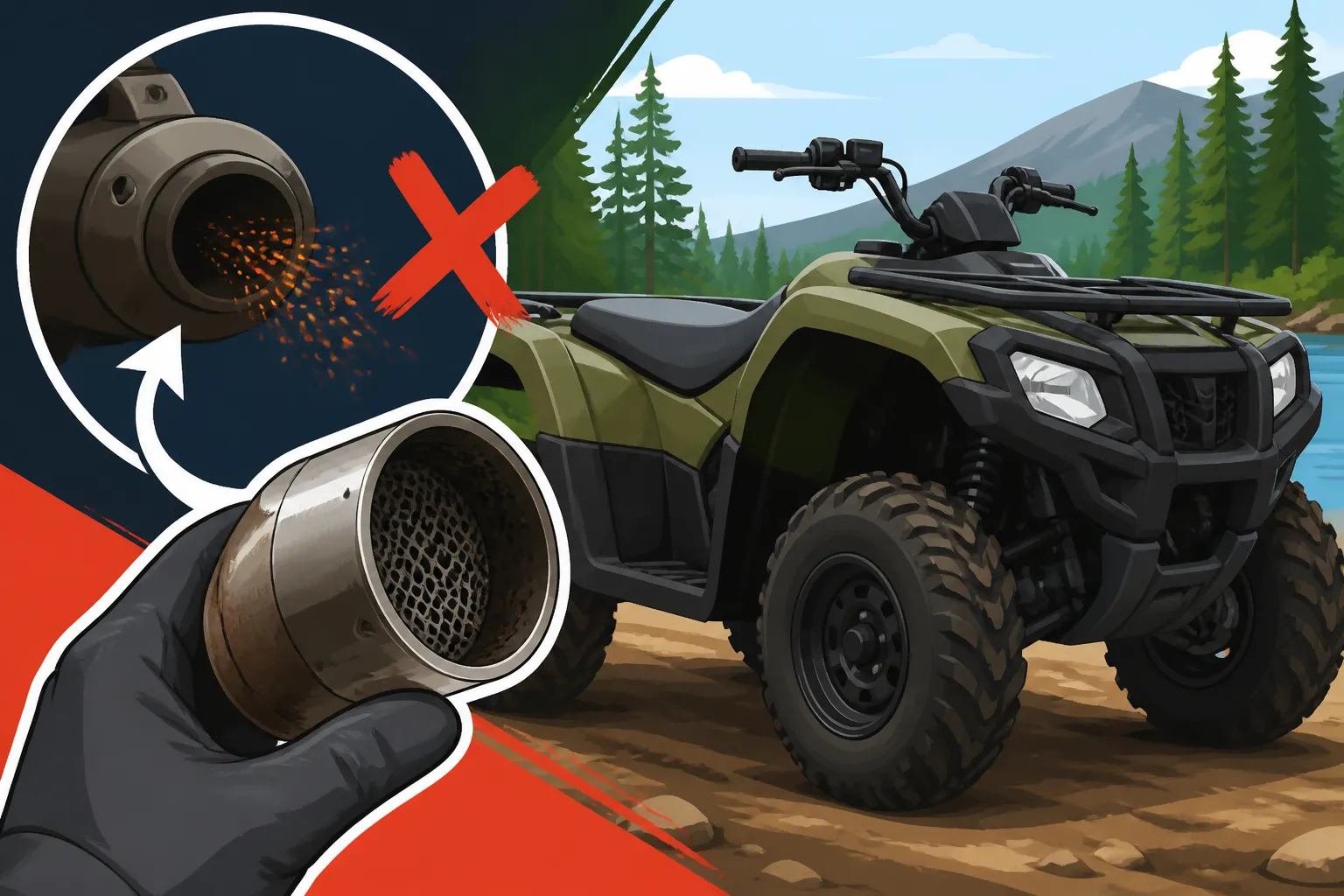
Spark Arrestor Inspection on a Used Quad
There's nothing quite like the thrill of finding a "new to you" ATV or UTV, especially when you're itching to hit the incredible trails here in Maine. But before you even think about firing it up and heading out, there's one critical component often overlooked during a pre-purchase inspection or after bringing it home: the spark arrestor. Many riders just assume it's there and working, but a missing or damaged spark arrestor isn't just a minor technicality; it's a huge fire risk and a surefire way to earn a hefty fine from a Maine Warden. This guide will walk you through exactly how to inspect this vital safety device, ensuring your used quad is trail-ready, legal, and safe for exploring our beautiful state.
Why a Spark Arrestor Is Non-Negotiable on Maine Trails
Riding an ATV in Maine is a privilege, not a right, and a big part of keeping that privilege means respecting the land and the rules. A functional spark arrestor is at the heart of both legal compliance and responsible trail use. It’s one of those things you never want to find yourself without when a Warden pulls up, or worse, when you inadvertently start a forest fire.
The Law and Landowner Trust
Here in Maine, the law is very clear: any motorized recreational vehicle operating on designated trails or public lands must be equipped with a US Forest Service approved spark arrestor. This isn't just a suggestion; it's a mandatory requirement. Wardens regularly patrol our vast trail networks, and checking for proper equipment, including spark arrestors, is a routine part of their job. Getting caught without one can result in a significant fine, and nobody wants their adventure cut short by a ticket. You can learn more about how wardens operate in [Maine Warden Service ATV Patrols].
Beyond the letter of the law, there's the spirit of the law, which really boils down to trust. A huge portion of Maine's ATV trails run across private land, thanks to the generosity and goodwill of landowners. When you ride on their property, you're accepting a responsibility to be a good steward of that land. A missing or faulty spark arrestor erodes that trust instantly. Landowners are understandably wary of fire risks, and one incident can lead to sections of trails being permanently closed, impacting everyone. Preserving [Maine Landowner Permission Rules] is paramount for our trail system's future.
Fire Safety and Environmental Responsibility
Let's talk about the real danger: wildfires. An internal combustion engine, especially one working hard, can expel superheated carbon particles from the exhaust. If that exhaust isn't properly filtered by a spark arrestor, those hot embers can easily land on dry leaves, pine needles, or grass, igniting a fire. Maine experiences periods of significant drought and dry conditions, particularly in spring and late summer/fall. During these times, the fire danger can escalate rapidly.
Imagine riding through a pristine section of forest, only to look back and see smoke. That's a nightmare scenario no rider wants to live. A spark arrestor, by design, traps these incandescent particles, cooling them before they can exit the exhaust system. It's a simple, yet incredibly effective, piece of technology that directly prevents catastrophic fires. By ensuring your quad has a functional spark arrestor, you're not just complying with the law; you're actively protecting Maine's irreplaceable natural resources and the livelihoods of those who live and work in our forested regions. This commitment to safety also extends to [Maine Noise Limits and Muffler Rules], ensuring your machine is a good neighbor on the trails.
Locating and Inspecting the Spark Arrestor on Your Used Quad
So, you've got your used quad, and you're ready to get serious about that spark arrestor inspection. This isn't a job you want to rush, especially if you're unfamiliar with the machine's history or how well it was maintained. Take your time, get some good light, and be thorough.
Where to Find It: Common Locations and Types
The spark arrestor is almost always located within or at the very end of your ATV or UTV's muffler. For most stock machines, it's an integrated part of the exhaust system. You'll typically find it at the outlet end of the muffler, where the exhaust gases exit. On many models, it's a removable screen or baffle that's held in place by a small bolt, screw, or retaining ring. You might need to look closely to spot it, sometimes it's tucked just inside the exhaust tip.
Aftermarket exhaust systems can be a little different. Some performance exhausts come with integrated spark arrestors, while others might offer them as an optional insert. If your used quad has an aftermarket exhaust, it's crucial to verify that it explicitly states it's spark arrestor-equipped and approved. Brands like SuperATV offer a variety of aftermarket exhaust components, and if you're considering an upgrade, always ensure any new part meets the spark arrestor requirement. You might find information about different exhaust setups in [Aftermarket Exhaust and Trail Access]. For common utility quads like a Polaris Sportsman or a Honda Foreman, the spark arrestor is usually a small, cone-shaped screen or baffle accessible from the exhaust outlet. Some older machines might have a less obvious internal baffle system, but the principle remains the same.
The Visual Inspection: What to Look For
Once you've located the spark arrestor, it's time for a close visual inspection. Make sure the engine is completely cool before you start – you don't want to burn yourself on a hot exhaust! A good flashlight is your best friend here.
- Carbon Buildup: This is the most common issue. Over time, carbon deposits from combustion can accumulate on the screen or baffle, restricting exhaust flow and potentially rendering the arrestor ineffective. Look for heavy, flaky, black deposits. A light coating is normal, but a thick layer that visibly clogs the openings is a problem.
- Physical Damage: Inspect the screen or baffles for any rips, tears, holes, or deformities. Even a small hole can allow hot embers to escape. Look for signs of impact or corrosion that might have compromised the integrity of the screen material.
- Missing Components: Is the spark arrestor even there? Sometimes, previous owners remove them for perceived performance gains or simply because they didn't understand their importance. If it's a removable screen type, check if the retaining bolt or screw is present and secure. A completely open exhaust port usually indicates a missing spark arrestor.
- Tampering: Be wary of signs that someone has tried to modify or bypass the spark arrestor. This could be anything from a crudely removed screen to a makeshift "repair" that doesn't meet safety standards. When buying a used machine, a [Pre-Purchase Inspection Before You Buy a Quad] is critical for catching these kinds of issues.
The Physical Check: Cleaning and Maintenance
If your visual inspection reveals excessive carbon buildup, it's time for a physical cleaning.
- Removal (if applicable): If your spark arrestor is a removable screen or baffle, carefully remove it. This usually involves undoing one or two small bolts or screws. Take care not to strip the threads or drop the hardware into the muffler.
- Carbon Removal: Use a wire brush (a brass brush is often good for avoiding damage), a small scraper, or even a specialized spark arrestor cleaning tool to gently remove the carbon deposits. For stubborn carbon, some people soak the component in a carbon-dissolving cleaner, but always follow the product instructions carefully and ensure it won't damage the metal. Avoid harsh abrasives that could compromise the screen material. Never use anything that could deform the screen, like a drill bit.
- Inspection After Cleaning: Once clean, re-inspect for damage you might have missed under the carbon. If the screen is heavily corroded, torn, or has holes, cleaning won't fix it – it needs replacement.
- Reinstallation: Reinstall the cleaned or new spark arrestor, ensuring it's seated correctly and the retaining hardware is snug. Don't overtighten, as these are often small, delicate threads.
This routine maintenance helps maintain optimal exhaust flow and ensures the spark arrestor can do its job effectively. Regular cleaning, especially after dusty rides or if you notice any unusual exhaust noise, will keep your machine trail-ready.
What to Do If Your Spark Arrestor Fails Inspection or Is Missing
Discovering a problem with your spark arrestor after buying a used quad can be a minor headache, but it's a solvable one. Don't let it deter you from enjoying Maine's trails, but definitely don't ignore it. Addressing it quickly is key to both your safety and legal compliance.
Replacement Options: OEM vs. Aftermarket
If your spark arrestor is damaged, missing, or beyond effective cleaning, you'll need a replacement. You generally have two main routes to go:
- OEM (Original Equipment Manufacturer) Parts: This is often the safest bet, especially if you want to maintain the original performance and sound characteristics of your machine. OEM parts are designed specifically for your make and model, ensuring a perfect fit and compliance with original specifications. You can usually order these through a powersports dealer that carries your ATV's brand. The main downside is that OEM parts can sometimes be pricier.
- Aftermarket Options: There's a vast world of aftermarket exhaust systems and spark arrestor inserts available. Many aftermarket mufflers are designed to be spark arrestor-equipped and offer performance benefits (like lighter weight or different sound profiles) while still meeting legal requirements. If you're looking for performance upgrades or a different exhaust note, this might be the route for you. Brands like SuperATV offer a range of aftermarket parts, including complete exhaust systems or universal spark arrestor kits. When opting for aftermarket, always double-check that the product is clearly advertised as being US Forest Service approved. Don't assume.
Consider your budget, your riding style, and whether you're looking for a simple replacement or an upgrade. Regardless of your choice, ensure the new part is designed to effectively trap sparks.
Installation Best Practices
Installing a new spark arrestor or a new muffler with an integrated spark arrestor is generally a straightforward process, but attention to detail is important:
- Gather Your Tools: You'll likely need a socket set, wrenches, a screwdriver, and potentially a gasket scraper if you're replacing a full muffler.
- Allow Cooling: As always, ensure the exhaust system is completely cool to the touch before you begin.
- Remove Old Components: If replacing a full muffler, carefully remove the old one. You might need to unbolt it from the header pipe and any mounting brackets on the frame. If it’s just the arrestor screen, remove the retaining bolt as you did for cleaning.
- Clean Mating Surfaces: If installing a new muffler, clean any mating surfaces (where the muffler connects to the header pipe) to ensure a good seal. Old gasket material should be scraped off.
- Use New Gaskets (if applicable): Always use new gaskets when installing a new muffler to prevent exhaust leaks. Gaskets crush to seal, and reusing old ones can lead to annoying (and sometimes performance-robbing) leaks.
- Install New Part: Carefully position the new spark arrestor or muffler. Hand-tighten all bolts first to ensure everything aligns correctly.
- Tighten Securely: Once everything is in place, tighten all bolts evenly and securely. Consult your ATV's service manual or the aftermarket part's instructions for specific torque specifications if available. Overtightening can strip threads or crack components.
- Check for Leaks: After installation, start the engine (once it's cooled down again, if you needed to test-fit it hot) and listen for any exhaust leaks. You can also carefully run your hand around the joints to feel for escaping gases, or use soapy water in a spray bottle – bubbles will indicate a leak.
Re-inspection and Trail Readiness
Once your new spark arrestor or muffler is installed, perform a final visual inspection to confirm everything is secure. Make sure all bolts are tight, and there are no rattles or loose components. It’s a good idea to let the engine run for a bit to ensure everything settles in properly.
Now you can feel confident that your used quad is equipped with a functional spark arrestor, meeting Maine's requirements for fire safety and trail access. With this crucial check out of the way, you can focus on getting your machine registered (if it isn't already, don't forget you can often get [Maine ATV Registration Confirmation for Immediate Riding] even before your physical stickers arrive) and planning your next adventure on Maine's fantastic trail system. Enjoy the ride, and ride safe!
| Issue Found During Inspection | Common Causes | Recommended Solution |
|---|---|---|
| Heavy Carbon Buildup | Rich fuel mixture, prolonged idling, lack of cleaning | Remove and clean thoroughly with a wire brush or carbon cleaner. |
| Holes or Tears in Screen | Corrosion, physical damage, cheap materials | Replace the spark arrestor screen or entire muffler. |
| Missing Spark Arrestor | Removed by previous owner for "performance" | Purchase and install a new OEM or approved aftermarket spark arrestor/muffler. |
| Deformed Baffles/Screen | Impact, overheating, improper cleaning attempts | Replace the spark arrestor component or muffler. |
| Loose Retaining Hardware | Vibration, lack of maintenance | Tighten existing hardware; replace if stripped or damaged. |
| Signs of Tampering | DIY modifications, attempts to bypass | Replace with a proper, approved spark arrestor/muffler. |
Disclaimer
This article is for general informational purposes only and does not constitute professional advice. Laws, prices and regulations vary by location and change over time. Consult a qualified professional for guidance on your specific situation.