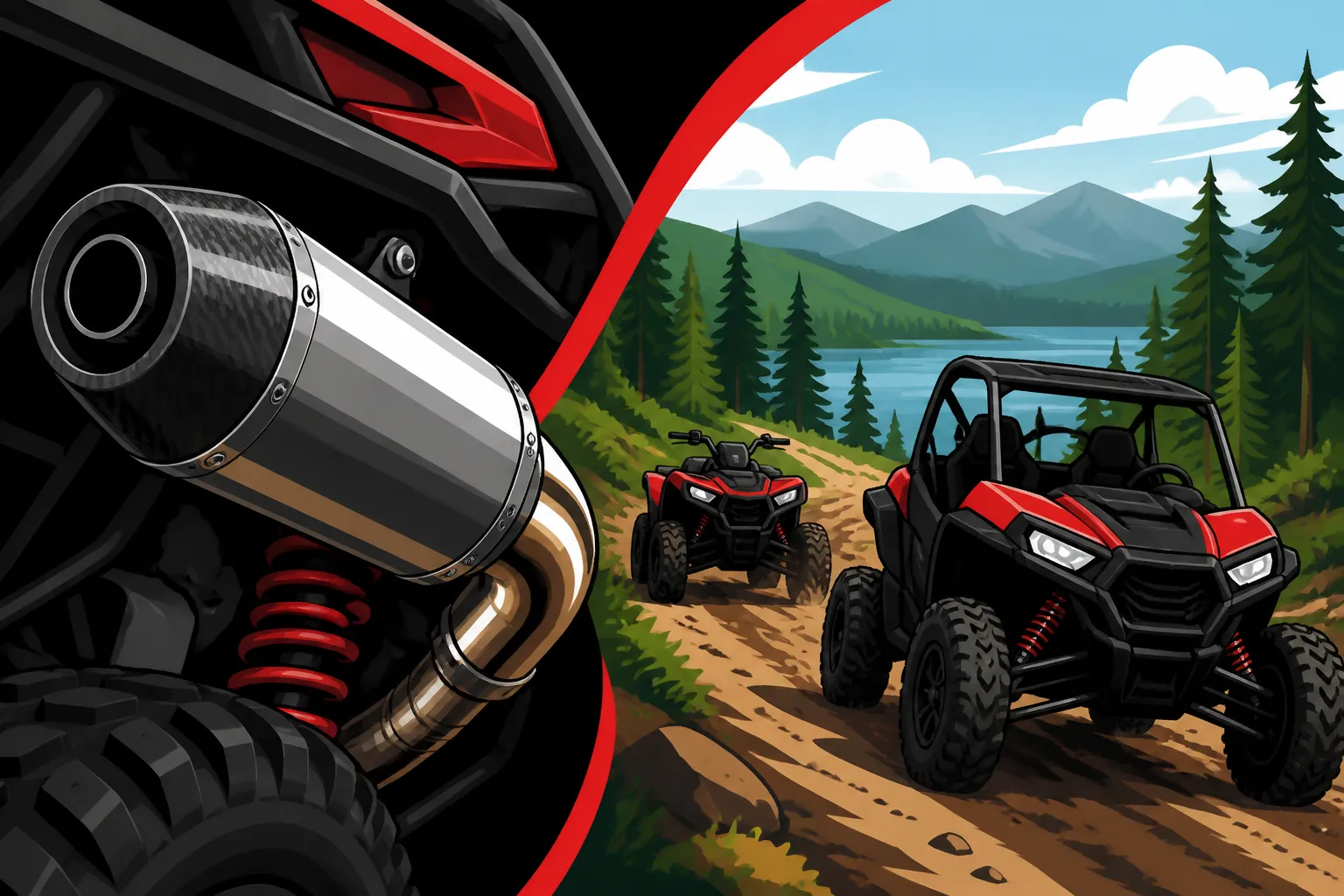
Aftermarket Exhaust and Trail Access
Many of us pour our passion into our ATVs and UTVs, constantly looking for ways to enhance performance, customize the look, or just get that perfect rumble. Aftermarket exhaust systems are a popular upgrade, promising more horsepower and a richer sound, but it's incredibly frustrating when that exciting modification inadvertently limits where you can ride. Nobody wants to invest in a new pipe only to find they're now operating outside Maine's regulations or, worse, contributing to the very trail closures that impact all riders. This comprehensive guide is here to unravel the complexities of aftermarket exhausts in Maine, helping you understand the rules, avoid common pitfalls, and ensure your machine stays compliant so you can enjoy the trails without worry.
Maine's Noise Regulations: Why Your Exhaust Matters
It's tempting to think of an aftermarket exhaust as just a sound or power upgrade, but in Maine, it quickly becomes a matter of legality and trail access. The sound an ATV or UTV makes isn't just a personal preference; it's regulated by state law and, crucially, affects the entire riding community. When that roar is too loud, it doesn't just bother your ears; it directly impacts the future of ATV and UTV riding in our beautiful state.
The Legal Decibel Limits You Need to Know
Maine has established clear noise limits for ATVs and UTVs to protect residents, wildlife, and the delicate balance of sharing our outdoor spaces. While specific decibel numbers can be found in the Maine Revised Statutes, the core principle is that your machine, whether stock or modified, must operate within these limits. This isn't just a suggestion; it's the law. These limits are typically measured at a specific distance from the machine and under particular engine RPMs, designed to ensure that even under normal operating conditions, your ATV or UTV isn't creating excessive disturbance.
What often happens is that an aftermarket exhaust, designed for maximum flow and a throaty sound, bypasses the engineering put into stock mufflers to meet these legal thresholds. You might love the aggressive note, but that aggressive note can easily push your machine beyond what's legally permissible. It's a fine line, and many riders unwittingly cross it, thinking a little louder is no big deal. But for those living near trail systems, or for other outdoor enthusiasts, it can quickly become an irritating and persistent problem.
How Wardens Enforce Noise Laws and Potential Penalties
Maine Game Wardens are out on the trails not just to check registrations and safety gear, but also to ensure compliance with noise regulations. It's not uncommon for wardens to use decibel meters to verify noise levels, especially if they receive complaints from landowners or residents. However, even without a meter, a warden can issue a citation if, in their judgment, your machine's exhaust noise is "unreasonably loud" or "excessive" as defined by statute. This subjective assessment can still lead to trouble, particularly if your exhaust is obviously much louder than a stock setup.
The consequences of being caught with an illegally loud aftermarket exhaust can range from a warning to a substantial fine. In some cases, if the issue is severe or persistent, it could even lead to your machine being impounded until it's brought into compliance. It's a real headache and an expense no one wants to deal with. Beyond the direct penalties, there's also the risk of losing respect within the riding community. Wardens are often the direct link between the public, landowners, and the riding community. When they have to address numerous noise complaints, it paints all riders in a negative light. You can learn more about how law enforcement operates in our guide on [Maine Warden Service ATV Patrols] and also understand the common violations by checking [Fines Maine Wardens Write Most Often].
Spark Arrestors: The Unsung Hero of Trail Preservation
Beyond noise, there's another absolutely critical component of your exhaust system that can make or break your trail access: the spark arrestor. This small, often overlooked part plays a gigantic role in protecting Maine's forests and fields from devastating wildfires, and operating without a compliant one is a serious offense that can have far-reaching consequences.
Understanding the Mandate for Spark Arrestors
A spark arrestor is a device incorporated into an internal combustion engine's exhaust system that is designed to prevent the emission of flammable debris (sparks) from the engine. When your ATV or UTV engine runs, it can expel tiny, super-heated carbon particles from the combustion process. If these particles land on dry grass, leaves, or pine needles, they can quickly ignite a wildfire. Given Maine's vast timberlands and often dry conditions, especially in spring and fall, the risk is incredibly high.
Because of this very real danger, Maine law, in line with federal regulations (specifically U.S. Forest Service standards), mandates that all off-road vehicles, including ATVs and UTVs, must be equipped with a U.S. Forest Service (USFS) approved spark arrestor. This isn't an option; it's a requirement for riding on any public land or any land that isn't your own private, designated area where you have complete control over fire safety. Most stock ATV and UTV exhausts come with an integrated, compliant spark arrestor right from the factory. The problem arises when riders switch to aftermarket systems. Many performance-oriented aftermarket exhausts prioritize flow and sound, sometimes at the expense of spark arrestor effectiveness or even omitting one entirely. This is where riders can inadvertently put themselves and our natural resources at risk. For a deeper dive into this vital component, read our article on [Spark Arrestor Requirements in Maine].
Ensuring Your Aftermarket System is Compliant
So, you've installed a shiny new aftermarket exhaust, perhaps from a brand like SuperATV, known for its extensive range of ATV/UTV parts. How do you know if it's got a compliant spark arrestor? The key is to look for a stamp or marking that indicates USFS approval. This is usually a small, stamped code on the muffler itself, often near the outlet. If you can't find such a stamp, or if the manufacturer's product description doesn't explicitly state USFS approval, then you should operate under the assumption that it's not compliant.
Some aftermarket exhausts might come with a removable spark arrestor insert. This is convenient for cleaning, but it also means it can be accidentally left out or removed permanently by a previous owner. Always physically inspect your exhaust. If you're unsure, consulting with an authorized dealer or an experienced mechanic can provide peace of mind. Regular maintenance also plays a role. Spark arrestors can become clogged with carbon buildup over time, reducing their effectiveness and even restricting exhaust flow. Cleaning them periodically, especially if you ride a lot, is a good practice. Neglecting this maintenance could lead to an inspection failure. Our guide on [Spark Arrestor Inspection on a Used Quad] offers more details on what to look for.
Aftermarket Exhaust and Its Direct Impact on Trail Access
This is where the rubber meets the road, or more accurately, where the exhaust meets the trail. The modifications you make to your ATV or UTV, especially to its exhaust, don't exist in a vacuum. They have real-world consequences that can directly affect where you and others can ride. In Maine, where trail access is a privilege, not a right, understanding this connection is paramount.
Private Landowners, Noise, and the Threat of Trail Closures
Maine's incredible network of ATV trails, stretching for thousands of miles, exists largely because of the generosity of private landowners. These individuals and families allow us to cross their property, often without asking for anything in return. This fragile relationship is the bedrock of our riding opportunities. Unfortunately, excessive noise from illegally modified or overly loud aftermarket exhausts is one of the top complaints wardens and ATV clubs receive from these landowners.
Imagine living in a peaceful rural area, only to have your weekends disrupted by the constant, high-pitched whine or guttural roar of ATVs passing by, often sounding much louder than a stock machine. It's easy to see how this could quickly erode patience and goodwill. Landowners who feel continually disturbed are more likely to post "No Trespassing" signs, revoke permission, and ultimately, close off sections of trail. When one section closes, it can disconnect entire loops or routes, making it impossible to ride from one town to another. This isn't just a hypothetical scenario; it happens regularly. Every time a landowner closes their land due to noise, it's a loss for everyone, impacting not just the individual rider, but the entire ATV community and the local economies that benefit from trail tourism. Understanding [Maine Trails That Cross Private Land] and fostering positive [Landowner Relations on Maine ATV Trails] are crucial, and your exhaust choice is a direct factor.
Navigating Town Ordinances and ATV-Access Routes
It's not just private landowners you need to consider. Many towns in Maine have developed specific ordinances to manage ATV and UTV traffic within their limits, especially on designated [Maine ATV-Access Routes and How Towns Post Them]. While these routes are fantastic for connecting trails to local businesses and services, they often come with stricter rules. What might be deemed acceptable noise on a remote woods trail could be a violation within a town's compact village area.
Town ordinances can specify different decibel limits for riding on public ways, or they might simply have a zero-tolerance policy for exhausts that are noticeably louder than stock. Some towns might require a completely stock exhaust system for passage through specific zones. These rules are put in place to maintain peace and quiet for residents, especially in residential areas or near businesses. Ignoring these local regulations can lead to tickets, fines, and even the eventual closure of those valuable town access routes. It's a lose-lose situation. Before venturing into any town on your ATV or UTV, it's always wise to check their specific ordinances. Our article on [Maine Town Ordinances That Restrict ATVs] provides more context on this.
| Exhaust Type | Pros | Cons | Compliance Risk (Maine) |
|---|---|---|---|
| Stock/OEM | Designed for quiet operation; meets all factory and legal noise/spark arrestor standards; generally durable. | Limited performance gains; may not offer the desired sound profile for some riders. | Very Low (assuming good condition) |
| Aftermarket (Performance-Oriented) | Increased horsepower/torque; lighter weight; often produces a louder, more aggressive sound. | Can exceed legal noise limits; may not include a USFS-approved spark arrestor (or one that's easily lost/removed); potential for landowner complaints. | High (without careful selection and verification) |
| Aftermarket (Quiet/Trail-Friendly) | Engineered to be quieter than typical performance exhausts while still offering some gains; often includes USFS-approved spark arrestor. | May not provide maximum performance gains; still requires verification of compliance. | Moderate (requires verification of specific model) |
Choosing a Responsible Aftermarket Exhaust for Maine Riding
Given these challenges, how can you upgrade your exhaust without jeopardizing your trail access? The answer lies in making informed, responsible choices.
-
Prioritize USFS Approval: Always, always ensure that any aftermarket exhaust you consider has a USFS-approved spark arrestor. If a manufacturer's description or the product itself doesn't explicitly state this, move on. Brands like SuperATV offer a wide array of parts, so if you're looking at their exhaust options or other accessories that impact noise, make sure to scrutinize the product details for compliance.
-
Research Noise Levels: Some aftermarket exhaust manufacturers provide decibel ratings for their products. Look for exhausts that explicitly state they meet or are below typical state noise limits. While exact decibel levels can vary based on your specific machine and how it's ridden, this is a good starting point. If a product simply advertises "aggressive sound" without any mention of compliance, it's a red flag.
-
Read Reviews and Ask the Community: Talk to other Maine riders, especially those in local ATV clubs. They often have firsthand experience with different aftermarket exhausts and can tell you which ones fly under the radar (legally!) and which ones cause problems. A local dealer who understands Maine's regulations can also be an invaluable resource.
-
Consider "Quiet Core" Inserts: Some performance exhausts offer optional "quiet core" inserts that can reduce noise levels to a more acceptable range. These can be a good compromise, allowing you to have a performance pipe for certain situations while being able to quiet it down for trail riding or passing through towns.
-
Think Beyond Raw Power: Sometimes, the small gain in horsepower from an aftermarket exhaust isn't worth the hassle of noise complaints and potential fines. Consider if there are other performance upgrades (like clutching or tuning) that might give you the desired boost without making your machine excessively loud.
Ultimately, choosing a responsible aftermarket exhaust means prioritizing trail access and community relations over the loudest possible roar. It's about being a good steward of the trails and ensuring that we all continue to have places to ride for years to come.
Responsible Riding and Exhaust Maintenance
Having the right exhaust system is only half the battle. Responsible riding practices and diligent maintenance are equally important to ensure your ATV or UTV remains compliant and doesn't contribute to the very issues that threaten trail access in Maine. It's an ongoing commitment, not a one-time fix.
Balancing Performance Desires with Community Responsibility
The allure of more power, a snappier throttle response, and a more aggressive exhaust note is undeniable for many ATV and UTV enthusiasts. However, living in a state like Maine, where the majority of our beloved trails traverse private land, means these desires must be balanced with a strong sense of community responsibility. Every decision you make about your machine, particularly regarding its sound, echoes through the entire riding community.
When a single rider, or a small group, continuously operates excessively loud machines, it casts a shadow over all ATV and UTV users. It reinforces negative stereotypes and makes it harder for ATV clubs and state agencies to negotiate new trail easements or maintain existing ones. The minor performance gain from an ungodly loud exhaust often pales in comparison to the collective loss of trail access that can result. Responsible riding means understanding that your personal enjoyment shouldn't come at the expense of others' peace and quiet, or the future of the sport itself. It's about being a good neighbor, even when you're miles deep in the woods.
Regular Maintenance for Ongoing Compliance
Even if you've invested in a USFS-approved, relatively quiet aftermarket exhaust, ongoing maintenance is crucial to ensure it remains compliant. Exhaust systems, especially on off-road vehicles, take a beating. They are exposed to mud, water, rocks, and constant vibrations, all of which can lead to wear and tear.
Here's what to keep an eye on:
- Spark Arrestor Cleaning: As mentioned earlier, spark arrestors can become clogged with carbon buildup. This not only reduces their effectiveness in preventing sparks but can also restrict exhaust flow, potentially affecting performance and making your engine run hotter. Consult your exhaust manufacturer's guidelines for how often and how to properly clean your spark arrestor.
- Checking for Leaks: Over time, gaskets can fail, or welds can crack, leading to exhaust leaks. These leaks not only create additional, unintended noise but can also be dangerous due to hot exhaust gases. Periodically inspect your entire exhaust system for any signs of leaks, such as black sooty marks or an unusual exhaust smell. Tighten any loose bolts or clamps.
- Muffler Damage: Dents, punctures, or cracks in the muffler body can compromise its sound-dampening capabilities, making your exhaust much louder than intended. If your muffler sustains damage from a collision with a rock or branch, it's wise to assess if it can be repaired or if replacement is necessary to maintain compliance.
- Baffling Degradation: Some aftermarket exhausts use internal baffling or packing material to reduce sound. Over time, this material can degrade, burn out, or shift, leading to a noticeable increase in exhaust volume. If your once-quiet exhaust suddenly becomes louder, this could be the culprit.
Regular inspection and maintenance will not only keep your machine compliant but also extend the life of your exhaust system and ensure your ATV or UTV runs as it should.
The Role of ATV Clubs in Maintaining Trail Access
Local ATV and UTV clubs are the backbone of Maine's trail system. They volunteer countless hours to maintain trails, build bridges, sign routes, and, critically, cultivate relationships with private landowners. These clubs work tirelessly to address concerns, mitigate issues like noise, and advocate for responsible riding.
When riders operate machines with excessively loud or non-compliant exhausts, it undermines all of these efforts. Landowners hear the noise and associate it with all ATV riders, not just the one individual. This makes the clubs' job infinitely harder when they try to secure or renew access agreements. Supporting your local club through membership dues (see [Maine ATV Club Membership and Dues]) or volunteering is not just about getting a map; it's about actively participating in the preservation of our riding heritage. These clubs are often the first line of defense against trail closures, and by ensuring your machine is compliant, you're directly contributing to their success and the longevity of our trails.
This article is for general informational purposes only and does not constitute professional advice. Laws, prices and regulations vary by location and change over time. Consult a qualified professional for guidance on your specific situation.