Maine ATV-Access Routes and How Towns Post Them
Picture this: you’ve been enjoying a fantastic day on Maine’s beautiful ATV trails, the sun shining, the engine purring, when suddenly, the trail ends at a paved road. Your heart sinks a little because you know the rules about riding on public ways are strict. How are you supposed to get to that gas station for a fill-up, or grab a burger at that diner you heard about, without trailering your machine for a mere mile or two? This guide is here to shed light on Maine’s ATV-access routes, those specially designated sections of town roads that make connecting trails and reaching amenities a whole lot easier and legal, helping you understand how towns decide to open them and what to expect when you ride them.
Understanding Maine's ATV-Access Route System
Maine has some truly incredible ATV trails, but one of the biggest challenges riders face is how to legally connect those trails or access services like gas, food, and lodging when a trail simply dead-ends at a public road. That's where the ingenious system of ATV-access routes comes into play. It's a game-changer for riders, transforming what could be a frustrating logistical puzzle into a seamless riding experience, as long as you know the rules and where to find them.
What Exactly is an ATV-Access Route?
An ATV-access route is, quite simply, a section of a public way – usually a town road, but sometimes even part of a state aid road – that a local municipality has officially designated as open for ATV and UTV travel. Think of it as a legal extension of the trail system, built into the existing road infrastructure. These aren't just random stretches of pavement; they are carefully selected and approved corridors that serve a specific purpose: to link trail networks, provide access to essential services, or allow riders to reach specific destinations like a restaurant, store, or even a local campground.
This designation is a stark contrast to the general rules of riding ATVs on public roads, which are incredibly restrictive. Normally, you can only operate an ATV on a public way for very limited purposes, such as crossing a road at a 90-degree angle or traveling up to 500 yards along the shoulder to access a private parcel of land where you have permission to ride. These are temporary, utilitarian movements. An ATV-access route, however, grants you the legal right to travel on that section of road, often for much longer distances, as if it were part of the trail system itself, but with specific road rules still applying. It’s a purposeful exception to the general prohibition.
The key thing to remember is that ATV-access routes are not a statewide blanket permission. Every single route exists because a specific town has voted to create an ordinance allowing it. This means what's legal in one town might be strictly off-limits in the next, even if the roads look identical. That local decision-making power is why you see such a patchwork of access, and why checking maps and local signage is absolutely critical before you venture onto any paved or public gravel road.
The Legal Framework for Town-Designated Routes
The ability for towns to designate these routes isn't something they just came up with on their own. It's explicitly allowed under state law, which grants municipalities the authority to permit ATVs to operate on public ways under certain conditions. This is a crucial distinction, as without that state legislative backing, towns wouldn't have the power to override the general prohibitions on ATV use on public roads. It's a careful balance between preserving public safety and enhancing recreational opportunities.
Once the state legislation provides the framework, the real work happens at the local level. It's the town's select board, after a process that usually involves public hearings and community input, that votes to enact an ordinance. This ordinance legally defines which roads, or specific sections of roads, are designated as ATV-access routes, along with any specific rules that apply to them. These rules might cover speed limits, times of operation, helmet requirements, or even types of machines allowed. Understanding these nuances is vital for responsible riding. For more on general road rules, check out [Maine ATV Rules for Riding an ATV on the Road in Maine].
This local ordinance system also means that ATV-access routes operate entirely differently from how you might register a traditional street-legal vehicle. Your ATV or UTV, even when on an access route, is still considered an off-highway vehicle (OHV). It doesn't magically become a street-legal car. Therefore, the requirements for things like inspection stickers, full automotive insurance, or a standard vehicle license plate don't apply, though your ATV still needs a valid Maine registration and you must abide by the specific rules of the access route. It’s a special carve-out, not a reclassification of your machine.
Benefits of a Well-Planned Access Route
The creation of well-planned ATV-access routes brings a host of benefits, not just for riders, but for the entire community. First and foremost, they significantly enhance the rider experience. Instead of having to cut a ride short or trailer their machines for short distances, riders can seamlessly transition from trail to town and back again. This connectivity allows for much longer, more adventurous rides, letting people explore broader regions without the constant interruption of trailering. It makes planning multi-day trips much more viable and enjoyable.
Beyond the immediate riding experience, these routes are often a huge boon for local economies, especially in rural Maine. When riders can easily access towns, they're much more likely to stop for gas, grab a meal at a local diner, pick up supplies at a general store, or even book lodging for the night. This influx of recreational dollars supports small businesses, creates jobs, and generates tax revenue for communities that might otherwise struggle, particularly during the shoulder seasons. Many towns actively embrace ATV tourism specifically for this economic shot in the arm.
Finally, well-managed access routes foster a greater sense of community integration. When towns, local ATV clubs, and riders work together to establish and maintain these routes, it builds goodwill and understanding. Riders feel welcomed and valued, and residents see the positive impact of responsible ATV tourism. It validates the hard work of trail crews and club volunteers who maintain the vast network of trails, ensuring that access to amenities is not an afterthought but a planned part of the overall recreational infrastructure.
The Process of Designating an ATV-Access Route in Maine Towns
The idea of riding your ATV or UTV right into a small Maine town, maybe to grab a sandwich or a cold drink, sounds fantastic, doesn't it? But that convenience doesn't just happen overnight. Designating an ATV-access route is a deliberate, often lengthy process that requires cooperation, planning, and formal action at the municipal level. It's a testament to local communities recognizing the value that responsible ATV recreation can bring.
How a Town Initiates an ATV-Access Route
The spark for creating an ATV-access route typically comes from the ground up. More often than not, it's a local ATV club or a dedicated group of enthusiastic citizens who see a need and take the initiative to approach their town's select board or town council. These groups usually have a clear idea of which roads would be most beneficial for access, perhaps connecting two major trail systems, leading to a popular gas station, or providing a vital link to a cluster of local businesses. They'll come armed with maps, proposed routes, and a compelling argument for the economic and recreational benefits. You can learn more about how to get this process started in [How to Petition Your Town for an ATV Route].
However, the initiative isn't always solely from outside groups. Sometimes, town officials themselves might be proactive. They might observe the success of ATV tourism in neighboring communities, hear positive feedback from local businesses, or identify an opportunity to draw more visitors to their area. In these cases, the town leadership might initiate the process by directing town staff to research potential routes and draft a proposed ordinance. Regardless of who starts the conversation, the process always involves bringing the proposal before the elected town officials for their consideration.
Once a proposal is on the table, a critical step is public engagement. Designating an ATV-access route impacts everyone in the community, not just riders. Therefore, towns are typically required to hold public hearings or community forums. This is where residents can voice their support, raise concerns about noise, safety, dust, or traffic, and offer their own perspectives. This feedback is invaluable for the select board as they weigh the pros and cons and ultimately decide on the future of ATV access within their town. It's a democratic process that aims to find a balance benefiting the whole community.
Factors Towns Consider Before Approval
When a town's select board sits down to consider an ATV-access route proposal, they don't just rubber-stamp it. They carefully weigh a multitude of factors, prioritizing the safety and well-being of their residents while also looking at the potential benefits. One of the primary considerations is safety. This involves analyzing traffic volume on proposed roads, evaluating sight lines at intersections, and identifying any particularly dangerous curves or hills where ATVs might encounter cars unexpectedly. They'll also look at whether the route passes through heavily residential areas or near schools, where increased ATV traffic could pose a higher risk or create more disturbance.
Another significant concern often raised by residents is noise. While many modern ATVs and UTVs are much quieter than older models, any increase in off-highway vehicle traffic can lead to complaints, especially in peaceful residential neighborhoods. Town officials will consider the proximity of proposed routes to homes and look at ways to mitigate noise, perhaps by setting specific hours of operation or imposing stricter speed limits on certain sections. The goal is to allow access without unduly infringing on the quiet enjoyment of town residents.
Finally, towns must consider the practical impact on their infrastructure and resources. Will the increased ATV traffic lead to more dust on gravel roads, potentially affecting homes nearby? Will it accelerate wear and tear on roads, requiring more frequent maintenance? These are real costs that a town must bear, and they'll consider how these might be offset by the economic benefits or if adjustments need to be made. Crucially, they’ll also look at how well the proposed route connects to existing trail networks and serves key destinations, ensuring that the route truly enhances the riding experience and provides tangible value rather than just being a disconnected segment.
The Role of Town Ordinances and Select Board Votes
The formal mechanism for establishing an ATV-access route is through the adoption of a town ordinance. This isn't just a casual agreement; it's a legally binding local law. The process typically begins with the drafting of a proposed ordinance, often by town staff or a legal advisor, which outlines the specific roads, sections, and conditions under which ATVs are permitted. This draft will detail everything from speed limits and operating hours to any specific equipment requirements beyond state law, ensuring clarity for riders and residents alike.
Once a draft is ready, it usually goes through a review process, often involving the planning board or a special committee, before being presented to the select board. Public hearings are a mandatory part of this process, as mentioned, providing a forum for community input. After considering all feedback, revisions might be made to the draft ordinance. The select board then holds a formal vote, and if a majority approves, the ordinance is officially adopted, making the designated roads legal ATV-access routes within that municipality. This vote is the culmination of the entire process, turning a proposal into established law. Find out more about how these decisions are made in [Maine Select Board ATV Route Votes].
The importance of clear and specific language in these ordinances cannot be overstated. Ambiguity can lead to confusion for riders, enforcement challenges for local authorities, and potential conflicts with residents. A well-written ordinance clearly defines the boundaries of the access routes, specifies any unique local rules, and often references state laws that still apply. This precision ensures that everyone understands the expectations and limitations, contributing to safe and harmonious use of these shared public ways.
Posting and Signage Requirements for Maine ATV-Access Routes
Once a town has gone through the rigorous process of designating an ATV-access route, the job isn't over. In fact, one of the most critical steps to making these routes effective and safe is proper signage. Without clear, consistent, and legally compliant signs, riders might not know where they can legally ride, and non-riders might not understand the presence of ATVs on these roads. It's all about communication on the trail (and road!).
The Mandate for Clear and Consistent Signage
The reason signs are so incredibly crucial for ATV-access routes boils down to safety and legality. For riders, these signs are their guideposts, telling them exactly where they are permitted to operate their machines on public ways. Without them, even the most well-intentioned rider could inadvertently trespass or break the law by riding on an undesignated road. They eliminate guesswork and empower riders to explore safely and legally. For non-riders – drivers, pedestrians, and property owners – the signs serve as a vital heads-up, informing them that ATVs may be present on that particular road, prompting them to exercise extra caution and awareness.
Maine state law, specifically through the Department of Inland Fisheries & Wildlife (IF&W) regulations, mandates specific requirements for signage on designated ATV-access routes. These aren't suggestions; they're rules. Towns and the ATV clubs that often partner with them must ensure that signs are strategically placed at all entry and exit points of an access route, at major intersections along the route, and wherever a specific rule (like a reduced speed limit or a passenger restriction) might change. This isn't just about putting up a sign, but putting up the right sign in the right place so that riders have continuous, unambiguous guidance.
The responsibility for actually procuring, installing, and maintaining these signs often falls on a collaborative effort. While the town holds the legal authority to designate the route, it's frequently local ATV clubs that take on the heavy lifting of purchasing and installing the official signage, sometimes with grants or support from the Bureau of Parks and Lands (BPL). This partnership is vital because clubs are often intimately familiar with the trails and the nuances of the local area, making them excellent stewards of the signage network. You can delve deeper into the specifics of sign placement in [Maine ATV-Access Route Signs and Spacing].
What the Signs Look Like and What They Tell You
If you've spent any time riding in Maine, you've likely seen some of these signs. They're typically square or rectangular, often green, blue, or brown, with white lettering. The most common signs will clearly state "ATV ACCESS ROUTE" to immediately inform riders and drivers of the road's designation. Beyond that, you'll find a variety of other signs that provide crucial operational information. These might include directional arrows pointing the way to the trail, a specific speed limit for ATVs (which is often lower than the posted speed limit for cars on the same road), or warnings about specific local ordinances like "Single File Only" or "Helmets Required for All Riders."
It is absolutely imperative that riders pay close attention to every sign they encounter on an access route. What might be allowed on one section could change drastically a few miles down the road due to a local ordinance. For example, some towns might allow UTVs, while others might restrict them due to width or noise concerns. Some routes might be closed during certain hours or seasons. These signs are not decorative; they are direct instructions that you must follow to remain legal and safe. Ignoring them could result in fines or, worse, accidents. For a visual guide to these signs, check out [Maine ATV Route Signs and What They Look Like].
Occasionally, you might see signs detailing additional safety requirements specific to that route, such as "Yield to Vehicular Traffic" or "No Night Riding." It's a localized system, and what makes it work is strict adherence to the posted information. Think of it as riding a trail where the difficulty level changes – you need to be aware and adjust your riding style accordingly. These signs are the town's way of communicating those adjustments, ensuring that the coexistence of ATVs and other traffic is as smooth and safe as possible.
Challenges in Maintaining Signage
While designating and posting signs sounds straightforward on paper, the reality of maintaining them across miles of routes in Maine's varied terrain and weather can be a significant challenge. One common issue is vandalism. Unfortunately, some signs are targeted by individuals who remove, deface, or damage them, rendering them useless or misleading. This not only creates confusion for riders but also incurs costs for replacement and diverts resources from other trail maintenance efforts.
Weather is another formidable adversary for signage. Maine experiences harsh winters with heavy snow and ice, followed by periods of intense rain and strong winds. These conditions can cause signs to become bent, faded, knocked down, or completely obscured by overgrowth. A sign that was perfectly visible in July might be completely hidden by roadside brush in August, or buried under a snowbank in January. This requires constant vigilance and effort from volunteers to keep routes clearly marked year-round.
The ongoing effort to replace damaged signs, trim vegetation that obscures them, and ensure new signs are installed when routes change or expand is a continuous task. Local ATV clubs often dedicate countless volunteer hours to these efforts, knowing that accurate signage is fundamental to the integrity and safety of the entire system. Without their tireless work, the network of ATV-access routes would quickly become unreliable, making it harder for riders to enjoy Maine's trails responsibly.
Rules and Regulations on Maine ATV-Access Routes
Riding on a designated ATV-access route in Maine isn't the same as riding on a private trail or a wide-open logging road. While these routes offer invaluable connectivity, they are still public ways shared with other vehicles, pedestrians, and residents. This means there are specific rules and regulations that riders must absolutely adhere to, both for their own safety and for the harmonious coexistence with other road users and the community.
General Operating Rules on Access Routes
When you transition from a forest trail onto an ATV-access route, the rules of the road immediately kick in, even though you're still on an off-highway vehicle. One of the most critical rules to be aware of is the speed limit. While the posted speed limit for cars on a particular road might be 35 MPH or 45 MPH, ATVs and UTVs often have a lower specific speed limit on access routes, typically around 20-25 MPH, especially in residential areas or village centers. These lower limits are in place to enhance safety, reduce noise, and minimize dust, which are common concerns for residents. Always look for and obey specific ATV speed limit signs, and if none are posted, default to a safe, slow speed that shows respect for the area. You can learn more about general speed regulations in [Maine ATV Speed Limits Near Buildings].
Another common operating rule, especially on narrower access routes or those passing through populated areas, is riding in single file. This is crucial for safety, allowing other vehicles to pass more easily and reducing the footprint of a group of ATVs. It's not a suggestion; it's often a requirement specified in town ordinances or on signage. You’re sharing the road, and taking up less space is a sign of respect and responsibility.
Perhaps the most important overarching rule is yielding to traffic. On an ATV-access route, your ATV or UTV is generally expected to yield to automobiles. This means being extra vigilant at intersections, allowing cars to pass, and never assuming you have the right of way. While it's fantastic to have the privilege of riding on these roads, it's a privilege that comes with the responsibility of being a courteous and safe road user. This includes signaling your turns and generally operating predictably, just as any other vehicle would.
Specific Equipment and Safety Requirements
Beyond general operating rules, ATVs and UTVs on designated access routes often have specific equipment and safety requirements that might be more stringent than what's required on private trails. For example, while helmets are highly recommended everywhere, they are frequently mandatory for all riders, regardless of age, when operating on public ways or designated access routes. This is a non-negotiable safety measure that could literally save a life, and wardens enforce it strictly.
Lighting is another critical requirement, especially if you plan to ride during dawn, dusk, or at night. Your ATV or UTV must be equipped with functioning headlights, taillights, and brake lights, and they must be turned on during these low-light conditions. Some ordinances might even specify additional running lights or reflective tape. These measures are not just for your visibility; they are essential for making you visible to other drivers sharing the road. To understand Maine's lighting regulations better, refer to [Maine Lighting Requirements for Night Riding]. Products from SuperATV, like their DOT-approved LED headlights and taillights, can be excellent upgrades to ensure your machine meets all necessary visibility standards.
Depending on the local ordinance, some towns might also require ATVs and UTVs on their access routes to have mirrors and a horn. While not universal, these additions can significantly enhance safety when operating around other vehicles. Mirrors allow you to be aware of traffic behind you, and a horn can be a crucial warning device in an emergency. It's always a good idea to check the specific town ordinance for the routes you plan to ride to ensure your machine is equipped to the letter of the law.
Understanding Local Variations and Restrictions
One of the biggest lessons for riding Maine's ATV-access routes is this: what applies in one town might not apply in another. This system is inherently local, and towns have the power to create ordinances that reflect their unique community needs and concerns. This means you simply cannot assume that the rules for an access route in Greenville will be the same as those in Jackman or Millinocket. This variation can be a source of frustration for riders who are just trying to enjoy a seamless trip, but it's a reality you must navigate.
For instance, some towns might have time-of-day restrictions, prohibiting ATV use on their access routes after a certain hour, perhaps to minimize noise complaints in residential areas. Others might impose specific noise limits, requiring all machines to have a functioning exhaust system with a spark arrestor and prohibiting excessively loud aftermarket exhausts. There could also be restrictions on machine types; while most routes accommodate both ATVs and UTVs, some towns might have specific concerns about wider UTVs or very loud machines and limit their access.
The best way to understand these local variations is to do your homework before you go. Consult local ATV club maps, check the town's official website for their ordinances, or look for specific signage on the routes themselves. Ignoring these local rules isn't just rude; it's a violation that can lead to fines and, more importantly, can jeopardize the future of ATV access in that community. Responsible riders understand that respecting these local nuances is key to maintaining access for everyone. For insights into which towns have specific rules, see [Maine Towns That Restrict ATVs on Public Ways].
Navigating and Finding Maine's ATV-Access Routes
Maine boasts thousands of miles of ATV trails, and the network of ATV-access routes plays a crucial role in making that vast system truly interconnected. But for new riders, or those visiting from out of state, finding these sometimes inconspicuous road sections can feel like a treasure hunt. Thankfully, there are excellent resources available to help you navigate and incorporate these routes into your riding plans.
Resources for Finding Designated Routes
When you're planning an ATV adventure in Maine, your first stop for identifying designated access routes should always be reliable, up-to-date maps. The Maine Bureau of Parks and Lands (BPL), which oversees the state's ATV program, often provides general information and links to maps, but the real heroes here are the local ATV clubs. These clubs meticulously map their trail systems, and crucially, they clearly mark where official ATV-access routes are located within their territories. Their websites are invaluable resources, often featuring downloadable PDF maps or interactive online maps.
Beyond official state and club resources, several excellent third-party mapping applications have become indispensable for ATV riders. Apps like onX Offroad, for example, frequently integrate ATV trail data, including designated access routes, allowing riders to see their location in real-time, plan routes, and even download maps for offline use in areas without cell service. These digital tools have revolutionized trail navigation, making it easier than ever to confidently follow access routes. To find specific routes, you'll want to check [Finding Posted ATV Routes in Your Maine Town] and consult the [ATV Maine Club Map Online].
It's also worth noting that many gas stations, general stores, and visitor centers in popular ATV riding regions will often have printed maps available, sometimes free of charge. These maps, produced by local clubs or regional tourism associations, often highlight ATV-access routes prominently. Don't be shy about stopping in a local business and asking for a map or for recommendations on local routes. The people working there are often riders themselves and can provide excellent insights.
Planning Your Ride to Incorporate Access Routes
Successfully incorporating ATV-access routes into your ride requires a bit of pre-planning, but the payoff is immense. Imagine being able to ride from one trail system to another, without having to load your machine onto a trailer. That's the power of these routes. When you're looking at your map, identify where major trail networks end near public roads. Then, see if a designated access route picks up from there, leading you towards the next trail segment or a desired amenity like a gas station, a small town with restaurants, or perhaps a lakeside lodge.
These routes are especially valuable for planning multi-day trips. Instead of basing yourself in one spot and trailering daily, you can use access routes to create grander loops, linking together distant trail systems. This allows you to explore more of Maine's diverse landscapes, from the deep woods of Aroostook to the western mountains. It opens up opportunities to experience different towns and their unique charm, truly making your ATV trip an adventure through the heart of Maine.
However, planning isn't just about identifying the routes; it's also about understanding the specific challenges. Pay attention to any road crossings along your planned access route. Even on designated routes, you'll still need to exercise extreme caution at intersections with busy highways or areas with heavy car traffic. Always be prepared to yield, stop, and look both ways multiple times. Planning also means considering your fuel range; knowing where access routes lead to gas stations is essential for long rides.
Respecting Boundaries and Private Property
While ATV-access routes provide a welcome opportunity to ride on public ways, it's absolutely crucial to remember that they are specific, designated corridors. The moment you veer off a marked access route onto adjacent land, you are likely trespassing. This is a critical point of contention between landowners and riders, and irresponsible riding can lead to the closure of trails or access routes. Respecting these boundaries is non-negotiable for the future of ATV riding in Maine.
Be acutely aware of private property along these routes. Many designated roads pass by homes, farms, or private businesses. Your actions directly impact these residents. This means being mindful of your speed, keeping noise to a minimum, and definitely not kicking up excessive dust. It also means never stopping on someone's lawn, driveway, or private land, unless you have explicit permission. These acts of disrespect can quickly sour landowner relations, leading to legitimate complaints that can put access routes in jeopardy.
You’ll often see signs for "No Trespassing" or land marked with "purple paint" along roadsides. This purple paint method is a legal way for landowners in Maine to indicate that land is off-limits without needing extensive signage. An ATV-access route is a defined path; anything outside that path is private property unless explicitly marked otherwise. Your privilege to ride on these routes depends entirely on showing respect for the land and its owners.
The Community and Economic Impact of ATV-Access Routes
Maine’s ATV-access routes are more than just lines on a map; they are arteries that pump economic vitality into small, rural towns and foster stronger community ties. The decision to open a road section to ATVs isn't made lightly, and it's often driven by the clear benefits that such integration can bring to local populations and businesses. It's a testament to how recreational tourism can be a powerful economic engine.
Supporting Local Businesses
For many remote Maine communities, especially those that might not be on a major highway, ATV tourism has become a lifeline. ATV-access routes directly facilitate this by allowing riders to easily reach local businesses. Picture a group of riders pulling up to a general store to grab snacks and drinks, heading to a diner for lunch, or filling up their tanks at a gas station. Each of these stops represents money flowing into the local economy, supporting small, often family-owned, businesses.
Many towns and individual businesses actively embrace this economic opportunity, proudly displaying "ATV Friendly" signs. This might mean having designated ATV parking, offering discounts to registered riders, or simply being known for their welcoming atmosphere. This positive feedback loop encourages more riders to visit, which in turn encourages more businesses to cater to them. It's a powerful way to inject much-needed revenue into areas that often rely heavily on seasonal tourism.
This isn't just about gas and food; it extends to lodging as well. Riders on multi-day trips will book rooms at motels, cabins, or sporting camps that are directly accessible from the ATV trail network via these access routes. This boosts the hospitality sector, from cleaners to front desk staff, and provides a broader economic benefit. The money generated from ATV registrations and fees also contributes to trail maintenance and development, further supporting the infrastructure that makes this tourism possible. For more on how these funds are allocated, see [Maine ATV Registration Revenue and Trail Grants].
Collaboration Between Towns, Clubs, and Landowners
The success of Maine’s ATV-access routes is a shining example of collaboration in action. It’s rarely a top-down mandate; instead, it's usually the result of a vital partnership between three key groups: the towns, the local ATV clubs, and the private landowners. Without all three working together, the system simply wouldn't function.
Local ATV clubs are often the driving force behind proposing and implementing access routes. They represent the riding community, understand the trail network intimately, and are typically responsible for a great deal of the on-the-ground work, including purchasing and installing signage, maintaining trail sections that lead to routes, and serving as the primary liaison between riders and the community. Their volunteer hours are indispensable.
Towns, through their select boards and municipal staff, provide the crucial legal framework. They conduct public hearings, draft and adopt the ordinances that officially designate these routes, and sometimes contribute to maintenance or enforcement. Their willingness to embrace and regulate ATV access is what makes these routes legal and sustainable. It takes foresight and a willingness to engage with the riding community to make it work.
And, of course, the landowners. A significant portion of Maine's vast trail network, even those leading to access routes, crosses private land. The continued permission of these landowners is the bedrock of the entire system. Access routes are often designed to minimize impact on private property, and the respectful behavior of riders is paramount to maintaining good landowner relations. This three-way partnership ensures that the routes are not just legal, but also supported and cherished by all stakeholders.
Potential Challenges and Ongoing Management
While ATV-access routes offer immense benefits, they also present ongoing challenges that require continuous management and adaptation. One of the most common issues that towns face is addressing complaints from residents. Noise, dust, and concerns about rider speed are frequent points of contention, particularly in residential areas along the routes. Towns must have mechanisms in place to receive and investigate these complaints, and if necessary, adjust ordinances or increase enforcement to ensure rider compliance.
Funding is another perpetual challenge. While ATV registration fees and grants contribute to the overall trail system, the direct costs associated with maintaining designated road sections – such as increased road wear, signage replacement, and additional enforcement – often fall on the towns themselves. Finding sustainable funding sources and balancing municipal budgets with the demands of recreational infrastructure is an ongoing tightrope walk.
Ultimately, the long-term success of ATV-access routes hinges on constant education and advocacy for responsible riding. This means reminding riders that the privilege of using these routes can be revoked if abuses occur. ATV clubs play a crucial role here, promoting trail etiquette, encouraging adherence to rules, and actively engaging with landowners and town officials. It's a dynamic system that requires all parties to remain committed to its proper management for the benefit of everyone.
Comparing ATV-Access Routes to Other Road Riding Scenarios
It's easy to get confused by Maine's rules about ATVs on public ways, especially with different types of roads and various regulations. Understanding the distinction between a designated ATV-access route and other scenarios, like the 500-yard rule or operating a street-legal UTV, is absolutely crucial to staying legal and safe on your machine. Let's break down these differences so you can ride with confidence.
Access Routes vs. the 500-Yard Limit
Perhaps the most common area of confusion for riders is mistaking a designated ATV-access route for the general "500-yard limit" rule. These are two distinctly different concepts with different purposes and limitations. The 500-yard rule, as outlined in Maine law, generally allows an ATV to operate on the extreme right of a public way for a distance not exceeding 500 yards. The primary purpose of this rule is to allow a rider to access an adjacent private parcel of land where they have permission to ride, or to cross a public way at a 90-degree angle to get from one trail segment to another. It's designed for short, utilitarian movements, not for extended travel.
An ATV-access route, on the other hand, is a specific section of a public way that a town has officially designated for ATV travel. This designation allows for much longer travel than the 500-yard limit, often for several miles, with the express purpose of connecting trails, reaching towns, or accessing amenities. Think of it this way: the 500-yard rule is a limited allowance for specific, brief maneuvers, while an access route is a recognized, legal pathway for recreational travel. You wouldn't use the 500-yard rule to ride into a town for lunch; that's what an access route is for.
It's also important to remember that the 500-yard limit still applies in areas without designated access routes. So, if you're riding in a town that hasn't established an ATV-access route, you're still bound by the strict crossing and 500-yard rules if you need to briefly use a public way. Never assume that just because you can ride 500 yards, you can ride indefinitely. Always check your maps and look for official "ATV ACCESS ROUTE" signage. For a deeper dive into the 500-yard limit, refer to [Maine's 500-Yard Limit on a Public Way].
What About Street-Legal UTVs?
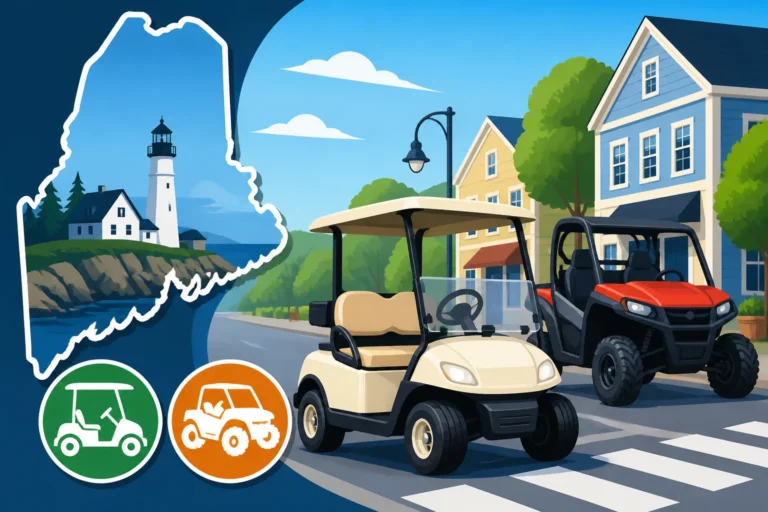
This is another area where the lines can get blurry, especially with the growing popularity of UTVs (side-by-sides). It's crucial to distinguish between an ATV/UTV operating on a designated access route and a UTV that has been formally converted and registered as a "street-legal" or "low-speed vehicle" (LSV) for general road use. They operate under entirely different sets of laws and requirements.
A UTV on an ATV-access route, regardless of whether it has a windshield or turn signals, is still considered an off-highway vehicle (OHV) under Maine law when on that route. It needs an ATV registration sticker from IF&W, and it follows the rules of the access route ordinance. It does not need a vehicle inspection sticker, a standard license plate, or full automotive liability insurance as if it were a car. It's temporarily granted permission to share that specific public way.
Conversely, a truly "street-legal" UTV has undergone specific modifications (DOT-approved tires, windshield, mirrors, horn, turn signals, seatbelts, etc.), has passed a vehicle inspection, has been registered with the Bureau of Motor Vehicles (BMV) as a low-speed vehicle or similar classification, and carries a standard license plate and full automotive insurance. These machines are designed to operate on most public roads (often with speed limitations) just like a car, not just on designated ATV access routes. While SuperATV offers many accessories and kits that can help convert a UTV to be street-legal, like their complete turn signal kits and DOT-approved safety glass windshields, simply installing these items doesn't automatically make your UTV street-legal. There's a formal registration and inspection process that must be completed. For more on converting your UTV, check out [Can a UTV Be Made Street Legal in Maine?]. These two categories are distinct, and mistaking one for the other can lead to serious legal consequences.
Understanding "Designated" vs. "Undesignated" Public Ways
The foundation of Maine's ATV-access route system rests on one core principle: if a public way is not explicitly designated as an ATV-access route, then, with the limited exceptions of crossing or the 500-yard rule, it is illegal to operate your ATV or UTV on it. This means you cannot just assume that because a road is quiet, unpaved, or seems like a natural extension of a trail, that you have the right to ride on it.
Many riders, particularly those new to Maine, sometimes make the mistake of thinking that all dirt town roads or even quieter paved roads are fair game. This is simply not true. Unless you see the official "ATV ACCESS ROUTE" signs, or you're performing a legal crossing or using the 500-yard access, you should not be on that public way with your ATV or UTV. This applies to town-maintained roads, county roads, and certainly state highways.
The importance of staying strictly on marked routes cannot be overstated. Riding on undesignated public ways can lead to significant fines, confiscation of your machine, and can severely damage the relationship between the riding community and local residents and officials. Every instance of illegal road riding threatens the hard-won access that local clubs and towns have worked so diligently to establish. It's a privilege to have these access routes, and responsible riders understand that protecting that privilege means adhering to the rules on all roads, not just the ones they prefer.
Disclaimer
This article is for general informational purposes only and does not constitute professional advice. Laws, prices and regulations vary by location and change over time. Consult a qualified professional for guidance on your specific situation.