Maine’s 500-Yard Limit on a Public Way
It can be incredibly frustrating when you're out enjoying Maine's expansive ATV trails, only to find your path interrupted by a public road. That moment of hesitation, wondering if you can legally cross, ride a short stretch, or even access a nearby gas station, is a common one for riders. This guide is here to untangle the complexities of Maine's 500-yard limit on public ways, helping you understand precisely when and how you can legally navigate these brief road sections without risking a fine or compromising your safety.
Understanding the 500-Yard Rule: What It Means for Maine ATV Riders
Navigating Maine's vast network of ATV trails often means encountering public roads. Whether it's a quick crossing or a short jaunt to reach another trail segment, understanding the specific rules governing these interactions is crucial. Among the most important is Maine's 500-yard limit on public ways, a regulation designed to balance ATV access with public safety and traffic flow. This rule isn't a free pass to cruise down the highway, but rather a carefully defined allowance for specific, limited circumstances.
The Core of the 500-Yard Limit: Defining a "Public Way"
At its heart, the 500-yard rule dictates how far an ATV operator can travel on a "public way" in Maine. But what exactly constitutes a "public way"? In the eyes of Maine law, this term generally refers to any road maintained by the state, a county, or a municipality and open to public vehicular traffic. This includes paved state routes, town-maintained gravel roads, and even paved town roads. It's not just the bustling main streets; even quiet, paved country roads fall under this definition. The key here is that it's a road intended for general automotive traffic, not just designated ATV trails or private access roads.
The distinction is incredibly important because the rules for riding an ATV on a designated trail, a private woodlot, or even a logging road are vastly different from those applied to a public way. Many riders, especially those new to Maine or visiting from out of state, might assume that a less-trafficked paved road is fair game, only to discover too late that it's still considered a public way subject to strict regulations. This legal definition sets the stage for why the 500-yard limit exists in the first place—it's about regulating interaction with traditional traffic infrastructure.
Why 500 Yards? The Rationale Behind the Restriction
So, why 500 yards and not, say, 100 or 1,000? The 500-yard limit is a pragmatic compromise. It acknowledges that rigidly separating ATV trails from all public roads isn't always feasible or practical. Many of Maine's most beloved trail systems naturally intersect or run alongside public ways for short distances. The 500-yard allowance provides just enough leeway for riders to perform essential tasks like crossing a road to reach a continuous trail on the other side, or riding a very short distance to access vital services.
The rationale behind this specific distance is rooted in minimizing the exposure of ATVs to higher-speed, heavier vehicular traffic, while still providing necessary connectivity and access. Beyond 500 yards, the risk profile significantly changes. ATVs are smaller, often slower, and less visible than cars and trucks, making them vulnerable on longer stretches of public road. The limit forces riders to be intentional about their presence on public ways and encourages towns to develop proper designated [Maine ATV-Access Routes and How Towns Post Them] for longer distances. It's about safety first, aiming to reduce potential conflicts and accidents.
Visualizing the Limit: What 500 Yards Actually Looks Like on the Ground
For many riders, 500 yards can feel like an abstract number. "Is that two football fields? Half a mile?" It's easy to misjudge, especially when you're focused on the trail ahead. To put it in perspective, 500 yards is roughly five football fields laid end-to-end, or just under half a kilometer. It's a significant distance, but it's also not a grand tour. When you're on a public road, 500 yards can pass by quicker than you think, especially if you're traveling at a reasonable pace.
This means you need to be constantly aware of your surroundings and your progress. If you're on a public way, you should be looking for your re-entry point to the trail, or the gas station, or the diner, and know that your time on that road segment is strictly limited. Don't assume you can just "keep going a little further" if you miss your turn. It's crucial to scout your route beforehand, if possible, or use a GPS app like onX Offroad or a physical map to accurately gauge where your 500 yards begins and ends. Overestimating this distance is a common mistake that can lead to unexpected encounters with Maine Wardens and potential fines.
When and Where the 500-Yard Rule Applies
Understanding the 500-yard limit isn't just about knowing the distance; it's about recognizing the specific scenarios where this rule legally comes into play. Maine law doesn't permit ATVs to simply cruise down public roads because they're within the 500-yard threshold. Instead, this allowance is granted for very particular, practical reasons that help facilitate responsible ATV recreation and access to necessary services. Riders must operate their machines with these specific intentions in mind to remain compliant with the law.
Crossing a Public Way: Brief Interruptions to Your Ride
One of the most common applications of the 500-yard rule is when an ATV trail is interrupted by a public way and continues on the other side. Imagine you're riding a beautiful stretch of trail, and suddenly it brings you to the edge of a paved road. If the trail clearly picks up again just across that road, the 500-yard rule allows you to make that crossing. This isn't about riding parallel to the road for a long distance, but rather traversing it as directly and safely as possible to rejoin the trail.
When performing such a crossing, it's not just about the distance. You still have crucial responsibilities as an operator. Maine law requires you to come to a complete stop before entering any public way. You must yield to all vehicular traffic and pedestrians, ensuring the path is clear before proceeding. Once you cross, your goal should be to immediately re-enter the designated trail. The 500-yard allowance ensures that if the trail doesn't pick up exactly opposite where you exited, you have a short distance to safely maneuver to the re-entry point without becoming an illegal road rider. Think of it as a brief, regulated detour to maintain trail continuity.
Accessing Services: Fuel, Food, and Lodging Just Off the Trail
Another vital function of the 500-yard rule is to allow ATV riders to access essential services that are just a short distance off a designated trail system. Picture this: you've been riding for hours, your fuel gauge is dropping, and you spot a gas station just down a paved road from where the trail comes out. The 500-yard rule is designed precisely for these moments. It permits you to leave the trail, ride that short distance on the public way to the gas station, refuel, grab a snack, and then return to the trail.
This application extends beyond just fuel. It also covers situations where a local diner, a small store, or even an ATV-friendly lodging establishment might be located a short hop off the main trail system. These are critical access points for riders, especially on multi-day trips. [Riding an ATV to a Gas Station] is a common necessity, and this rule provides the legal framework. However, this isn't an excuse to go joyriding on the public way. The intent must be clear: you are riding on the public way solely for the purpose of reaching a specific service, and once that purpose is fulfilled, you are expected to return to the trail. Using SuperATV's handy trail maps or GPS systems can help you identify these service points and plan your access efficiently, ensuring you stay within the legal limits.
Connecting Trail Sections: Bridging Gaps Between Designated Trails
Sometimes, two perfectly legal and enjoyable ATV trail sections don't quite meet. There might be a short gap, often a stretch of public way, that prevents a continuous ride. The 500-yard rule can be a lifeline in these situations, allowing riders to legally bridge that short distance between two otherwise disconnected trail segments. This is particularly valuable in areas where trail development is ongoing or where natural features or land ownership prevent a seamless off-road connection.
This scenario requires a bit more foresight. You should know, or have a map indicating, that a specific section of public way is the designated, legal connector between two official trails. It's not about creating your own connections wherever you see fit. Local ATV clubs often work with towns and the state to identify and sometimes even mark these brief connecting sections. By utilizing the 500-yard allowance, riders can extend their range and explore larger portions of Maine's backcountry, transforming what would be two separate rides into one continuous adventure. Always check local regulations or club maps to confirm these connecting sections are officially recognized for ATV travel.
Navigating Public Ways Legally: Beyond Just the Distance
Just knowing about the 500-yard limit isn't quite enough to ensure a legal and safe interaction with public ways in Maine. The law has very specific requirements for how you operate your ATV or UTV when you're on a public road, even for those short, permissible distances. These aren't suggestions; they are mandates designed to protect you, other motorists, and pedestrians. Ignoring these operational rules can quickly turn a legal 500-yard traverse into a ticketable offense.
Complete Stop and Yield: Your Responsibilities at the Roadway
This is absolutely non-negotiable and one of the most fundamental rules for any ATV operator encountering a public way. Before you enter any public way, whether you intend to cross it, ride 500 yards down it, or just use it as a brief connector, you must bring your ATV to a complete and verifiable stop. This isn't a "rolling stop" or a slow crawl; your machine must be fully stationary. This gives you a critical moment to assess the situation.
Once stopped, you are then legally obligated to yield to all vehicular traffic and pedestrians. This means you must wait until it is absolutely safe to proceed. Do not assume that because you are within your 500-yard limit, you have the right-of-way. You don't. Cars, trucks, bicycles, and walkers all have priority. Failing to stop and yield is a prime reason Maine Wardens issue citations at trail crossings. This rule is so important, it has its own dedicated guidance: [Maine's Stop-and-Yield Rule Before a Public Way]. Take the extra seconds; it could save you from an accident or a significant fine.
Riding the Extreme Right: Staying Out of Vehicle Traffic
If you are legally operating your ATV on a public way, even for those short 500-yard stretches, you must position your machine as far to the right of the traveled portion of the public way as is practicable. This is often referred to as [Riding the Extreme Right of a Maine Road]. The goal is to maximize the distance between your ATV and other vehicles using the road, enhancing your safety and minimizing disruption to traffic flow.
This means you shouldn't be riding in the middle of the lane, even if the road appears empty. If there's a shoulder, you should be on it, provided it's safe to do so. If there's no shoulder, stay as close to the right edge of the paved or gravel surface as possible. Be aware of debris, gravel, or soft shoulders that might compromise your control. Your presence on the public way is a temporary, highly regulated privilege, not an equal right to share the lane with automobiles. Making yourself as visible as possible and staying out of the primary travel lane are key components of safe and legal operation.
Observing Posted Signs: Town Ordinances and Access Routes
While state law outlines the 500-yard rule, local towns in Maine have a significant say in how ATVs interact with their public ways. Towns can, and often do, designate specific roads or portions of roads as official ATV-Access Routes. These designated routes often supersede the 500-yard limit, allowing for longer stretches of legal road travel. However, they also come with their own set of rules and are almost always clearly marked with specific signage.
Conversely, towns can also restrict ATV access on certain public ways entirely, even within the 500-yard window, if they deem it necessary for safety or other reasons. This is why it's absolutely crucial to always observe posted signs. A sign indicating "No ATV Access" or "ATVs Prohibited" means exactly that, regardless of the 500-yard rule. When riding, always be on the lookout for official signs that might indicate special permissions or restrictions. Ignoring these local postings, even unknowingly, can lead to [Penalties for Riding an Unregistered ATV in Maine] or operating illegally. Always do your homework on local ordinances before you ride in a new area.
Common Misconceptions and Risky Behaviors to Avoid
The 500-yard limit, while a practical allowance, is also one of the most frequently misunderstood and abused aspects of Maine's ATV laws. This misunderstanding often leads to risky behaviors and, unfortunately, citations from the Maine Warden Service. It's vital for every rider to distinguish between what the rule allows and what it prohibits to ensure a safe and legal riding experience.
The "Quick Dash" Fallacy: It's Not a Free Pass for Extended Riding
One of the biggest misconceptions is that the 500-yard rule grants a blanket permission to ride on any public way for a brief period. Many riders think, "Oh, it's just a short stretch, I'll be fine." This mindset often leads to riders exceeding the limit or using public ways for purposes not explicitly allowed, such as finding a new trail entrance they haven't scouted, or simply taking a "shortcut" that happens to be more than 500 yards. The 500-yard rule is very specific: it's for crossing, accessing services, or connecting official trail segments. It's not a general "quick dash" allowance for any random road.
The danger here is twofold. First, you might find yourself far past the 500-yard mark before you realize it, especially on an unfamiliar road. Second, even if it feels like a quick dash, if your intent isn't one of the legally sanctioned purposes, you're technically in violation. Wardens are well-versed in these nuances and are looking for riders who are clearly abusing the intent of the law rather than legitimately using it for connectivity or access. Avoid the temptation to stretch the rule; stick to its clear purpose.
Avoiding Busy Roads: Safety First, Even Within the Limit
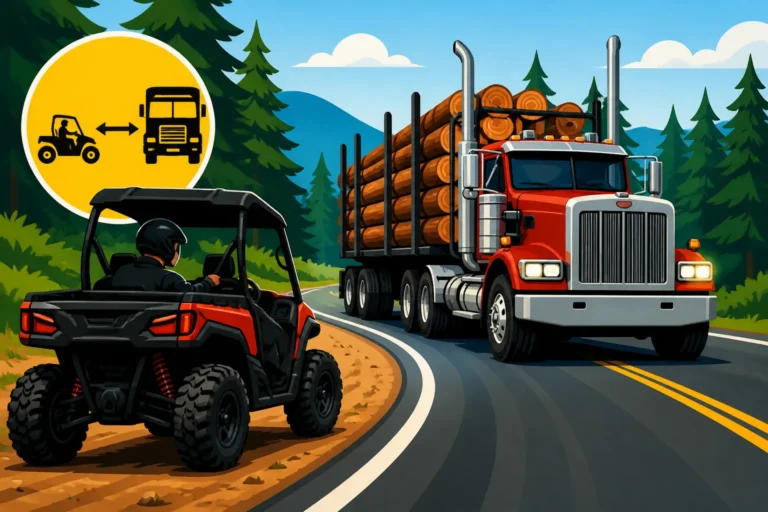
While the 500-yard rule allows for limited travel on public ways, it doesn't diminish the inherent dangers of mixing ATVs with cars and trucks. Even a short stretch on a busy road can be incredibly hazardous. ATVs are not designed for road travel; they have different handling characteristics, braking distances, and are far less visible than typical road vehicles. Attempting to navigate a congested state route, even for less than 500 yards, is an invitation for trouble.
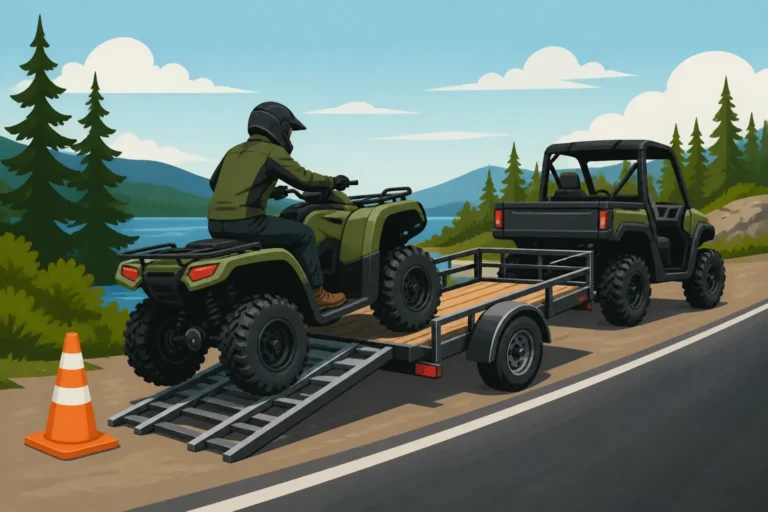
Always prioritize safety over convenience. If a public way is heavily trafficked, has blind curves, or narrow shoulders, consider if there's an alternative route, even if it's longer. Sometimes, the safest option is to trailer your machine past the dangerous section. The 500-yard rule is a legal allowance, but it doesn't override the need for common sense and self-preservation. Be especially cautious during peak travel times, on weekends, or during events when roads are busier. No trail access is worth putting yourself or others at undue risk.
Penalties for Exceeding the Limit: What Maine Wardens Look For
Maine Wardens take ATV regulations seriously, and exceeding the 500-yard limit or misusing the allowance is a common reason for citations. They are patrolling trail systems and road intersections regularly, especially in popular riding areas. What exactly are they looking for? Beyond the obvious observation of an ATV riding on a public way for an extended period, wardens are trained to assess intent and context.
They'll consider if you're actively trying to cross to a visible trail, if you're pulling into a known service station, or if you appear to be simply using the road as a shortcut or an impromptu trail. Key indicators like your speed, your location on the road, and whether you're making efforts to re-enter a trail or access a service will all be part of their assessment. Fines for operating an ATV on a public way without authorization can be significant, and repeated offenses can lead to loss of riding privileges. Familiarize yourself with common [Maine Wardens Write Most Often] to understand their enforcement priorities. It's far better to be safe and legal than to face the financial and legal repercussions of a violation.
Equipment and Safety Considerations for Brief Road Travel
Even though the 500-yard limit is for brief, specific uses, it doesn't excuse ATV operators from taking essential safety precautions and ensuring their machines are adequately equipped for these short ventures onto public ways. Unlike riding exclusively on dedicated trails, these road interactions require a heightened level of awareness and preparation. Neglecting these aspects can turn a simple crossing into a dangerous incident.
Essential Gear: Helmets, Eye Protection, and Lighting
When you're on a public way, even for a short distance, you're interacting with different types of traffic at potentially higher speeds. This environment demands that you and your passengers are properly equipped.
- Helmets: While Maine law requires helmets for riders and passengers under 18 at all times, wearing a helmet is a smart choice for all riders, regardless of age, when on a public way. [Maine Helmet Rules for Riders Under 18] are strict, but the principle of head protection applies to everyone. A DOT-approved helmet can be the difference between a minor bump and a severe injury in an accident.
- Eye Protection: Dust, debris, insects, and even small stones can be kicked up by passing vehicles. Goggles or a full face shield on your helmet are absolutely essential to maintain clear vision and protect your eyes.
- Lighting: If you're riding at dusk, dawn, or in low-light conditions, your ATV must have proper lighting. This includes at least one headlight and one taillight. These are not just for you to see; they are crucial for other motorists to see you. Check your [Maine Lighting Requirements for Night Riding] to ensure compliance, as visibility is paramount on public roads.
Beyond these legal and safety essentials, consider wearing bright, highly visible clothing. Fluorescent colors or reflective gear can significantly increase your presence in the eyes of other drivers, especially on roads where ATVs are unexpected.
UTVs and the 500-Yard Rule: Specific Considerations
Utility Terrain Vehicles (UTVs), or side-by-sides, are increasingly popular in Maine. While they fall under many of the same ATV regulations, their size and features sometimes create specific considerations when interacting with the 500-yard rule. UTVs are wider and often heavier than traditional ATVs, which can make navigating narrow shoulders or the extreme right of a road more challenging.
Many UTVs come standard with features like seatbelts, roofs, and sometimes even turn signals. While these are great safety enhancements, they don't automatically make a UTV "street legal" for extended road use. The 500-yard rule still applies, and the intent must still be for crossing, accessing services, or connecting trails. If your UTV is equipped with accessories from SuperATV, such as mirrors or turn signal kits, these can significantly enhance your safety and signaling capabilities when on public ways, making you more visible and predictable to other drivers. However, these accessories do not exempt you from the 500-yard limit or the need for a specific, legal purpose for road travel. For those wondering about making a UTV fully road legal, there's more to it than just a few accessories; see [Can a UTV Be Made Street Legal in Maine?] for comprehensive details.
The Role of Accessories: Enhancing Visibility and Safety
Beyond the mandatory equipment, certain aftermarket accessories can significantly improve your safety and visibility when operating on public ways, even for short distances. These are especially important given that ATVs are not standard road vehicles.
- Mirrors: Side mirrors are incredibly useful for checking traffic behind you before entering a public way or before making a move on the road. While not always legally required for ATVs on trails, they are a wise addition for any machine that will touch public asphalt.
- Turn Signals/Hand Signals: If your ATV or UTV doesn't have factory turn signals, consider adding an aftermarket kit (SuperATV offers various options). Alternatively, be proficient in hand signals. Clearly indicating your intentions—turning, stopping, or moving—is crucial for communicating with other drivers.
- Horn: A working horn is essential for alerting pedestrians or other drivers to your presence if needed.
- Reflectors/Reflective Tape: Adding extra reflectors or strips of reflective tape to your machine, especially on the rear and sides, can drastically improve your visibility, particularly in low light conditions.
While these accessories enhance safety, remember they do not change the fundamental legal limits of the 500-yard rule. They are tools to help you operate more safely within the existing legal framework, reducing the risk of accidents during those brief, necessary interactions with public roads.
Local Ordinances and ATV-Access Routes: Expanding Your Options
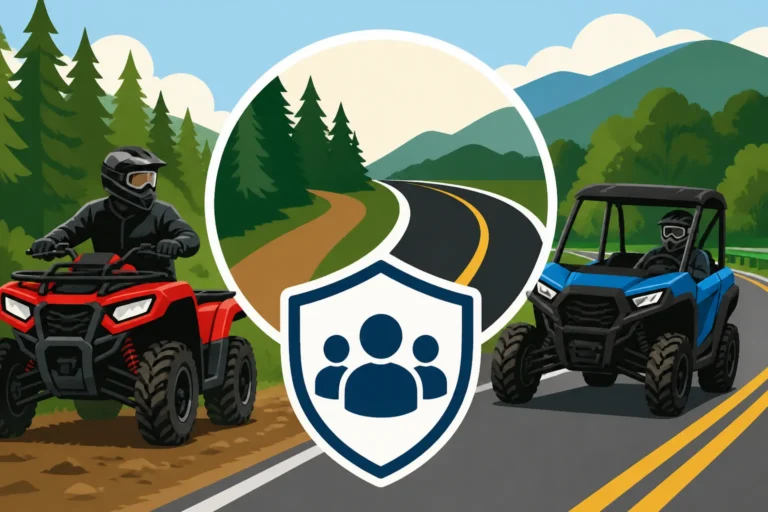
While the 500-yard rule provides a baseline for brief road interactions, it's not the only way ATVs can legally operate on public ways in Maine. Many towns and cities recognize the economic and recreational benefits of ATV tourism and have proactively established designated ATV-access routes. These routes often extend beyond the 500-yard limit and provide more seamless connectivity for riders. However, understanding how these routes are created, identified, and governed is key to using them legally.
Town-Designated ATV-Access Routes: When the Rules Change
A town-designated ATV-access route is a section of a public way that a municipality has officially opened for ATV travel, often for distances exceeding the standard 500-yard limit. These routes are a fantastic development for riders because they significantly expand where ATVs can go legally, allowing for longer rides to fuel, food, and lodging, or to connect extensive trail systems. [Maine ATV-Access Routes and How Towns Post Them] are a game-changer for many regions.
The key distinction here is the "designation." These aren't just informal agreements; they're official actions taken by local governments, typically involving a vote by the town's select board or city council. When a road becomes a designated access route, the local municipality takes on certain responsibilities for signage and communication, and riders gain more expansive, legal access. These routes are usually chosen carefully, often on less-trafficked roads or those with good sightlines, to minimize conflicts with other traffic and ensure public safety.
How to Identify Legal Access Routes: Signs and Maps
Knowing that designated access routes exist is one thing; finding and identifying them on the ground is another. Fortunately, Maine law requires these routes to be clearly marked. Look for official signs, usually green or brown, indicating "ATV Access Route" or similar wording, often with an ATV symbol. These signs will be posted at the beginning and end of the designated route, and sometimes at intervals along its length.
Beyond physical signs, the best resources for identifying these routes are local ATV club maps and the Maine Department of Inland Fisheries & Wildlife (IF&W) website. Local clubs, who often work directly with towns to establish these routes, are an invaluable source of current and accurate information. Many clubs provide detailed maps, often available online or at local businesses, that clearly show designated ATV trails and any connecting access routes. Using a GPS with up-to-date trail maps, or a dedicated app like onX Offroad, is also highly recommended to ensure you stay on legal routes. Trustworthy mapping and clear signage are your best friends in navigating Maine's complex network of trails and public ways.
Petitioning Your Town for New Access: Making a Difference
If you see a need for an ATV-access route in your town, or if an existing trail system would benefit from a short road connection that goes beyond the 500-yard rule, you have the power to make a difference. Many of Maine's current ATV-access routes came about because passionate riders and local clubs actively petitioned their municipal governments.
The process typically involves presenting a proposal to your town's select board or city council. This usually includes identifying the specific road segment, explaining the benefits (e.g., economic boost from ATV tourism, improved trail connectivity, safer access to services), and addressing any potential concerns from residents or law enforcement. You'll likely need to gather support from other riders, local businesses, and potentially work with a local ATV club to present a well-researched case. Understanding the role of [Maine Select Board ATV Route Votes] in this process is crucial. It’s an example of how community involvement can directly shape the future of ATV riding in Maine, allowing for more expansive and legal access beyond the standard limits.
Comparing the 500-Yard Rule to Other Maine ATV Road Laws
The 500-yard limit is a cornerstone of Maine's ATV regulations regarding public ways, but it doesn't exist in a vacuum. It's part of a broader set of laws that govern how ATVs interact with roads. Understanding how the 500-yard rule relates to, and differs from, other key regulations is essential for complete compliance and safe operation. Confusion between these rules can lead to missteps, penalties, and dangerous situations.
Differences from the Complete Stop Before Entering a Maine Public Way
This is perhaps the most critical distinction and a point of frequent misunderstanding. The "complete stop" rule is a precondition for exercising the 500-yard allowance, not an alternative to it. [Complete Stop Before Entering a Maine Public Way] means that every single time your ATV moves from a private property or a designated trail onto a public way, you must come to a full, controlled stop. This applies whether you intend to cross the road, turn onto it for a brief 500-yard stretch, or simply pause at the edge.
The 500-yard rule then dictates what you can do after you've made that complete stop and safely yielded to traffic. The complete stop ensures you have a moment to assess the safety of entering the public way, while the 500-yard rule defines the maximum distance and permissible intent of your travel once on that public way. You cannot use the 500-yard allowance without first adhering to the complete stop and yield requirements. One is about entry protocol, the other about allowable travel distance and purpose.
Contrast with Maine's Extreme Right Rule on a Public Way
Similar to the complete stop, the "extreme right" rule is about how you operate your ATV when legally on a public way, rather than if you can be there or for how long. [Riding the Extreme Right of a Maine Road] is a requirement that applies whenever you are permitted to operate an ATV on a public way, including during those brief 500-yard stretches. It mandates that you keep your machine as far to the right side of the road as is practical and safe, maximizing the space between your ATV and other vehicles.
So, the 500-yard rule tells you when and for how long you can be on a public way for specific purposes, while the extreme right rule tells you where on that public way you must position your machine during that time. Both are integral to safe and legal operation. You could be well within your 500-yard limit, but if you're riding down the middle of the lane, you're still in violation of the "extreme right" rule and potentially creating a hazardous situation.
Understanding Maine ATV Speed Limits Near Buildings
Another important consideration, especially when on those short 500-yard stretches of public way, is observing appropriate speed limits. While the general expectation is that ATVs will travel at a reasonable and safe speed, Maine law specifically addresses speed limits in certain areas, particularly near buildings. [Maine ATV Speed Limits Near Buildings] are in place to ensure safety and minimize noise pollution in developed areas.
Even if you're legally on a public way for under 500 yards to access a gas station or connect trails, if that stretch of road passes residential homes, businesses, or public buildings, you are expected to reduce your speed significantly. These limits are often lower than typical road speed limits and are in place to protect property, reduce dust and noise, and ensure the safety of pedestrians who might be in the area. Disregarding these speed limits, even for a short distance, can not only lead to a fine but also generate negative perceptions of ATV riders, which can jeopardize future access routes. Always be mindful of your surroundings and adjust your speed accordingly, especially in populated areas.
Table: Maine ATV Public Way Rules at a Glance
To help clarify the various rules for interacting with public ways, here's a quick comparison of the 500-yard limit alongside other important regulations.
| Rule/Regulation | Primary Focus | When It Applies | Key Requirement | Overrides 500-Yard Rule? |
|---|---|---|---|---|
| 500-Yard Limit | Max distance on public way | Crossing, accessing services, connecting trails | Max 500 yards on public way for specific purposes | No, it defines the limit. |
| Complete Stop & Yield | Entry procedure onto public way | Every time entering any public way from private land/trail | Stop completely, yield to all traffic & pedestrians | No, it's a precondition. |
| Extreme Right Rule | Positioning on public way | When legally permitted on any public way | Ride as far right as practicable and safe | No, it's about how to ride. |
| Designated ATV-Access Route | Extended legal travel | On specific, town-approved and marked roads | Follow posted signs, may exceed 500 yards | Yes, for that specific route. |
| Speed Limits Near Buildings | Speed control in populated areas | When legally riding on a public way that passes buildings/residences | Reduce speed (often 20 mph or less), posted or unposted | No, it's a concurrent rule. |
| Helmet Rules (Under 18) | Rider safety (minors) | All times for riders/passengers under 18 | DOT-approved helmet required | No, it's a safety rule. |
| Lighting Requirements | Visibility for all | During periods of low visibility (dusk, night, fog) | Headlight & taillight required | No, it's a safety rule. |
This table highlights that while the 500-yard limit is a crucial piece of the puzzle, it's just one part of a comprehensive framework designed to ensure safe and responsible ATV operation on or near public roads in Maine. Always consider all applicable rules when planning your ride.
Disclaimer
This article is for general informational purposes only and does not constitute professional advice. Laws, prices and regulations vary by location and change over time. Consult a qualified professional for guidance on your specific situation.