Club Rules on Road Sections of a Trail
It's incredibly frustrating when you're out enjoying Maine's expansive ATV trail system, only to encounter a section that suddenly shifts from a winding woods path to a paved or gravel public road. The rules seem to change on a dime, and what was perfectly acceptable just moments ago might now land you in hot water. This guide is all about navigating those tricky road sections that are integral parts of many club trails, helping you understand the specific rules, expectations, and courtesies required to keep those routes open for everyone.
The Complex Relationship Between Club Trails and Public Roads in Maine
Maine's ATV trail system is a marvel, offering thousands of miles of riding through some of the most beautiful wilderness in the Northeast. But it's not a monolithic, uninterrupted stretch of dirt and gravel. Instead, it's a vast patchwork, intricately woven together by the dedicated efforts of local ATV clubs, private landowners, and the state. This weaving often requires ATVs to briefly utilize public roads to connect different trail segments, access services, or navigate around natural obstacles.
Why Road Sections Are Even Part of the Trail System
You might wonder why, if the goal is to provide off-road trails, riders ever end up on actual roads. The answer lies in the unique landscape and land ownership patterns here in Maine. Unlike some states where vast tracts of public land are available for recreation, a significant portion of Maine's ATV trails, upwards of 80%, crisscross private property. This reliance on private landowners means that trail clubs often have to be incredibly creative and resourceful in routing their trails.
Sometimes, a trail will hit a natural barrier like a major river without a bridge, or an area where landowner permission simply isn't granted. In these situations, the only practical way to link one section of trail to another is to temporarily use a town-approved public way. Think of it like a detour: it's not the ideal route, but it's the necessary one to keep the journey going. These road sections are also crucial for riders to access gas stations, convenience stores, restaurants, or lodging – amenities that are rarely found deep in the woods. Imagine running low on fuel hours from your destination; a short road section to the nearest general store isn't just convenient, it's essential. Clubs work tirelessly with local towns to get these connections approved, understanding that without them, many extensive loop rides or multi-day adventures simply wouldn't be possible.
The State Law Baseline for ATV Road Use
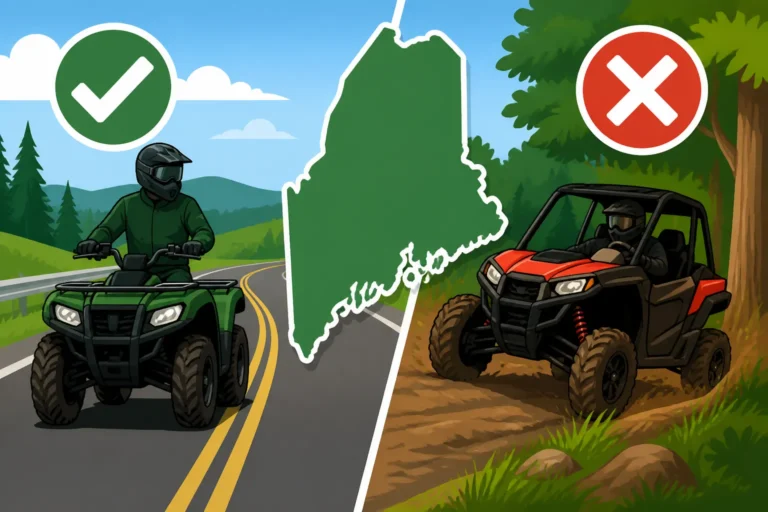
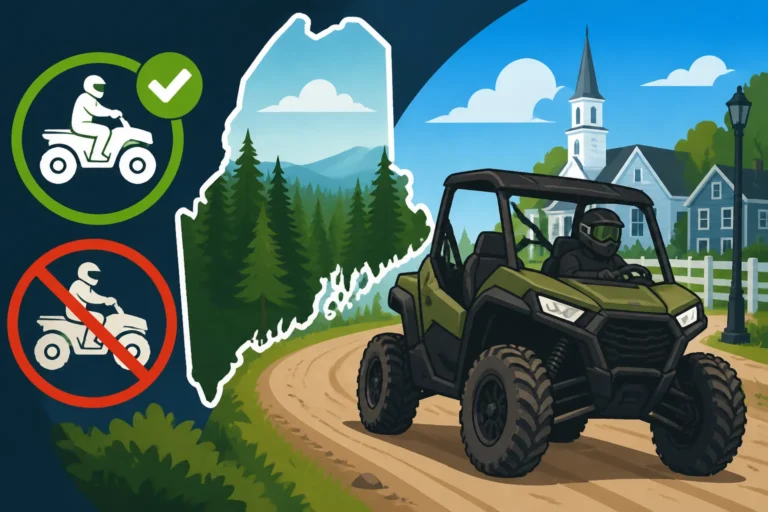
Before we dive into club-specific nuances, it's critical to understand the foundational state laws governing ATV use on public roads in Maine. These are the absolute minimum requirements you must always adhere to, regardless of any club recommendations. Maine law generally restricts ATVs from operating on public ways, with some very specific exceptions. The most common exception you'll encounter is the ability to cross a public way or operate on the extreme right of the traveled way for a distance not exceeding 500 yards to access other trails or services. You need to make a complete stop before entering any public way, yield to all vehicular traffic and pedestrians, and proceed with extreme caution. These rules are in place for safety, to minimize conflicts with other vehicles, and to reduce the impact of ATV traffic on local communities.
It’s important to remember that these state laws are the baseline. Club rules don't override state law; instead, they often add extra layers of safety, courtesy, and respect, especially in areas where trails intersect or run parallel to residential roads. For instance, while state law allows for certain road use, a club might have a stricter "no passing" rule on a specific road section that funnels ATVs through a residential area. You can find more detailed information on general road rules in resources like [Maine's 500-Yard Limit on a Public Way] and [Crossing a Maine Highway on an ATV]. Always be aware that neglecting state law in favor of a less strict club interpretation is a surefire way to encounter a Maine Warden.
Deciphering Club-Specific Rules for Road Sections
While state law provides the legal framework, ATV clubs in Maine often implement their own, sometimes stricter, rules for road sections within their trail networks. These aren't arbitrary guidelines; they're carefully considered measures designed to ensure rider safety, maintain good relationships with local communities, and, most importantly, preserve the private landowner permissions that are the lifeblood of our trail system. Ignoring these club-specific rules can have far-reaching negative consequences for the entire ATV community.
The Club's Authority and Where Their Rules Come From
ATV clubs in Maine aren't just social organizations; they are the unsung heroes and primary stewards of the trails. They spend countless hours negotiating with landowners, securing easements, building and maintaining bridges, clearing brush, and managing signage. When it comes to road sections, these clubs often act as direct liaisons between riders and local town governments. Many towns in Maine have specific ordinances that allow ATVs on certain public ways, but these permissions are frequently contingent upon the local ATV club enforcing specific behavioral standards. This means a club's rules might stem directly from a town select board's resolution, a specific agreement with a large landowner, or simply from years of experience in what it takes to coexist peacefully with local residents.
Their authority, in essence, comes from the trust they've built and the vital role they play in the recreational landscape. When a club posts a rule about speed on a particular road, it's not just a suggestion; it's often a condition of access, a promise made to the community. They understand the delicate balance required to keep trails open. Breaching these agreements by ignoring club rules can quickly lead to an entire trail section being revoked, which is a loss for every rider. It’s a collective responsibility, and the club's rules are the playbook for upholding that responsibility. You can learn more about how towns manage these things in articles like [Maine Town Ordinances That Restrict ATVs].
Common Club Rules You'll Encounter on Road Sections
When you transition from a forest trail onto a road section managed by an ATV club, be prepared for a shift in expectations. Here are some of the most common club rules you'll likely encounter, designed to enhance safety and preserve access:
- Strict Speed Limits: While state law has general speed guidelines, clubs often impose much lower, explicit speed limits on road sections, especially those passing through residential areas, near businesses, or around blind curves. You might see signs stating "Walking Pace," "10 MPH," or "As Posted." These aren't suggestions; they are mandates. Roaring down a residential road at 25 mph, even if technically within a state-defined general limit for some roads, will quickly draw the ire of locals and put trail access at risk. Always err on the side of caution and go slower than you think is necessary. [Maine ATV Speed Limits Near Buildings] delves deeper into these considerations.
- Single File Riding: This is a huge one for both safety and courtesy. On narrow town roads, riding single file minimizes your footprint, makes it easier for oncoming traffic to pass, and reduces the perceived "invasion" by a large group. Resist the urge to ride side-by-side, even if the road seems wide enough. Clubs often explicitly state "Single File Only" on signs.
- No Dusting/Respect for Residents: Kicking up huge clouds of dust is a quick way to upset homeowners. Clubs will often stress slowing down significantly on gravel road sections to keep dust to a minimum. Similarly, excessive noise from aftermarket exhausts can be a major nuisance. Clubs advocate for respectful operation, meaning keeping your noise down, especially in the mornings or evenings, and giving a wide berth to pedestrians or cyclists. It's about being a good neighbor.
- Yielding to Traffic: While state law already mandates yielding, clubs often reinforce this with specific warnings. Always assume cars, trucks, and even bicycles have the right-of-way. Be prepared to stop and pull over completely to let traffic pass. Make eye contact with drivers to signal your intentions.
- Specific Crossing Points/Designated Routes: Some towns might only allow ATVs to cross public ways at specific, marked intersections, or to use only a particular side road to connect trails. Pay attention to signage indicating these designated routes. Deviation could lead to fines or the closure of the route.
- Helmet Rules: While Maine law requires helmets for riders under 18, some clubs strongly encourage or even mandate helmets for all riders on road sections due to the increased risk of interacting with vehicular traffic. This is for your safety. Always wear a helmet that meets DOT standards. You can read more about age-specific requirements in [Maine Helmet Rules for Riders Under 18].
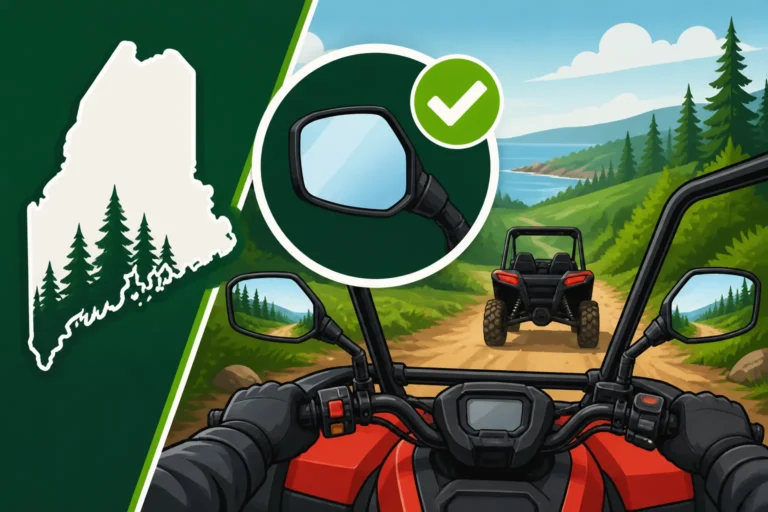
- Equipment: Clubs might also remind riders about basic equipment necessities for road riding, such as working headlights, taillights, and a horn. Many riders install aftermarket mirrors, perhaps from a brand like SuperATV, to enhance their rear visibility when sharing the road with vehicles. A well-maintained machine with proper safety equipment isn't just a good idea; it's often an expectation.
How Clubs Communicate Their Rules
Clubs are quite deliberate in how they convey these important rules. You won't find them hidden in obscure bylaws. Instead, they're typically front and center:
- Signage: This is the most direct and common method. Look for distinct club signs at the transition points from trail to road, or along the road section itself. These signs might have specific colors, logos, or phrasing that differentiates them from official state signage. They will often explicitly state speed limits, single-file requirements, or "No Dusting" warnings.
- Club Websites and Social Media: Before you head out, it's always a great idea to check the website or Facebook page of the ATV club that maintains the trails you plan to ride. They often post updates, specific rules for different sections, and notifications of any temporary closures or changes in road access.
- Trail Maps: Many clubs provide detailed trail maps, either physically or digitally. These maps often highlight road sections and may include legends or notes about special rules for those areas. When reviewing a map, always look for footnotes or symbols indicating specific local regulations.
- Word of Mouth and Local Knowledge: Don't underestimate the value of talking to local riders or people in the communities you're visiting. They often have firsthand knowledge of specific local expectations or recent changes that might not yet be widely publicized.
- IF&W Online Portal: While this primarily covers state regulations, some club-specific information or links to club resources might be available through the Maine Department of Inland Fisheries & Wildlife (IF&W) online registration portal or associated links.
Ultimately, it’s the rider’s responsibility to be informed. Ignorance of the rules, whether state or club-mandated, is not an acceptable excuse if you're stopped by a Warden or confronted by an upset resident. Make it a habit to check [Finding Posted ATV Routes in Your Maine Town] or the local club’s resources before venturing into new territory.
The Importance of Adhering to Club Rules (and the Consequences of Not To)
Adhering to club rules on road sections isn't just about avoiding a ticket; it's about safeguarding the future of ATV riding in Maine. The relationships that clubs forge with landowners and towns are incredibly fragile, built on years of trust and responsible behavior. A few irresponsible riders can jeopardize access for thousands.
Why Landowner Relations Are Paramount
Imagine a farmer who graciously allows an ATV trail to cross their property, or a resident who lives along a town road that doubles as a trail connector. Their goodwill is the very foundation of Maine's extensive trail network. Without their permission, vast stretches of trails would simply cease to exist. Clubs work tirelessly to cultivate and maintain these relationships, often making promises about rider conduct – promises like keeping speeds down, riding single file, and respecting privacy.
When riders ignore these club rules, it's seen as a breach of trust, not just by the landowner but by the club that vouched for the riders. A landowner seeing ATVs kicking up dust clouds, speeding through their yard, or creating excessive noise might quickly decide to withdraw their permission, permanently closing a vital section of trail. This often happens without warning, and once access is lost, it's incredibly difficult, sometimes impossible, to regain. The "purple paint" rule, which signifies posted private property, is a stark reminder of how landowners can and will restrict access if their wishes are not respected. Understanding [Purple Paint Marks Along a Maine Road] is crucial for all riders. Every irresponsible act by one rider reflects poorly on the entire community and could lead to the loss of precious riding opportunities for everyone.
Enforcement and Penalties
While club rules might not carry the same immediate legal weight as state statutes, they are often backed by local ordinances, and Maine Wardens do enforce state laws that are frequently violated when club rules are ignored. For example, if a club-mandated speed limit on a road section is 15 MPH, and you're caught by a warden exceeding the state's general prudent speed for that area, you can still face a citation for reckless operation or excessive speed. Wardens often patrol these road sections precisely because they are known flashpoints for complaints.
Beyond state-level fines, towns with specific ATV access ordinances can levy their own penalties for violations of those local rules. These can include monetary fines, and repeated violations could lead to a town reconsidering or even revoking its permission for ATV access on public ways entirely. The most significant consequence, however, might be the club's "enforcement" – the loss of trail access. If a club's agreements with landowners or towns are repeatedly violated, those agreements will be withdrawn, and the trail will be closed. This impacts all riders. Wardens are very familiar with common violations; you can get an idea of what they look for in [Fines Maine Wardens Write Most Often]. Having appropriate safety gear, like a well-functioning horn (perhaps a robust model from SuperATV), can also help you avoid certain violations by alerting others to your presence on shared roadways.
Being a Responsible ATV Steward in Maine
Being a responsible ATV rider in Maine means more than just having a registered machine and knowing the basic laws. It means being a steward of the trails and actively contributing to their preservation. The clubs are the backbone of this effort, and supporting them is paramount.
Consider joining a local ATV club. [Maine ATV Club Membership and Dues] are usually very reasonable, and your membership dues go directly towards trail maintenance, insurance, and the crucial work of negotiating with landowners. Many clubs also have volunteer work days where you can help clear trails, build bridges, or perform other necessary maintenance. This hands-on involvement gives you a deeper appreciation for the effort that goes into keeping the trails open and instills a greater sense of responsibility. Furthermore, becoming an active member allows you to stay informed about local rules and changes directly from the source. It's about being part of the solution, not part of the problem.
Practical Tips for Navigating Road Sections Safely and Legally
Successfully and respectfully navigating road sections on Maine's ATV trails requires a combination of preparation, awareness, and courteous riding. It's about blending in, minimizing your impact, and ensuring the safety of yourself and others.
Pre-Ride Preparation for Road Segments
Before you even hit the trails, especially if your route includes road sections, some crucial preparation can make all the difference:
- Study Maps Thoroughly: Get your hands on up-to-date trail maps from the local ATV club or the state. Identify all road sections on your planned route. Note where they begin and end, their length, and any specific town names they pass through. This will help you anticipate changes in terrain and rules. Plan your stops for fuel and food around these road sections, as services are typically found along public ways.
- Check Your Machine's Road-Readiness: Ensure all your lights are in working order—headlights, taillights, and brake lights. This is especially critical if there's any chance you'll be on a road after dusk or in low visibility conditions. A functional horn is also a must for alerting others to your presence. Consider adding mirrors if your machine doesn't have them; brands like SuperATV offer a range of robust, universal mirrors that greatly improve rearward visibility, which is a major safety asset on shared roads. Check your brakes and tire pressure. You can find more specific lighting requirements in [Maine Lighting Requirements for Night Riding].
- Know Local Ordinances: If you're traveling through multiple towns, it's wise to quickly check the town websites for any specific ATV ordinances. While clubs will often sign these, knowing the official rules can prevent misunderstandings. Some towns might have very strict hours of operation or specific routes that ATVs must adhere to.
Riding Etiquette on Public Ways
Once you're actually on a road section, your riding style needs to adapt significantly from typical trail riding:
- Slow Down Dramatically: This is perhaps the most important rule. Reduce your speed to a very conservative pace, especially in residential areas. A "walking pace" is often a good mental benchmark. The goal is to be as unobtrusive as possible, minimizing dust, noise, and any perceived disruption to residents.
- Maximize Visibility: Keep your headlights and taillights on, even during the day, to make yourself more visible to other road users. Wear bright clothing. Make eye contact with drivers, pedestrians, and cyclists to acknowledge their presence and communicate your intentions.
- Respect Other Road Users: Remember that you are a guest on these public ways. Yield to all vehicles, pedestrians, and cyclists without hesitation. Don't crowd them or try to assert a right-of-way. Give them ample space. If a car is coming up behind you, signal them to pass if safe, or pull over if there's room.
- Minimize Your Footprint: Stay to the extreme right of the traveled way. This is not only state law but also a courtesy that leaves more room for vehicular traffic. Avoid kicking up dust on gravel roads by reducing speed. Do not ride on private lawns or property edges. [Riding the Extreme Right of a Maine Road] details this critical rule.
- Store Registration Documents Securely: Always carry your ATV registration and proof of safety course completion. While you might not need to show it on a trail, a warden stop on a road section is common, and you'll need to produce these documents. Many riders keep them in a waterproof bag on their machine. For more on what to carry, check [Maine Warden Stops and ATV Paperwork].
What to Do If You're Unsure About a Rule
It happens to everyone: you're riding along, come to a road section, and the signs are confusing, or you're not sure if you're allowed to proceed. Here's the best course of action:
- Err on the Side of Caution: If you're genuinely unsure whether you're allowed on a particular road section or what the specific rules are, do not proceed. Turn around, consult a map, or find an alternate route. It's far better to miss a section of trail than to risk a fine, an accident, or contributing to a trail closure.
- Consult Resources: If you have cell service, check the local ATV club's website or the town's official site. If you're with a group, ask if anyone has local knowledge.
- Ask a Local (Respectfully): If you see a resident, store owner, or another rider, you can politely ask for clarification. Be courteous and explain your situation.
- Avoid Confrontation: If a resident approaches you about a perceived violation, remain calm, polite, and apologetic, even if you believe you're in the right. A heated argument will only escalate the situation and further damage the reputation of ATV riders.
Remember, the vast majority of people in Maine are supportive of ATV recreation, but that support hinges on responsible and respectful riding, especially on shared public ways.
| Feature / Rule | General Maine State Law Baseline | Common Club Rule / Recommendation (on Road Sections) |
|---|---|---|
| Speed | Prudent speed, 500-yard limit implied slower | Often explicitly posted lower (e.g., 10-15 MPH, "walking pace"), especially in residential areas |
| Riding Formation | Not explicitly stated for road sections | Almost always "Single File Only" for safety and courtesy |
| Road Position | Extreme right of the traveled way, yield to traffic | Strongly emphasize extreme right, pull over if traffic builds |
| Dust Control | Not explicitly covered by general ATV law | Strong emphasis on slowing down to minimize dust on gravel roads |
| Noise | General muffler/noise limits apply | Strong emphasis on operating quietly, avoiding unnecessary revving in residential areas |
| Headlights/Taillights | Required after dark/low visibility | Often encouraged or expected to be on at all times on road sections for visibility |
| Mirrors | Not explicitly required by state law | Highly recommended for improved visibility when sharing roads |
| Horn | Not explicitly required for ATV registration | Recommended for alerting other road users to your presence |
| Yielding | Must yield to all vehicular traffic and pedestrians | Emphasized as paramount, always assume others have right-of-way |
| Helmet | Required for riders under 18 | Often encouraged or recommended for all riders on road sections due to increased risk |
Disclaimer
This article is for general informational purposes only and does not constitute professional advice. Laws, prices and regulations vary by location and change over time. Consult a qualified professional for guidance on your specific situation.