Maine ATV Trespass Rules Along Roads
It’s a common scenario for many ATV and UTV riders here in Maine: you're out on the trails, enjoying the crisp air and scenic views, when suddenly, the trail ends at a road. Or perhaps you're trying to get from one section of a trail to another, and a short stretch of road or someone's property seems to be the only way. This guide is here to walk you through the often-confusing world of Maine's ATV trespass rules along roads, helping you navigate these situations legally and responsibly without jeopardizing your riding privileges or upsetting landowners.
Understanding the Basics of Trespass Law in Maine for ATVs
Navigating Maine's vast network of ATV trails often means encountering public roads or crossing privately owned land. It’s easy to get confused about where you can and cannot ride, especially when the line between "trail" and "private property" or "public way" feels blurry. The fundamental principle here is simple: respect for private property and adherence to state and local regulations are paramount. Ignoring these can lead to serious legal repercussions and damage the relationships that keep our trail system thriving.
The "Permission is Key" Philosophy
Maine's ATV laws operate heavily on the concept of explicit or implied permission. Unlike some states where general access might be assumed unless posted otherwise, Maine leans towards requiring permission for private land. When it comes to roads, the rules get even more nuanced because you're dealing with public infrastructure that often abuts private land. You can't just assume you have permission to ride down someone's driveway or cut across their field to bypass a tricky road section, even if it looks like an old logging road. That kind of shortcut is a straight path to a trespass violation.
Most of our incredible [Maine's 6,000 Miles of ATV Trails] exist because private landowners have generously granted permission for riders to cross their property. When you deviate from marked trails, or ride along roads where it's not explicitly permitted, you risk not only a fine but also jeopardizing these crucial landowner relationships. A single act of trespass can lead to an entire section of trail being closed down for everyone, which is a frustration none of us want to experience.
What Constitutes Trespass for ATVs
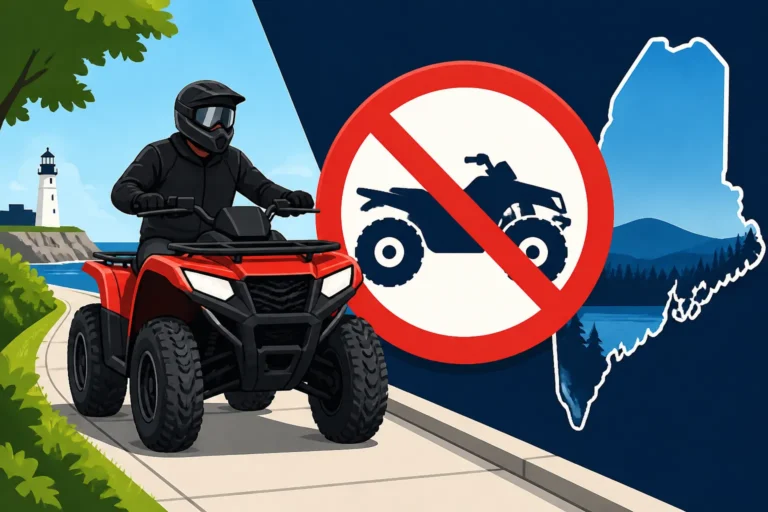
In Maine, operating an ATV on private property without permission is considered trespass. This isn't just about riding deep into someone's woods; it includes cutting corners through fields, riding alongside a road on someone's lawn, or even turning around in their driveway. The law also extends to roads: riding on a public way where ATVs are prohibited, or crossing a public way incorrectly, can also fall under the umbrella of unlawful operation, which carries similar weight to trespass. It’s about being where you shouldn’t be, regardless of your intention.
It's important to remember that "ignorance of the law is no excuse." You can't claim you didn't know the property was private or that ATVs weren't allowed on that particular road. As the operator, it's your responsibility to know the rules and to ensure you're on designated trails or authorized access points. This due diligence protects you, your machine, and the future of ATV riding in Maine.
Specific Scenarios: Roads, Shoulders, and Ditch Lines
The most common points of confusion and potential trespass often occur where trails meet roads. It's a natural bottleneck, and knowing the specifics of what you can and cannot do in these transitional zones is vital. These areas are where riders often make honest mistakes that can lead to big headaches.
The 500-Yard Limit and Proper Crossings
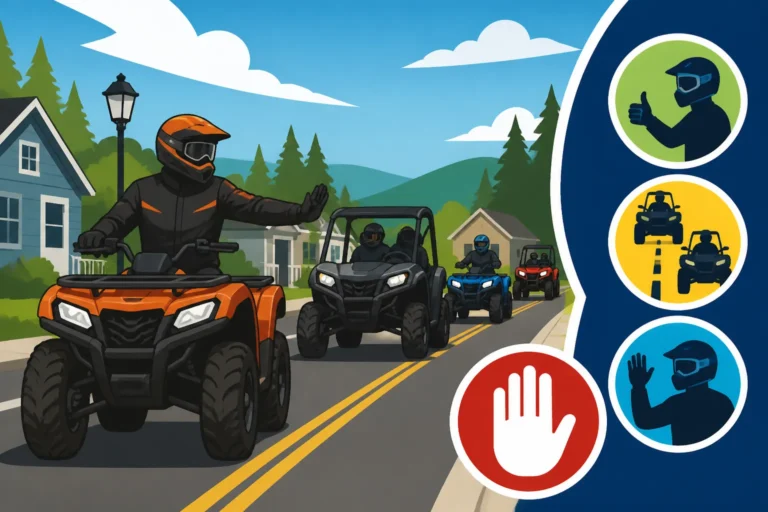
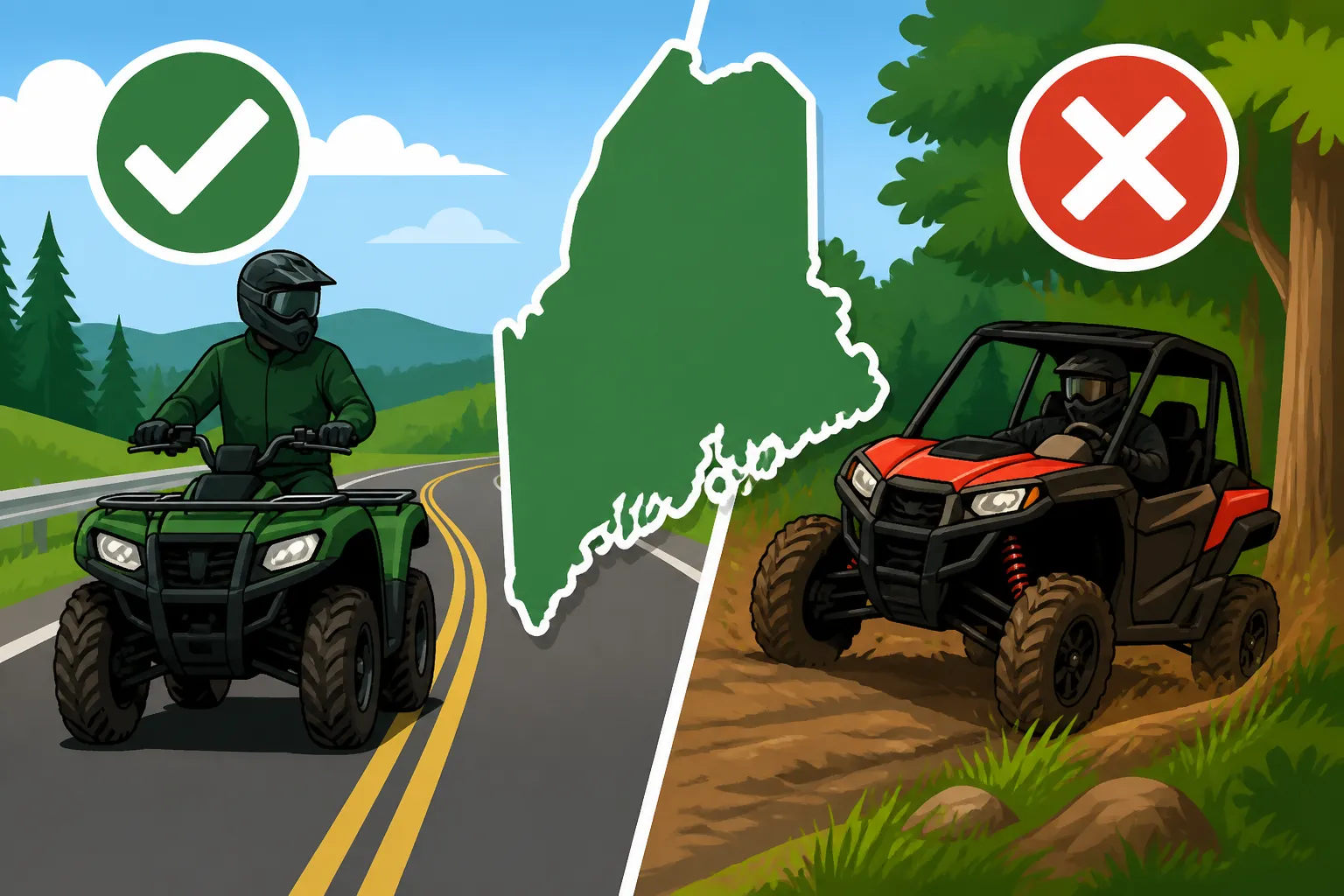
Maine law does allow for limited ATV operation on public ways under specific circumstances, most notably for crossing a public way or riding a short distance to access another trail or service. The general rule allows you to operate an ATV on a public way for a distance not to exceed 500 yards for the sole purpose of gaining access to another trail or facility, or for crossing. This is not a free pass to ride down the road. You must remain on the extreme right of the traveled way, proceed in the same direction as traffic, and stop completely before entering a public way. You also have to yield to all vehicular traffic. [Maine's 500-Yard Limit on a Public Way] delves deeper into these specifics.
However, this 500-yard limit applies to the traveled portion of the public way – the pavement or gravel road itself. It does not automatically give you permission to ride on the shoulder, in the ditch line, or beyond the immediate vicinity of the road if those areas are private property. This is where the challenge lies; many roads are built within a public right-of-way, but the land immediately adjacent, including the shoulder and ditch, might still be privately owned.
When Shoulders and Ditches Become Private Property
Here's where it gets tricky. While the traveled portion of a public road is generally accessible under the 500-yard rule for crossings or limited access, the land immediately beside it—the shoulder, the ditch line, or even what looks like an unused grassy strip—is often still part of someone's private property. These areas might be maintained by the town or state, but ownership rarely extends much beyond the actual paved or gravel surface. [Maine ATV Trespass Rules Along Roads] specifically addresses this.
Riding in these areas without explicit permission from the adjacent landowner is a trespass. Imagine the frustration of a homeowner whose well-manicured lawn or ditch is constantly chewed up by ATV tires, even if it's "just for a second" to avoid the road. This is one of the quickest ways to sour landowner relations and prompt them to post their land. It's best practice to assume these areas are private unless clearly marked as part of an official ATV access route. If you're on the shoulder or in the ditch, you're likely off the legal path.
The Temptation to "Cut Across"
We've all been there: a clear line of sight across a field or a short, unused-looking woods road seems like the perfect way to connect two trails or avoid a busy stretch of public road. The temptation to "just cut across" is strong, but it's also one of the most common ways riders commit trespass. That field, that woods road, that seemingly abandoned lot – almost always, it's private property. Even if there are no fences or "No Trespassing" signs, the land isn't public domain.
It’s crucial to understand that even if the land looks unmaintained, someone owns it. The moment you deviate from a marked, authorized trail or a legally permitted road crossing onto unmarked land, you are at risk of trespass. Always stick to established, signed trails or designated ATV-access routes. If in doubt, turn around or find an alternative, legal route.
Private Roads vs. Public Ways: A Crucial Distinction
Understanding the difference between a private road and a public way is absolutely fundamental for ATV riders in Maine. Misinterpreting this distinction is a leading cause of accidental trespass and friction with property owners. The rules for riding an ATV on each are vastly different, and knowing which one you're on can save you a lot of trouble.
The Nuances of Private Camp Roads
Maine is dotted with countless private camp roads, logging roads, and seasonal access ways. These roads might look just like public gravel roads – well-maintained, sometimes even signed – but they are unequivocally private property. They are often owned by individuals, a group of camp owners, or large timber companies. Unless there are clear, official signs indicating they are part of the designated ATV trail system, you cannot ride your ATV on them.
Many of these private roads are actively used by landowners, loggers, and residents, and they rely on the peaceful enjoyment of their property. Riding an ATV on a private camp road without explicit permission from the owner is a direct trespass. Even if the road is part of a larger, long-standing trail system, it's always contingent on landowner permission. If that permission is withdrawn, the trail segment on that private road is closed. Always check your maps and look for official signage. [Maine ATV Rules on Private Camp Roads] offers more specific guidance.
Public Ways and Designated ATV-Access Routes
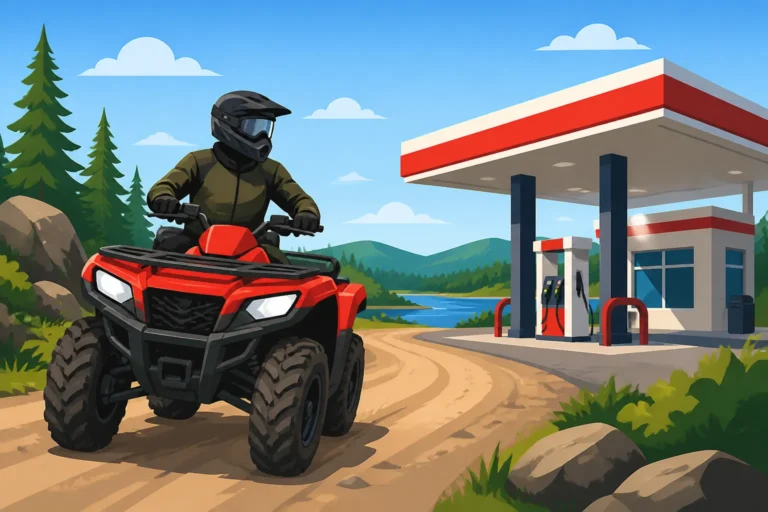
A "public way" in Maine generally refers to roads maintained by the state, county, or a municipality, open for public vehicular travel. While you can typically cross these roads under the 500-yard rule, riding along them for extended periods is generally prohibited unless the town or state has specifically designated that section as an "ATV-access route." These designated routes are clearly marked with official signs that indicate ATV access is permitted, often linking trail segments or providing access to services like gas stations or restaurants.
It’s vital to recognize the difference. A public paved road is not an ATV trail, even if it has a wide shoulder. Only officially designated and signed access routes allow ATVs for travel beyond simple crossings. If you see signs like "ATV Access Route" or specific markers put up by the town or a club, you're likely on a legal path. Without those signs, assume you are not. [Maine ATV-Access Routes and How Towns Post Them] provides detailed information on how these routes are established and identified.
| Feature | Private Road (e.g., Camp Road) | Public Way (e.g., State Route, Town Road) | Designated ATV Access Route (on a Public Way) |
|---|---|---|---|
| Ownership | Private individual, group, or company | State, county, or municipality | State, county, or municipality (but with specific ATV permission) |
| ATV Riding | Generally NOT permitted without explicit, specific permission | Generally NOT permitted for travel; only for crossing (500-yard rule) | PERMITTED for travel by ATVs, clearly signed |
| Signs | May have private road signs, "No Trespassing," or no signs at all | Standard road signs (speed limits, street names) | Specific "ATV Access Route" signs, often with directional arrows |
| Permit | Requires landowner consent for specific use | No special permit for limited crossing; full use not permitted | No special permit beyond ATV registration for permitted travel |
| Trespass Risk | HIGH if no permission, even if unmarked | HIGH if riding along road beyond 500-yard crossing rule, or on shoulder | LOW if staying on designated route and following all other rules |
Navigating Posted Land and "No Trespassing" Signs
Maine landowners have a clear right to protect their property from unauthorized entry. Understanding how land is "posted" and what those signs mean is critical for ATV riders to avoid inadvertent trespass and maintain positive relationships with the landholders who make our trails possible. Ignoring these signs isn't just rude; it's illegal.
The Force of "No Trespassing" Signage
In Maine, a "No Trespassing" sign means exactly that: no entry is permitted without the express permission of the landowner. These signs can be highly visible, or sometimes subtle, but their legal weight is the same. They can be found along roadsides, at property boundaries, or at the entrance to private driveways or woods roads. It is your responsibility as an ATV operator to be constantly aware of your surroundings and to heed all such warnings. [No Trespassing Signs and ATV Riders] further explains the implications.
When you see a "No Trespassing" sign, you must not proceed. This applies even if the sign appears to be for a small, insignificant piece of land, or if it seems to block a path that used to be a trail. Landowner permission can be revoked at any time, and posting is their legal way of communicating that withdrawal of consent. Continuing past such a sign is a clear act of trespass, and it leaves little room for defense if you are caught.
The Meaning of Purple Paint Marks
Beyond traditional "No Trespassing" signs, Maine also recognizes purple paint marks as a legal way for landowners to post their property. This system is designed to be easily recognizable and durable, often being painted on trees or fence posts at eye level along property boundaries. If you see purple paint, consider it the same as a "No Trespassing" sign: stay out. [Purple Paint Marks Along a Maine Road] explains this marking system in detail.
The intent behind purple paint is to provide a consistent, unmistakable signal to anyone entering the land that permission has not been granted. It removes any ambiguity about whether a sign was blown down or simply missed. Just like "No Trespassing" signs, purple paint means you must turn around or find an alternative legal route. Operating an ATV past these markings without permission is a direct violation of Maine's trespass laws.
How to Confirm Permission if Unsure
Sometimes, you might encounter a situation where you're truly unsure if you have permission to cross a piece of land, especially if it's not clearly posted or if you're attempting to connect to a trail. In these cases, the best course of action is always to assume you don't have permission and seek an alternative route. However, if you genuinely believe it might be permissible, your only safe recourse is to contact the landowner directly.
This might involve checking town tax maps to identify the property owner and then attempting to reach out to them. Never assume that because a trail used to be open, it still is. Landowners can change their minds, sell their property, or simply withdraw permission due to misuse by a few irresponsible riders. [Asking a Landowner for Permission to Ride] offers practical advice on how to approach this, emphasizing respectful communication. Remember, positive [Landowner Relations on Maine ATV Trails] are the backbone of our trail system.
Consequences of ATV Trespass in Maine
While the allure of a quick shortcut or a seemingly open stretch of land can be tempting, the consequences of ATV trespass in Maine are serious and far-reaching. It's not just a slap on the wrist; it can impact your wallet, your riding privileges, and the future of trail access for everyone.
Fines and Penalties for Trespass
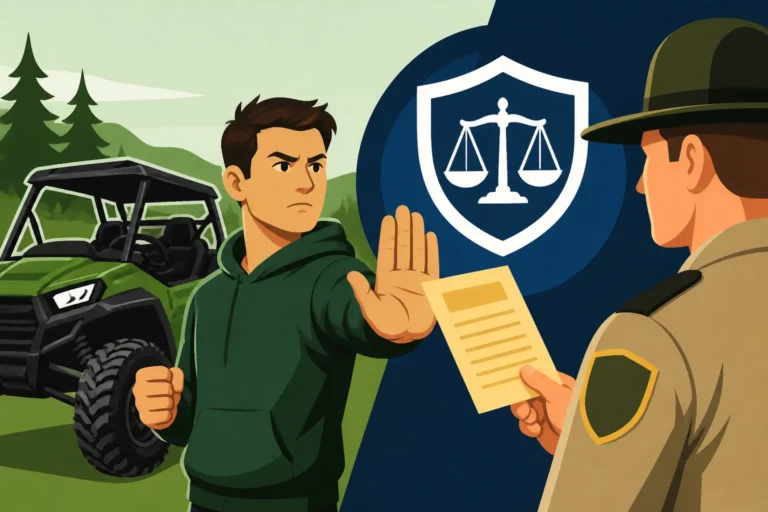
Operating an ATV on private land without permission, or unlawfully on a public way, can result in significant fines. Maine's laws empower game wardens and other law enforcement officers to issue citations for these violations. The exact fine can vary depending on the specific statute violated and whether it's a first offense or a repeat offense. These aren't cheap tickets; you could be looking at hundreds of dollars in fines, plus court fees.
Beyond monetary penalties, a conviction for trespass can appear on your record, potentially affecting future recreational licenses or even employment, especially if it's a pattern of behavior. It’s a stark reminder that these aren't minor infractions; they are violations of property rights and public safety laws. [Fine for an Unregistered ATV in Maine] details some of the financial consequences related to ATV violations, and trespass fines can be similar or even higher.
Impoundment of Your ATV
In more serious or repeated cases of trespass, law enforcement has the authority to impound your ATV. This means your machine could be seized on the spot, and you would be responsible for towing and storage fees in addition to any fines. Getting an impounded machine back is a costly and inconvenient process, often requiring you to pay all outstanding fines and fees before release. It’s a scenario no rider ever wants to face, but it's a very real possibility if you repeatedly disregard trespass laws.
Imagine being miles from home, having your quad towed away, and being left to find your own way back. It's a logistical nightmare that can turn a fun day of riding into a truly miserable experience. The possibility of impoundment should serve as a powerful deterrent against taking risks with private property or restricted areas.
Impact on Landowner Relations and Trail Access
Perhaps the most significant long-term consequence of ATV trespass is the damage it does to landowner relations. Maine's extensive ATV trail system relies almost entirely on the goodwill and generosity of private landowners. When riders trespass, damage property, or disregard rules, landowners lose trust. It only takes a few bad actors to spoil it for everyone.
One instance of trespass, whether intentional or accidental, can lead a landowner to withdraw their permission for all ATV access across their property. This means an entire section of trail could be permanently closed, affecting countless other responsible riders. This is an all-too-common reason why we see trails rerouted or even disappear. Maintaining positive [Landowner Relations on Maine ATV Trails] is a collective responsibility, and every act of trespass undermines that fragile foundation.
Staying on the Right Side of the Law: Best Practices
Avoiding trespass isn't just about knowing the rules; it's about adopting a mindset of respect, preparedness, and continuous vigilance. By following these best practices, you can ensure your rides are not only enjoyable but also fully legal and responsible.
Invest in Up-to-Date Maps and GPS
One of the most effective ways to prevent accidental trespass is to be prepared with current and accurate navigation tools. Don't rely solely on memory or old paper maps. Invest in a good quality GPS unit or a reliable mapping app on your phone (like onX Offroad, though I cannot endorse specific apps). Ensure your maps are specifically for ATV trails and show property boundaries if possible. [Aroostook County ATV Trail Map Download] or maps provided by local clubs can be invaluable.
Always cross-reference your route with current trail conditions and any posted closures, which are often available on ATV club websites or the Maine Bureau of Parks and Lands website. Carrying a physical paper map as a backup, especially in areas with spotty cell service, is also a smart move. Being able to pinpoint your exact location relative to known boundaries is your best defense against inadvertently riding where you shouldn't.
Know Your Local Regulations and Designated Routes
While state laws provide a general framework, local towns and municipalities in Maine can have their own specific ordinances regarding ATV use, especially concerning public ways. What might be allowed in one town for road crossings or access routes might be completely prohibited in another. For example, some towns have designated [Maine Towns That Restrict ATVs on Public Ways].
Before you head out, especially if you're riding in a new area, take a few minutes to check the local town ordinances or reach out to the local ATV club. These clubs are usually a fantastic resource for up-to-date information on trail status, access routes, and any unique local rules. Never assume that the rules you know from your home area apply everywhere else.
Always Seek Explicit Permission for Private Land
If you find yourself in a situation where you need to cross private land that is not part of a clearly marked, established ATV trail, your only legal option is to obtain explicit permission from the landowner. This means direct contact – knocking on a door, making a phone call, or sending an email – and getting a clear "yes." Verbal permission is often sufficient, but for more sensitive areas or repeated use, written permission can offer greater clarity and protection for both parties.
Do not mistake unposted land for public land. The absence of "No Trespassing" signs or purple paint does not automatically grant you permission to ride. It simply means the landowner has not formally posted their property. When in doubt, stay out. It's far better to err on the side of caution than to face a trespass charge or alienate a property owner.
Ride Responsibly and Stay on Marked Trails
Ultimately, the best way to avoid trespass and ensure the longevity of Maine's ATV trails is to be a responsible rider. This means staying on marked trails, respecting signage, riding at appropriate speeds, and minimizing your impact on the environment. It also means equipping your machine appropriately for the conditions you'll encounter. While a brand like SuperATV offers robust accessories like winches, skid plates, or heavy-duty axles that can handle rugged terrain, these tools are meant to enhance your legal trail riding, not enable off-trail adventures onto private property.
It also means being mindful of noise levels near homes, avoiding littering, and slowing down when you encounter other trail users or residents. Every rider is an ambassador for the sport. By demonstrating respect for the land, landowners, and the law, we collectively ensure that the privilege of riding in Maine continues for generations to come.
Disclaimer
This article is for general informational purposes only and does not constitute professional advice. Laws, prices and regulations vary by location and change over time. Consult a qualified professional for guidance on your specific situation.