Maine ATV Rules on Frozen Lakes
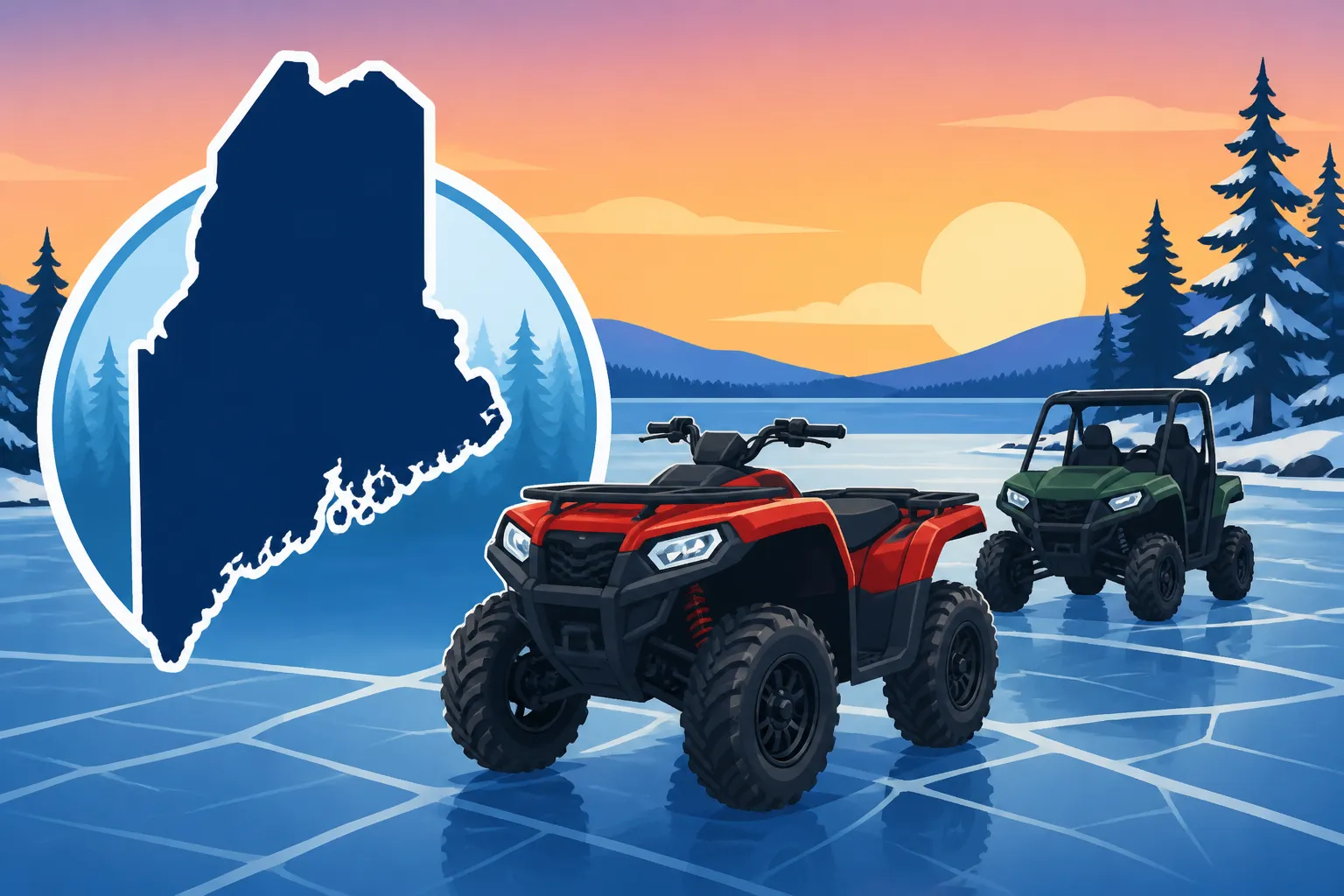
There's nothing quite like the allure of Maine's frozen lakes in winter – the crisp air, the vast expanse of white, and the promise of a unique adventure on your ATV or UTV. But before you zip out onto that icy wonderland, it's absolutely crucial to understand that frozen lakes, while tempting, come with their own very specific set of rules and, more importantly, inherent dangers. Many riders, eager for a new kind of terrain, mistakenly think a frozen lake is just another open field, but the reality is far more complex and regulated. This guide is here to walk you through Maine's ATV rules on frozen lakes, ensuring your winter rides are not only thrilling but also safe and legal.
The Legal Landscape: What Maine Law Says About ATVs on Ice
When you take your ATV or UTV onto a frozen lake in Maine, you're not just venturing onto a wild, unregulated expanse. You're entering a realm where specific laws apply, designed to protect riders, ice anglers, and the environment. It's not enough to simply have your machine registered; you need to understand how the water beneath you changes the rules of the game. The key takeaway here is that frozen lakes are generally treated as public waterways, which comes with its own set of legal considerations for ATV and UTV operation.
General Registration and Operation on Frozen Waters
First and foremost, any ATV or UTV operated on a frozen lake in Maine must be properly registered. There’s no special "ice registration" or exemption just because you’re not on a dirt trail. The same registration requirements that apply to land trails, including the need for a current sticker and accompanying paperwork, also apply to frozen waterways. This means if you're a resident, you'll need your [Maine Resident ATV Registration Fee] paid up. Non-residents have options too, like the [Maine Non-Resident Annual ATV Registration] if you're spending a lot of time here, or even the [Maine Non-Resident Seven-Day ATV Registration] for shorter visits. Wardens regularly patrol frozen lakes, and they'll be checking for proper registration, just as they would on a land trail.
Beyond registration, the general rules of operation still apply. You can't operate recklessly, harass wildlife, or endanger other people on the ice. While it might feel like an open canvas, remember that ice anglers, snowmobilers, cross-country skiers, and even pedestrians might be sharing that same frozen surface. Maintaining a safe distance from others and always being aware of your surroundings is paramount. Speed limits, though often feeling arbitrary on a wide-open lake, are still in effect, and operating your machine in a way that creates excessive noise or disturbance can also draw unwanted attention from enforcement.
It’s easy to get caught up in the thrill of wide-open spaces on a frozen lake, but that freedom doesn't exempt you from basic courtesy and safe operating practices. Always assume there are others out there you can't see, especially with shifting light or snowy conditions. Thinking about how to operate your machine responsibly here is no different than considering [Maine ATV Registration and How It Differs] for various types of riding.
Specific Regulations and Prohibitions
Maine law also outlines specific prohibitions and regulations related to operating ATVs and UTVs on frozen bodies of water. For instance, there are often rules about how close you can operate your machine to ice fishing shacks or other structures on the ice. The goal is to prevent property damage, reduce noise disturbances for those enjoying the tranquility of ice fishing, and ensure safety. You wouldn't want someone buzzing by your shack at high speed, creating an unnecessary hazard or ruining your peaceful day.
Additionally, certain areas might be explicitly off-limits or have specific restrictions. These could include designated conservation areas, sections of lakes with known thin ice conditions, or areas near public water supplies. It's always a good idea to check local ordinances for the specific lake you plan to visit, as towns can sometimes impose additional restrictions. These specific regulations are designed to minimize conflict between different user groups and to protect vulnerable areas or wildlife. Ignorance of these local rules is no excuse, and getting stopped by a warden for violating a posted restriction can quickly ruin your day on the ice. Wardens are out there specifically to enforce these rules, and you can definitely expect [Maine Warden Service ATV Checkpoints] on popular frozen lakes.
Finally, remember that operating under the influence is just as illegal and dangerous on a frozen lake as it is on any road or trail. The penalties for [Maine ATV Operating Under the Influence] are severe, and the risks of an accident on ice are amplified, given the potential for falling through and the extreme cold. Always prioritize safety and sobriety, especially when venturing onto potentially hazardous terrain like frozen water.
Night Riding and Visibility Requirements
Riding on a frozen lake at night presents a unique set of challenges and, consequently, specific legal requirements in Maine. The vast, flat, and often featureless expanse of a frozen lake can become disorienting in the dark, making proper lighting and visibility absolutely critical for safety. Maine law dictates specific lighting requirements for ATVs and UTVs operating after dark, and these are especially important on frozen lakes where there are no trees or landmarks to break up the darkness.
Your machine must be equipped with at least one headlight and one taillight, both operational and visible from required distances. Reflective tape or other reflective materials can also significantly increase your visibility to others on the ice, whether they are on another machine, ice fishing, or simply walking. Think about how easily a dark object can disappear against the backdrop of a moonless night sky or a snow-covered lake. You might also consider investing in auxiliary lighting from a brand like SuperATV, designed to cut through the darkness and provide a wider, clearer field of vision, which can be a game-changer when navigating subtle changes in ice or snow conditions at night.
Beyond the legal minimums, common sense dictates that you should make yourself as visible as possible. Wear reflective clothing, use a beacon or other flashing light if appropriate, and always ride at a speed that allows you to react to unexpected hazards, such as open water, pressure ridges, or other people. The consequences of a collision or falling through the ice at night can be far more severe than during daylight hours, making adherence to [Maine Lighting Requirements for Night Riding] not just a legal obligation, but a life-saving practice. Being prepared means being seen, and being seen means being safe on the ice after the sun goes down.
Safety First: Beyond the Letter of the Law on Frozen Lakes
While understanding the legal rules for riding on frozen lakes is essential, simply knowing the law isn't enough to guarantee your safety. The dynamic and unpredictable nature of ice requires a proactive, safety-first mindset that goes well beyond what’s written in the statute books. A momentary lapse in judgment or an underestimation of conditions can have serious, even fatal, consequences. Think of it as knowing the theory versus actually mastering the practice – and on ice, practice requires extreme caution and preparation.
Assessing Ice Conditions and Thickness
This is, without a doubt, the most critical aspect of safe ice riding. Ice thickness is not uniform, and it can change dramatically over short distances, even on the same body of water. Factors like currents, springs, underwater structures, depth, and even sunlight can significantly impact ice stability. Never assume that just because one spot is safe, the entire lake is. Always start by checking ice thickness near the shore and continue to do so as you venture out. A spud bar or an auger are your best friends here. You need to be drilling holes and physically measuring the ice.
Minimum recommended ice thicknesses are often cited, but these are general guidelines, not guarantees. New, clear, solid ice is always stronger than old, cloudy, or "rotten" ice. Snow cover can also act as an insulator, preventing further ice growth, and it can hide dangerous slush layers or open water. Always be wary of areas around inlets, outlets, bridge abutments, and pressure ridges, as these are common spots for weak or thin ice. No ride is worth the risk of going through. If you're new to this, or even if you're experienced, always err on the side of extreme caution. It's truly a matter of life or death, which is why we talk about [Ice Riding Safety on a Frozen Pond] with such seriousness.
Here's a general guideline for ice thickness, but remember, this is for new, clear ice and actual conditions can vary widely:
| Activity | Minimum Recommended Clear Ice Thickness |
|---|---|
| Ice Fishing/Walking | 4 inches |
| Snowmobile/ATV | 5-7 inches |
| Small Pickup Truck | 8-12 inches |
| Medium Truck | 12-15 inches |
Always check conditions yourself. These are general guidelines only and do not account for variations in ice quality or specific local conditions.
Essential Gear and Preparedness for Ice Riding
Beyond checking the ice, equipping yourself and your machine properly for cold-weather, ice-specific riding is non-negotiable. Freezing temperatures and the potential for a dunk in icy water demand a different level of preparedness than a summer trail ride. Think about your personal gear first. A flotation suit or PFD (Personal Flotation Device) is a smart investment, as it can keep you afloat and provide crucial thermal protection if you do go through. Always carry ice picks around your neck or in an easily accessible pocket; these can be your only means of self-rescue. A whistle, a fully charged cell phone (in a waterproof bag), and a satellite messenger are also vital, especially if you plan to ride in remote areas with no cell service.
For your machine, consider modifications that enhance safety and performance on ice. Studded tires can significantly improve traction, especially on glare ice or hard-packed snow. A robust winch, perhaps from a reputable brand like SuperATV, is an invaluable tool for self-recovery or assisting others who might get stuck in deep snow or slush pockets. Many riders also carry a recovery rope or strap, a small shovel, and a basic tool kit suitable for cold-weather repairs. Even something as simple as a fully charged portable jump starter can save you a long, cold walk back to your vehicle.
Remember, the goal is not just to prevent an accident, but to be prepared for one. A real-life scenario might involve you helping a fellow rider whose machine broke down far from shore, or even needing to call for help yourself after encountering unexpected conditions. Having the right gear isn't just about following rules; it's about empowering yourself to handle emergencies and improving your chances of survival in a hostile environment. Just like learning the ropes with [Maine ATV Safety Course Requirements], preparing for the ice is about education and equipment.
Avoiding Risky Behavior and Protecting Yourself
The wide-open nature of a frozen lake can sometimes tempt riders into pushing the limits – higher speeds, sharper turns, or trying stunts that would be unthinkable on a narrow trail. This is a recipe for disaster. Speed on ice reduces your reaction time dramatically and increases the severity of any potential accident. The slick surface provides minimal grip, making sudden stops or evasive maneuvers incredibly difficult. Beyond the risk of falling through the ice, collisions with other machines, snowmobilers, or even stationary objects like ice shacks are a real danger.
Never ride alone on a frozen lake, especially if you're venturing far from shore or into unfamiliar territory. The "buddy system" is your best defense against unforeseen problems. If one person breaks through or gets stuck, the other is there to help or call for assistance. Establish a plan before you head out, let someone know your route and expected return time, and stick to that plan. Avoid alcohol or drugs entirely when operating an ATV or UTV on the ice; your judgment and reaction time need to be absolutely pristine. Just as [Maine ATV Operating Under the Influence] applies on land, it is enforced vigorously on frozen lakes.
Finally, be respectful of others. Don't buzz ice fishing shacks, stay clear of areas marked off for events, and always yield to foot traffic. The ice is a shared resource, and demonstrating good etiquette helps ensure that these precious winter playgrounds remain open for everyone. While a full protection package from SuperATV might make your UTV feel invincible, no amount of aftermarket armor can protect you from poor judgment or unsafe practices on unpredictable ice.
Common Misconceptions and Enforcement Realities
Despite the clear dangers and established rules, there are still many misconceptions surrounding ATV and UTV use on Maine's frozen lakes. These misunderstandings can lead to dangerous situations, legal troubles, and contribute to negative perceptions of ATV riders. It's important to clarify these points to ensure everyone can enjoy Maine's winter responsibly.
"My Own Land" and Public Waterways
One of the most common misconceptions riders have, especially those with lakefront property, is that if they own the land bordering a lake, they automatically have exclusive rights or different rules applying to them on the ice directly in front of their property. This simply isn't true for the vast majority of Maine's lakes and ponds. In Maine, the great ponds (any pond or lake greater than 10 acres in size) and navigable rivers are considered public waterways. This means that the surface of the frozen lake, regardless of who owns the adjacent shoreline, is generally public domain.
While your deed might extend to the low-water mark, your right to regulate activity on the ice does not. Therefore, the same state laws and local ordinances regarding ATV operation, speed limits, and safety apply to you as they do to any other rider on that public waterway. You cannot, for example, unilaterally close off a section of the ice in front of your camp or claim it as private for your riding use. This is a distinct difference from land-based riding where [Maine Landowner Permission Rules] are paramount. On the ice, the "landowner" is essentially the public trust, managed by the state.
Understanding this distinction is crucial to avoid conflicts with ice anglers, snowmobilers, or wardens. What might seem like a harmless private ride in front of your camp could still be in violation of public waterway rules if you're operating unsafely or without proper registration. Always treat the frozen lake as a shared public space, subject to all applicable laws and regulations.
The Role of Wardens and Local Ordinances
Maine Game Wardens play a critical role in enforcing ATV and UTV laws on frozen lakes. They are highly visible during the winter months, patrolling popular ice fishing spots and major lakes to ensure compliance with registration, safety, and OUI laws. Many riders are surprised to encounter a warden far out on a lake, but their presence is a regular and expected part of winter enforcement. Wardens are not just looking for registration; they're also observing operator behavior, checking for proper safety gear, and ensuring that machines are not creating undue disturbance or danger to others.
Local towns also have the authority to enact ordinances that can affect ATV access and operation on frozen lakes within their jurisdiction. These local rules might include specific access points, curfews, or restrictions in certain sensitive areas. It's not uncommon for towns to implement such ordinances, especially in areas where there's significant public use of the ice or where residential areas border popular lakes. Before you head out, it's always a good idea to check with the town office or local authorities about any specific rules for the lake you plan to visit. Ignoring these local ordinances can lead to unexpected fines or even the temporary closure of access points.
The consequences of violating these rules can range from a warning to significant fines. [Fines for Riding Without Maine Registration] are a common penalty, but infractions related to reckless operation, OUI, or ignoring specific prohibitions can carry much stiffer penalties, including loss of riding privileges. Wardens are experienced and knowledgeable about ice conditions and ATV operation, and they take violations seriously, especially those that compromise public safety. They are there to protect both the public and the resource, so cooperating with them and understanding their role is vital for all riders.
Winter Specifics: Snow Cover and Trail Markings
Winter weather brings its own set of unique challenges to ice riding, particularly concerning snow cover. A fresh blanket of snow, while beautiful, can completely obscure dangerous ice conditions beneath it. Snow acts as an insulator, preventing further ice growth and sometimes even melting the ice below from retained warmth. It also hides cracks, pressure ridges, and open water, turning what looks like a smooth, safe surface into a minefield of hazards. Never assume that a snow-covered lake is uniformly safe; always check the ice thoroughly, even under seemingly pristine snow.
Furthermore, unlike land-based trails, frozen lakes rarely have formal, marked ATV trails maintained by clubs, though some snowmobile clubs might groom specific sections or mark routes across lakes. Even if there are snowmobile trail markers, these are primarily for snowmobilers and don't necessarily guarantee safe ice conditions for ATVs or UTVs, especially if your machine is heavier or wider. Always be cautious when following existing tracks, as conditions can change rapidly, and those tracks might have been made under different circumstances or by lighter machines.
Some larger lakes might have temporary access routes plowed by ice fishing derby organizers or local businesses, but these are often limited in scope and don't imply safety across the entire body of water. When considering winter accessories for your machine, you might look at heavy-duty plows or even track systems from a company like SuperATV if you plan to navigate deep snow. However, even with these enhancements, the fundamental rule of ice safety remains: always check the ice yourself, be aware of what's beneath the snow, and never take unnecessary risks. The pristine beauty of a Maine winter lake is meant to be enjoyed safely and responsibly.
Disclaimer
This article is for general informational purposes only and does not constitute professional advice. Laws, prices and regulations vary by location and change over time. Consult a qualified professional for guidance on your specific situation.