Can a 14-Year-Old Cross a Road on an ATV in Maine?
It's a common scenario: you're out on the Maine trails with a younger rider, maybe your child, grandchild, or a friend's kid, and suddenly you come to a paved road or public way that needs to be crossed to continue the adventure. The question immediately pops into your head: can a 14-year-old legally cross this road on their ATV, or do they need to dismount and walk it across? This can feel like a high-stakes moment, with safety and legal compliance both weighing heavily, and the last thing you want is a run-in with a Maine Warden or a dangerous situation. This guide will walk you through the specific rules and best practices for young ATV operators crossing public ways in Maine, helping you understand the law and keep everyone safe on the trails.
Understanding Maine's Age Restrictions for ATV Operation
Maine has very specific rules when it comes to who can operate an ATV, especially when public ways are involved. It's not just about knowing how to ride; it's about understanding the legal framework designed to keep everyone safe. Many parents and guardians feel a significant weight on their shoulders trying to navigate these rules, particularly since they can seem complex and differ from what might apply to other vehicles or in other states.
The 10-15 Age Group and Supervision Rules
For riders between the ages of 10 and 15, Maine law requires a specific level of supervision. This isn't just a suggestion; it's a strict legal mandate. A 14-year-old falls squarely within this age bracket, meaning they are subject to these rules. They can indeed operate an ATV, but they cannot do so unsupervised. This supervision must come from an adult, defined as someone at least 18 years old. The adult isn't just present; they are actively accompanying the youth rider. This means riding on the same trail, maintaining visual or verbal contact, and being able to intervene if necessary. It’s not enough for the adult to be "somewhere in the vicinity" or back at camp. The law intends for the adult to be a direct supervisor, guiding the young rider and ensuring their safety and adherence to rules. For more details, you can look into [Maine ATV Age Rules for Riders Under 16].
It's also crucial to remember that this supervision requirement applies generally to ATV operation on designated trails and private land where permission has been granted. When it comes to public ways, an additional layer of rules comes into play, which we’ll discuss shortly. The spirit of the law is to provide a safety net for young, less experienced operators, acknowledging that their judgment and reaction times might not be as developed as an adult's. This is why things like engine size limits for youth machines also exist, ensuring they're on an ATV they can physically handle.
Safety Course Requirements for Young Riders
Beyond age and supervision, Maine also mandates a formal safety education. Anyone between 10 and 16 years of age who operates an ATV on land other than that owned by their parent or guardian must have successfully completed an approved ATV safety course. For a 14-year-old, this is a non-negotiable requirement if they're riding on public trails or designated access routes that might involve road crossings. Without this certificate, they are not legally allowed to operate an ATV off their family's private property.
This course isn't just about ticking a box; it provides essential knowledge about safe operation, trail etiquette, environmental responsibility, and, critically, understanding the specific rules for interacting with public roads. It covers topics like hand signals, what to do in an emergency, and how to safely navigate different terrains. Think of it as their driver's education for ATVs. The instructors emphasize the critical importance of situational awareness, especially when approaching areas where ATVs and other vehicles might intersect. You can find more information about this at [Maine ATV Safety Course Requirements]. This certification demonstrates a basic understanding of responsible riding, which is especially important when considering the complexities of road crossings.
What "Accompanied by an Adult" Really Means
Let's dig a little deeper into what "accompanied by an adult" actually entails, especially for a road crossing. It's more than just an adult being on the same trail system. When a 14-year-old is operating an ATV, and you encounter a public way, the accompanying adult must be actively present and supervising the crossing. This means the adult should cross with or immediately before/after the youth, ensuring they observe all traffic laws, stop signs, and yield rules. The adult is the primary decision-maker in these situations, guiding the youth through the crossing safely.
Consider a scenario where you're riding a two-up side-by-side and your 14-year-old is on their own quad. As you approach a road, you as the adult should be in a position to clearly communicate and oversee their actions. If the crossing is particularly tricky due to traffic or visibility, the adult might go first to assess the situation, or position themselves to observe the youth's crossing from a safe vantage point. The key is active, direct supervision. It's not about being in a general group; it's about being responsible for that specific young rider's actions during a potentially hazardous maneuver. This is a crucial distinction, as passive supervision simply won't cut it in the eyes of the law or for genuine safety. For further guidance on this, consider [Supervising a Young Rider on the Road].
The Specifics of Road Crossings for Youth Riders
This is where the rubber meets the asphalt, so to speak. Maine law has very particular rules for ATVs interacting with public roads, and these rules are amplified when a young rider is at the controls. Understanding the difference between crossing a road and riding on a road is fundamental. Many riders, even experienced adults, sometimes misunderstand these nuances, leading to potential fines or, worse, accidents.
Maine's "Complete Stop" and "Extreme Right" Rules
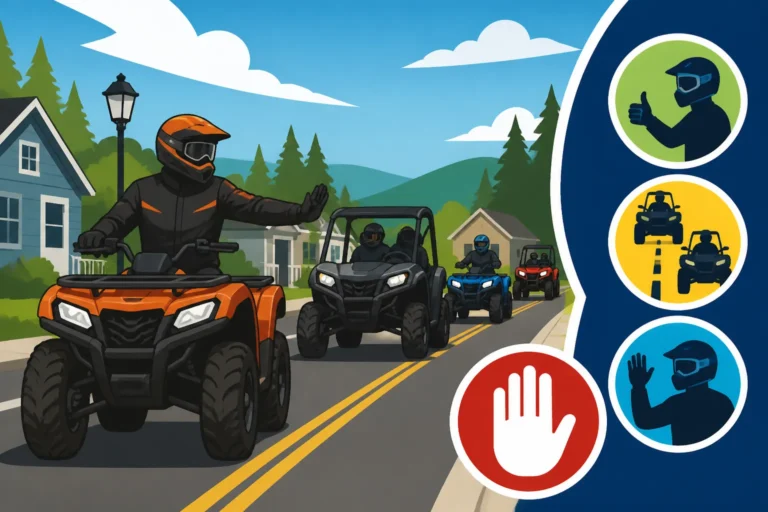
When an ATV encounters a public way in Maine, whether it's a paved highway, a dirt town road, or even a side street in a village, the law requires a complete stop before proceeding. This is akin to stopping at a stop sign or a railroad crossing. The ATV must come to a full, momentary stop before entering the travel portion of the public way. This gives the operator time to look both ways, assess traffic, and ensure it's safe to proceed. For a 14-year-old, this is a critical moment where their learned safety skills and your direct supervision come into play. There should be no rolling stops or quick glances; it’s a full, deliberate pause. Find more information on this at [Complete Stop Before Entering a Maine Public Way].
Once the complete stop is made and it's clear to proceed, the crossing must be made at approximately a 90-degree angle to the public way. This means you don't ride parallel to the road for any distance. The goal is to minimize the time the ATV spends in the traffic lane. Furthermore, the crossing must be made "at the extreme right of the traveled way," meaning as far to the right as safely possible within the intersection or crossing point. This isn't about riding on the shoulder; it's about making the actual crossing as direct and brief as possible, and not impeding traffic more than necessary. It's a fundamental rule of interaction that reduces conflict with other vehicles. Understanding [Maine's Extreme Right Rule on a Public Way] is essential here.
Crossing vs. Riding on a Public Way
This distinction is perhaps the most important point for young riders and their supervisors. Maine law generally prohibits ATVs from operating on the traveled portion of a public way. There are exceptions for specifically designated ATV access routes, which some towns have created to connect trails or allow access to services like gas stations or restaurants. However, these are exceptions, clearly marked, and usually have specific rules for operation, such as speed limits or single-file riding. For the vast majority of public roads, an ATV is only permitted to cross it.
A crossing is defined as traversing the shortest possible distance from one side of the road to the other to continue on a trail. It is not riding down the road for any distance. For a 14-year-old, this means they cannot ride their ATV on the shoulder, in the ditch, or on the pavement for any length of time, even if it feels like a short hop to the next trail segment. The moment they start riding along the public way instead of directly across it, they are in violation of the law. This is a common mistake and one that Wardens specifically look for. This strict interpretation protects riders from motor vehicle traffic and preserves the recreational nature of ATVing. If you're looking for approved routes, check out [Maine ATV-Access Routes and How Towns Post Them].
Yielding to Traffic: A Crucial Safety Step
Maine law explicitly states that an ATV operator, when crossing a public way, must yield the right-of-way to all vehicular traffic on that public way. This means that cars, trucks, motorcycles, and any other vehicle legally using the road have priority. A 14-year-old, even with an adult supervising, must understand that they cannot pull out in front of approaching traffic. They must wait until the road is clear, or until they can cross safely without causing any vehicle to slow down, stop, or swerve.
This is where the "complete stop" rule really reinforces safety. After stopping, both the youth and the supervising adult need to scan the road thoroughly in both directions. It’s not just about what’s immediately visible; it’s about judging the speed of oncoming vehicles and ensuring there’s ample time to cross. Even on a quiet dirt road, you never know when a vehicle might appear around a bend. Teaching a young rider to be patient and make a conservative decision at every road crossing is paramount. The consequences of misjudging traffic can be severe. This aspect is covered in [Maine's Stop-and-Yield Rule Before a Public Way].
| Action Required at a Maine Public Way Crossing | Youth Rider (10-15) | Accompanying Adult |
|---|---|---|
| Complete Stop Before Entry | Required | Ensure compliance |
| Yield to All Traffic | Required | Direct and confirm |
| Cross at 90-Degree Angle | Required | Ensure compliance |
| Cross at Extreme Right | Required | Guide placement |
| No Riding Along Public Way | Strictly Prohibited | Strictly Enforce |
| Maintain Visual/Verbal Contact | N/A | Required |
| Possess Safety Certificate | Required | Confirm possession |
Safety Considerations and Best Practices for Young Riders
Beyond the letter of the law, ensuring a young rider's safety during a road crossing involves a holistic approach to equipment, supervision, and judgment. It’s about building good habits from the start, recognizing that youth riders, even with their safety course and natural enthusiasm, might lack the predictive judgment that comes with years of experience.
Equipment and Gear: Helmets and Eye Protection
Safety gear is not just recommended; it’s legally required for young riders in Maine. Any ATV operator under the age of 18 must wear a helmet. This isn't optional, and it's one of the first things a Maine Warden will check for during a trailside stop. The helmet must meet specific safety standards (like ANSI or DOT approved) to offer proper protection. A properly fitting helmet can be the difference between a minor bump and a serious head injury in the event of a fall or collision, which is a real risk during a road crossing.
Beyond the helmet, eye protection is also highly recommended and often a good idea for any rider. Goggles or a face shield on the helmet will protect a young rider’s eyes from dust, debris, insects, and branches, ensuring clear vision, which is absolutely critical when scanning for traffic at a road crossing. Imagine trying to make a judgment call about an oncoming car if your eyes are tearing up from wind or you're squinting through dust. Good vision is paramount to safe operation, especially at critical moments like road interactions. You can find more details on [Maine Helmet Rules for Riders Under 18]. When selecting gear, ensure it's high-quality and designed for ATV use; brands like SuperATV offer a wide range of accessories, though their primary focus might be more on UTVs and larger machines, the principles of quality and safety gear apply broadly across the spectrum of off-road riding.
Supervising a Young Rider Effectively
Effective supervision goes beyond just being present; it's about active guidance and being prepared to intervene. When approaching a public way with a 14-year-old on an ATV, the supervising adult should:
- Lead by Example: Always demonstrate correct procedure – full stop, look both ways, yield to traffic. Young riders learn a tremendous amount by observing.
- Communicate Clearly: Before reaching the crossing, remind the youth about the specific rules. Use clear, concise instructions. "Full stop at the edge, wait for my signal, look left, then right, then left again, then cross."
- Position for Safety: The adult should position themselves to have a clear view of the youth rider and the approaching traffic. Sometimes this means the adult crosses first and then signals the youth; other times, the adult may cross alongside. The key is visibility and control.
- Emphasize Patience: Teach the young rider that it's always better to wait for a completely clear window than to rush a crossing. There's no prize for being fastest across the road.
- Reiterate "No Riding Along": Continuously reinforce that the ATV is only crossing the road, not riding on it. This helps cement the legal and safety distinction.
Remember, the goal is not just legal compliance but instilling good, safe riding habits that will last a lifetime. Effective supervision during these critical moments builds confidence and competence in young riders.
Choosing the Right Machine Size
While not directly tied to road crossing rules, having a 14-year-old on an appropriately sized machine significantly impacts their ability to safely control the ATV, especially during maneuvers like stopping quickly or accelerating smoothly across a road. Youth ATVs are designed with smaller engines, lighter frames, and sometimes speed limiters, all tailored to the physical capabilities and reaction times of younger riders.
A machine that is too large or too powerful can be overwhelming, leading to a loss of control, especially when startled by traffic or unexpected road conditions. Conversely, a machine that's too small might be outgrown, affecting comfort and control. Ensure your 14-year-old is riding an ATV that matches their physical size, strength, and experience level. While a 14-year-old might be tempted by a full-size machine, the law, and good judgment, often dictate a more conservative choice. This is vital for their overall safety, which includes their ability to execute a safe road crossing. Information about this can be found in [Best Youth Quad Size for a Ten-Year-Old] and [Youth Machine Size Limits for Maine Riders].
Navigating road crossings with a 14-year-old on an ATV in Maine requires diligence, knowledge of the law, and a strong commitment to safety. By understanding the age and supervision requirements, adhering strictly to crossing protocols, and prioritizing proper gear and effective supervision, you can ensure that these necessary transitions on the trail are as safe and lawful as possible for everyone involved.
Disclaimer
This article is for general informational purposes only and does not constitute professional advice. Laws, prices and regulations vary by location and change over time. Consult a qualified professional for guidance on your specific situation.