Riding to a Deer Stand on an ATV
It’s a scenario many Maine deer hunters dream of: having your ATV parked discreetly near your stand, ready to make quick work of retrieving a big buck. The idea of using your trusty quad to get deep into the woods, haul out your gear, and, hopefully, transport your harvest can be incredibly appealing, especially when thinking about those remote, hard-to-reach spots. However, the woods of Maine, whether private or public, come with a specific set of rules and unwritten etiquette that can make this dream a bit more complicated than just firing up the engine and going. This comprehensive guide is here to untangle the legalities, offer practical advice, and ensure you can use your ATV responsibly and effectively during deer season without running afoul of the law or disrupting the hunting experience for others.
The Basics of ATV Use for Hunting in Maine
Navigating the Maine wilderness with your ATV during hunting season requires a clear understanding of where you can and cannot ride, especially when your goal is to access a deer stand. It’s not simply a matter of owning an ATV; it’s about respecting the land, wildlife, and fellow hunters, all while staying within the confines of Maine law.
General Rules for ATVs in the Maine Woods
Maine has a fantastic network of ATV trails, thanks to the dedicated work of local clubs and landowners. However, it’s crucial to understand that these trails aren't always directly aligned with prime hunting grounds, nor are all wooded areas open to ATV traffic. Generally speaking, you can ride your ATV on designated, marked ATV trails and on private land where you have explicit permission from the landowner. This distinction is paramount, as illegally riding on private property, even if it feels remote, is a serious offense that can lead to fines and, perhaps more damagingly, the loss of access for all riders.
Before you even think about heading out, ensure your ATV is properly registered with the Maine Department of Inland Fisheries & Wildlife (IF&W). This isn't just a formality; it's a legal requirement that helps fund the very trails you ride on and supports enforcement efforts to keep our woods safe and accessible. For young riders, or even new adult riders, completing a Maine ATV safety course is also highly recommended, and often mandatory for certain age groups, to ensure you understand safe operating practices. Knowing these foundational rules is your first step to a legal and enjoyable hunting season with your ATV.
Maine's "Road" vs. "Trail" Distinction for ATVs
One of the biggest areas of confusion for ATV riders, especially hunters, revolves around the difference between a "road" and a "trail" in the eyes of Maine law. This distinction profoundly impacts how you can access your deer stand. A designated ATV trail is specifically marked and maintained for ATV use. These are usually narrow paths winding through the woods, often connecting towns or remote areas. Riding on these is generally straightforward, assuming your machine is registered and you're following all other regulations.
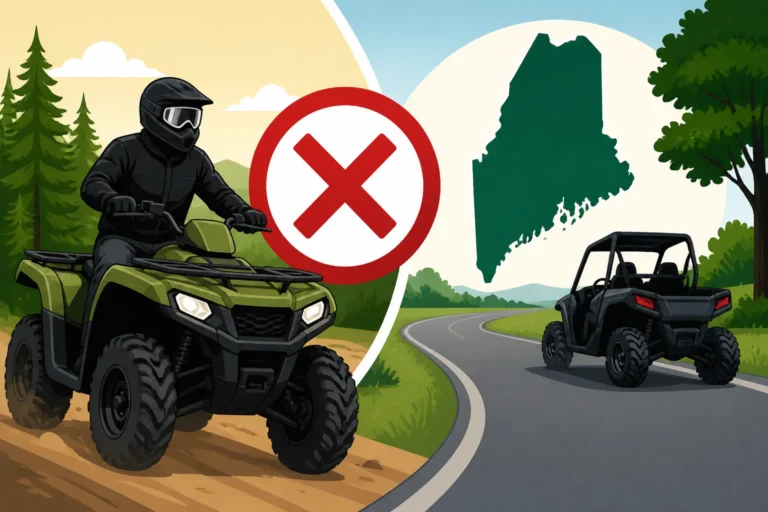
However, many deer stands are accessed via private camp roads, logging roads, or old dirt roads that, while seemingly abandoned, are still considered private property or even public ways. [Maine ATV Rules on Private Camp Roads] are clear: you need permission from the landowner to use them. Even if a logging road looks like a perfect access point, it's often actively used by timber companies and private citizens, and riding without permission can be a major trespass. Furthermore, public roads, even unpaved ones, have very specific and often restrictive rules regarding ATV use. Maine law limits how far you can travel on certain public ways and what kind of crossings you can make. Understanding this nuance is crucial. You might be able to ride your ATV down a marked trail to within a certain distance of your stand, but you likely cannot just drive it down a town-maintained dirt road, even if it seems remote. Always verify the status of the path leading to your stand, and remember that [Riding a Logging Road on an ATV] usually requires explicit permission. When in doubt, it's always safer to assume a path is off-limits until you can confirm otherwise.
Navigating Private Land and Permission
The vast majority of deer hunting in Maine occurs on private land, making landowner permission the single most critical factor when planning to use your ATV to access a deer stand. Without proper permission, you're not just risking a fine; you're risking the goodwill that keeps vast tracts of Maine open for hunting and recreation.
The Critical Role of Landowner Permission
Let’s be blunt: if you don’t have permission, you don’t ride your ATV to your deer stand on private land. It's as simple and as vital as that. Many hunters have established relationships with landowners over years, often helping with upkeep or even just bringing a pie around at holiday time. These relationships are the backbone of Maine's hunting access. "Permission is presumed" is a common phrase in Maine, meaning that unless land is clearly posted with "No Trespassing" signs or marked with purple paint, you generally have permission to walk onto it for recreational purposes. However, this "presumed permission" often does NOT extend to ATV use. Many landowners allow foot traffic for hunting but explicitly prohibit ATVs due to concerns about rutting, noise, and potential liability.
The best practice, by far, is to seek explicit, written permission from the landowner if you intend to use an ATV on their property. This conversation allows you to understand their specific wishes, such as where you can ride, where you should park, and whether they have any areas they want you to avoid entirely. Always look out for [Purple Paint Marks Along a Maine Road] or traditional "No Trespassing" signs; these unequivocally mean no entry without direct permission. Ignoring these signs, especially when operating an ATV, is a clear violation of [Maine Trespass Law for ATV Riders] and can result in significant penalties, not to mention permanently souring landowner relations for everyone. Don't risk it. A simple conversation or a written agreement can save you a lot of headache and protect future access.
Specifics for ATV Use to Access a Deer Stand
So, you've got the landowner's blessing to use your ATV to get to your deer stand. That's fantastic, but there are still nuances to consider beyond just having permission. Can you ride directly to the stand itself? While some might, it's generally not advisable, for both practical and ethical reasons. The noise and disturbance of an ATV can easily spook game, not just in your immediate area but across a wider swath of the woods. Deer, being creatures of habit and keen senses, will certainly know you're there if you ride right up to their doorstep.
A better strategy is to use your ATV to get as close as is practical and respectful, then park it a reasonable distance away – perhaps a quarter-mile or more – and walk the rest of the way in silently. This minimizes your impact and allows the woods to settle down before you take your position. Consider how you're approaching: is your route disturbing other hunters? Is it rutting up the access path? Remember, you're trying to integrate into the natural environment, not dominate it. Using your ATV for the bulk of the travel, especially when hauling heavier gear, can save you a lot of energy, but the final approach should always be on foot. Think of your ATV as a helpful tool to get you near your hunting spot, not into it.
Legalities of Carrying Game and Firearms
Once you've successfully harvested a deer, the next challenge is often getting it out of the woods. This is where an ATV can truly shine, but again, there are specific rules about how you can transport both your quarry and your hunting equipment.
Transporting a Harvested Deer by ATV
The satisfaction of a successful hunt often comes with the arduous task of dragging a deer, sometimes for miles, out of the woods. This is where an ATV earns its keep. Maine law does allow you to use your ATV to retrieve a harvested deer, provided you are on legal ATV trails or private land with permission. However, there are practical and ethical considerations.
First, your ATV has a weight limit. A large buck can easily weigh 200+ pounds, not including your gear and yourself. Overloading your ATV can be dangerous, affecting steering, braking, and stability, especially on uneven terrain. Consider using a utility trailer specifically designed for ATVs if you're pulling a large animal or multiple smaller ones. If dragging, ensure the deer is secured to prevent it from swinging into your tires or getting caught on obstacles. Many hunters prefer to load the deer onto a sturdy cargo rack or in a utility cart rather than dragging, as dragging can damage the hide and meat, and is generally harder on the machine.
Always prioritize safety. When [Hauling a Deer Out by ATV], drive slowly and deliberately, especially on wet or rough trails. The goal is to get your deer home safely and respectfully, not to damage your machine or yourself. Remember that other hunters may still be in the woods, so be mindful of your speed and noise, even if your hunt is complete.
Carrying Firearms and Bows on an ATV
Maine has specific regulations regarding the transportation of firearms on ATVs during hunting season. The primary rule is that a firearm, bow, or crossbow must be UNLOADED when transported on an ATV. "Unloaded" for a firearm means no ammunition in the chamber or magazine, and "uncased" can be acceptable in some instances, but it’s always safest to transport your firearm in a securely fastened case. This applies whether you're actively hunting or just transiting to your stand. The intention behind this law is safety – preventing accidental discharges that could injure you, others, or even wildlife.
When you're carrying a rifle, shotgun, or bow, make sure it's safely secured to your ATV. You don't want it bouncing around, getting damaged, or worse, falling off. This is where accessories designed for ATVs become invaluable. Many hunters utilize gun scabbards or specialized racks that mount securely to the ATV's front or rear rack. Companies like SuperATV offer a range of robust mounting solutions for firearms and bows, ensuring they are held firmly in place, protected from the elements, and easily accessible once you've dismounted and are away from the machine. These accessories are a smart investment, not just for compliance with [Carrying a Firearm on an ATV in Maine] regulations, but for protecting your valuable equipment and ensuring everyone's safety in the field. Always double-check your firearm is unloaded before mounting it on your ATV, and keep it cased for extra protection.
Safety, Etiquette, and Practical Considerations
Beyond the legal aspects, using an ATV for hunting in Maine also involves a blend of safety practices, respecting the environment, and adhering to unwritten rules of etiquette that ensure a positive experience for everyone in the woods.
Minimizing Impact and Respecting Fellow Hunters
When you venture into the Maine woods on an ATV during hunting season, you're often sharing that space with other hunters who are on foot, quietly stalking game, or patiently waiting in a stand. The noise of an ATV, even a relatively quiet one, carries a long way through the forest. It's not just about what you hear, but what the deer hear. Riding too close to active hunting areas, especially at peak times like dawn and dusk, can easily spoil another hunter's chance at success or even spook game out of a wide area for hours.
To minimize your impact, always ride at a reasonable speed, avoid excessive noise, and stay on designated trails or permitted paths. If you encounter other hunters on foot, slow down, give them a wide berth, and perhaps even stop and shut off your engine to let them pass or for a brief, polite exchange. The goal is to be a ghost, not a bulldozer. Consider parking your ATV further away from your stand than strictly necessary and walking the final leg in silence. This not only increases your chances of encountering undisturbed game but also shows respect for the ecosystem and your fellow outdoorsmen. A little courtesy goes a long way in fostering good relations and preserving hunting access for all.
Essential Gear and ATV Maintenance for Hunting
Heading into the backcountry for deer hunting, especially with an ATV, requires more than just a full tank of gas and a prayer. Proper preparation and maintenance are crucial for safety, success, and ensuring you don't end up stranded miles from anywhere with a harvested deer.
Before every hunt, give your ATV a thorough once-over. Check tire pressure, oil levels, brakes, and lights. Ensure your winch, if you have one, is in working order – a winch can be invaluable for pulling out a heavy deer or self-recovering a stuck machine. For those frequently tackling rugged terrain, investing in heavy-duty suspension components or specialized tires from a brand like SuperATV can provide enhanced durability and traction, making your machine more reliable when it truly counts.
Beyond the machine itself, pack smart. Always carry a basic toolkit, tire repair kit, and a small air compressor. Extra fuel in a securely mounted container is a must for longer trips into remote areas. Beyond mechanicals, think about personal safety and survival. A comprehensive first-aid kit, signaling devices (whistle, mirror), a headlamp, and a reliable navigation tool (GPS, compass, and map) are non-negotiable. Cell service is spotty at best in many Maine hunting grounds, so a satellite messenger or two-way radio can be a lifesaver. Finally, if you're planning to haul a deer, ensure you have appropriate straps, ropes, or a game sled. Being prepared means you can focus on the hunt, knowing your ATV and your gear are ready for whatever the Maine woods throw at you. For tips on what else to bring on extended trips, check out [What to Carry on a Remote Trail Ride].
Here's a quick comparison of common methods for transporting a harvested deer with an ATV:
| Method | Pros | Cons | Best Use Case |
|---|---|---|---|
| Dragging (bare) | No extra equipment needed immediately. | Can damage hide/meat; high friction; harder on ATV; slower. | Short distances, unexpected harvest, emergency retrieval. |
| Game Sled/Hauler | Protects hide/meat; reduces friction; easier. | Requires pre-planning to bring sled; can be bulky. | Longer distances, rough terrain, preserving meat/hide quality. |
| ATV Cargo Rack | Keeps deer off ground; relatively secure. | Weight limits are crucial; deer needs to be quartered or tied well. | Medium-sized deer, short distances on stable trails. |
| Small ATV Trailer | Carries heaviest loads; protects deer fully. | Requires a specific trailer; maneuverability on narrow trails. | Large deer, multiple deer, very long distances, easy access trails. |
| Utility Cart (pulled) | Good for rough terrain where a trailer won't go; keeps deer off ground. | Still requires pulling power; can get caught on obstacles. | Rocky, uneven trails where full trailer access is difficult. |
No matter your method, always ensure the deer is secured and won't shift during transport. Your ATV should remain stable and controllable.
Disclaimer
This article is for general informational purposes only and does not constitute professional advice. Laws, prices and regulations vary by location and change over time. Consult a qualified professional for guidance on your specific situation.