Maine ATV Road Crossing at an Angle
It’s a scenario every ATV and UTV rider in Maine encounters: you're cruising along a beautiful trail, enjoying the peace and scenery, when suddenly, the path spits you out onto a paved public way. Your heart might do a little flip-flop, wondering exactly how you're supposed to navigate this momentary intersection with car traffic. The urge to just angle across and keep moving can be strong, but doing so could put you in serious jeopardy and violate Maine law. This guide is here to untangle the confusion and clearly lay out the correct, safe, and legal way to cross a public road on your ATV or UTV in Maine, specifically addressing why crossing at an angle is a definite no-go.
The Rationale Behind Angled Crossings: Why It Matters
When you approach a public road on your ATV, your instinct might be to angle across it, almost as if you were making a wide turn from one side of the trail to the other. On a dirt track or a private path, this might be perfectly natural. However, when you're interacting with established roadways and vehicle traffic, this seemingly innocuous maneuver actually introduces a significant amount of risk and confusion for everyone involved. It's not just about what feels natural; it's about what's predictable and safe in a high-speed environment.
Visibility and Safety for Everyone
Crossing a public way at an angle, rather than straight across, dramatically increases the amount of time your machine spends in the active travel lane. Think about it: if you're attempting to angle from the dirt shoulder on one side to the dirt shoulder on the other, your ATV or UTV is exposed to oncoming traffic for a longer duration. This extended presence can be incredibly dangerous. Drivers of cars and trucks are accustomed to predicting the movements of other vehicles, and an ATV moving at an angle can be harder to judge. Is the rider turning onto the road? Are they simply confused? This ambiguity can lead to critical delays in a driver's reaction time, especially if they are approaching at highway speeds or around a blind corner.
Furthermore, an angled approach often means you're turning your head and machine in a way that might reduce your own direct line of sight down the road. You need to see clearly in both directions for a significant distance to ensure a safe crossing, and angling can compromise this direct visual sweep. The law’s intent is to create a clear, unambiguous moment of crossing that minimizes risk for everyone on the road, including you. It's about reducing variables and making the interaction as quick and straightforward as possible.
Maine Law's Explicit Stance
It's important to understand that the rules for crossing public ways in Maine are not mere suggestions or best practices; they are codified in law. These regulations are designed to standardize how ATVs and UTVs interact with roads, ensuring maximum safety and predictability. The law specifically addresses the manner in which you must approach, stop, and then cross a public way, leaving little room for interpretation, especially when it comes to "angling." The whole point is to avoid any motion that could be misinterpreted as joining the flow of traffic or making a turn.
The explicit requirements help prevent confusion and ensure that all riders, regardless of their experience level, follow the same procedure. This consistency is vital for accident prevention. When a car driver sees an ATV at the edge of the road, they should have a clear expectation of what that ATV will do next, and an angled motion deviates from that expectation. Maine has a clear [Maine's Stop-and-Yield Rule Before a Public Way] for a reason, and understanding its implications is critical to safe and legal riding.
The Correct Way to Cross a Maine Public Way
So, if angling is out, what's the correct procedure? Maine law is quite specific, focusing on minimizing your time on the paved surface and eliminating any ambiguity about your intentions. It's a straightforward process, but one that demands vigilance and a precise approach every single time. This isn't just about avoiding a ticket; it's about making sure you get to the other side safely.
The Perpendicular Rule: What It Means
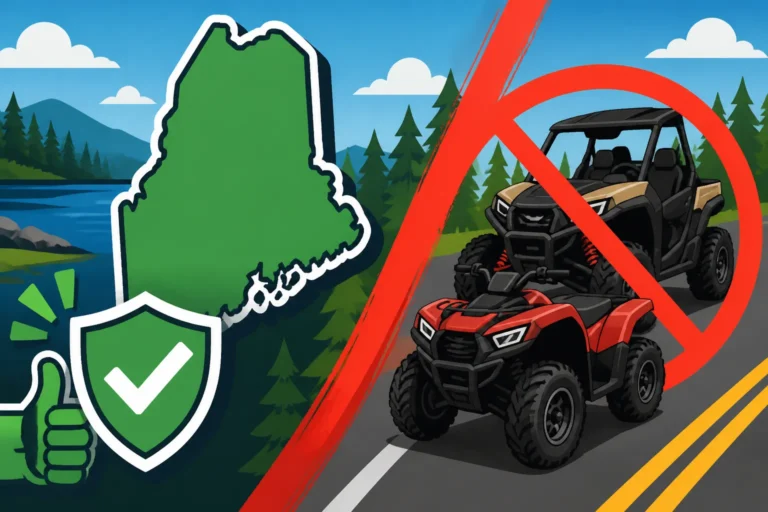
When the law talks about crossing a public way, it generally means crossing at a perpendicular or right angle to the road. Imagine drawing a straight line directly across the road, from one side of the trail to the other. Your ATV or UTV should follow that line. This means your machine's front will be facing straight across the road, and you'll proceed in a straight line until you've cleared the travel lanes. You're not turning onto the road, you're not riding along it, and you're certainly not cutting across at an oblique angle. You are making a direct transit across the pavement.
This method ensures the shortest possible time that your ATV is exposed to vehicular traffic. It also makes your intent incredibly clear to any approaching driver: you are crossing, not merging or turning. By minimizing your time on the road, you reduce the chances of a collision and adhere strictly to the legal framework designed to keep you safe.
Step-by-Step for a Safe Crossing
Let's break down the exact sequence of actions you should take when encountering a public way from an ATV trail. Mastering this process will not only keep you legal but, more importantly, keep you safe.
- Approach Slowly and Cautiously: As you near the road, reduce your speed significantly. Be prepared to stop well before the edge of the pavement. Look for any signage that might indicate specific local rules or access points.
- Come to a Complete Stop: You must bring your ATV or UTV to a full and complete stop before you enter the traveled portion of the public way. This means stopping with your tires still on the shoulder or dirt, not on the asphalt. This is a non-negotiable step, as outlined in [Complete Stop Before Entering a Maine Public Way].
- Look Both Ways (Multiple Times): Scan the road thoroughly in both directions, not just once, but twice, maybe even three times. Look far down the road for any approaching vehicles. Don't assume the road is clear just because you don't immediately see anything. Be especially mindful of crests, curves, or driveways that might obscure visibility.
- Listen Carefully: Even if you don't see anything, listen for the sounds of approaching traffic, especially large trucks or motorcycles that might be harder to spot. If your engine is loud, consider idling down or even shutting it off for a moment to improve your ability to hear.
- Signal (If Applicable) and Confirm: While ATVs don't typically have turn signals like cars, you can use hand signals if you're in a group to indicate your intention to cross. More importantly, ensure you have a clear, uninterrupted window of opportunity to cross safely. Never rush.
- Proceed Straight Across at a 90-Degree Angle: Once you are absolutely certain the road is clear, accelerate smoothly and proceed directly across the public way. Maintain a 90-degree angle to the road's edge. Your goal is to get off the paved surface as quickly and safely as possible.
- Do Not Stop on the Road: Once you start your crossing, do not stop in the middle of the road unless there is an emergency. Any hesitation or mid-crossing stop prolongs your exposure to traffic and creates a hazardous situation.
- Rejoin the Trail: Once all parts of your ATV or UTV have cleared the traveled portion of the public way and are safely on the shoulder or the trail on the other side, you can resume your ride.
This methodical approach is the safest way to navigate these intersections. Always be aware of your surroundings, traffic speed, and any potential blind spots.
Equipment Considerations for Visibility
While proper crossing technique is paramount, having the right equipment can significantly enhance your safety by making you more visible to other road users. This isn't just about following the law for lighting, but about proactively making yourself seen. Especially when you're momentarily sharing a space with cars and trucks, every bit of visibility helps.
Consider wearing bright, reflective clothing, especially if you're riding during dawn, dusk, or in less-than-ideal weather conditions. Your ATV or UTV should have working headlights and taillights, which are required by law for certain times of day or conditions. Some riders also choose to add auxiliary lighting or flags for increased visibility, especially for larger UTVs. Companies like SuperATV offer a range of aftermarket lighting solutions, from LED light bars to enhanced taillights, that can significantly boost your presence on or near public ways. While these aren't specifically for crossing, they contribute to your overall conspicuity, which is always a good thing when interacting with road traffic.
Common Mistakes and Potential Penalties
Even with the best intentions, it's easy to fall into bad habits or misunderstand the nuances of the law when it comes to road crossings. However, these mistakes can have serious consequences, ranging from fines to severe accidents. Understanding why certain actions are prohibited is just as important as knowing the correct procedure.
Why Angled Crossings are Risky (and Illegal)
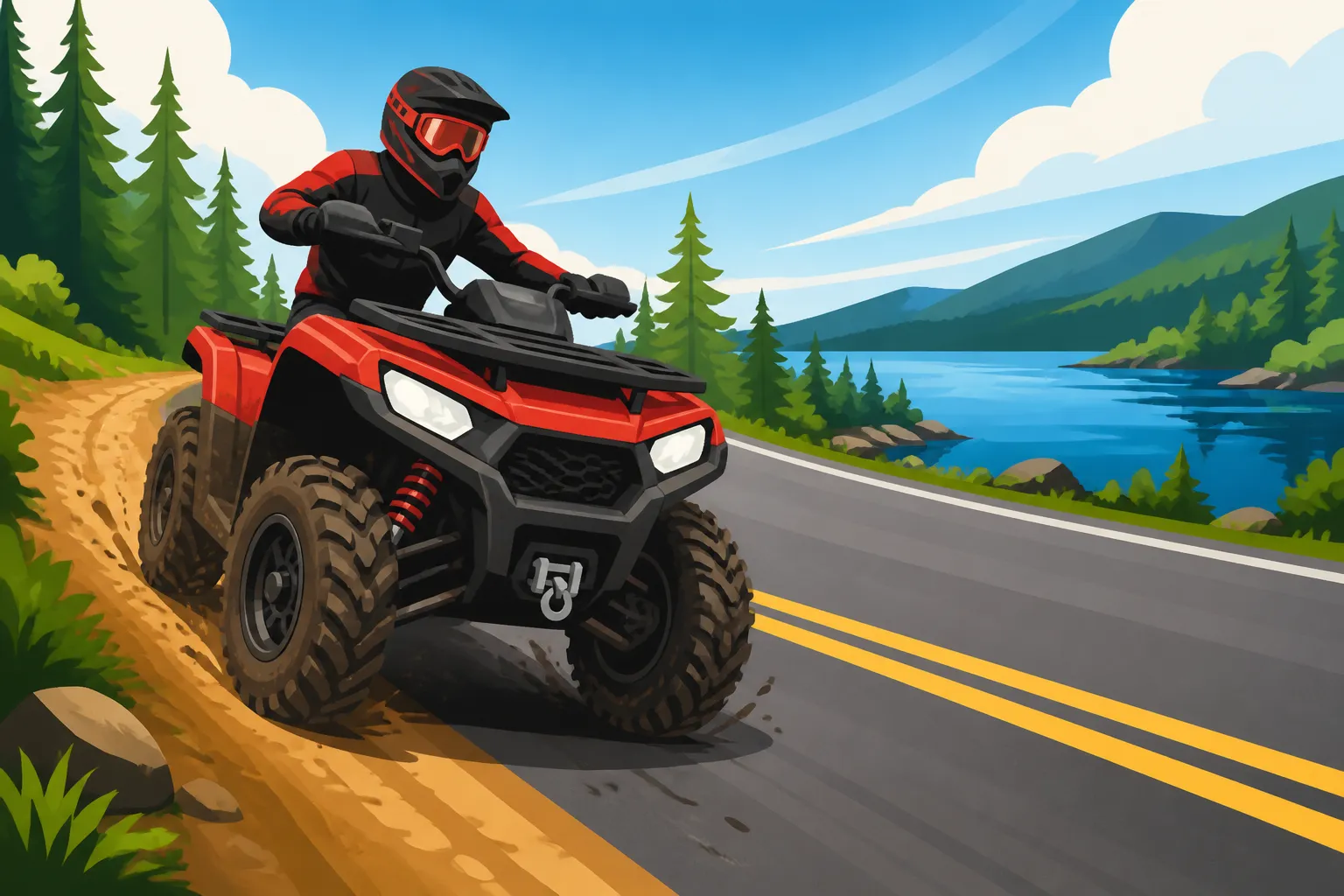
The primary risk of an angled crossing, as discussed, is the prolonged exposure to traffic and the confusion it creates for drivers. Imagine a scenario: you approach a paved road from a trail, decide to cut across at a 45-degree angle, and a car is rapidly approaching from your left. The driver sees your ATV, but because you’re angling, they might not immediately perceive you as just crossing. They might think you're attempting to turn onto the road and travel alongside it, or worse, that you're an unpredictable obstacle. This split-second misinterpretation can be the difference between a safe pass and a catastrophic collision.
Furthermore, an angled crossing can force you to make a longer, less direct path through the lane, making it harder for you to judge the speed of oncoming traffic and for drivers to anticipate your departure from the road. The law prioritizes direct, predictable movements for a reason. Any deviation, like an angled crossing, is seen as an unsafe and illegal act because it fundamentally undermines the safety protocols designed for these intersections.
Penalties for Improper Crossing
Violating Maine's rules for crossing public ways can lead to significant penalties. While specific fine amounts can vary, wardens and law enforcement take these infractions seriously due to the inherent safety risks involved. You could face fines for operating improperly on a public way, which might fall under broader categories of traffic violations. For example, crossing carelessly or without coming to a complete stop could lead to citations that wardens frequently issue. You can get an idea of the types of infractions and the severity with resources like [Fines Maine Wardens Write Most Often].
Beyond the monetary fines, there's the risk of personal injury or property damage in an accident. If an improper crossing leads to a collision, you could be held liable for damages, medical expenses, and face legal action. The Maine Warden Service conducts regular patrols, and they are particularly vigilant at known road crossings to ensure compliance. [Maine Warden Enforcement on Public Ways] is a reality for riders, and they are trained to spot violations of road rules. Adhering to the perpendicular crossing rule isn't just about avoiding a ticket; it's about safeguarding your life and your riding privileges.
Understanding "Public Way" Definitions
One common misconception among riders is what actually constitutes a "public way" that requires these specific crossing rules. It's not just major state highways. In Maine, a "public way" can encompass a wide range of roads, including paved town roads, gravel roads maintained by a municipality, and even some privately owned roads that are regularly open to public travel. The key is whether the road is open to and commonly used by vehicular traffic.
This means that even if you're on a less-traveled dirt road in a small town, if it's considered a public way and maintained by the town, you must follow the same strict crossing procedures. Don't assume that a quiet road means relaxed rules. Always operate under the assumption that any road you cross is a public way requiring a full stop and a perpendicular crossing. For more details on what constitutes a public way and general rules, riders can refer to guides like [Riding an ATV on the Road in Maine].
| Feature | Angled Crossing | Perpendicular Crossing |
|---|---|---|
| Legality in Maine | Generally illegal and discouraged | Required by law |
| Safety for Rider | Lower due to prolonged exposure and unpredictability | Higher due to minimized exposure and clear intention |
| Visibility for Others | Can be confusing; intentions unclear | Clear and predictable; intentions unambiguous |
| Time on Pavement | Longer, increasing risk | Shortest possible duration |
| Risk of Collision | Higher due to misinterpretation and exposure | Lower due to clarity and speed of crossing |
| Penalty Risk | Higher likelihood of fines and citations | Minimal if executed correctly |
Planning Your Ride Around Road Crossings
Responsible ATV and UTV riding in Maine extends beyond just operating your machine safely on the trail; it involves careful planning and adherence to rules, especially when interacting with public roads. Anticipating crossings and having a clear strategy can make all the difference in ensuring a smooth, safe, and legal ride.
Pre-Ride Map Reconnaissance
Before you even load up your machine, it's incredibly helpful to review your planned route on a map. Modern trail apps and even old-fashioned paper maps will show where ATV trails intersect or cross public roads. By identifying these points in advance, you can mentally prepare for the transition from trail to road. You can note if a crossing is on a blind curve, a busy highway, or a quiet dirt road, and adjust your approach accordingly. This foreknowledge allows you to plan your stops, gather your group, and execute the crossing without last-minute surprises.
Many local ATV clubs provide detailed maps that highlight these crossings and any specific local rules. Checking resources like [Maine ATV Trail Maps and Club Boundaries] can be invaluable. Look for signs on the ground as well; [Maine ATV-Access Route Signs and Spacing] can give you real-time information about designated crossings and access points, often installed by local clubs or the state. Knowing what to expect means you're never caught off guard.
Group Ride Protocols
If you're riding with a group, establishing clear protocols for road crossings is essential. The safest approach is for each rider to treat the crossing as an individual maneuver, rather than simply following the machine in front of them. While a designated leader can help navigate and signal, every rider is personally responsible for assessing the safety of the crossing before proceeding.
Before reaching a public way, the lead rider should signal the group to slow down and prepare to stop. Each rider should then come to a complete stop, look in both directions, and only proceed when they have a clear and safe window. Never assume the road is clear just because the rider ahead of you went. This sequential, individual assessment ensures that everyone in the group crosses safely. Clear communication and hand signals (if practical) can greatly enhance safety, but ultimately, individual vigilance is key.
Respecting the Rules and Landowners
Adhering to Maine's road crossing rules is about more than just personal safety; it's a critical component of maintaining positive relations with communities, motorists, and especially the landowners who generously allow trails to cross their property. Many of Maine's extensive ATV trail networks rely heavily on private land, and respecting all rules, including those for public ways, demonstrates responsible riding.
When riders disregard rules, it erodes trust and can lead to increased restrictions or even the permanent closure of trail sections. A negative incident involving an ATV at a road crossing could reflect poorly on the entire riding community. The rules, while sometimes feeling restrictive, are designed to create a harmonious coexistence between trail users and other members of the public. They are there for everyone's safety and to preserve the privilege of riding these incredible trails. Knowing and respecting regulations like [Maine's 500-Yard Limit on a Public Way] and other specific road rules ultimately helps keep the trails open for everyone.
Disclaimer
This article is for general informational purposes only and does not constitute professional advice. Laws, prices and regulations vary by location and change over time. Consult a qualified professional for guidance on your specific situation.