Maine’s Extreme Right Rule on a Public Way
Riding an ATV or UTV in Maine offers unparalleled access to some of the most beautiful backcountry in the Northeast, but let's be honest, navigating the rules and regulations for using public ways can feel like trying to find your way through a moose bog in the dark. It’s not always intuitive, and misunderstanding just one small detail can lead to frustration, fines, or worse, an accident. This comprehensive guide is here to clear up one of the most crucial, yet often misunderstood, aspects of riding your machine on Maine's public roads: the "extreme right rule." We'll dive deep into what it means, where it applies, and how to stay safe and legal on your Maine adventures.
Understanding the 'Extreme Right' Concept for ATVs in Maine
When you're out on the trails, the last thing you want to worry about is whether you're breaking the law when you encounter a paved road. Maine's regulations are designed to keep everyone safe, but they require a bit of deciphering. The "extreme right rule" is a cornerstone of responsible ATV and UTV operation on public ways, and it's something every rider needs to understand implicitly. It's not just a suggestion; it's a legal requirement that plays a huge role in how we share the roads with other vehicles.
What Exactly Does "Extreme Right" Mean?
The phrase "extreme right" sounds pretty straightforward, but its practical application on an ATV or UTV can sometimes lead to confusion. In essence, it means you must operate your machine as far to the right side of the paved surface as is safely possible. We're talking about hugging the edge, staying out of the main flow of traffic, and being hyper-aware of your position. This isn't about just staying in your lane; it's about being on the very fringe of the road, whether that's the paved shoulder, the breakdown lane, or simply the outermost edge of the travel lane if no shoulder exists.
Think of it this way: when you're on a public way, your ATV or UTV is the smallest and most vulnerable vehicle. The rule is there to provide the maximum buffer between you and cars, trucks, and other larger vehicles that are operating at higher speeds. It's about minimizing the chance of conflict and giving everyone ample space. If there's a paved shoulder, that's where you belong. If the shoulder is unpaved, you might still need to stay on the extreme right of the pavement, depending on local ordinances and the type of public way. Always assume the most conservative interpretation for your own safety and legal compliance. It also means you should be riding [Single File in a Group] if you're with other riders, never side-by-side unless the road is explicitly wide enough for two machines on the extreme right and it's allowed by local ordinance, which is rare.
Why This Rule Exists: Safety and Sharing the Road
The "extreme right rule" isn't some arbitrary guideline dreamt up to make your ride less fun. It's rooted firmly in common sense and road safety principles. Maine's public ways are often narrow, winding, and traveled by vehicles of all shapes and sizes. An ATV or UTV, especially with its lower profile and often slower speeds compared to cars, needs extra protection when sharing that space.
One primary reason is visibility. By staying to the extreme right, you become more predictable to other drivers. They expect you to be there, rather than suddenly appearing in the middle of a lane. This predictability reduces the risk of collisions, especially on blind curves or hills. Another key factor is minimizing traffic impedance. Cars often travel at significantly higher speeds than ATVs or UTVs are permitted or safe to operate on public roads. By staying to the extreme right, you allow faster traffic to pass safely without having to swerve dramatically or wait for an extended period, which can lead to impatient or aggressive driving. This rule helps maintain a smoother flow of traffic for everyone, fostering a better relationship between ATV riders and other road users. Ultimately, it’s about acknowledging that public roads are primarily for motor vehicle traffic and that ATVs are being granted limited access under specific conditions to allow trail connectivity, not to replace traditional vehicles.
Where the Extreme Right Rule Applies on Maine Public Ways
It's crucial to understand that "public way" doesn't automatically mean "open to ATVs." Maine has a very specific framework for where and how ATVs and UTVs can legally access public roads. The extreme right rule is always in play when you are on a public way, but the circumstances under which you can even be on that public way are just as important. Knowing the difference between an approved access route and a simple road crossing is vital for staying on the right side of the law.
Designated ATV Access Routes and the Rule
Maine towns have the authority to designate certain sections of public ways as official ATV access routes. These are the golden tickets for riders, allowing you to legally operate your ATV or UTV on a portion of the road to connect trails, reach a gas station, or get to a local restaurant. When you're on one of these designated [Maine ATV-Access Routes and How Towns Post Them], the "extreme right rule" is absolutely paramount. You must stay as far to the right as safely possible for the entire duration of your ride on that route.
These routes are typically marked with clear signage, often depicting an ATV symbol and sometimes indicating specific hours of operation or other restrictions. They are not free-for-all zones. You might be riding on a paved shoulder, or sometimes, if the shoulder is narrow or non-existent, you'll be on the extreme edge of the travel lane itself. In these cases, you become an integral part of the road traffic, albeit one that is expected to stick to the very edge. It’s imperative to keep an eye out for [Maine ATV-Access Route Signs and Spacing] to ensure you're on a legal route. These signs are there for a reason, guiding riders and informing other motorists. Remember, even on a designated route, speed limits for ATVs may differ from those for cars, and you're still expected to adhere to all standard traffic laws. The extreme right rule is your constant companion on these routes, ensuring a safer experience for you and other drivers.
Road Crossings vs. Road Riding: A Critical Distinction
Here's where many riders get confused. There's a fundamental difference between briefly crossing a public way and riding on one as a designated access route. The extreme right rule applies to both, but the context and expectations change significantly.
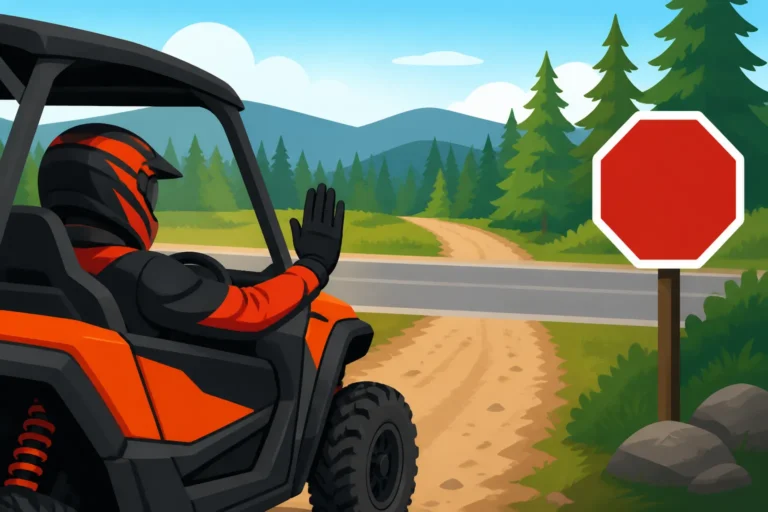
When you're simply crossing a public way to get from one section of a trail to another, your goal is to minimize your time on the road. You must approach the public way, [Complete Stop Before Entering a Maine Public Way], look for traffic, and then proceed directly and safely across to the opposite trail entrance. During this crossing, you are still expected to stay as far to the right as practical as you traverse the road, minimizing your footprint in the active travel lanes. This is a very brief maneuver, often just a few yards, and it's not considered "riding on" the road. You're not meant to parallel the road for any distance; it's a direct point-to-point crossing.
On the other hand, riding on a designated ATV access route means you are intentionally using a section of the public way to travel for a longer distance, perhaps to get to a nearby town or connect to another trail system. In this scenario, the extreme right rule is enforced for the entire length of your travel on that public way. You're part of the flow, albeit on the very edge. For example, if you’re riding [Maine's 500-Yard Limit on a Public Way], you'll be sticking to the extreme right for that entire stretch. Understanding this distinction is vital. Attempting to ride for a distance on a public way that isn't a designated access route, even if you stay to the extreme right, is illegal and can result in significant penalties.
Practical Application: Riding Safely on the Extreme Right
Adhering to the extreme right rule is more than just knowing where you're supposed to be; it's about active, defensive riding. You're sharing the road with vehicles that weigh thousands of pounds more than your machine and often travel much faster. Your safety depends on your vigilance and your commitment to being predictable and visible.
Situational Awareness and Visibility
Riding on the extreme right requires an elevated level of situational awareness. You can't just cruise along enjoying the scenery; your eyes and ears need to be constantly engaged. Always be looking ahead for potential hazards like potholes, gravel, debris, or changes in the shoulder. You also need to be frequently checking your mirrors (which, by the way, are often a legal requirement for road use, so make sure your machine is equipped!). Don't rely solely on mirrors; periodically glance over your shoulder to check for vehicles, especially before making any slight adjustments to your path or if you feel a vehicle approaching rapidly from behind.
Visibility isn't just about where you ride; it's also about how you ride and what you're wearing. Brightly colored riding gear, especially neon or fluorescent colors, can make a huge difference, particularly during overcast conditions or at dawn and dusk. Make sure your headlights and taillights are functioning perfectly. Some riders even add additional reflective tape or aftermarket lighting, like those offered by SuperATV, to their machines to increase their profile. Remember, a car driver's blind spot can easily swallow an ATV, so assume you are invisible until proven otherwise and ride defensively. Riding with your headlights on, even during the day, is a smart practice to enhance your visibility.
Speed Limits and Road Conditions
While you might be used to pushing your machine on wide-open trails, public ways demand a different approach to speed. Even if the posted speed limit for cars is 45 mph, it does not mean you should be going that fast on your ATV, even if you are capable. Maine law often dictates specific, lower speed limits for ATVs on public ways, particularly in town centers or near residential areas. Always be aware of these limits and err on the side of caution.
Road conditions on the extreme right can also be very different from the smooth center of the lane. Shoulders often accumulate gravel, sand, potholes, and debris. These can be treacherous for an ATV, especially when encountering them unexpectedly. Keep your speed appropriate for these conditions. A patch of loose gravel on the shoulder can cause you to lose traction quickly, so slow down significantly when approaching such areas. Be particularly cautious on curves, as debris tends to get pushed to the outside edge, right where you're supposed to be. Wet conditions, ice, or snow further amplify these risks, demanding even slower speeds and more cautious riding. Never push your limits or the machine's capabilities on a public way.
Encountering Other Traffic and Pedestrians
Sharing the road means interacting with a variety of other users, and knowing how to do so safely and courteously is part of being a responsible rider. When you encounter oncoming vehicle traffic, maintain your position on the extreme right and slow down slightly, especially if the road is narrow. This shows other drivers you are aware of them and gives them more room to pass. When a vehicle is approaching from behind, again, maintain your extreme right position and hold your line, allowing them to pass safely. Do not swerve into the main lane or make sudden movements that could startle the driver.
Pedestrians and cyclists are also common users of road shoulders, especially in residential or village areas. Always yield to pedestrians and cyclists. Give them ample space, slow down, and pass them with extreme caution. A friendly wave goes a long way in fostering good relations between ATV riders and other members of the community. Remember, we are guests on these public ways, and demonstrating respect and safety helps ensure continued access for all riders. Keep your engine noise to a minimum, particularly in residential zones, as [Maine Noise Limits and Muffler Rules] are strictly enforced.
Common Mistakes and Misconceptions About the Rule
Even experienced riders can sometimes misinterpret or neglect aspects of the extreme right rule. These misunderstandings can not only lead to fines but, more importantly, can put you and others in danger. Let's clarify some of the most common pitfalls.
Drifting from the Shoulder: Why It's Dangerous and Illegal
One of the most frequent mistakes riders make is drifting away from the extreme right. This can happen for a number of reasons: you might be distracted, trying to avoid a small puddle, or simply not paying enough attention to your positioning. However, even a slight drift into the main travel lane is both dangerous and illegal. When you drift, you lose that crucial buffer zone between your ATV and other vehicles. You become less predictable to drivers, who expect you to be hugging the edge. This significantly increases the risk of a sideswipe collision or causing another driver to react suddenly and dangerously.
Law enforcement, particularly the Maine Warden Service, pays close attention to this. They understand the purpose of the extreme right rule is safety, and they won't hesitate to pull you over for failing to adhere to it. The consequences could range from a warning to a citation and fine for illegal operation on a public way. It's not worth the risk. Always be conscious of your position, constantly adjusting to stay as far right as safely possible. If the shoulder is too rough or non-existent, and you find yourself constantly having to drift into the lane, it's a sign that perhaps this isn't a safe or legal ATV access route for your machine, or that you need to slow down dramatically.
Assuming All Public Ways Are Open to ATVs
Another pervasive misconception is that if you see a public road, and you stay to the extreme right, you're good to go. This is absolutely incorrect and a recipe for trouble. As mentioned earlier, Maine public ways are not universally open to ATV and UTV traffic. Access is highly regulated, primarily through town ordinances that designate specific segments as ATV access routes. [Maine Towns That Restrict ATVs on Public Ways] are common, and these restrictions are legally binding.
Just because you're riding to the extreme right doesn't magically make an otherwise restricted road legal for your ATV. You must ensure you are on a properly marked, designated ATV access route, or simply making a direct road crossing at an approved location. Rely on official trail maps, club information, and visible signage. Never assume. If you're unsure, it's always safer to find an alternative route or avoid that segment of road entirely. Getting caught riding illegally on a public way can lead to fines, your machine being impounded, and potentially even losing future trail access privileges. It's critical to know [Where Maine Lets You Ride an ATV] before you embark on your journey.
Equipment and Modifications for Safer Road Riding
While the extreme right rule focuses on how you ride, the safety equipment on your machine plays a crucial role in enabling you to adhere to this rule effectively and safely. Having the right gear not only helps you comply with Maine law but also significantly boosts your visibility and control when sharing public ways.
Essential Lighting and Reflectors
Visibility is paramount when an ATV or UTV is sharing a public road, even when sticking to the extreme right. Maine law requires ATVs and UTVs operated on public ways to have functional headlights and taillights. But don't just stop at the minimum. Consider enhancing your lighting setup for maximum visibility. Upgraded LED headlights offer brighter, wider illumination, which helps you see road debris on the shoulder and makes you more noticeable to oncoming traffic. Taillights should also be bright and easily visible from a distance.
Many riders also add auxiliary lighting, such as amber or white running lights, to their machines. These can make your presence clearer to other drivers, particularly in low-light conditions or inclement weather. Reflectors are another simple yet effective addition. Strategic placement of reflective tape or decals on your machine, especially on the front, rear, and sides, can drastically improve your visibility to other vehicles, especially at night when headlights hit your machine. Companies like SuperATV offer a wide range of lighting solutions, from full LED light bars for off-road use to more subtle, street-legal auxiliary lights and reflective kits designed to boost safety without breaking the bank. Investing in good lighting is an investment in your safety.
Mirrors, Horns, and Other Safety Gear
Beyond lights, several other pieces of equipment are either legally required or highly recommended for safer road riding on an ATV or UTV in Maine. Mirrors are typically mandatory when operating on a public way. You need to be able to see traffic approaching from behind without constantly turning your head. At least one rearview mirror is usually required, but having two (one on each side) provides a much better field of vision, helping you monitor traffic in both lanes as you adhere to the extreme right.
A functional horn is also a legal requirement. While you might not use it often, a horn is a critical safety device for alerting pedestrians, cyclists, or even other drivers to your presence in an emergency. Ensure your horn is loud enough to be heard in traffic. Additionally, consider a sturdy windshield for your UTV or a small windscreen for your ATV to protect you from road debris kicked up by other vehicles or passing cars. [Eye Protection on a Road Ride] is also non-negotiable for ATV riders. Finally, make sure your machine's tires are in good condition and suitable for mixed-surface riding. While aggressive knobby tires are great for mud, they might offer less predictable handling on pavement, especially on loose gravel shoulders. Opt for a tire with a more balanced tread pattern if you plan to frequently use public access routes.
| Feature | ATV Road Crossing | ATV Access Route Riding |
|---|---|---|
| Duration | Brief, direct | Extended travel |
| Purpose | Connect trails | Trail connection, services |
| Extreme Right Rule | Required | Required |
| Speed Limit | Cautious, slow | Specific ATV limit (often lower than cars) |
| Visibility | Critical | Critical, sustained |
| Signage | Look for trail entrance | Look for ATV access route signs |
| Regular Traffic Flow | Minimize disruption | Blend safely on extreme right |
| Required Equipment | Basic lighting, helmet | Lights, horn, mirrors, helmet (often more robust) |
| Local Ordinances | May govern crossing points | Explicitly designates routes |
Enforcement, Penalties, and What Wardens Look For
The Maine Warden Service and local law enforcement take ATV and UTV regulations seriously, particularly when it comes to operating on public ways. They understand the potential for conflict and danger when these machines interact with traditional road traffic. Knowing what wardens are looking for and the potential penalties can help you avoid a costly mistake and ensure your riding privileges remain intact.
Maine Warden Service Patrols and Spot Checks
It's a common sight during riding season: Maine Warden Service vehicles, often blending in with pickup trucks, patrolling areas where ATV trails intersect or run parallel to public ways. These wardens are well-versed in ATV law and are actively looking for violations. They know the designated access routes, the common crossing points, and unfortunately, the common areas where riders illegally enter or travel on public roads.
During [Maine Warden Service ATV Checkpoints] or spot checks, they will typically verify your [Maine ATV Registration Numbers and Where They Go], proof of ownership, and often your [Maine ATV Safety Course Requirements] certificate if you're under a certain age. But beyond paperwork, they are specifically looking at how you are operating your machine. Are you riding on the extreme right? Are you on an approved access route, or are you on a public way where ATVs are prohibited? Is your machine properly equipped with working lights, mirrors, and a horn? Are you operating safely and predictably? These are all key elements they'll observe. Remember, wardens also have jurisdiction on private land, so don't assume you're safe from enforcement just because you're technically off the main public road.
Penalties for Violating the Extreme Right Rule
Violating the extreme right rule, or more broadly, illegally operating an ATV or UTV on a public way, can carry significant penalties in Maine. These aren't just minor infractions; they are taken seriously due to the inherent safety risks involved. A typical fine for operating an ATV on a public way where it's prohibited, or failing to adhere to the extreme right rule on an approved route, can range from a few hundred dollars or more, depending on the specific statute and whether it's a first offense. These [Maine ATV Ticket Costs by Violation] can quickly add up and put a damper on your riding season.
Beyond monetary fines, there can be other consequences. Repeated violations could potentially lead to your machine being impounded, or in severe cases, the suspension of your ATV registration or even your driver's license. The biggest risk, of course, is the potential for an accident. A collision involving an ATV and a motor vehicle on a public way can result in serious injuries or fatalities, and legal repercussions will follow. Adhering to the extreme right rule isn't just about avoiding a ticket; it's about safeguarding your life and the lives of others. It also helps maintain positive relations with landowners and the general public, which is crucial for the future of Maine's extensive ATV trail network.
Disclaimer
This article is for general informational purposes only and does not constitute professional advice. Laws, prices and regulations vary by location and change over time. Consult a qualified professional for guidance on your specific situation.