Low-Speed Vehicle Rules in Maine
Navigating the myriad rules for off-highway vehicles and road-going machines here in Maine can feel like trying to solve a puzzle with half the pieces missing. Many folks wonder about the possibilities of using their recreational vehicles, or even a modified golf cart, on public roads for short hops to the store, a friend's house, or the local trail access. This comprehensive guide is here to untangle the specific regulations governing Low-Speed Vehicles (LSVs) in Maine, helping you understand what they are, where you can drive them, and what’s required to make them street-legal.
What Exactly is a Low-Speed Vehicle (LSV) in Maine?
It's a common misconception that if a vehicle goes slow, it must be street-legal on local roads. The truth, especially when it comes to the legal definition of a Low-Speed Vehicle (LSV) in Maine, is far more nuanced. It’s not just about how fast it can go, but how it was manufactured, what safety features it includes, and how the state specifically chooses to classify it. Trying to figure this out on your own can lead to a lot of head-scratching and, frankly, wrong turns. You might look at a souped-up golf cart or a compact utility vehicle and think, "Surely that's an LSV," only to find out Maine has a very particular definition.
Defining an LSV: More Than Just a Golf Cart
Let's cut right to the chase: an LSV isn't just any old golf cart you decide to put some lights on. While many golf carts can be modified to meet some of the criteria, a true Low-Speed Vehicle is a specific class of motor vehicle, often manufactured to federal safety standards for low-speed operation on public streets. Think of it this way: a golf cart is designed for golf courses or private communities, while an LSV is designed from the ground up (or at least specifically certified) to share certain public roadways.
The crucial distinction lies in the manufacturing and safety certifications. A genuine LSV typically comes from the factory meeting federal motor vehicle safety standards (FMVSS) for low-speed vehicles. This means it has certain built-in safety features that an average golf cart simply doesn't, or doesn't have to, possess. This is where the confusion often begins, because many people purchase a golf cart and then attempt to retrofit it with various components, hoping to meet the LSV standard, only to find they fall short of what Maine requires for actual road registration.
Key Characteristics That Set LSVs Apart
So, what exactly defines an LSV in Maine? The state aligns its definition closely with federal standards, which typically characterize an LSV as a four-wheeled vehicle with a gross vehicle weight rating of less than 3,000 pounds. The critical element is its top speed: an LSV is designed to operate at speeds greater than 20 miles per hour but not greater than 25 miles per hour. If it goes faster than 25 mph, it's generally considered a regular motor vehicle and falls under different, often more stringent, regulations. If it goes slower than 20 mph, it might still be classified as a golf cart or something else entirely.
These speed parameters are crucial. A vehicle that struggles to hit 20 mph might not be allowed on the same roads as an LSV, and one that easily cruises at 35 mph is definitely not an LSV. It's a very specific sweet spot. Beyond speed, LSVs are built with specific safety features from the factory that you'd expect on a minimal road-legal vehicle, distinguishing them from the simpler construction of a typical golf cart.
How Maine Law Classifies LSVs
In Maine, the classification of an LSV is detailed under state statute, mirroring the federal definition quite closely. Essentially, for a vehicle to be registered and legally operated as an LSV on Maine roads, it must meet these specific federal and state criteria. It’s not a matter of simply adding a turn signal kit to your favorite UTV or golf cart; the vehicle itself must be designed and certified as an LSV by the manufacturer.
This means if you're looking at purchasing a vehicle specifically for low-speed road use, you'll want to ensure it's explicitly sold and marked as an LSV. Retrofitting a standard ATV or UTV, or even a golf cart, to meet these exact specifications can be incredibly difficult, if not impossible, without manufacturer certification. The Maine Bureau of Motor Vehicles (BMV) will be looking for proof that the vehicle truly qualifies, which usually comes in the form of a manufacturer's certificate of origin that designates it as an LSV. This strict classification helps ensure that any vehicle sharing public ways meets a baseline of safety for both its occupants and other road users. This is an important distinction to understand before you consider options for [Registering a Side-by-Side as a Road Vehicle].
Where Can You Legally Drive a Low-Speed Vehicle in Maine?
This is often the million-dollar question for anyone considering an LSV in Maine. The allure of a small, nimble vehicle for quick errands or short commutes is strong, but the reality of where you can actually take it can be quite restrictive. Many assume that because it’s "street-legal," it can go anywhere a car can, but that’s far from the truth for an LSV here in the Pine Tree State. Understanding these limitations is absolutely critical to avoid fines, accidents, or confusing interactions with law enforcement.
Public Road Limitations and Speed Restrictions
The primary restriction for LSVs in Maine revolves around speed. Because they are capped at 25 miles per hour, they are generally only permitted on public roads where the posted speed limit is 35 miles per hour or less. This immediately rules out most major arterial roads, state routes, and certainly any highways or interstates. You won't be taking your LSV on Route 1, for example, unless you're in a very specific town section with a 35 mph or lower limit.
This limitation means LSVs are primarily useful in residential areas, small towns, or designated communities where local roads naturally have lower speed limits. Even within these areas, you must always be mindful of the posted signs. If a road suddenly changes from 35 mph to 45 mph, your LSV is no longer legal on that stretch. It's important to remember that this isn't just a suggestion; it's a legal requirement, and violating it can result in a traffic citation. The idea is that an LSV traveling at 25 mph shouldn't be on a road where the flow of traffic is significantly faster, as this creates a dangerous speed differential.
Navigating Local Ordinances and Designated Routes
While state law sets the overarching framework for LSVs, individual cities and towns in Maine often have the authority to further restrict or, in some cases, specifically designate areas for LSV use. This means that what's legal in one town might not be in the next, even if both towns have roads with 35 mph speed limits. This local control adds another layer of complexity for LSV owners.
Before purchasing or planning to use an LSV, it is absolutely essential to check with the municipal offices of the town(s) where you intend to operate it. Some towns might have specific ordinances prohibiting LSVs on certain streets, or they might have embraced them, creating designated LSV-friendly routes to connect residential areas with commercial districts or trailheads. These local rules can sometimes be found on town websites, but a direct call to the town clerk's office is often the most reliable way to get current information. This patchwork of regulations means that while your LSV might be road-legal statewide under certain conditions, its practical use might be limited by very specific local rules. This also applies to understanding [Maine Golf Cart Rules on Town Streets], which can differ greatly.
Distinguishing LSV Road Use from ATV/UTV Access
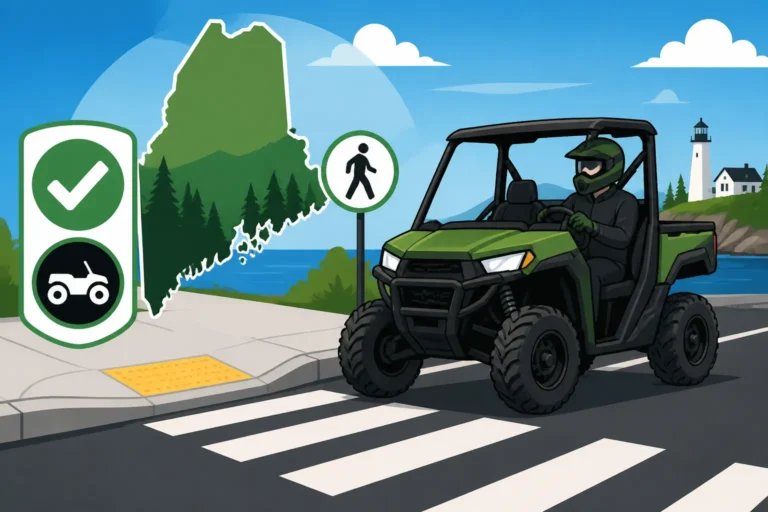
It's absolutely crucial not to confuse LSV road rules with the specific, often very different, regulations for ATVs and UTVs on public ways in Maine. While both LSVs and UTVs (especially side-by-sides) might look somewhat similar, their legal standing on public roads is entirely distinct. ATVs and UTVs, unless specifically made street-legal through a complex conversion process and reclassification, are generally prohibited from operating on public roads, with only very limited exceptions like crossing a road or using a short designated segment. You can learn more about these limitations by reading up on [Maine's 500-Yard Limit on a Public Way] and [Maine Rules for ATVs in Village Centers].
An LSV, by its very definition, is a road-legal vehicle for low-speed operation, manufactured and certified for that purpose. It requires traditional motor vehicle registration, plates, and insurance. A UTV, on the other hand, is an Off-Road Recreational Vehicle (ORRV) and typically requires an ATV registration and follows a completely different set of rules, primarily designed for trail use. Trying to treat your UTV as an LSV without the proper modifications, certifications, and registrations is a recipe for trouble with the Maine Warden Service or local police. The legal pathways for [Can a UTV Be Made Street Legal in Maine?] are rigorous and often expensive, involving far more than just adding basic safety equipment.
Essential Equipment for Maine Low-Speed Vehicles
If you’ve decided an LSV is the right fit for your short-distance travel needs in Maine, getting it on the road legally isn't just about speed limits and local ordinances; it’s also about ensuring the vehicle itself meets a stringent list of equipment requirements. Unlike a casual golf cart, an LSV must be equipped with specific safety features that allow it to safely interact with other traffic. Skimping on these details isn't just dangerous, it will prevent you from getting that coveted registration plate.
Safety Features Mandated for Road Use
Maine law, in alignment with federal standards, requires LSVs to be outfitted with a comprehensive set of safety features. These aren't optional add-ons; they are fundamental components for any vehicle sharing the road with cars, trucks, and motorcycles. Expect to see requirements for:
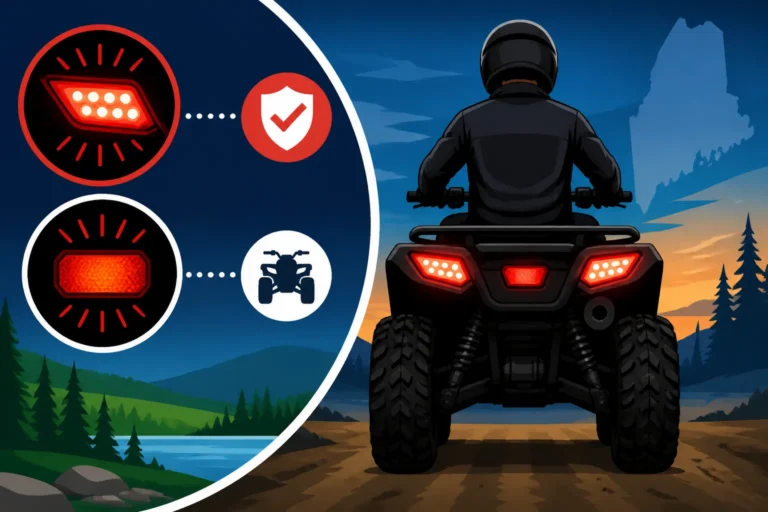
- Headlamps: Just like any other vehicle, your LSV needs working headlights to operate from dusk till dawn, or during periods of reduced visibility. These need to be properly aimed and of sufficient brightness.
- Taillamps: Red taillights visible from the rear are essential. These often integrate with brake lights.
- Brake Lights: When you hit the brakes, lights on the rear must illuminate to warn following drivers. This is a non-negotiable safety feature.
- Turn Signal Lamps: Indicators for left and right turns are a must, both front and rear, allowing you to signal your intentions clearly to other motorists.
- Reflex Reflectors: Additional reflectors, typically red at the rear and amber at the sides, enhance visibility, especially at night or in low light.
- Parking Brake: A functional parking brake is required to secure the vehicle when stopped or parked.
- Rearview Mirrors: At least one, and typically two (one on each side), functional rearview mirrors are needed to give the driver a clear view of traffic approaching from behind.
- Windshield: A safety glass windshield is required, providing protection from debris and elements.
- Seat Belts: All seating positions must be equipped with safety belts or restraints, just like in a car.
- Vehicle Identification Number (VIN): A properly affixed VIN is required for registration and identification.
It’s a robust list, and any LSV you consider should come standard with these features from the manufacturer. Trying to piece together an aftermarket kit to meet all these requirements on a vehicle not designed for them can be a frustrating and potentially non-compliant endeavor. For example, while many off-road parts companies like SuperATV offer fantastic accessories and modifications for UTVs to enhance their trail performance, their primary focus isn't necessarily on manufacturing factory-certified LSVs that meet every single one of these specific federal road-use safety standards from the get-go.
Lighting, Mirrors, and Other Visibility Requirements
Beyond the basic list, specific standards often apply to the functionality and placement of lights and mirrors. For instance, headlights must illuminate the road a certain distance ahead, and taillights must be visible from a specified range. Mirrors need to offer an unobstructed view, and turn signals must blink at a certain rate. These seemingly small details contribute significantly to overall road safety and are part of what distinguishes a factory-built LSV from a modified recreational vehicle.
Consider the practical implications: if you're driving an LSV that meets all these requirements, you're signaling your turns clearly, you can see what's behind you, and you're visible to other drivers. This is vastly different from an ATV or UTV that might only have basic headlights and taillights for trail riding. The level of visibility required for road use is simply higher, recognizing that you’re sharing the pavement with much faster and heavier vehicles. Without proper lighting and visibility, even a slow-moving vehicle becomes a hazard.
Making Sure Your LSV Meets Federal and State Standards
The key to navigating equipment requirements is ensuring your LSV comes with a manufacturer's certification that it meets all applicable federal motor vehicle safety standards (FMVSS) for low-speed vehicles. When you go to register the vehicle with the Maine Bureau of Motor Vehicles (BMV), they will be looking for this proof. Without it, even if you’ve meticulously added every piece of required equipment, you might face significant hurdles.
Some companies specialize in producing LSVs that are ready for the road right off the showroom floor, which greatly simplifies the registration process. If you're looking at a used LSV, make sure to ask for documentation from the original manufacturer confirming its LSV classification. Do not assume that just because it looks like it has all the right parts, it actually is a compliant LSV in the eyes of the law. This is particularly important when considering a converted vehicle. For those interested in a full list of what's needed for other road-legal conversions, checking out [Street-Legal UTV Equipment Lists] can provide a good comparison point, highlighting the rigorous standards involved. The bottom line is to start with a vehicle designed and certified as an LSV if you want the smoothest path to legal road operation in Maine.
Registering, Titling, and Insuring Your LSV in Maine
Once you understand what an LSV is and what equipment it needs, the next logical step is figuring out how to make it officially road-legal in Maine. This involves a distinct set of procedures for registration, titling, and insurance, which are very different from those for an ATV or UTV. Trying to lump your LSV into the same category as your trail machine will only lead to confusion and delays at the BMV.
The Registration Process for a Road-Legal LSV
Registering an LSV in Maine is much like registering a small car. It falls under the conventional motor vehicle registration process, not the recreational vehicle system used for ATVs and snowmobiles. This means you'll need to head to your local municipal office or directly to a Maine Bureau of Motor Vehicles (BMV) branch.
You'll need proof of ownership, typically a manufacturer's certificate of origin (MCO) for new vehicles or a title from the previous owner for used ones. Crucially, this MCO or title must clearly identify the vehicle as a Low-Speed Vehicle. You'll also need proof of insurance (which we'll discuss shortly), and you'll pay the applicable registration fees and any sales tax, just as you would for a car. The registration will be annual, and you'll receive a standard license plate that needs to be affixed to the rear of the vehicle. This process is distinct from how you’d handle [Maine ATV Registration for a Machine Without Paperwork], for instance, which has different rules entirely. It’s a formal vehicle registration for a road-going machine, plain and simple.
Maine's Titling Requirements for Low-Speed Vehicles
Maine is a titling state, meaning that most motor vehicles, including LSVs, must have a certificate of title issued by the state. This document serves as proof of legal ownership. If you purchase a new LSV from a dealer, they will typically handle the initial title application process for you. For a private sale of a used LSV, you'll need the seller's properly assigned title to transfer ownership into your name.
The title will specify the vehicle's make, model, year, and its Vehicle Identification Number (VIN). It's an essential document for proving ownership, especially if you ever decide to sell the LSV or if it's involved in an accident. Without a clear title, registering the vehicle can become a significant headache. Always verify the VIN on the title matches the VIN on the actual vehicle before completing any purchase to avoid complications later on. This title process reinforces the LSV's status as a distinct class of road vehicle, separate from its off-road cousins. For more details on this, you might look into [Low-Speed Vehicle Registration in Maine].
Understanding Insurance Needs for LSV Operation
Operating an LSV on Maine's public roads requires valid motor vehicle liability insurance. This isn't optional; it's a legal necessity. Just like with a car, your insurance policy needs to meet Maine's minimum liability coverage requirements. This coverage protects you financially if you cause an accident that results in injury to others or damage to their property.
Many people might assume their homeowner's insurance or an existing ATV/UTV policy would cover an LSV, but this is rarely the case for vehicles used on public roads. You'll need a dedicated motor vehicle policy specifically for your LSV. It's a good idea to shop around and compare quotes from different insurance providers, as policies and premiums can vary. When speaking with agents, be sure to explicitly state that you are insuring a "Low-Speed Vehicle" to ensure they provide you with the correct type of coverage. An LSV, being a road-legal vehicle, has insurance requirements much more akin to a car than to an ATV or snowmobile. For those considering a UTV for road use, information on [Insurance for a Road-Ridden UTV] would be very relevant for comparison.
Low-Speed Vehicles vs. Street-Legal UTVs and Golf Carts: The Maine Distinction
The world of small, utility-oriented vehicles and their legality on Maine roads can be a minefield of confusion. Many folks use the terms "Low-Speed Vehicle," "street-legal UTV," and "golf cart" interchangeably, but in the eyes of Maine law, they are distinctly different categories with vastly different rules. Understanding these nuances is paramount to avoiding fines, ensuring safety, and making sure your vehicle is genuinely compliant with local and state regulations.
The Complexities of Converting a UTV for Road Use
Let's address the elephant in the room: turning a standard utility terrain vehicle (UTV) into a truly street-legal machine in Maine is a formidable undertaking, and it's fundamentally different from owning a factory-built LSV. Most UTVs are manufactured solely for off-road use, and while they might seem robust, they typically lack the federal motor vehicle safety standards (FMVSS) certifications required for public road operation.
To make a UTV street-legal, you're not just bolting on a few accessories; you're often attempting to meet standards it wasn't designed for. This process can involve significant modifications: adding DOT-approved tires, a VIN inspection, installing an actual horn, DOT-compliant glass windshield, wipers, mirrors, seat belts for all seating positions, proper lighting (headlights, taillights, brake lights, turn signals), and often more. Even if you manage to install these components, the vehicle itself might still not have the necessary FMVSS certification, which is where many conversions hit a brick wall. Companies like SuperATV offer a wealth of aftermarket parts to enhance UTVs for off-road performance or even to add some road-style features, but their products typically don't transform an off-road UTV into a federally compliant LSV or a fully street-legal vehicle from a regulatory standpoint. The costs and complexities involved in making a UTV meet the rigorous standards for [Maine Registration for a Road-Legal Side-by-Side] are substantial, often making it more practical to purchase a vehicle specifically designed for road use from the outset.
Why a Golf Cart Isn't Necessarily an LSV
This is perhaps the most common area of confusion. People see golf carts with lights and mirrors zipping around coastal towns or campgrounds and assume they are LSVs. While a golf cart can be modified to resemble an LSV, the key distinction often comes back to its original manufacturing and federal certification. A standard golf cart is designed to travel at speeds generally under 20 mph and lacks the structural integrity and many safety features of a true LSV.
Maine does have provisions for golf cart use on certain public ways, but these are typically very limited, often restricted to specific local ordinances in small towns or planned communities where the speed limit is very low and traffic minimal. These golf cart rules are distinct from LSV rules. A modified golf cart, even one with all the bells and whistles, might still not qualify as an LSV if it doesn't meet the top speed requirement (must go over 20 mph but not more than 25 mph) and, more importantly, the federal safety standards. So, while you might be able to use your golf cart in specific, very localized situations under [Maine Golf Cart Rules on Town Streets], don't assume it can automatically be registered and operated as an LSV across other general public roads. It's a critical difference that can lead to legal issues if misunderstood.
Choosing the Right Vehicle for Your Maine Adventures
So, how do you choose? It really boils down to your intended use and willingness to navigate complex regulations.
- If you need a vehicle for very specific, low-speed, short-distance road travel (under 25 mph) in residential areas or small towns, and you want something factory-certified for road use, an LSV is your best bet. It comes ready for registration as a street-legal vehicle, assuming it meets Maine's definition.
- If your primary desire is off-road trail riding, with only occasional, very limited road crossings or designated trail access use, a UTV (like those you might outfit with parts from SuperATV for extreme performance) is the right choice. But be prepared for the fact that it's generally not street-legal without extensive, expensive, and often difficult modifications and re-certification processes.
- If you're looking for a vehicle purely for a private property, a campground, or within very specific, golf-cart-friendly communities with explicit local ordinances, a traditional golf cart might suffice. But understand its severe limitations on public roads.
Ultimately, don't try to force a vehicle into a category it wasn't designed for. Starting with the right machine for your intended purpose, whether it's a factory-certified LSV, an off-road UTV, or a simple golf cart, will save you a world of headaches and ensure you're compliant with Maine law.
| Feature / Vehicle Type | Low-Speed Vehicle (LSV) | Street-Legal UTV (Modified) | Golf Cart (Standard) |
|---|---|---|---|
| Top Speed (MPH) | >20 but ≤25 | Varies, often >25 | Typically <20 |
| Primary Use Case | Low-speed public roads | Off-road trails (modified for road) | Golf courses, private property |
| Federal Certification | Yes (FMVSS for LSVs) | No (typically off-road only) | No (recreational device) |
| Maine Registration | Standard motor vehicle registration | Standard motor vehicle registration (if compliant) | No (unless special local ordinance) |
| Maine Title Required | Yes | Yes (if compliant) | No |
| Insurance Required | Motor vehicle liability | Motor vehicle liability | Not typically for public roads |
| Equipment Requirements | Full suite of road-legal safety features | Extensive road-legal safety features (difficult to meet) | Basic lights often optional |
| Roads Permitted On | Posted speed limit ≤35 MPH | Posted speed limit ≤35 MPH (if compliant) | Very limited; specific local ordinances |
| Typical Appearance | Small car-like, or purpose-built | Rugged, off-road styling | Open, simple chassis |
Disclaimer
This article is for general informational purposes only and does not constitute professional advice. Laws, prices and regulations vary by location and change over time. Consult a qualified professional for guidance on your specific situation.