DOT vs ANSI Helmet Standards for Riders
Trying to figure out what kind of helmet you actually need to ride your ATV or UTV in Maine can feel like trying to decipher ancient hieroglyphics. Between "DOT" stickers and references to "ANSI," it's enough to make your head spin, and frankly, it's frustrating when all you want to do is hit the trails safely and legally. This guide will cut through the jargon, explaining exactly what these helmet standards mean for you, why Maine cares, and how to choose a helmet that offers real protection, not just a sticker.
What Do "DOT" and "ANSI" Actually Mean for Your Helmet?
When you pick up a helmet, you're looking at a piece of equipment designed to save your life. But not all helmets are created equal, and the markings inside tell you a lot about the protection they offer. Understanding the difference between a "DOT" certification and an "ANSI" reference is crucial for both your safety and staying on the right side of Maine's laws. It's not just about a sticker; it's about the rigorous testing and design philosophies behind those letters.
The Federal Standard: DOT Certification
The most common certification you'll see on an ATV or UTV helmet, and the one most directly relevant to legal riding in the United States, is the "DOT" sticker. This refers to the U.S. Department of Transportation's Federal Motor Vehicle Safety Standard (FMVSS) No. 218, often simply called "DOT FMVSS 218." This isn't just a suggestion; it's a minimum performance standard set by the federal government for all helmets manufactured or sold for use on public roads. While ATVs and UTVs aren't always on public roads, this standard is broadly applied as the baseline for acceptable head protection.
DOT certification involves a series of tests to ensure the helmet can withstand impacts, resist penetration, and stay securely on your head. They check impact attenuation, meaning how well the helmet absorbs energy from a blow, preventing that force from reaching your skull. They also test for penetration resistance to ensure sharp objects won't pierce through the shell, and they assess the retention system – the chin strap and buckle – to make sure it won't fail during an accident. It's important to remember that manufacturers self-certify their helmets to meet this standard, meaning they test them and apply the sticker themselves. However, the DOT does conduct random audits and testing, so selling non-compliant helmets can lead to significant penalties. This system is designed to provide a uniform minimum level of safety across the board.
ANSI: A Voluntary Performance Standard
You might occasionally hear "ANSI" mentioned in discussions about helmet standards, but it's less common for current powersports helmet regulations than DOT. ANSI stands for the American National Standards Institute. Unlike the DOT, which sets a federal mandate for motor vehicle helmets, ANSI is a private, non-profit organization that oversees the development of voluntary consensus standards for products, services, processes, and systems in the United States. Think of ANSI as a facilitator for various industries to agree on best practices and safety benchmarks.
When it comes to helmets, ANSI standards historically existed for things like industrial safety helmets or even bicycle helmets. However, for helmets designed for ATVs, UTVs, motorcycles, and other motor vehicles, the DOT FMVSS 218 standard became the dominant legal requirement. While a helmet could technically meet an ANSI standard for some aspect, it's the DOT certification that Maine's laws, like most states, are generally concerned with for motorized recreational vehicles. If you see an older reference to ANSI in relation to helmets, it's often a historical context or perhaps a standard for a different type of protective headgear. For your ATV or UTV, you'll be looking for that DOT sticker.
Snell and Other Certifications: Going Above and Beyond
Beyond DOT, you'll often encounter the Snell Memorial Foundation certification, particularly in racing circles. Snell is a private, non-profit organization that develops even more stringent voluntary standards for protective headgear. Their testing protocols are generally much tougher than DOT's, involving higher impact energies, multiple impact points, and more rigorous penetration tests. A Snell-certified helmet offers a significantly higher level of protection, which is why racers, and riders who simply want the absolute best protection available, often opt for them.
While Snell certification is not legally required for general ATV or UTV riding in Maine, choosing a Snell-certified helmet means you're investing in a helmet that has passed a much more aggressive series of tests. Many premium helmets will carry both a DOT and a Snell sticker, indicating they meet both the minimum federal standard and a more advanced safety benchmark. There are also international standards like ECE (Economic Commission for Europe) and FIM (Fédération Internationale de Motocyclisme) for racing, which are also very rigorous. For recreational riding, DOT is your legal baseline, but Snell is an excellent standard to aim for if maximum safety is your priority. Just remember that a Snell sticker alone won't fulfill a legal requirement if DOT is explicitly stated or implied.
Why Maine's Helmet Law Cares About These Standards
Maine is passionate about its outdoor recreation, and that includes ATV and UTV riding. To ensure everyone has a safe and enjoyable time, the state has specific regulations about helmet use, especially for younger riders and when operating on certain public access routes. These rules aren't just arbitrary; they're designed to protect riders from serious injury, and understanding them is key to a worry-free ride. It's not just about staying out of trouble with a game warden; it's about protecting yourself and your loved ones on the trails.
Maine's Legal Requirements for Helmets
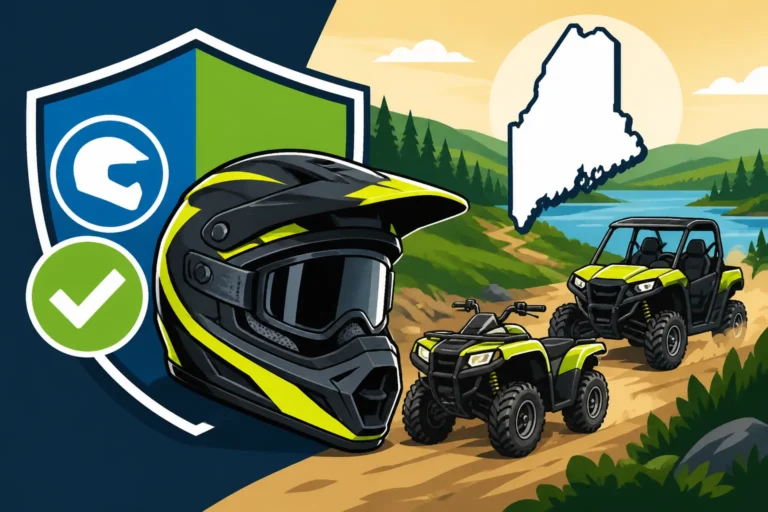
When it comes to helmet requirements in Maine, the law distinguishes between adult riders and youth riders. For anyone under the age of 18, wearing an approved helmet is mandatory whenever operating an ATV or UTV, regardless of where they are riding – whether it's on private land, club trails, or approved public ways. This is a critical point for parents and guardians to remember. You can find more specific details in our guide on [Maine Helmet Rules for Riders Under 18]. The law states that this helmet must be "approved," and in practice, this refers to helmets that meet the DOT FMVSS 218 standard.
For adult riders (18 years and older), the requirement for helmet use is generally tied to specific situations, primarily when operating on public ways or approved ATV-access routes. If you're riding strictly on your own private land or on trails that don't fall under these categories, a helmet isn't legally mandated for adults, though it's always highly recommended. However, if you plan on using any designated [Riding an ATV on the Road in Maine] sections, or crossing public ways, or riding on an approved [Maine ATV-Access Routes and How Towns Post Them], then an approved helmet becomes a legal requirement. The same "approved" standard, meaning DOT compliant, applies here. For passengers, especially those under 18, similar rules apply as covered in [Helmet Rules for Maine Passengers Under 18].
Understanding "Approved" Helmets in Maine
The term "approved helmet" in Maine's ATV and UTV laws is crucial, and while it doesn't always explicitly state "DOT FMVSS 218" in every piece of legislation, that is the universally recognized and accepted standard for compliance. When a Maine game warden or law enforcement officer checks your helmet, they are looking for that DOT sticker or certification mark. This sticker indicates that the manufacturer has certified the helmet to meet the federal minimum safety requirements. Without this certification, even if a helmet looks sturdy, it may not be considered "approved" under the law.
This means that while a helmet might have other safety certifications like Snell, or be designed for non-motorized activities, if it lacks the DOT FMVSS 218 sticker, it won't satisfy the legal requirement for an "approved" helmet in Maine for ATV/UTV use in regulated situations. It's not just about having a helmet on your head, but having one that meets a specific safety benchmark. This is why when you're [Buying a Helmet That Meets the Standard], checking for that DOT certification is your absolute first step. Understanding [Maine Helmet Standards: ANSI and FMVSS 218] is therefore a practical necessity for riders in the Pine Tree State.
Consequences of Non-Compliance
Ignoring Maine's helmet laws can lead to more than just a stern talking-to from a game warden. Riders found in violation, particularly those under 18 or adults riding in required areas without an approved helmet, can face fines. While the exact amount can vary, it's an avoidable expense that no one wants. Beyond the financial penalties, repeated or serious violations could potentially impact your ability to enjoy Maine's trails in the future. It's a reminder that these laws are in place for a reason.
However, the most significant consequence of not wearing a proper, approved helmet isn't legal, it's physical. Head injuries are among the most devastating outcomes of ATV and UTV accidents. A helmet that meets DOT standards is specifically designed to absorb impact energy, reduce penetration, and stay put during a crash, dramatically decreasing the risk of severe brain injury. Investing in and consistently wearing an approved helmet is the single most effective way to protect your most important asset – your brain – while enjoying the thrills of Maine's backcountry. Safety should always be your top priority, far above any potential fine.
Choosing the Right Helmet: Beyond Just the Sticker
Okay, so you understand the DOT standard and why it matters in Maine. That's a huge step! But simply having a DOT sticker isn't the only consideration when picking out a helmet. The right helmet for you isn't just about meeting the legal minimum; it's about comfort, proper fit, and features that enhance your riding experience while maximizing protection. After all, a helmet that's uncomfortable or doesn't fit correctly is one you won't want to wear, or worse, one that won't protect you when you need it most.
Finding a Proper Fit
This might be the most overlooked, yet critical, aspect of helmet selection. A helmet that's too loose will shift around, obstructing your vision and offering minimal protection during an impact. One that's too tight can cause headaches and hot spots, making a long ride miserable. The key to a good fit is finding a helmet that feels snug all around your head without uncomfortable pressure points. Your cheeks should feel a slight squeeze, and if you grab the helmet and try to rotate it, your skin should move with the helmet, not just the helmet sliding independently.
To find your size, measure the circumference of your head just above your eyebrows. Then, check the manufacturer's sizing chart. When you try it on, wear it for a few minutes. Are there any unbearable pressure points? Does it wobble when you shake your head? Can you pull it off if the chin strap is buckled? (You shouldn't be able to!) Different brands have different "head shapes" (round oval, intermediate oval, long oval), so a helmet that fits one person perfectly might be uncomfortable for another with the same head circumference. Don't be afraid to try on several brands and sizes. A well-fitting helmet is paramount to both comfort and safety.
Types of Helmets for ATV/UTV Riding
The world of helmets offers a variety of styles, each with its own advantages for ATV and UTV riding:
- Full-Face Helmets: These offer the most comprehensive protection, covering your entire head, face, and chin. They often have built-in face shields. They're great for protection from roost, branches, and wind, but can feel warm in slow, strenuous riding. Many come with excellent ventilation systems.
- Off-Road/Motocross Helmets: Characterized by an elongated chin bar for breathing and roost protection, a large visor to shield from sun and flying debris, and no face shield (requiring goggles). These are popular for ATV riding due to superior ventilation and compatibility with goggles, which can be essential for dust and mud. Many riders also add safety accessories like a communication system which can integrate seamlessly. Brands like SuperATV often carry related accessories, such as [Eye Protection on a Road Ride] goggles to go with these.
- Modular (Flip-Up) Helmets: These offer the versatility of a full-face helmet with the option to flip up the chin bar and face shield. They're convenient for short stops, talking, or getting a breath of fresh air without removing the entire helmet. However, they can be heavier and potentially offer slightly less impact protection than a dedicated full-face due to the hinge mechanism.
- Dual-Sport Helmets: A hybrid that blends features of full-face and off-road helmets. They have a visor and a face shield but also offer better ventilation and a more aggressive look than a standard full-face. They're a good compromise for riders who spend time on both trails and occasional public ways.
The best type for you depends on your riding style, the terrain you frequent, and your personal comfort preferences. For aggressive trail riding where dust and mud are common, an off-road helmet with good goggles is often preferred. For more casual UTV cruising, especially with a windshield, a full-face or modular might be more comfortable.
Key Features to Look For
Once you've narrowed down the type and found a good fit, consider these features that will enhance your riding experience and safety:
- Ventilation: Look for helmets with multiple adjustable vents to manage airflow. This is crucial for staying cool in warm weather and preventing fogging of your face shield or goggles. Good ventilation can significantly reduce rider fatigue.
- Field of Vision: Ensure the helmet offers a wide, unobstructed view, especially important for situational awareness on trails. If using an off-road helmet, make sure your preferred goggles fit well within the eye port without creating blind spots. SuperATV offers various accessories that can enhance visibility, such as side mirrors for your UTV, complementing good helmet visibility.
- Weight: Lighter helmets generally reduce neck strain and fatigue, especially on longer rides. However, don't sacrifice safety for a marginal weight reduction. Materials like fiberglass composites or carbon fiber are typically lighter than polycarbonate but can be more expensive.
- Removable/Washable Liner: A helmet's interior can get sweaty and grimy. A removable and washable liner is a huge plus for hygiene and comfort. Being able to easily clean the padding helps keep your helmet fresh and extends its lifespan.
- D-Ring Retention System: Many helmets use a double D-ring chin strap closure, which is simple, secure, and less likely to loosen than quick-release buckles under stress. It's a proven design for safety and is widely accepted.
| Feature | DOT Certified Helmet (Min. Standard) | Snell M2020 Certified Helmet (Higher Standard) | Why it Matters for ATV/UTV Riders |
|---|---|---|---|
| Impact Attenuation | Requires energy absorption up to a certain force. | Requires higher energy absorption and broader impact coverage. | Protects your brain from concussions and severe trauma in a crash. |
| Penetration Test | Requires resistance against a pointed striker. | Requires resistance against multiple pointed strikers. | Prevents sharp objects (branches, rocks) from piercing the helmet shell and injuring your head. |
| Retention System | Tests chin strap strength and buckle integrity. | Tests chin strap strength, buckle integrity, and rolling off the head. | Ensures the helmet stays on your head during an impact or rollover. |
| Helmet Weight | No specific weight limit, but generally lighter materials. | No specific weight limit, but often premium, lighter materials. | Reduces rider fatigue, especially during long rides or aggressive maneuvers. |
| Coverage | Minimum coverage area required. | Often offers more comprehensive coverage around the base of the skull. | Broader protection from impacts from various angles, crucial in unpredictable off-road environments. |
| Ventilation | Not explicitly tested by DOT, but designs vary. | Not explicitly tested by Snell, but premium helmets usually have good ventilation. | Prevents overheating and keeps you comfortable, reducing distraction. |
| Cost | Generally more affordable, readily available. | Typically more expensive due to advanced materials and rigorous testing. | Budget consideration, but safety is priceless. |
Common Misconceptions and Your Responsibilities as a Rider
Even with the best intentions, riders sometimes fall prey to common misconceptions about helmets or neglect their responsibilities once they've bought one. Your helmet is an investment in your safety, and like any critical piece of gear, it needs proper understanding and care to do its job effectively. Don't let a simple oversight compromise the protection it offers.
The "Sticker Only" Trap
A significant pitfall many riders encounter is assuming that any helmet with a "DOT" sticker is legitimate and safe. Unfortunately, there are counterfeit helmets on the market, especially online, that bear fake DOT stickers but have not undergone any legitimate testing. These helmets offer little to no real protection and can be incredibly dangerous. They might look the part, but the internal construction, foam density, and shell strength are often compromised.
To avoid this "sticker only" trap, always purchase your helmet from a reputable dealer or well-known online retailer. Be wary of prices that seem too good to be true, as they often are. A proper DOT-certified helmet will feel substantial, not flimsy. If you're unsure, do some research on the brand and model. Reading reviews and checking official product specifications can help confirm its authenticity. Remember, that little sticker needs to represent actual safety standards, not just a false sense of security. It's better to invest a little more in a helmet from a known brand than to risk your brain on a cheap knock-off.
Helmet Lifespan and Maintenance
Helmets don't last forever, even if they've never been in a crash. The materials used in their construction, particularly the EPS (Expanded Polystyrene) foam liner that absorbs impact, degrade over time due to exposure to UV light, sweat, and general wear and tear. Most helmet manufacturers and safety organizations recommend replacing your helmet every five to seven years from the date of manufacture, regardless of visible damage. This might seem frequent, but it's about the invisible degradation of critical components.
More importantly, if your helmet sustains any impact, even if you drop it from a short height onto a hard surface, it should be replaced immediately. The EPS foam is designed to crush and absorb energy on impact. Once it crushes, it loses its ability to protect effectively in a subsequent impact, even if there's no visible damage to the outer shell. Think of it like a bicycle helmet after a crash – you replace it. Keep your helmet clean by wiping the exterior with mild soap and water, and regularly wash removable liners. Store it in a cool, dry place, away from direct sunlight and extreme temperatures, to prolong its lifespan. Proper care ensures that when you need it most, your helmet is ready to perform.
Protecting Your Investment (and Your Head)
Your helmet is a vital piece of safety equipment, and treating it as such will ensure it protects you for as long as possible. Don't toss it into the back of your UTV where it can bounce around and get scratched or damaged. Use a helmet bag for storage and transport. When you take a break on the trail, hang it carefully or place it on a soft surface where it won't roll off. A small crack or impact that seems minor can compromise the structural integrity.
Also, remember that a helmet is just one part of your overall safety gear. While it protects your head, don't forget [Eye Protection on a Road Ride] with goggles or a face shield, appropriate riding gloves, sturdy boots, and durable clothing. Consider adding other protective gear, like a chest protector or knee pads, especially for more aggressive riding. For your UTV, you might also consider securing your helmet when not in use with some of the cargo solutions offered by brands like SuperATV. Your responsibility as a rider extends beyond simply wearing a helmet; it's about being prepared, staying alert, and maintaining all your gear to ensure a safe and enjoyable experience on Maine's beautiful trails.
Disclaimer
This article is for general informational purposes only and does not constitute professional advice. Laws, prices and regulations vary by location and change over time. Consult a qualified professional for guidance on your specific situation.