Helmet Rules for a 17-Year-Old Rider in Maine
Navigating the specific rules and regulations for ATV and UTV riding in Maine can feel like trying to find your way through a dense forest without a map. One of the most common areas of confusion, and frankly, frustration, often revolves around safety gear, especially for younger riders. If you're a parent or a 17-year-old rider in Maine, trying to understand the exact helmet requirements for your age group can be particularly perplexing. This guide is here to clear up that confusion, lay out the law, and help you ensure safe and compliant riding on Maine's beautiful trails.
Maine's General Helmet Law for ATV and UTV Riders
Maine takes the safety of its younger riders very seriously, and this is reflected clearly in its helmet laws for All-Terrain Vehicles (ATVs) and Utility Terrain Vehicles (UTVs). It's not just a suggestion; it's a legal requirement designed to protect those who are still developing their riding skills and judgment. For anyone under the age of 18, the helmet law is quite straightforward, but understanding its scope is key.
The Under-18 Mandate: What the Law Says
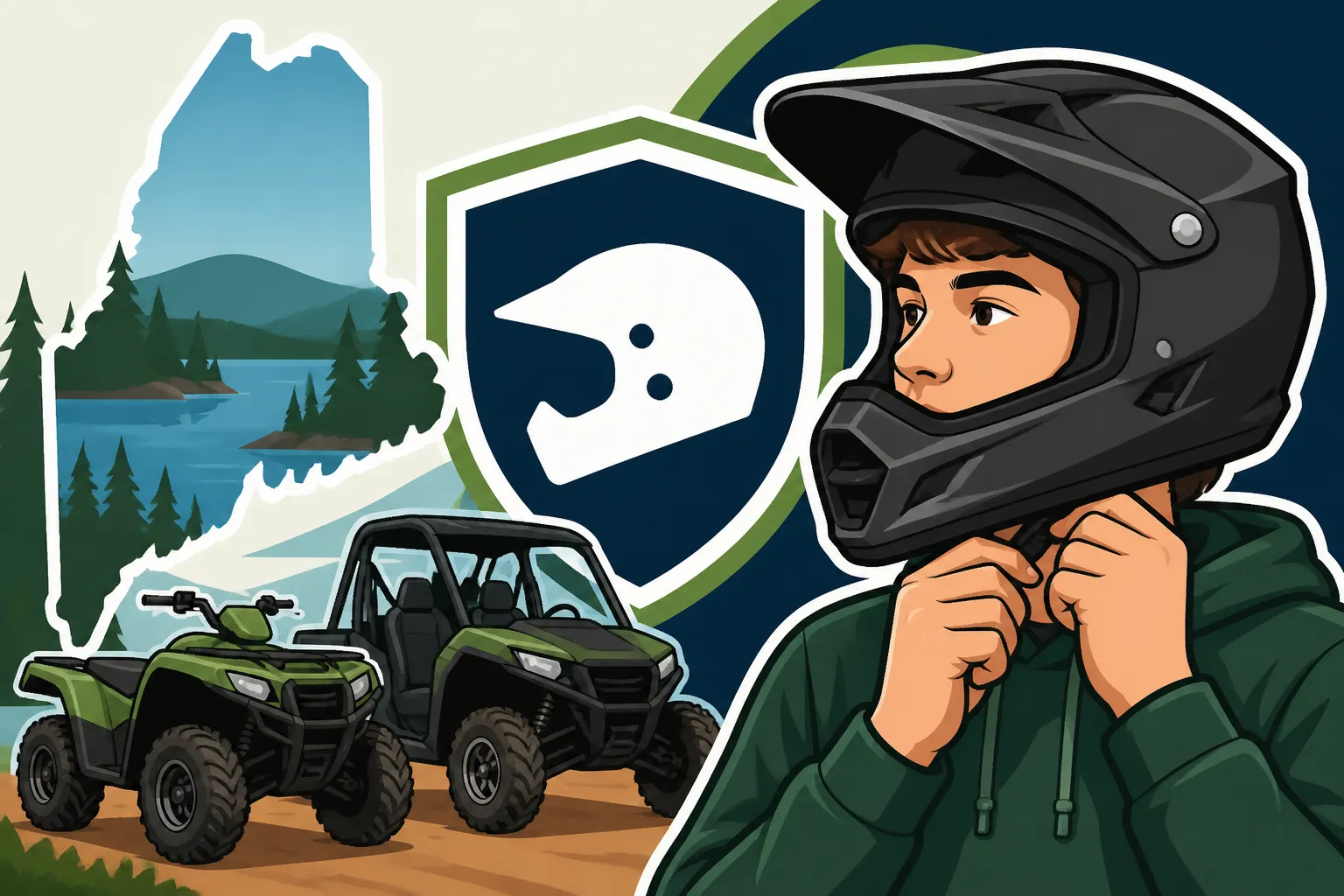
In Maine, the law is unambiguous: any person operating or riding as a passenger on an ATV or UTV who is under 18 years of age must wear a helmet. This isn't a rule that bends based on experience, machine size, or even the type of terrain. Whether you're a seasoned 17-year-old rider who feels perfectly comfortable on the trails or a passenger just along for the ride, that helmet needs to be on and properly secured. This mandate extends to all public lands, designated trails, and even private property unless explicitly exempted by other specific circumstances which are exceedingly rare for helmet laws. The intent is to provide a consistent layer of protection for minors who may not always recognize potential hazards or react as quickly as an adult in an unexpected situation.
This age-specific rule can sometimes feel a bit arbitrary, especially for a 17-year-old who might feel like they're just on the cusp of adulthood and capable of making their own safety decisions. However, the law is in place because studies consistently show that head injuries are among the most serious and common in ATV/UTV accidents, and helmets dramatically reduce the risk of severe outcomes. So, while it might feel like an inconvenience sometimes, it's really about protecting your most vital asset. It's a non-negotiable part of the riding experience for anyone who hasn't yet reached their 18th birthday, covering both the operator and any passengers within that age bracket.
Consider a scenario where a 17-year-old is confidently navigating a winding trail, perhaps with a younger sibling or friend, say a 15-year-old, riding as a passenger. In this instance, both the 17-year-old operator and the 15-year-old passenger are required by Maine law to wear a helmet. There's no leeway here; the law applies to everyone under 18 who is either driving or riding on the machine. This ensures that even if the primary operator is older, the younger passenger is still afforded the full protection mandated by the state.
When the Rule Doesn't Apply: Exemptions and Nuances
When it comes to helmet laws for minor ATV and UTV riders in Maine, the exemptions are practically non-existent. Unlike some other regulations, such as certain [Maine ATV Registration Exemptions] for farm or woodlot use, the safety requirement of wearing a helmet for riders under 18 is a steadfast rule. There are no provisions in Maine law that allow a 17-year-old, or any minor, to legally operate or ride an ATV or UTV without a helmet, regardless of whether they are on private land, family property, or a designated trail.
This strict adherence to the helmet law for minors highlights the state's paramount concern for safety over convenience. While an adult rider (18 and older) in Maine technically isn't legally mandated to wear a helmet on trails (though it's always highly recommended for their own safety), this freedom does not extend to anyone under 18. This distinction can sometimes cause confusion, leading a young rider or their parent to believe that if they're on their own land, the rules might be different. However, that is not the case for helmet use.
Imagine a situation where a 17-year-old is riding an ATV on their family's expansive private woodlot in rural Maine. Even though they are on private property, and perhaps just doing some light chore work or exploring their own land, the state law still requires them to wear a DOT-approved helmet. This is a crucial point that sometimes surprises people, but it's a testament to how seriously Maine views the protection of young riders. The goal is to safeguard against potential head injuries regardless of the riding environment.
What Kind of Helmet Meets Maine's Standards?
It's not enough to simply have a helmet; it needs to be the right kind of helmet. Maine's laws, like most states, specify certain safety standards that helmets must meet. This is where terms like DOT and ANSI come into play, ensuring that the protective gear you choose genuinely offers the level of safety intended by the law. Understanding these certifications is vital for making an informed purchase and staying compliant.
DOT and ANSI: Understanding the Requirements
The primary standard you'll encounter and need to adhere to for ATV/UTV helmets in Maine is the one set by the U.S. Department of Transportation (DOT). A helmet that is "DOT-certified" means it has met the Federal Motor Vehicle Safety Standard (FMVSS) 218. This standard dictates requirements for energy absorption, penetration resistance, strap integrity, and peripheral vision. When you purchase a helmet, look for the distinctive "DOT" sticker on the back. This sticker is your assurance that the helmet has been manufactured to meet the minimum safety requirements for highway use, and by extension, is accepted for off-road recreational vehicles like ATVs and UTVs in Maine. You can learn more about these specific requirements in articles like [DOT vs ANSI Helmet Standards for Riders].
While DOT certification is the widely accepted benchmark, you might also hear about ANSI (American National Standards Institute) or Snell standards. Snell Memorial Foundation is a non-profit organization that develops more stringent performance standards for helmets than DOT, often focusing on racing and higher-impact scenarios. While a Snell-certified helmet will certainly meet or exceed DOT requirements, Maine law primarily looks for DOT certification as the baseline for legal use. For a 17-year-old rider, ensuring the helmet has that DOT sticker is the most direct path to legal compliance and adequate protection.
Consider a parent who is new to ATV riding trying to buy a helmet for their 17-year-old. They might browse online or visit a local powersports dealer. The key is to specifically look for the DOT certification label. Many reputable manufacturers and retailers, including those offering a wide range of powersports accessories like SuperATV, will clearly mark their helmets with this certification. It's not just about the sticker; it's about the internal construction and materials that meet rigorous testing to absorb impact effectively. Always check for this before making a purchase, because a helmet without the proper certification, even if it looks protective, may not be legally compliant or offer the necessary safety features. If you're unsure, don't hesitate to ask the salesperson or check the product's specifications carefully, as detailed in [Buying a Helmet That Meets the Standard].
Open Face vs. Full Face: Choosing the Right Protection
When it comes to the style of helmet, you'll generally find two main categories: open-face (often called 3/4 helmets) and full-face helmets. While Maine's helmet law for a 17-year-old primarily focuses on the DOT certification, the choice between open-face and full-face can significantly impact the level of protection and comfort during riding. For ATV and UTV use, especially off-road, a full-face helmet is almost universally recommended by safety experts due to the nature of the sport.
A full-face helmet offers comprehensive protection, covering the entire head, face, and chin. This is crucial for ATV and UTV riding where you're exposed to a myriad of hazards: flying debris, branches, unexpected falls, or collisions. The chin bar is a particularly important feature, as many impacts in off-road accidents involve the lower jaw and face. Furthermore, full-face helmets often come with integrated visors, providing essential [Eye Protection on a Road Ride] and preventing dust, insects, and glare from impairing vision. While an open-face helmet might offer more ventilation and a wider field of view, it leaves the face completely exposed, which can be a serious vulnerability on the trails.
Choosing the right helmet for a 17-year-old often involves weighing protection against comfort and rider preference. While an open-face helmet might feel less restrictive, particularly on hot days, the trade-off in safety is significant. For the unpredictable environment of Maine's ATV trails, the robust protection of a full-face helmet is invaluable. It's a layer of defense against not just impact but also abrasions from foliage and projectiles. Many riders also pair their helmets with other gear from places like SuperATV – like durable gloves, boots, and chest protectors – to ensure full-body protection, but the helmet remains the undisputed priority for head safety.
Here’s a quick comparison of helmet types:
| Feature | Full-Face Helmet | Open-Face (3/4) Helmet |
|---|---|---|
| Protection | Excellent: Covers entire head, face, and chin. | Good: Covers top, back, and sides of head. Face exposed. |
| Impact Areas | Protects against front, side, and rear impacts. | Vulnerable face and chin in front/side impacts. |
| Debris Shield | Integrated visor protects eyes and face from dust, branches. | Requires separate goggles or face shield. |
| Ventilation | Often has adjustable vents; can feel warmer. | More airflow, cooler; face fully exposed to elements. |
| Noise Reduction | Generally quieter, reduces wind noise. | Higher wind noise, can be fatiguing. |
| Best Use Case | Off-road ATV/UTV, trail riding, racing, maximum safety. | Casual street riding (less common for ATVs/UTVs). |
Enforcement, Consequences, and Best Practices for Young Riders
Understanding the law is one thing, but understanding the consequences of not following it, and then going beyond minimum compliance to embrace true safety, is another. For a 17-year-old rider in Maine, getting caught without a helmet can lead to immediate legal repercussions and, more importantly, put their health and future at significant risk.
What Happens If a 17-Year-Old Is Caught Without a Helmet?
Maine's Warden Service, as well as local law enforcement, actively patrols ATV and UTV trails to ensure compliance with all state laws, including helmet requirements for minors. If a 17-year-old is stopped and found to be operating or riding as a passenger without a DOT-approved helmet, there will be consequences. The most immediate outcome is typically a fine. While specific fine amounts can vary and change, it's generally a monetary penalty that will hit the wallet of the rider or, more likely, their parent or guardian. This financial penalty serves as a deterrent, but it's often just the beginning.
Beyond the initial fine, there can be other implications. In some cases, repeated offenses or particularly egregious violations could lead to more serious actions, such as the temporary impoundment of the ATV or UTV. This means your riding day is definitely over, and retrieving the machine can involve additional fees and logistical headaches. Furthermore, the incident might go on the rider's record, which could have future implications depending on local policies. For a deeper understanding of potential penalties, you might find [Fines Maine Wardens Write Most Often] to be an illuminating read.
Consider a scenario: A 17-year-old, perhaps feeling invincible on a beautiful Saturday afternoon, decides to ride a short loop near their camp without their helmet, thinking they won't run into anyone. Suddenly, a Maine Warden, conducting routine patrols, emerges from a side trail. The warden stops the rider. Not only will the 17-year-old face a citation and a fine, but their parents will also be notified. This situation can be a significant disruption and an uncomfortable experience, highlighting that "just this once" isn't a gamble worth taking when it comes to safety regulations and enforcement. Law enforcement, as described in [Maine Warden Service ATV Checkpoints], are trained to spot these violations.
Beyond the Law: Why Helmets Are Non-Negotiable
While the legal ramifications of not wearing a helmet are certainly a motivator, the most crucial reason for a 17-year-old to wear one is far more profound: personal safety. Off-road riding, by its very nature, carries inherent risks. Trails can be unpredictable, with sudden changes in terrain, hidden obstacles, and varying surfaces like mud, rocks, and roots. Even experienced riders can have an unexpected tip-over or collision. In such instances, a helmet is the single most effective piece of equipment to prevent severe head trauma, brain injury, or even death.
The human skull, while robust, is not designed to withstand the forces generated in a direct impact with the ground or a solid object at typical ATV speeds. Helmets are engineered with layers of energy-absorbing materials that dissipate impact forces, cushioning the brain within the skull. Without this protection, a seemingly minor fall could result in a concussion, skull fracture, or more devastating traumatic brain injury (TBI) with long-term consequences impacting memory, cognition, and overall quality of life. For a 17-year-old, whose brain is still developing, the stakes are even higher.
Beyond head protection, helmets also serve as a barrier against flying debris – rocks kicked up by other riders, low-hanging branches, or even insects. For example, a face shield or goggles (often integrated into full-face helmets or worn separately with open-face styles) protects the eyes, ensuring clear vision, which is paramount for safe operation. This isn't just about avoiding a ticket; it's about making it home safely and preserving the ability to enjoy future rides and life experiences. It's about empowering young riders with the confidence that they've done everything they can to protect themselves in an activity they love.
Ensuring Compliance and Encouraging Safe Riding Habits
The responsibility for a 17-year-old's helmet use and overall safety doesn't fall solely on the rider themselves. Parents, guardians, and the wider ATV/UTV community all play a significant role in fostering a culture of safety and ensuring that young riders are not only compliant with the law but also truly embrace safe riding practices.
Parental Responsibility and Education
For parents of 17-year-old riders, ensuring helmet compliance is a direct legal and moral responsibility. It's not enough to simply buy a helmet; it's about consistently enforcing its use every single time the ATV or UTV is ridden, regardless of the perceived risk or location. This means establishing clear rules, checking that the helmet fits properly and is securely fastened, and making it an absolute non-negotiable part of getting on the machine. Open communication with your teen about why the helmet is important – explaining the real risks of head injury – can often be more effective than simply dictating a rule.
Beyond the helmet, parents should actively encourage their 17-year-olds to take an approved ATV safety course. Maine offers courses, and completing one not only provides invaluable instruction on safe operation, trail etiquette, and risk assessment but can also reinforce the importance of proper gear. Information on these courses, such as [Maine ATV Safety Course Requirements], can be found through the Maine Department of Inland Fisheries & Wildlife (IF&W) or local ATV clubs. These courses teach more than just how to steer; they instill a safety mindset crucial for responsible riding.
Perhaps one of the most powerful tools parents have is leading by example. If adults in the riding group consistently wear helmets, even when not legally required to do so, it sends a strong message to younger riders that safety is for everyone, not just those under 18. This modeling behavior can cement the habit of wearing a helmet as a fundamental part of the riding experience, not just a begrudging compliance with the law. When everyone gears up together, it reinforces that shared commitment to safety.
Maintaining and Replacing Helmets
A helmet is a piece of safety equipment, and like any equipment, it requires proper care and maintenance to remain effective. It's not a "set it and forget it" item. For a 17-year-old rider, understanding how to care for their helmet and recognizing when it needs to be replaced is crucial. Helmets are designed to protect against a single significant impact. If a helmet has been involved in a crash, even if there's no visible damage, its ability to absorb a second impact can be severely compromised. In such cases, the helmet must be replaced immediately.
Beyond crash damage, helmets also have a lifespan. The materials, glues, and resins that make up a helmet can degrade over time due to exposure to UV light, sweat, and general wear and tear. While there isn't a strict expiration date stamped on every helmet, general recommendations suggest replacing a helmet every five to seven years from its manufacturing date, or sooner if it shows signs of damage, cracking, or deterioration of the inner liner. Regular inspection for frayed straps, loose padding, or cracks in the shell is an important part of a rider's safety routine.
Consider a situation where a 17-year-old has been riding with the same helmet for several years, perhaps an older sibling's hand-me-down. Over time, the internal foam may have compressed, and the straps might be showing signs of wear. Even without a crash, this helmet may no longer offer the level of protection it once did. Parents should periodically check their teen's helmet for fit and condition. A helmet that is too loose or too old provides diminished protection. Investing in a new, properly fitting, DOT-certified helmet from a reputable source is a critical step in ensuring the ongoing safety of a young rider, complementing other safety gear often found through brands like SuperATV.
Disclaimer
This article is for general informational purposes only and does not constitute professional advice. Laws, prices and regulations vary by location and change over time. Consult a qualified professional for guidance on your specific situation.