Maine ATV Ticket Costs by Violation
Riding your ATV or UTV in Maine is all about freedom, adventure, and making memories on those beautiful trails. But that sense of freedom can quickly turn into a headache if you find yourself stopped by a Maine Game Warden and handed a ticket. It's a frustrating experience, often leaving riders wondering not only what they did wrong, but more pressingly, what it's going to cost them. This guide aims to demystify the potential financial sting of various ATV and UTV violations in Maine, helping you understand the landscape of fines and associated costs.
The Frustration of an ATV Ticket in Maine
There's nothing quite like the knot in your stomach when those blue lights flash behind you on a trail, or a warden flags you down. For many of us, our ATVs and UTVs are a significant investment, a source of relaxation, and a way to connect with the outdoors. A ticket feels like a personal affront to that enjoyment, and the immediate concern often shifts to the practical implications: "How much is this going to set me back?"
More Than Just a Fine: The Hidden Costs
When you receive an ATV ticket, it's rarely just about the initial fine amount printed on the citation. There's a whole cascade of potential hidden costs that can add up quickly. First, there's the inconvenience and loss of time. You might have to take time off work to address the issue, whether it's making a court appearance, paying the fine in person, or simply researching the repercussions. Then, there's the potential for increased scrutiny in the future; once you've had a violation, wardens might be more inclined to check your machine or riding habits more thoroughly.
Beyond that, some violations can lead to more severe consequences like impoundment fees if your machine is seized, or even higher insurance premiums if your provider considers certain ATV violations. While Maine doesn't require ATV insurance for trail riding, some riders opt for it, and a violation could impact those rates. It's not just the immediate hit to your wallet, but the ripple effect that can make an ATV ticket particularly frustrating.
Why Fines Aren't Always Simple or Fixed
One of the most confusing aspects of ATV tickets in Maine is that the fines aren't always a fixed, cut-and-dry amount. Instead, many violations come with a range of potential penalties. This can depend on several factors: the specific circumstances of the violation, whether it's your first offense, your attitude towards the warden, and even the discretion of the issuing officer.
For instance, a warden might issue a warning for a minor infraction to a respectful, first-time offender, whereas a repeat offender with a less cooperative demeanor might receive the maximum allowable fine. If you choose to contest the ticket in court, the judge then has the final say on the penalty, which could be lower or higher than the initial recommended fine, and will almost certainly include additional court processing fees. It's this variability that can make predicting the exact cost so challenging for riders.
Common Maine ATV Violations and Their Potential Costs
Maine has a comprehensive set of laws governing ATV and UTV operation, designed to keep riders safe, protect landowners, and preserve the trail system. Unfortunately, it's easy to inadvertently run afoul of these rules, leading to citations. Understanding the common violations is the first step in avoiding them and knowing what to expect if you do get a ticket.
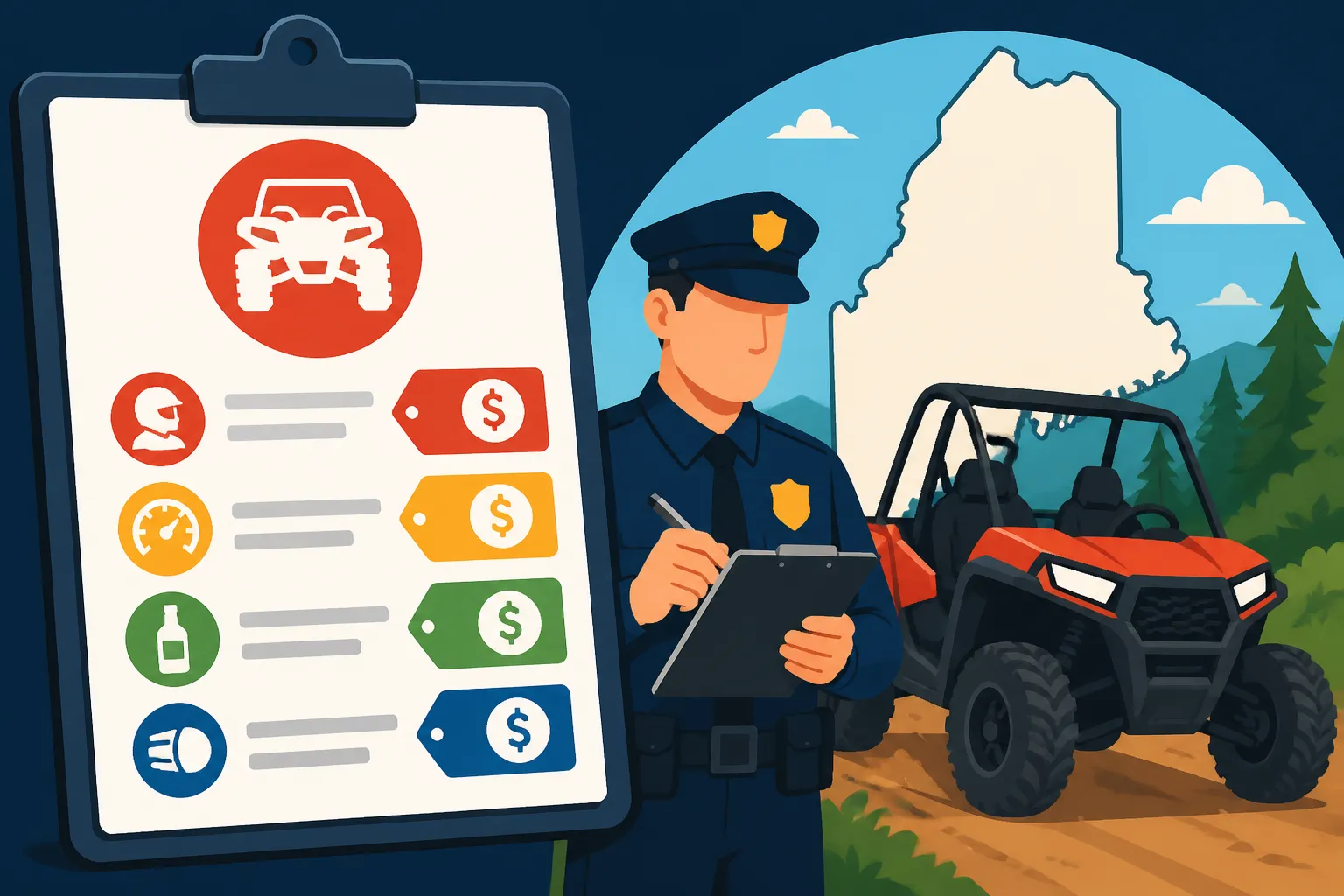
Here's a look at some frequent violations and their general cost implications. Please remember, these are ranges and potential costs, and actual figures can vary. Always check with the Maine Judicial Branch for current fine schedules.
| Violation Category | Description | Potential Financial Impact (General) | Other Potential Consequences |
|---|---|---|---|
| Unregistered ATV | Operating a machine without a valid Maine registration | Moderate to Significant fine | Machine impoundment, suspension of riding privileges |
| Trespassing | Riding on private land without landowner permission | Moderate to Significant fine | Loss of trail access, civil lawsuit from landowner, property damage fees |
| Operating Under the Influence | Driving an ATV/UTV while impaired by alcohol or drugs | Very Significant fine | License suspension, jail time, legal fees, forfeiture of machine |
| Helmet/Youth Rider Violation | Minor (under 18) riding without a helmet or supervision | Low to Moderate fine | Safety course requirement, future restrictions |
| Improper Road Crossing/Use | Exceeding the 500-yard limit, improper crossing, riding prohibited areas | Low to Moderate fine | Increased scrutiny, future citations |
| Missing Safety Equipment | Lack of spark arrestor, proper lights for night riding | Low to Moderate fine | Safety hazard, trail system exclusion |
Riding an Unregistered ATV
This is one of the most common tickets issued, and it’s a tough one to swallow. You're out enjoying the trails, maybe you just bought a new-to-you machine, or perhaps you simply forgot to renew. Regardless, operating an ATV or UTV without a current Maine registration is a clear violation. The state relies on these registrations to fund the trail system, so wardens take it seriously. You can expect a fine that can feel substantial, especially if you're caught far from home. Beyond the fine, repeated offenses or particularly blatant disregard could potentially lead to your machine being impounded, adding towing and storage fees to your woes. It's always best to make sure your machine is up-to-date. Need to know more about the specific penalties? Check out [Fines for Riding an Unregistered ATV in Maine].
Trespassing on Private Land
Maine's extensive ATV trail network relies heavily on the goodwill of private landowners. When riders trespass, it erodes that trust and can lead to trail closures, impacting everyone. Trespassing can range from mistakenly straying off a marked trail onto private property to deliberately riding on clearly posted land. The fines for trespassing can be considerable, reflecting the state's commitment to protecting landowner rights. Furthermore, in egregious cases, a landowner could pursue civil action against you for damages, adding a whole new layer of legal and financial stress. Wardens are especially vigilant about protecting landowners, and the presence of purple paint marks along a property line is a clear indicator that permission has not been granted. You can delve deeper into this topic by reading [Maine Trespass Fines for ATV Riders].
Operating Under the Influence (OUI)
This is by far the most serious violation you can commit on an ATV or UTV in Maine. Just like operating a motor vehicle on the road, operating an ATV while under the influence of alcohol or drugs carries severe penalties. We’re talking about very substantial fines, potential jail time, and the suspension of your driver's license, even if you weren't in a car. The legal process is complex, often requiring significant legal fees to defend yourself. Your machine could also be forfeited. It's a grave offense that puts yourself and others at extreme risk, and the state's penalties reflect that severity. It’s crucial to understand [Maine OUI on an ATV: What Happens] to fully grasp the ramifications.
Helmet and Youth Rider Violations
Maine has specific rules designed to protect its youngest riders. Any ATV or UTV operator under the age of 18 is required to wear an approved helmet while riding. Additionally, there are strict rules about age and supervision for youth riders. Forgetting a helmet or letting a child ride unsupervised when the law requires it can lead to a ticket. These fines might not be as high as an OUI, but they are still significant and, more importantly, highlight a safety lapse that could have serious consequences for the rider. Ensuring everyone has the proper gear is paramount. For detailed rules, refer to [Maine Helmet Rules for Riders Under 18] and [Maine ATV Road Rules for Young Riders].
Road Riding Violations
Maine offers some incredible opportunities to connect trails via designated ATV-access routes on public ways. However, these privileges come with strict rules. Violations can include riding on a public way where it's not designated, exceeding the allowed speed, failing to make a complete stop before entering a public way, or riding beyond the permissible 500-yard limit to get to a trail. These are often considered less severe than OUI or severe trespassing, but they can still result in fines that serve as a reminder to respect road rules. It's a good idea to know [Maine's 500-Yard Limit on a Public Way] to avoid these common mistakes.
Missing Safety Equipment
Sometimes, a ticket isn't about how you're riding, but what you're riding with (or without). Maine law requires certain safety equipment, especially for night riding. This includes proper headlights, taillights, and brake lights. A missing or non-functional spark arrestor on your muffler is also a common violation, designed to prevent wildfires. While a warden might initially give a warning for a minor equipment issue, a formal ticket can follow, carrying a modest to moderate fine. Ensuring your machine is properly equipped, perhaps with durable aftermarket parts from a company like SuperATV, not only keeps you safe but also helps you stay on the right side of the law. Make sure you understand [Maine Lighting Requirements for Night Riding] and [Maine Spark Arrestor Requirements] before heading out.
Understanding the Factors That Influence Your ATV Ticket Cost
As we've touched upon, the stated fine on a ticket isn't always the end of the story. Several factors can either increase or decrease the total burden of an ATV violation in Maine. Being aware of these can help you navigate the process more effectively.
Warden Discretion and Circumstances
Maine Game Wardens are professionals who often exercise discretion in the field. The exact circumstances surrounding your violation can play a huge role in the severity of the ticket. Were you respectfully trying to understand the rules and made an honest mistake? Or were you operating recklessly, causing property damage, or showing disrespect? Your attitude, whether you have prior offenses, and the specific details of the incident (e.g., how far off the trail you were trespassing, the time of day, other people involved) can all influence whether you receive a warning, a minimum fine, or a maximum penalty. Cooperation and a willingness to learn from your mistake can sometimes make a difference.
Court Fees and Surcharges
If you receive a summons to court, or if you choose to contest a ticket, you'll likely face additional court fees and surcharges beyond the base fine. These administrative costs are standard in the judicial system and can add a significant amount to your overall bill. These fees aren't typically detailed on the initial citation but are applied by the court once the case is processed. This means that even if a judge reduces your base fine, the added court costs might still make the total amount higher than you initially anticipated.
Legal Fees if You Contest the Ticket
Deciding whether to fight an ATV ticket in court is a personal choice, and it's essential to weigh the potential costs and benefits. For minor infractions, the cost of hiring an attorney might far outweigh the fine itself. However, for more serious violations like OUI, severe trespassing, or incidents involving property damage or injury, legal representation can be crucial. An attorney can help you understand your rights, navigate the court system, and potentially negotiate a plea bargain or argue for a lesser penalty. Be prepared for legal fees to add substantially to your overall expense if you choose this route. Familiarize yourself with the process of [Appealing an ATV Citation] if you're considering this option.
The Potential for Loss of Privileges
Beyond monetary fines, one of the most significant consequences of certain ATV violations is the potential loss of your riding privileges. Serious offenses, especially repeat violations or those that endanger public safety or landowner relations, can lead to the suspension or revocation of your ATV registration. This means you wouldn't be able to legally operate your machine for a specified period, which can be a huge blow if ATV riding is a significant part of your outdoor recreation. In some cases, you might even be required to complete a [Maine ATV Safety Course Requirements] before your privileges are reinstated. This consequence directly impacts your ability to enjoy your machine. Understanding [Losing Your Maine Registration After a Violation] provides more insight into this possibility.
What to Do If You Get an ATV Ticket in Maine
Getting an ATV ticket is never a pleasant experience, but how you handle it can significantly impact the outcome. Knowing what steps to take can save you stress, time, and potentially money.
Cooperate with the Warden, Then Assess Your Options
When a Maine Game Warden stops you, the most important thing to do is remain calm, cooperative, and respectful. Answer their questions honestly and provide any requested documentation, such as your registration and proof of ownership. Arguing or being confrontational in the moment will rarely, if ever, work in your favor and can sometimes lead to additional charges. Once the interaction is complete and you have your ticket, take the time to carefully read and understand the charges listed. Note the date, time, location, and the specific statutes cited for the violation.
After the initial stop, you can then objectively assess your options. Were you truly in violation? Is there anything unclear about the ticket? Sometimes, taking a moment to gather your thoughts and review the situation can help you determine your next best steps. It's also helpful to be aware of what wardens might look for during a stop; you can find more information on this in [Maine Warden Checks and What They Ask].
Paying the Fine vs. Contesting It
Once you have your ticket in hand, you generally have two main choices: pay the fine or contest it in court.
-
Paying the Fine: For minor infractions where the facts are clear and the fine is manageable, paying the fine is often the simplest and quickest solution. It resolves the issue without further court appearances, legal fees, or prolonged stress. However, be aware that by paying the fine, you are admitting guilt to the violation, which can sometimes have implications for future offenses or, in severe cases, impact other licenses. The ticket will typically have instructions on how and where to pay.
-
Contesting the Ticket: If you believe you were wrongly cited, or if there were extenuating circumstances you feel a judge should consider, you have the right to contest the ticket. This will involve appearing in court. It's crucial to be prepared if you choose this path. Gather any evidence that supports your case, such as photos, witness statements, or documentation. While it might seem daunting, contesting a ticket can sometimes result in a dismissal, a reduced fine, or a different outcome, especially if the warden's account is inaccurate or there's a misunderstanding of the law. However, be prepared for the time commitment and potential additional court costs.
Learning from the Experience and Staying Compliant
Regardless of the outcome, an ATV ticket should serve as a learning experience. Use it as an opportunity to review Maine's ATV and UTV laws. These rules are designed not just for enforcement, but for safety and the sustainable use of our beautiful trail systems. Consider taking a safety course if you haven't already, as it can refresh your knowledge of regulations and best practices.
Staying informed about current regulations, riding only on marked trails or with permission, and ensuring your machine is properly registered and equipped are key. Investing in reliable accessories, like those from SuperATV, that help you meet compliance requirements (such as proper lighting or mirrors for UTVs on designated roads) can save you a lot of grief in the long run. The goal is always to enjoy Maine's incredible backcountry responsibly, ensuring that your next ride is ticket-free and full of the adventure you seek.
Disclaimer
This article is for general informational purposes only and does not constitute professional advice. Laws, prices and regulations vary by location and change over time. Consult a qualified professional for guidance on your specific situation.