Maine ATV Rules for Riders Without a Driver’s License
Navigating the world of ATV and UTV riding in Maine can be a bit of a maze, especially when you're trying to figure out who can legally operate a machine if they don't hold a traditional driver's license. It’s a common question, and many folks, particularly parents of young riders or even adults who prefer not to drive cars, find themselves scratching their heads. This comprehensive guide will clear up the confusion, explain the specific rules set by the Pine Tree State, and help you ensure everyone riding your ATV or UTV is doing so legally and safely.
Understanding the Difference: Driver's License vs. ATV Registration
One of the biggest sources of confusion for new and even experienced ATV owners is the difference between needing a motor vehicle driver's license and having your ATV or UTV properly registered with the state. These are two very distinct requirements, and understanding their individual purposes is key to legal riding in Maine.
Why Your Car License Isn't Always the Deciding Factor
It's a common misconception that if you don't have a driver's license for a car, you can't operate any kind of motorized vehicle, including an ATV. For riding on most of Maine's vast trail system, this simply isn't true for adult riders. A standard motor vehicle driver's license (like the one you'd use to drive a car or truck on public roads) primarily regulates your ability to operate vehicles on paved public ways. ATVs and UTVs, for the most part, are designed for off-road use, and the rules governing their operation reflect that. When you're out on the trails, the Maine Warden Service is generally more concerned with your ATV's registration, proper safety equipment, and adherence to trail rules than whether you can legally drive a sedan down I-95.
However, the distinction becomes crucial when you start to consider where you're riding. If your ATV or UTV ventures onto a public way—even briefly for a crossing or on a designated ATV access route—then the rules about driver's licenses can absolutely come into play, especially for certain age groups. We'll dive deeper into those specific scenarios in later sections. For now, remember that legal operation of an ATV often hinges more on proper registration and knowing the rules of the trail, rather than possessing a traditional driver's license. You can find more information about the foundational requirement in [What It Takes to Register an ATV in Maine].
Maine's Focus: Registration and Safety, Not Necessarily a Driver's License
Maine's approach to ATV and UTV operation emphasizes proper machine registration, rider safety, and responsible trail use. The Department of Inland Fisheries and Wildlife (IF&W) oversees ATV registration, and this is the fundamental requirement for anyone operating an ATV or UTV on designated public trails, public reserved lands, or private land where permission has been granted. Your machine needs to be registered annually, and you'll receive a sticker to display. This registration confirms that your ATV is accounted for and that you've contributed to the system that maintains our incredible trail network.
For an adult, generally, as long as your ATV is properly registered and you're riding on approved trails or private land with permission, you do not need a motor vehicle driver's license to operate the machine. This is a huge relief for many adults who might not drive cars but love to explore the Maine outdoors by ATV. However, safety remains paramount. All riders are expected to understand and follow ATV laws, ride responsibly, and use appropriate safety gear. It's not a free-for-all; it's an opportunity for more people to enjoy the trails, provided they do so respectfully and safely. Getting your machine registered is typically the first step, and you can learn about [Maine Resident ATV Registration Fee] and [Maine Non-Resident Annual ATV Registration] if you're visiting.
Youth Riders and the Maine ATV Safety Course
When it comes to young riders, the rules in Maine tighten up considerably, and while a traditional driver's license isn't required for them, a mandatory safety course absolutely is. This is a critical area where many families can get tripped up, and ensuring your child meets these requirements is essential for their safety and to avoid penalties.
Mandatory Safety Course for Young Operators
Maine law clearly states that any person between the ages of 10 and 16 must complete an approved ATV safety course before operating an ATV or UTV on land other than that owned by their parent, guardian, or immediate family. This means if your child wants to ride on a club trail, a friend's property, or any public land, they must have that safety certificate in hand. This course isn't just a formality; it's designed to teach young riders essential safety practices, basic maintenance, environmental responsibility, and the specific rules of the trail. It covers everything from proper riding posture to navigating obstacles and understanding trail signage. The knowledge gained in these courses is invaluable and directly contributes to a safer riding experience for everyone on the trails.
The requirement applies to both residents and non-residents, so if you're visiting Maine with your family, make sure your child has either a Maine safety certificate or an equivalent one recognized by Maine. Wardens regularly check for these certificates, and riding without one can result in fines and a ruined day on the trails. You can find more details on [Maine ATV Safety Course Requirements].
Age Restrictions and Supervision Requirements
Beyond the safety course, there are strict age restrictions in place for youth riders in Maine.
- Under 10 years old: Children under 10 years of age are generally prohibited from operating an ATV or UTV on land other than that owned or leased by their parent or guardian, or on controlled accesses provided by a family member. They cannot ride on public trails.
- Ages 10 to 16: As mentioned, these riders must complete an approved ATV safety course. When operating an ATV or UTV, they must also be under the direct supervision of an adult (at least 18 years old) who holds a valid driver's license or has completed an ATV safety course. This adult must be within eyesight and voice communication. The adult is responsible for the child's safe operation. This supervision rule is often overlooked, but it's crucial. It's not enough for the adult to be somewhere on the same trail; they need to be actively monitoring the youth rider.
These regulations are in place to protect young riders, who might not yet have the judgment, experience, or physical strength to handle an ATV safely on their own. It ensures they learn the ropes in a controlled environment with proper guidance. When choosing a machine for a young rider, always consider the [Youth Machine Size Limits for Maine Riders] to ensure it's appropriate for their age and skill level.
Riding on Public Ways Without a Driver's License
Here's where the waters can get a little murky. While a driver's license isn't typically needed for off-road ATV operation, when an ATV or UTV ventures onto a public way, even briefly, the rules change significantly. This is the main scenario where not having a driver's license can create a legal problem for adult riders.
Crossing Public Ways: The 500-Yard Rule
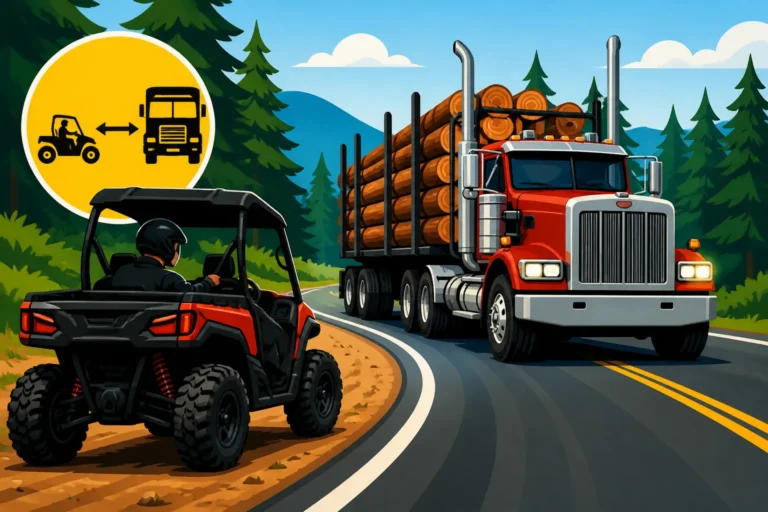
Maine law does allow ATVs and UTVs to cross public ways, such as paved roads or highways, under very specific conditions. These crossings are generally permitted only when an approved ATV trail directly intersects a public way. Even then, there are rules:
- Complete Stop: You must come to a complete stop before entering or crossing any public way.
- Yield to Traffic: You must yield to all vehicular traffic on the public way.
- Cross at Right Angles: Cross at a right angle (as directly as possible) to the public way, not riding along it.
- 500-Yard Limit: You can operate on a public way for a maximum distance of 500 yards (about a quarter-mile) only if it's to access another section of a designated trail system and no alternative exists. This "500-yard limit" is often misinterpreted. It's not a general permission to ride down the road for a short distance; it's for connecting trails where absolutely necessary. [Maine's 500-Yard Limit on a Public Way] delves into this in more detail.
For an adult (16 years or older) operating an ATV or UTV on a public way for these permissible crossings, a valid motor vehicle driver's license is generally required. This is because you are temporarily entering the domain of registered motor vehicles. If you don't have a driver's license, even a quick crossing could be a violation. This is a key distinction that riders without a license need to be acutely aware of.
Designated ATV Access Routes and Town Ordinances
Some towns in Maine have established designated ATV access routes, often on the shoulders of public roads or along specific, low-traffic town roads. These routes are specifically marked with official signage to indicate where ATVs and UTVs are permitted to operate. The purpose is usually to connect trail sections, allow riders to access gas stations, restaurants, or lodging, or provide access to trailheads.
Even on these designated routes, the requirement for a driver's license for adult operators often remains. When you're sharing any portion of a public way, even if it's designated for ATVs, you're interacting with the rules of the road. Most town ordinances that create these access routes stipulate that operators must possess a valid driver's license. This is because these routes are still considered part of the public road system, and the state and towns want operators to have demonstrated a basic understanding of traffic laws and road etiquette. Before riding any designated access route, always check local ordinances or look for specific signage, as requirements can vary. For those planning to ride on roads, understanding [Maine Lighting Requirements for Night Riding] and [Maine ATV Speed Limits Near Buildings] becomes even more crucial. Many riders use aftermarket accessories, like those from SuperATV, to enhance visibility and safety for these more public sections of a ride.
Exemptions, Special Cases, and Other Considerations
While the general rules cover most situations, there are always a few specific scenarios and exemptions to keep in mind regarding driver's licenses and ATV operation in Maine. Knowing these can prevent unintended legal issues.
Private Land Riding: No License Needed (Generally)
If you own land in Maine, or have explicit permission from a private landowner, you can generally ride an ATV or UTV on that private property without needing a driver's license, regardless of your age (though parental supervision for minors is always a good idea for safety). The same goes for your guests or family members. The key here is that it must be exclusively private land and not part of a public trail system or require crossing a public way.
This exemption is straightforward: the state generally doesn't regulate how you operate a vehicle on your own private property, as long as you're not causing a nuisance or breaking other laws. However, even on private land, you still need to ride responsibly and safely. Just because the law doesn't require a license doesn't mean you can operate recklessly. All common-sense safety practices, like wearing a helmet and not operating under the influence, should still be followed. If you're a landowner curious about specific exemptions, [Maine Registration Exemption on Your Own Land] provides more details.
Farm and Woodlot Use Exemptions
Maine law provides specific exemptions for ATVs and UTVs used exclusively for farming or woodlot operations. Machines primarily used for agricultural purposes, such as hauling feed, checking fences, or transporting tools on a working farm or for logging operations on a private woodlot, may have different registration requirements and, in some cases, exemptions from certain operating rules.
However, even with these exemptions, the question of a driver's license can still arise if the machine is operated on or across public ways, even for agricultural purposes. For instance, moving an ATV from one field to another across a public road might still trigger the driver's license requirement. It's always best to clarify these specific scenarios with the Maine IF&W or a local Warden if your ATV use falls into one of these commercial or specialized categories. While you might be exempt from certain aspects, operating a robust machine for demanding tasks, perhaps with specialized equipment from SuperATV, still requires careful handling and adherence to safety.
Understanding Penalties for Violations
Riding an ATV or UTV without meeting the necessary license or safety course requirements can lead to more than just a stern talking-to from a Warden. The penalties can include fines, and in some cases, your ATV could even be impounded. For youth riders, a violation could mean losing their riding privileges for a period.
For an adult operating on a public way without a valid driver's license where one is required, you could face fines similar to those for operating any other motor vehicle without a license. Additionally, if you're involved in an accident while operating in violation of these laws, your insurance coverage could be jeopardized, and you could face significant civil liability. The legal ramifications are serious, and it's simply not worth the risk. Always prioritize understanding the rules and adhering to them. Information on [Penalties for Riding an Unregistered ATV in Maine] offers a good overview of the consequences for general registration violations, which can sometimes accompany license-related issues.
Navigating Maine's ATV Landscape Without a Driver's License
For many, the idea of getting out on Maine's thousands of miles of ATV trails is incredibly appealing, and the good news is that not having a traditional driver's license doesn't necessarily exclude you. However, it does require a clear understanding of where and how you can legally ride.
Knowing Your Riding Zones: Trails vs. Roads
The most important takeaway for riders without a driver's license is to be acutely aware of your riding environment.
- Designated ATV Trails & Private Land with Permission: This is your primary domain. If your ATV is properly registered and you're riding on established, marked ATV trails (which often traverse private land with landowner permission) or exclusively on private property you own or have explicit permission for, you generally do not need a motor vehicle driver's license. This is where most recreational ATV riding takes place in Maine, and it's very accessible.
- Public Ways (Roads, Shoulders, Access Routes): This is the tricky part. Whenever your wheels touch a paved or public dirt road, the likelihood of needing a driver's license increases dramatically. Even for quick crossings or on designated ATV access routes, the rules often stipulate a valid driver's license for adult operators. Unless you are certain an exception applies or you are riding solely on your own private land, assume a driver's license is required on public ways. This is the area where the most caution is advised. You can learn about [Maine's 6,000 Miles of ATV Trails] and how they connect.
Before you head out, always consult trail maps and local ordinances. Many clubs and the Maine IF&W provide excellent resources that clearly mark where trails connect and where public ways are involved. This due diligence is crucial for a stress-free and legal ride.
Practical Steps for Safe and Legal Riding
If you or someone in your riding party doesn't have a driver's license, here are some practical steps to ensure everyone stays on the right side of the law:
- Prioritize the Maine ATV Safety Course: For youth riders (ages 10-16), this is non-negotiable. Even for adults without a driver's license, taking an ATV safety course is highly recommended. It provides valuable information on safe operation, trail etiquette, and Maine-specific laws, making you a more confident and responsible rider.
- Stick to Approved ATV Trails: Focus your riding on the vast network of designated ATV trails. These trails are explicitly designed for off-road vehicles and minimize interaction with public road traffic. Always carry a current map and understand the trail markings.
- Avoid Public Roads Entirely: If you don't have a driver's license, the safest bet is to completely avoid operating your ATV or UTV on or across any public way, unless it is an absolute emergency or you have explicit, confirmed legal allowance for that specific, marked access point and meet all other requirements (like the 500-yard rule if it even applies).
- Confirm Local Ordinances: If you plan to use any ATV access routes within a town, double-check that town's specific ordinances. What's allowed in one town might be prohibited in another, or the driver's license requirement might vary. Local town offices or ATV clubs are excellent resources for this information.
- Always Register Your Machine: This is the baseline. Regardless of your driver's license status, your ATV or UTV must be registered to ride on public trails or private land you don't own. [First-Time Maine ATV Registration at the Town Office] will help you get started.
- Wear Proper Safety Gear: Helmets are mandatory for riders under 18 in Maine, and highly recommended for all. Eye protection, gloves, sturdy footwear, and long pants are also critical. While not a legal requirement for adults on trails, protective gear, sometimes enhanced by durable options from SuperATV, is always a smart choice.
By understanding these nuances and taking proactive steps, riders without a driver's license can still fully enjoy the incredible ATV and UTV opportunities Maine has to offer. It’s all about informed choices and responsible riding.
Maine ATV Operating Scenarios and Driver's License Requirements
Here’s a quick overview to help clarify common situations for adult riders (16+) without a driver's license:
| Scenario | Location Type | Driver's License Required? | Notes |
|---|---|---|---|
| Riding on personal property | Your own land or land you lease | No | Must be truly private; no access/crossing of public ways involved. |
| Riding on a designated ATV trail | Marked club trails, public reserved land | No | Assumes no public way interaction beyond permissible crossings. |
| Crossing a paved public way (short distance) | Intersection of ATV trail and public road | Yes | Even for quick, legal crossings, a valid license is generally required. |
| Riding a designated ATV access route | Shoulders of public roads, specific town roads | Yes | These routes are part of the public way system; license usually mandatory. |
| Riding on private land with permission | Friend's property, private woods | No | Similar to personal property, as long as it doesn't involve public ways. |
| Operating a UTV street-legal conversion | Any public road, paved or unpaved | Yes | Requires a valid driver's license and specific registration as a road vehicle. |
Understanding this table is key to staying out of trouble. When in doubt, err on the side of caution and avoid public ways if you do not possess a driver's license.
Disclaimer
This article is for general informational purposes only and does not constitute professional advice. Laws, prices and regulations vary by location and change over time. Consult a qualified professional for guidance on your specific situation.