Riding an ATV Home From the Trailhead
It’s a common scenario, isn't it? You’ve spent a fantastic day tearing up the trails, the sun is starting to dip, and the thought of loading your muddy ATV or UTV back onto the trailer for a short haul home just feels like a chore. That little voice in your head whispers, "It's only a mile or two down this road… can I just ride it?" This guide is here to shed light on exactly when and how you can (and absolutely cannot) ride your ATV or UTV on Maine’s public roads, helping you understand the rules, stay safe, and avoid costly mistakes on your way back from the trailhead.
Understanding Maine's ATV Road Rules: The 500-Yard Limit and Beyond
The call of the open road, even for a short stretch, is tempting when you’re leaving the woods. But Maine’s regulations for ATV and UTV use on public ways are specific, and misunderstanding them can quickly turn a convenient shortcut into a hefty fine or a dangerous situation. It's not as simple as "if it's unregistered, don't ride it," because even a registered machine has strict limits on where it can go.
The 500-Yard Rule: A Double-Edged Sword for Riders
Many riders in Maine hear about the "500-yard rule" and mistakenly believe it grants them a blanket permission to ride their ATV or UTV on any public road for half a mile. This widespread misconception often leads to confusion and, unfortunately, tickets. The truth is, the 500-yard rule is highly specific and limited in its application. It primarily exists to allow riders to cross a public way or access an immediately adjacent trail or landowner's private property where direct trail access isn't available. It is absolutely not a license to ride down the road to the store, to a friend's house a quarter-mile away, or to your camp if it's beyond that very narrow definition of access.
Think of it this way: if you're on a designated trail and it needs to briefly cross a paved or gravel town road to connect to another section of trail, that’s typically where the 500-yard rule comes into play. It provides a legal framework for that brief, necessary crossing. It also applies if your private driveway happens to be within 500 yards of an approved trail, allowing you to get your machine from your property to the trail without needing to trailer it that short distance. However, extending this rule beyond its intended purpose—such as riding home for a full 500 yards from a remote trailhead that isn't directly connected to your property—is usually a violation. Always remember that the spirit of this rule is about access and connection, not extended travel. For a deeper dive into the specifics, check out [Maine's 500-Yard Limit on a Public Way].
Designated ATV Access Routes: Your Best Bet for Road Travel
If you genuinely want to ride your ATV or UTV on a public road for more than just a fleeting crossing, your absolute best and safest bet is to seek out designated ATV access routes. These are specific sections of public roads—often town-maintained gravel roads or less-trafficked paved sections—that a local municipality has officially opened for ATV and UTV travel. You'll recognize them by clear signage, indicating that ATVs are permitted. These routes are a game-changer for riders, allowing you to connect trail systems, reach local businesses like gas stations or restaurants, or even get back to a designated parking area or camp. Many towns, especially in popular riding regions like Jackman, Millinocket, Greenville, and much of Aroostook County, have embraced these routes to boost local tourism and convenience for riders.
These designated routes are distinct from trying to make your UTV "street legal" with turn signals and a license plate, which is a much more involved and often complex process with different rules entirely. The beauty of designated access routes is that they work within the existing ATV registration framework, without requiring street-legal conversions. However, it's crucial to understand that even on a designated access route, you are still operating an ATV, not a car. You must adhere to specific rules of the road, including speed limits, yielding to conventional traffic, and often riding as far to the right as safely possible. Keep an eye out for signs like those described in [ATV-Access Route Signs and Spacing] to confirm you're on a legal route. Understanding [How a Maine Town Designates an ATV-Access Route] can also give you insight into why some areas are more ATV-friendly than others.
The Critical Role of Town Ordinances and Private Roads
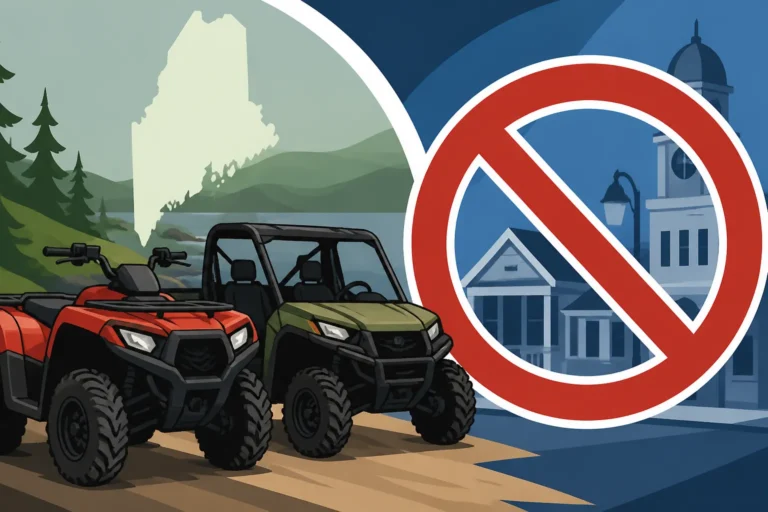
Beyond the statewide 500-yard rule and designated access routes, local town ordinances play an incredibly important role in determining where you can and cannot ride your ATV or UTV on public ways. Maine operates under a "local control" philosophy for many aspects of ATV use, meaning towns have the authority to create their own rules and restrictions regarding ATV access on local roads. This is why you might be able to ride a specific road in one town, only to find similar-looking roads strictly prohibited just a few miles away in the next town over. This can be frustrating for riders, but it's the reality of navigating Maine's diverse landscape and municipal priorities. Before you even think about riding a public road, always check the local town's ordinances. Websites, town offices, or even local ATV clubs are excellent resources for this information. [Maine Town Ordinances That Restrict ATVs] provides more context on this variability.
Furthermore, it's vital to distinguish between public roads and private roads or camp roads. While a private road might look like a public way, especially in rural areas, it's still private property. Riding on private roads always requires explicit permission from the landowner or association that manages the road, even if it feels like a shortcut or leads directly to your camp. Many landowners permit ATV use on their private roads, but that permission can be revoked or may come with specific conditions. Never assume permission. Disrespecting private property rights is one of the quickest ways to lose trail access for everyone. Familiarize yourself with [Maine ATV Rules on Private Camp Roads] to ensure you're always riding responsibly and legally.
Gearing Up for the Road: What Your ATV (and You) Need
Even for those brief, legal stints on a public road, your ATV or UTV needs to be properly equipped, and you, as the operator, need to be prepared. Riding on pavement or gravel with cars isn't the same as tearing through the woods. Visibility, control, and appropriate safety gear become paramount.
Essential Equipment for Brief Road Sections
When you're transitioning from the soft dirt of the trail to the harder surface of a public way, even for a designated access route or a 500-yard crossing, your machine needs to meet certain basic requirements. First and foremost, working lights are non-negotiable. This includes a functional headlight, taillight, and brake light. Even if you're only riding during daylight hours, these lights increase your visibility to other vehicles significantly, which is critical given the smaller profile of an ATV or UTV. [Maine Lighting Requirements for Night Riding] details what’s needed, but a good rule of thumb is to have them on any time you're on a road.
Mirrors, while not always explicitly mandated for all road use scenarios for ATVs, are an absolute no-brainer for safety. How else will you see approaching traffic or vehicles behind you? A simple set of rearview mirrors, either handlebar-mounted for ATVs or side mirrors for UTVs, can prevent an accident. Additionally, your machine must be equipped with a spark arrestor and a properly functioning muffler. Maine has noise regulations, and loud aftermarket exhausts can not only be illegal but also annoy residents, leading to complaints and potential trail closures. Ensure your spark arrestor is in good order, as outlined in [Spark Arrestor Requirements in Maine], and that your muffler meets [Maine Muffler and Exhaust Noise Limits]. And, of course, your ATV or UTV must be currently registered. Carry proof of registration, as highlighted in [Maine ATV Registration Confirmation for Immediate Riding].
Personal Protective Gear: Don't Skimp on Safety
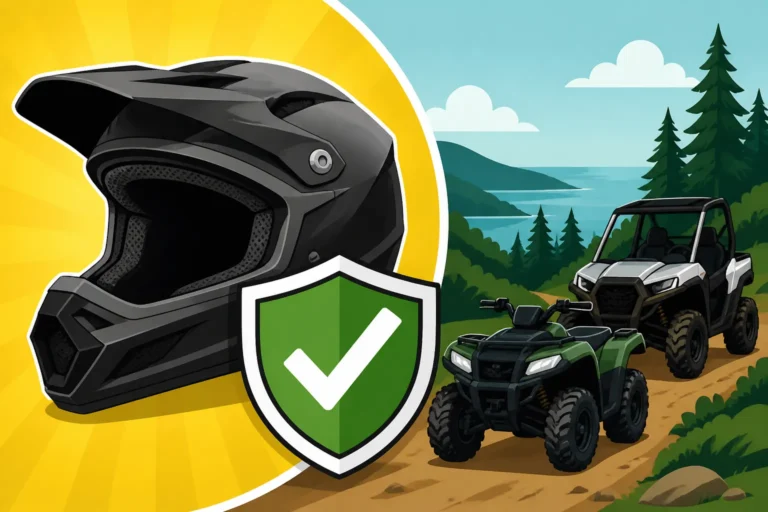
Your personal safety gear is just as important, if not more so, than your machine's equipment, especially when sharing the road with cars. While adults over 18 are not legally required to wear a helmet on Maine trails, it is always recommended, and it becomes even more critical when operating on or crossing public roads. For riders under the age of 18, helmets are mandatory by law, regardless of where they are riding. This is a rule with no exceptions, and wardens enforce it strictly. Understanding [Maine Helmet Rules for Riders Under 18] is vital if you ride with youth.
Beyond helmets, eye protection is crucial. Kicking up dust on the trail is one thing, but getting debris or even just a bug in your eye while on a public road can be incredibly dangerous, causing you to lose control. Whether it's goggles or a face shield on a full-face helmet, make sure your eyes are protected. Learn more about the specifics in [Eye Protection on a Road Ride]. Lastly, always wear sturdy, protective clothing, even for a short ride. Long pants, long sleeves, gloves, and over-the-ankle boots can offer significant protection in the event of a fall or collision, much more so than shorts and a t-shirt. The road surface is unforgiving, and even a low-speed incident can cause serious injury without proper gear.
Tire Choice and ATV Condition: Ready for Pavement?
Most ATVs and UTVs are equipped with aggressive, knobby tires designed for maximum traction in mud, dirt, and rocky terrain. While fantastic for the trails, these tires behave very differently on hard pavement or even packed gravel roads. They wear down much faster, can make the machine feel "squirrelly" on turns, and reduce overall grip compared to tires designed for road use. For occasional short road sections, your knobby tires are generally fine, but be mindful of their limitations. Consider adjusting your tire pressure slightly for road sections – sometimes a bit more air can improve stability, but always consult your owner's manual for recommended pressures.
Beyond tires, the overall condition of your ATV or UTV is paramount. Your brakes must be in excellent working order; sudden stops on asphalt require maximum stopping power. Your steering components, like tie rods and ball joints, should be tight and responsive, without excessive play. For riders who frequently transition between aggressive trail riding and road sections, upgrading to more robust aftermarket parts can offer peace of mind. For instance, high-quality, heavy-duty tie rods from a brand like SuperATV can significantly improve the longevity and responsiveness of your steering system, which is a major plus when you're sharing the road with cars. Similarly, ensure your suspension is properly maintained and adjusted. A well-maintained machine is a safer machine, no matter the terrain.
Navigating Road Sections Safely and Responsibly
Riding an ATV or UTV on a public road demands a different mindset and skill set than trail riding. You're no longer alone in the wilderness; you're now a part of traffic, and everyone's safety depends on your awareness and adherence to the rules.
Situational Awareness and Traffic Interaction
The golden rule when riding an ATV or UTV on any public road is to assume you are invisible. Car drivers are often not looking for ATVs, especially in areas where they are less common. This means you must be hyper-aware of your surroundings. Wear bright, reflective clothing to maximize your visibility. When approaching intersections or driveways, make eye contact with drivers if possible to ensure they see you before you proceed. Never assume a driver will yield to you. Ride predictably, avoid sudden movements, and use hand signals for turns if your machine isn't equipped with turn signals.
Always be prepared to yield to conventional traffic. On designated access routes, you're permitted to be there, but cars often have the right of way. Understanding [ATV Yield Rules in Traffic] and [Maine's Stop-and-Yield Rule Before a Public Way] is critical. When approaching any intersection with a public way, you must come to a complete stop before proceeding, regardless of whether there's a stop sign. This full stop, as outlined in [Complete Stop Before Entering a Maine Public Way], gives you time to assess traffic and make a safe decision.
Speed Limits and Lane Positioning
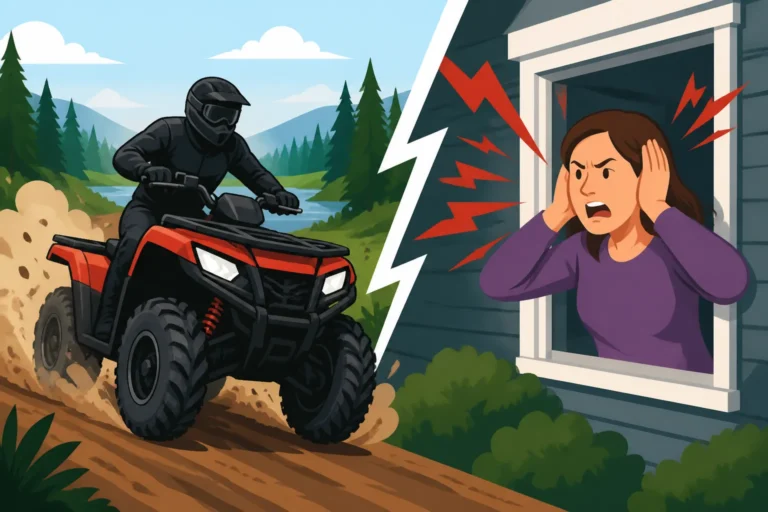
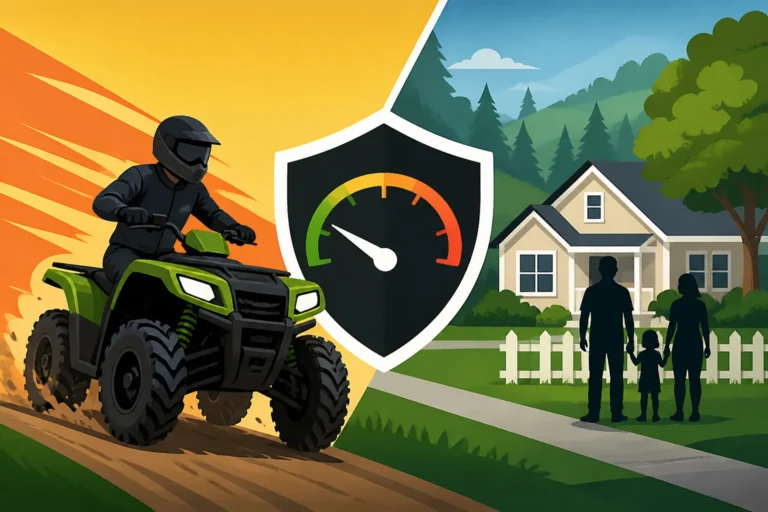
Just because the speed limit for cars on a road might be 45 MPH doesn't mean it's safe or legal for your ATV or UTV. Many towns impose lower speed limits specifically for ATVs on designated access routes, often significantly lower than for cars. Always observe posted speed limits, and if none are specified for ATVs, err on the side of caution and ride at a speed that allows you complete control and ample time to react to hazards. Be particularly mindful of [Maine ATV Speed Limits Near Buildings] or residential areas, where noise and dust can be a concern for residents.
When riding on a public road, always position your ATV or UTV as far to the right side of the travel lane as safely possible. This gives other vehicles maximum room to pass you safely. If you're riding in a group, ride in single file. Never ride side-by-side on a public road, as this takes up too much space and can be incredibly dangerous. [Maine's Extreme Right Rule on a Public Way] provides the specific legal expectation for ATVs on public ways. Remember, your goal is to minimize your impact on regular traffic flow while maximizing your own safety.
Planning for the Unexpected: What If Something Goes Wrong?
Even with the best preparation, things can go awry. If your ATV or UTV breaks down on a public road, you need a plan. Can you safely pull it off the road? Do you have a tow strap or a way to contact help? Being stranded on a busy road with an inoperable machine is not only inconvenient but also dangerous.
It's also essential to be prepared for a potential encounter with a Maine Game Warden. They are tasked with enforcing ATV laws on both trails and roads. Always carry your registration paperwork and, if applicable, your ATV safety course certificate. Keep them in a waterproof bag, securely stored on your machine where they're easily accessible. [Storing Registration Paperwork on the Machine] and knowing [Maine Warden Stops and ATV Paperwork] can help you feel more confident during such an interaction.
In the unfortunate event of an accident or collision on a public road, know what steps to take. Ensure everyone's safety first, move to a safe location if possible, and call emergency services. Document the scene with photos, and exchange information with any other involved parties. Understanding [What to Do After an ATV Crash on a Road] can be invaluable in a stressful situation. Being prepared for these contingencies is part of being a responsible rider.
Mapping Your Trail-to-Home Transition
The desire to ride your ATV or UTV directly home from a day on the trails is completely understandable for convenience and the sheer enjoyment of extending your ride. However, making this a reality in Maine requires diligent planning and a clear understanding of where you can legally ride. "Hoping for the best" or "just trying it" can lead to fines, loss of privilege, or worse.
Researching Your Local ATV-Access Options
Before you even think about hitting a public road, you absolutely must do your homework. Start by checking with the local town office or municipal website for the areas you plan to ride through. Many towns have specific ordinances or maps detailing designated ATV access routes. Don't rely on old information or hearsay. Laws and ordinances can change. The best source of up-to-date information often comes from local ATV clubs. These clubs, like those mentioned in [Maine ATV Clubs and the Trails They Keep Open], work tirelessly with landowners and municipalities to establish and maintain trails and access routes. They often have detailed maps and current information on trail and road status.
Modern technology can also be a huge asset. Apps like onX Offroad (just as an example of what's available out there) can sometimes show legal ATV trails and designated routes on their maps, which can be immensely helpful for pre-planning. Always cross-reference this digital information with official town or club sources, however, as conditions and permissions can change. The key is to verify, verify, verify. Relying on assumptions about what's legal in an unfamiliar area is a recipe for trouble. For comprehensive trail mapping resources, [onX Offroad Maps for Maine Trails] can be a starting point for your research.
Creating a Legal Route Plan
Once you've done your research, sit down and create a concrete route plan that legally connects the trails to your desired destination (whether that's your home, a parking area, or a local business). This means identifying specific points where trails legitimately intersect with designated road access routes. Don't just look for the shortest distance between two points; look for the legal path. Your plan should clearly mark sections where you're on a trail, where you're permitted on a designated road route, and where you'll cross a public way under the 500-yard rule. If a section of road is not a designated access route and doesn't fit the strict definition of the 500-yard rule for crossing, then it's not part of your legal route.
Think about mapping out your ride backwards from home, or your destination, to the trailhead. This helps ensure that the final leg of your journey is fully compliant. Having a physical or digital map clearly marking your intended route can also be helpful if you're ever stopped by a warden. It demonstrates that you've put thought and effort into riding legally and responsibly, rather than just winging it.
When in Doubt, Trailer It Out
Ultimately, if you're ever in doubt about the legality of riding a specific section of road, the safest and most responsible course of action is to trailer your machine. It might be less convenient, but it eliminates the risk of fines, accidents, or contributing to negative perceptions of ATV riders. [Penalties for Riding an Unregistered ATV in Maine] can be steep, and an illegal road ride, even on a registered machine, can lead to fines for illegal operation or trespass. These incidents can also jeopardize landowner permissions and future trail access for everyone.
Consider the big picture: one irresponsible road ride can have repercussions that extend far beyond your individual experience, potentially leading to road closures or stricter regulations that impact the entire ATV community. Instead, plan your day so that your vehicle and trailer are parked at a designated [Maine ATV Trail Parking and Staging] area that allows for a legal and safe return. While riding straight home might seem like the dream, adhering to the rules and prioritizing safety ensures that the trails remain open and enjoyable for years to come.
| Aspect | Trail Riding (Generally) | Road Riding (Designated Access/500-Yard) |
|---|---|---|
| Registration | Required (unless on own land) | Required |
| Helmet (Adults 18+) | Recommended, not legally required | Recommended, not legally required (except youth) |
| Helmet (Youth <18) | Required | Required |
| Eye Protection | Recommended | Essential |
| Lights (Head/Tail/Brake) | Recommended (especially at dusk/dark) | Required to be functional |
| Mirrors | Optional | Strongly Recommended, for visibility |
| Spark Arrestor | Required | Required |
| Muffler Noise Limits | Applicable | Applicable |
| Speed Limits | Vary by trail/landowner, often low | Posted road limits (or lower for ATVs) |
| Lane Position | N/A (follow trail) | Extreme right of travel lane |
| Yielding to Traffic | N/A | Always yield to conventional vehicles |
| Stop at Intersections | N/A | Required (complete stop) |
| Turn Signals | N/A | Hand signals recommended if no machine signals |
| Proof of Ownership | Carry (or accessible) | Carry (or accessible) |
| Insurance | Not legally required (but smart to have) | Not legally required (but smart to have) |
| Tires | Aggressive knobby preferred | Knobby acceptable, but be aware of wear/handling |
Disclaimer
This article is for general informational purposes only and does not constitute professional advice. Laws, prices and regulations vary by location and change over time. Consult a qualified professional for guidance on your specific situation.