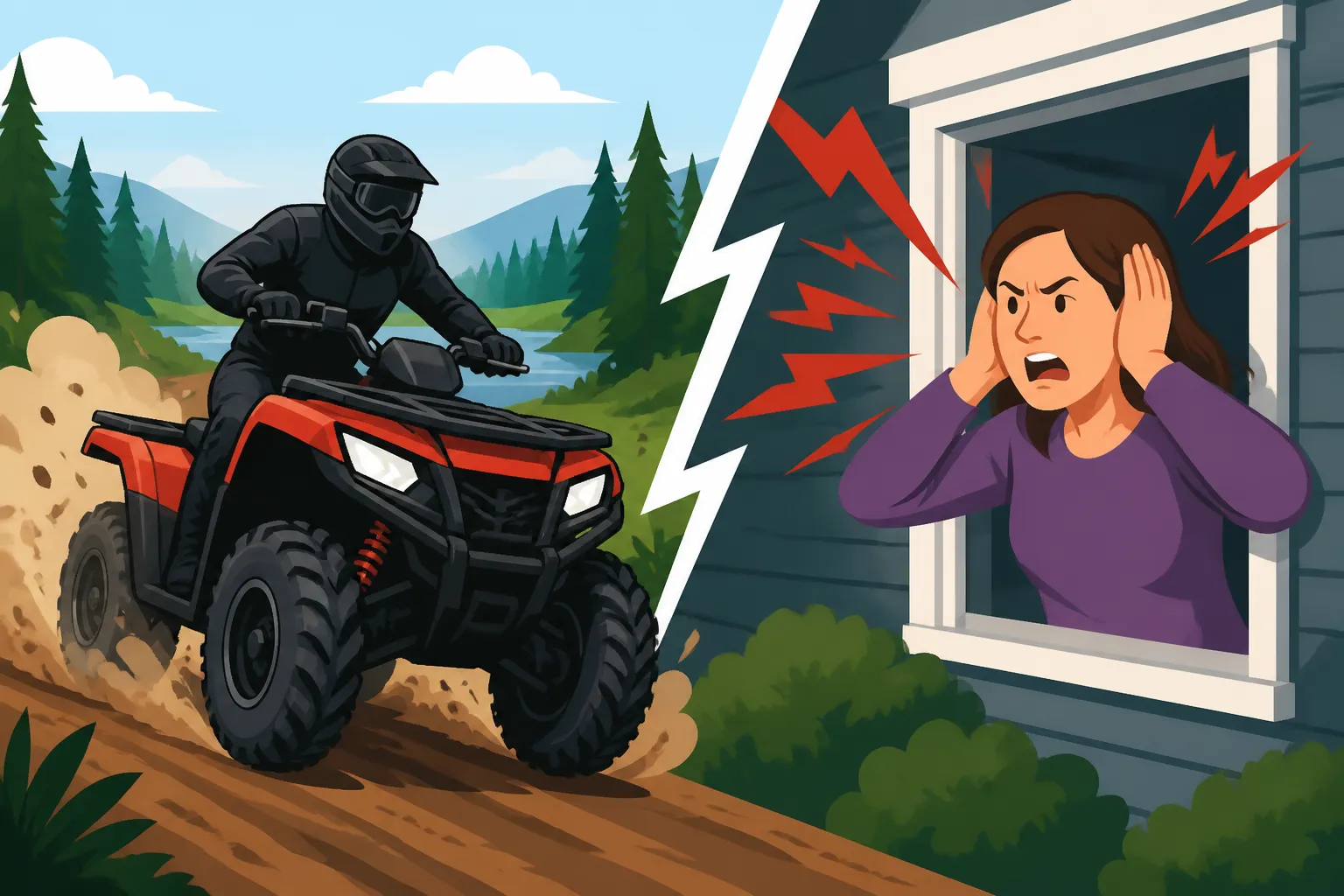
ATV Noise Complaints From Neighbors
There are few things that can sour the joy of a perfect Maine trail ride faster than a knock on your door from a disgruntled neighbor or even, dare I say, a warden, because of noise complaints from your ATV or UTV. It’s a frustrating situation for everyone involved: you want to enjoy your machine, but your neighbors deserve peace and quiet. This guide will help you understand the nuances of ATV noise, local regulations in Maine, and practical steps you can take to be a good neighbor and keep enjoying your ride.
Understanding Maine's Approach to ATV Noise
Navigating the world of ATV and UTV noise regulations in Maine can feel a bit like slogging through a muddy trail after a spring rain – it's often unclear and varies greatly depending on where you are. Unlike some states with blanket decibel limits or strict enforcement policies, Maine’s approach to ATV noise is, shall we say, more decentralized. This can be a huge point of confusion for riders and a source of significant frustration for neighbors who feel like their peace is being constantly disturbed.
The Lack of a Statewide ATV Noise Limit
One of the biggest challenges right off the bat is that Maine does not have a single, statewide decibel (dB) limit specifically for ATVs and UTVs. You won't find a clear number in the state statutes that says, "Your quad cannot exceed X dB at Y distance." This absence often leads to a grey area where riders might assume that if there's no specific law, anything goes. However, that's a dangerous assumption, both for maintaining good neighborly relations and for avoiding potential legal issues down the line.
While there isn't a hard number, Maine's general nuisance laws still apply. These laws are less about a specific decibel reading and more about whether the noise is "unreasonable" or "excessive" under the circumstances. What one person considers a fun engine rumble, another might consider an intolerable assault on their eardrums, especially if it's happening repeatedly or at odd hours. This subjective standard means that perception, frequency, and timing often play a much larger role than a sound meter ever would in determining if a complaint is valid.
The lack of a uniform statewide standard also means that riders often feel caught in the middle. They might buy a machine that's perfectly legal from the factory, only to find out it's too loud for their specific neighborhood's sensibilities. This situation can make it difficult for even the most well-intentioned rider to know if they're in compliance, leading to anxiety about every throttle blip and engine start. It's truly a scenario where ignorance isn't always bliss, and proactive understanding is key.
Local Ordinances: The Town-by-Town Wild West
Because the state doesn't impose a universal decibel limit, many towns and municipalities across Maine have stepped up to create their own local ordinances to address noise. This is where the "wild west" aspect really comes into play, as what's perfectly acceptable in one town's jurisdiction might land you a warning or a fine just a few miles down the road in another. It means that as a rider, your homework isn't just about state laws; it's about knowing the specific rules of every town you plan to ride through, especially if your trails connect various communities.
These local ordinances can vary widely in their scope and specifics. Some towns might define "quiet hours," restricting when ATVs can be operated in residential areas, perhaps between 9 PM and 7 AM. Others might have specific decibel limits, often measured at a certain distance from a property line. You might even find rules about specific routes, prohibiting ATV use on certain roads or access ways near homes entirely, often designated as [Maine Towns That Restrict ATVs on Public Ways]. These nuances underscore why a quick check with the town office or a look at their municipal website is invaluable.
The impact of these local rules often falls disproportionately on riders who live in or near population centers, or those whose trails pass close to homes. In rural, unorganized territories, you might find fewer restrictions. However, as Maine's population grows and more people move to traditionally quiet areas, the pressure on local governments to address noise concerns from ATVs and UTVs increases. This trend means that even if your town doesn't have a specific ordinance today, it could very well be a topic of discussion at a future town meeting, spurred by mounting neighbor complaints.
The "Reasonable Person" Standard in Nuisance Law
In the absence of clear decibel limits, or even alongside them, the concept of a "reasonable person" standard often underpins nuisance complaints related to ATV noise. This legal principle asks: would an ordinary, reasonable person find this noise level, at this time, for this duration, to be an unreasonable interference with their enjoyment of their property? As you can imagine, what's "reasonable" can be incredibly subjective and is often at the heart of disputes between neighbors.
For a rider, this standard can feel frustratingly vague. You might feel you're operating your machine responsibly, but if a neighbor finds the sound of your engine consistently disruptive, especially if it's revving loudly or operating frequently near their home, it can quickly escalate. It’s not just about the absolute volume, but also the character of the noise – a persistent, high-pitched whine might be more irritating than a lower, deeper rumble, even if they register the same decibel level.
Ultimately, this subjective standard often puts the onus on the rider to be extra considerate. If a complaint does go to law enforcement or, in extreme cases, a civil court, the determination will hinge less on technical measurements and more on testimony, frequency of the disturbance, and the impact on the complainant's quality of life. Understanding this helps frame why proactive measures to reduce noise and maintain good relations are often far more effective than trying to argue technicalities.
Common Scenarios Leading to Noise Complaints
While ATVs and UTVs are a fantastic way to explore Maine's vast outdoors, they do come with a certain amount of noise. Most reasonable people understand that these machines aren't silent. However, it's often specific riding habits, times of day, or modifications that push neighbors past their tolerance threshold, leading to those dreaded complaints. Identifying these common scenarios can help riders adjust their behavior and avoid conflict.
Early Mornings, Late Nights, and "Quiet Hours"
One of the quickest ways to earn the ire of your neighbors is to fire up your quad or side-by-side early in the morning or late at night. These are typically the times when people are either sleeping, waking up, or enjoying quiet family time, and the sudden roar of an engine can be incredibly jarring and disruptive. Many towns have informal or formal "quiet hours" precisely for this reason, even if they don't explicitly mention ATVs.
Imagine your neighbor is a shift worker trying to catch some sleep during the day, or a family with young children finally getting them down for a nap. The sound of an ATV repeatedly starting, idling, or even just passing by loudly can quickly accumulate into a significant disturbance. It’s not just about the volume itself, but the timing and the perceived disregard for others' peace. A single loud pass at 6 AM might be quickly forgiven, but daily occurrences will build resentment fast.
To mitigate this, consider your timing. If you absolutely must head out early, try to start your machine as far from homes as possible, or push it down the driveway before firing it up. Keep your speeds low and your revs gentle until you’re well away from residential areas. Similarly, when returning late, try to minimize noise as much as possible, coasting where you can and avoiding aggressive throttle use until you're safely parked. A little common courtesy goes a very long way in preserving neighborly harmony.
Riding Habits Near Residences
It's not just when you ride, but how you ride, particularly when you're in close proximity to homes. Aggressive riding, such as rapidly accelerating, braking hard, or performing wheelies and donuts, generates significantly more noise than simply cruising at a steady, moderate pace. The thrill of opening up the throttle is undeniable, but doing so repeatedly near someone's backyard can create a sustained, intrusive noise that is far more bothersome than a single pass.
Repetitive riding patterns, like doing laps around a field or a short trail section that borders someone's property, are also major culprits. The constant back-and-forth drone, even if it's not excessively loud at any one moment, can be incredibly irritating over time. Neighbors often report feeling like they can't escape the noise, as it just keeps returning. This is where what might seem like innocent fun to a rider transforms into a genuine quality-of-life issue for those nearby.
Think about the acoustics of your property and your neighbors'. Sound travels, especially on a quiet day, and houses can echo and amplify engine noise. By simply slowing down, keeping engine RPMs lower, and avoiding sudden bursts of speed when you're within earshot of homes, you can dramatically reduce the impact of your riding. It's about being aware of your surroundings and choosing your moments for more spirited riding away from populated areas.
Aftermarket Exhausts and Modified Machines
Many ATV and UTV enthusiasts enjoy customizing their machines, and aftermarket exhausts are a popular modification, often chosen for performance gains or a "better" sound. However, these modifications are perhaps the single biggest contributor to noise complaints. Factory mufflers are designed to balance performance with noise reduction, adhering to certain standards. Aftermarket systems, while often offering performance boosts, frequently bypass these noise considerations.
The reality is that many aftermarket exhausts are significantly louder than stock. They can produce a deep, rumbling roar that might be exhilarating on the trail but becomes a booming annoyance in a residential setting. Even a seemingly minor modification, like removing a baffle or altering the exhaust path, can dramatically increase the sound output. This isn't just a subjective issue; sound measurements often confirm a substantial increase in decibel levels. Some SuperATV aftermarket exhaust systems are designed with sound levels in mind, offering a balance, but riders need to do their homework.
Beyond exhausts, other modifications or even just poor maintenance can contribute to noise. Loose parts, worn bearings, or an engine that's running rough can all create rattles, squeaks, and additional mechanical noise. Riders need to be mindful that while a loud exhaust might sound cool to them, it's often perceived as aggressive and inconsiderate by others. If you're running a modified exhaust, you're almost certainly increasing your chances of a noise complaint, and you may even face a citation if your machine doesn't meet specific, albeit rare, local ordinances or general nuisance laws. It's worth considering options like a quiet core insert or a specifically designed quiet exhaust, some of which are available from brands like SuperATV, if you're experiencing issues. Also be aware of [Aftermarket Exhaust and Trail Access] rules which might prohibit excessively loud machines.
Proactive Steps for ATV Riders to Be Good Neighbors
Being a good neighbor when you own an ATV or UTV isn't just about avoiding trouble; it's about fostering a positive relationship with your community and ensuring continued access to the trails you love. Proactive measures are always more effective than reactive ones. By taking simple steps, you can significantly reduce the likelihood of noise complaints and help ensure that ATV riding remains a welcome activity in your area.
Muffler Maintenance and Spark Arrestors
One of the most straightforward ways to control your ATV's noise output is to ensure your exhaust system is in tip-top shape. A damaged, rusted, or poorly maintained muffler can become significantly louder than it was designed to be. Cracks, holes, or loose baffling can allow sound to escape unimpeded, turning a moderate rumble into an irritating roar. Regularly inspect your muffler for any signs of wear and tear, and address any issues promptly.
Beyond the muffler itself, your spark arrestor plays a crucial role. While primarily designed for fire prevention, an intact and properly maintained spark arrestor can also contribute to noise reduction by slightly muffling the exhaust note. If your spark arrestor is clogged, damaged, or missing, it not only presents a fire hazard but can also make your machine louder. Always ensure your spark arrestor is clean and in good working order, adhering to [Spark Arrestor Requirements in Maine]. If you've modified your exhaust with an aftermarket product, such as some available from SuperATV, always verify it includes a functional spark arrestor.
Think of it this way: a well-maintained stock exhaust system is your first line of defense against noise complaints. It's designed by the manufacturer to meet a certain sound standard. If you’ve got an older machine, or one that’s seen a lot of trail time, consider that the internal components of your muffler might have deteriorated, making it naturally louder. Replacing an old, worn-out muffler with a new stock-equivalent can often make a surprising difference in noise levels and keep the peace with your neighbors.
Mindful Riding Practices
Perhaps the most impactful step you can take doesn't involve your machine at all, but rather your own riding habits. Being a "mindful rider" means consciously adjusting your behavior, especially when you're in areas where noise might be a concern. This isn't about giving up the thrill of riding; it's about choosing the right time and place for it.
When you're leaving your property or riding near residential areas, make a conscious effort to keep your speeds down and your engine RPMs low. Avoid sudden accelerations or decelerations that create sharp, attention-grabbing noises. Resist the urge to "blip" the throttle just for fun when you're within earshot of homes. If you have to pass directly in front of a house, try to do so smoothly and quietly, almost coasting if possible, to minimize any disturbance.
Another key practice is to avoid repetitive riding patterns near homes. If you have a field or a short loop that borders a neighbor's property, don't ride it constantly. Spread out your riding to other parts of your land or head directly to designated trails. Consider setting specific, limited times for riding near homes, perhaps only during mid-day hours when general activity levels are higher and noise is less likely to stand out. Communication can also help; letting a close neighbor know when you plan to ride can often preempt a complaint. Remember, even a quiet machine can become annoying if it's constantly making noise right outside someone's window.
Communication and Community Engagement
Often, the biggest battle isn't about noise levels themselves, but about perception and relationship. One of the most powerful tools you have as an ATV rider is open communication with your neighbors. If you know you'll be riding, especially for an extended period or during potentially disruptive hours, a simple heads-up can work wonders. A quick conversation like, "Hey, just letting you know I'm heading out on the quad for a bit this afternoon, let me know if it gets too loud," shows respect and can de-escalate potential issues before they even begin.
Beyond individual conversations, consider getting involved with your local ATV club. [Maine ATV Clubs and the Trails They Keep Open] are often at the forefront of fostering good relationships with landowners and communities. These clubs frequently advocate for responsible riding, maintain trails, and act as a liaison between riders and residents. By joining a club, you're not only supporting the trail system but also aligning yourself with a community that values being a good neighbor. Clubs often have established protocols for addressing noise or trespass complaints, and your involvement can help shape those responses.
Finally, take an interest in your community. Attend town meetings if ATV regulations are on the agenda, or volunteer for local initiatives. When neighbors see you as an engaged member of the community, rather than just "the guy with the loud quad," they're much more likely to be understanding and approachable if an issue does arise. Showing a willingness to listen and compromise can transform a potential adversary into an ally, making the riding experience better for everyone.
What Happens When a Complaint Is Filed
Even with the best intentions and the most mindful riding practices, a noise complaint might still happen. Understanding the typical progression of a complaint in Maine can help you prepare, respond appropriately, and avoid further escalation. It’s important to remember that most people would prefer not to get law enforcement involved, but if they feel their concerns are ignored, they will take that step.
Initial Contact: A Knock on the Door or a Phone Call
In many cases, the first sign of a problem won't be a uniform at your door, but rather a direct approach from your neighbor. They might walk over and politely (or perhaps less politely, depending on their frustration level) ask you to quiet down, or they might give you a call if you've exchanged numbers. This initial contact is a crucial moment. How you respond can set the tone for future interactions and determine whether the issue can be resolved amicably or if it's destined to escalate.
If a neighbor approaches you, listen to their concerns without immediately becoming defensive. Try to understand their perspective. Are they bothered by the specific time of day? Is it the duration of the noise? Or is it a particular type of riding (e.g., revving, aggressive acceleration) that's causing the most disturbance? Acknowledging their feelings and expressing a willingness to find a solution can go a long way. This is your opportunity to show you’re a reasonable person and a good neighbor.
Ignoring these direct appeals or responding dismissively is almost guaranteed to push the situation to the next level. If neighbors feel their concerns are being brushed aside, they'll inevitably seek outside intervention. Remember, an ounce of prevention (or a respectful conversation) is worth a pound of cure. It’s far better to work things out directly than to have a third party, especially law enforcement, get involved.
Warden Service and Local Police Involvement
If direct communication fails, or if the noise is particularly egregious, a neighbor might contact local law enforcement, such as the town's police department or, more commonly for ATV issues, the Maine Warden Service. [Maine Warden Service ATV Patrols] are frequently on trails and responding to calls, so they are well-versed in these kinds of disputes. When law enforcement gets involved, the dynamic changes considerably. It moves from a neighborly disagreement to a potential enforcement situation.
When a warden or police officer responds to a noise complaint, they will typically investigate the situation. This might involve observing your riding, listening to your machine, and speaking with both you and the complainant. They will assess whether the noise constitutes a violation of any local ordinances or a general nuisance under state law. Since Maine lacks a statewide decibel limit for ATVs, they will often rely on the "reasonable person" standard or local town ordinances.
The outcome of their involvement can range from a friendly warning and a request to be more considerate, to a formal citation and a fine. [Fines Maine Wardens Write Most Often] can include violations related to noise if a local ordinance is in place, or even more general violations like reckless operation if the noise is a result of dangerous riding. Repeated complaints or a blatant disregard for warnings can lead to more serious consequences, including the possibility of having your trail access revoked by local clubs or landowners.
Escalation to Legal Action
In rare, but not unheard-of, cases where noise complaints are persistent, unresolved, and significantly impacting a neighbor's quality of life, the situation can escalate to civil legal action. This is typically a last resort for complainants who feel all other avenues have been exhausted. A civil lawsuit for nuisance would involve a neighbor seeking a court order to stop the disruptive noise and, potentially, damages for the interference with their property rights and enjoyment.
Such legal proceedings can be incredibly costly, time-consuming, and emotionally draining for everyone involved. You might find yourself needing to hire an attorney, appear in court, and potentially face an injunction that severely restricts your ability to ride your ATV near your property. The burden of proof in such cases would typically involve demonstrating a consistent pattern of excessive noise that significantly impairs the neighbor's use and enjoyment of their property.
While most noise complaints don't reach this level, it's a stark reminder of the potential consequences of ignoring neighborly concerns. Proactive communication, respectful riding habits, and a willingness to compromise are almost always preferable to battling it out in a courtroom. Maintaining positive community relations is not just about being polite; it’s also about protecting your right to enjoy your machine without facing legal challenges.
| Mindful Riding Practices (Recommended) | Risky Riding Habits (Avoid) | Impact on Neighbors | Consequence Risk |
|---|---|---|---|
| Start/Stop Quietly: Gentle acceleration away from homes. | Loud Starts/Stops: Revving engine, sudden bursts. | Disrupts peace, especially during quiet hours. | Complaints, warnings. |
| Low RPMs Near Homes: Cruise slowly, avoid high revs. | High RPMs/Acceleration: Aggressive throttle use. | Annoying, intrusive, constant drone or sharp noise. | Citations, legal action. |
| Vary Route & Time: Mix up riding patterns. | Repetitive Loops: Riding the same path near houses. | Feels like harassment, inescapable noise. | Escalation of complaints. |
| Maintain Stock Muffler: Ensure good condition, spark arrestor. | Aftermarket/Modified Exhaust: Louder than factory. | Amplifies all noise, specifically targets perceived volume. | Fines, loss of trail access. |
| Communicate with Neighbors: Give a heads-up. | Ignore Complaints: Continue riding as usual. | Shows disrespect, fuels resentment. | Increased enforcement, lawsuits. |
| Join ATV Clubs: Show community involvement. | Isolate Yourself: No engagement with local riders. | Less community support, harder to resolve issues. | Public backlash, trail closures. |
Disclaimer
This article is for general informational purposes only and does not constitute professional advice. Laws, prices and regulations vary by location and change over time. Consult a qualified professional for guidance on your specific situation.