Low-Speed Vehicle Registration in Maine
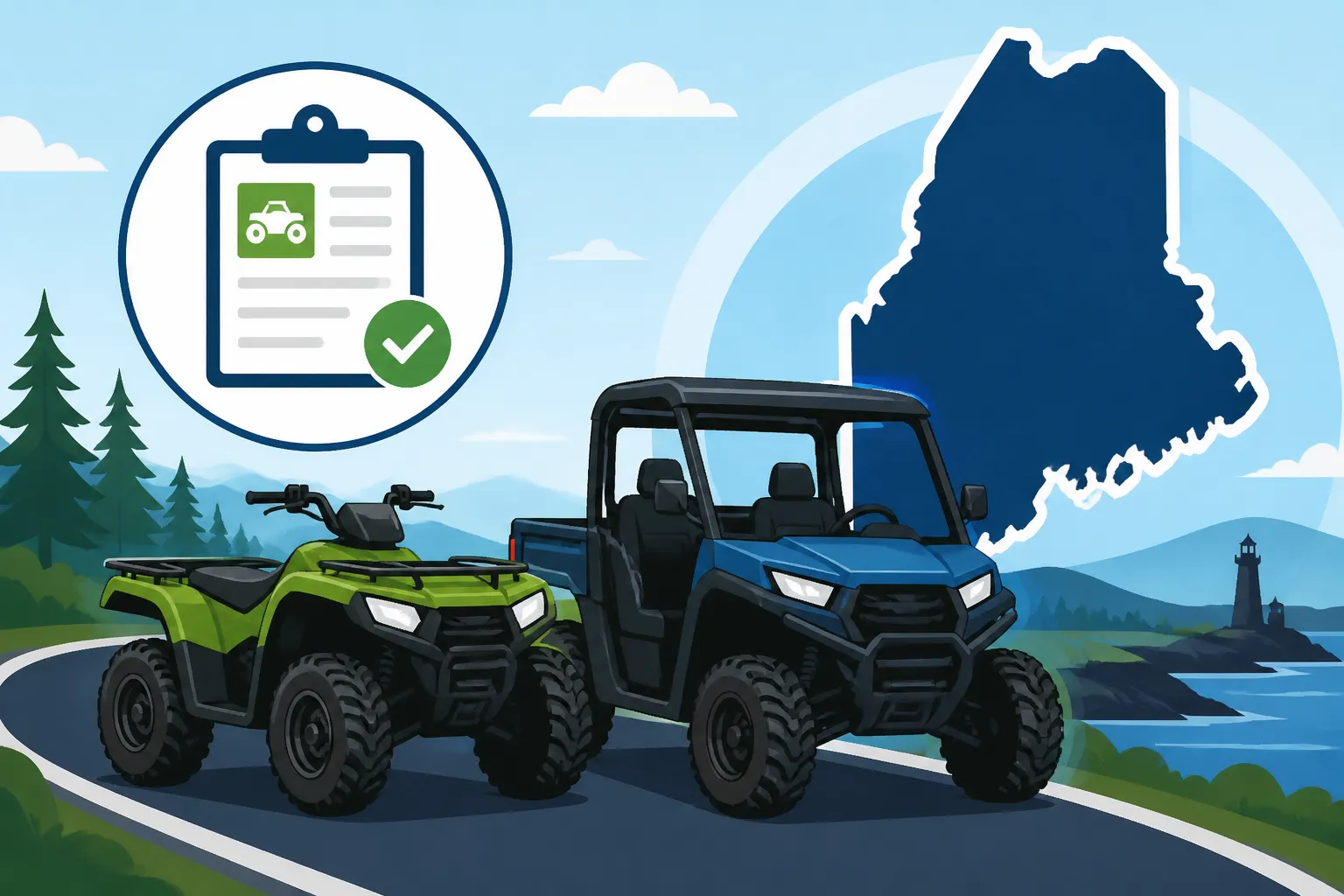
It can be incredibly frustrating when you have a side-by-side or a beefed-up golf cart and dream of running quick errands on public roads, only to be met with a wall of confusion about what's actually street legal in Maine. This guide is here to untangle the complexities of low-speed vehicle (LSV) registration in our state, helping you understand the specific requirements and processes to get your specialized vehicle legally on the pavement.
Understanding Low-Speed Vehicles (LSVs) in Maine
Before we dive into the nitty-gritty of registration, it's crucial to understand what Maine legally considers a "Low-Speed Vehicle." This isn't just a casual term; it's a specific classification with its own set of rules, distinct from your typical ATV or UTV. Many folks assume that if their side-by-side can go slow, it's an LSV, but that's often not the case at all.
What Defines a Low-Speed Vehicle?
In Maine, a Low-Speed Vehicle (LSV) is generally defined as a four-wheeled vehicle whose top speed is greater than 20 miles per hour but not greater than 25 miles per hour. It's designed to carry no more than four persons, and it must conform to the safety standards established by the National Highway Traffic Safety Administration (NHTSA) in the Code of Federal Regulations, Title 49, Section 571.500. This might sound like a mouthful of legal speak, but it boils down to some fundamental design and performance criteria.
Think about the golf carts you see in planned communities or on college campuses that actually have license plates. These are often manufactured to meet LSV standards right from the factory. They aren't just regular golf carts that someone slapped some lights on; they're built with specific safety components in mind to operate safely, albeit slowly, on public roads. This speed limitation is key – if your vehicle goes much faster than 25 mph, it immediately falls into a different category, typically requiring full automobile registration and compliance.
The weight limit is also a factor, though often less discussed than speed. An LSV is not designed for heavy hauling or extreme off-road punishment. Its primary purpose is to provide local transportation, akin to a very small, slow car. If you're looking at a vehicle that's built for aggressive trail riding or heavy utility work, it's probably not going to naturally fit the LSV definition without significant, and often impractical, modifications.
How LSVs Differ from ATVs and UTVs
This is where a lot of confusion comes in for Maine riders. While many UTVs (or side-by-sides) might look similar to some LSVs, their legal classifications and intended uses are quite different. An ATV (All-Terrain Vehicle) is designed exclusively for off-road use. It's built for rugged terrain, often has a straddle seat, and is not designed or equipped for public road travel beyond very specific, limited circumstances. UTVs are similar in their off-road design, offering seating for two or more side-by-side, often with a steering wheel and foot pedals, but they too are primarily off-road machines. You can learn more about [Maine UTV Registration and How It Differs] in a separate post.
The core difference lies in their federal and state classification and the safety standards they're manufactured to meet. ATVs and UTVs are not required to meet NHTSA motor vehicle safety standards for on-road use because they are not intended for on-road use. An LSV, by contrast, is manufactured to specific federal motor vehicle safety standards (FMVSS 500) that make it suitable for limited road travel. This includes things like specific lighting, seat belts, mirrors, and often a vehicle identification number (VIN) structure that aligns with on-road vehicles. Trying to convert a typical UTV into a full-fledged LSV can be a complex and expensive endeavor, as it often requires adding components that simply aren't present in its original design, and sometimes even a full VIN inspection and reclassification process.
Another critical distinction is purpose. ATVs and UTVs are registered with the Maine Department of Inland Fisheries & Wildlife (IF&W) specifically for recreational and utility off-road use. They get those iconic green or orange decals. LSVs, however, are registered with the Bureau of Motor Vehicles (BMV) and receive standard vehicle license plates, just like a car or truck, because they are considered road vehicles. This difference in registration authority underscores their entirely separate legal standing within the state.
Common Types of Vehicles Registered as LSVs
When people talk about LSVs in Maine, they are most commonly referring to electric golf carts or small utility vehicles that have been specifically manufactured to meet the federal FMVSS 500 standard. These vehicles often come straight from the factory equipped with all the necessary components for street legality, such as turn signals, brake lights, headlights, taillights, a windshield, seatbelts, and a VIN.
You might see these types of vehicles being used in coastal towns or planned communities where distances are short and speed limits are low. For example, some resorts might use them for guest transportation, or residents might use them to get to a local shop or the beach. They are ideal for these environments because they are quiet, efficient, and perfectly suited for low-speed, short-distance travel. The key is that they started as an LSV from the manufacturer, not as an ATV or UTV that someone tried to modify.
While some might attempt to modify a standard golf cart that wasn't originally an LSV, or even a UTV, to meet these requirements, it's a significant undertaking. Most non-factory LSVs struggle to meet all the federal safety standards required for registration with the Maine BMV. It’s not just about adding a few parts; it’s about proving the vehicle as a whole meets the structural and safety integrity required for a road-legal vehicle, even a low-speed one. This is why you'll mostly see purpose-built LSVs on our roads, rather than modified recreational vehicles.
Maine's Requirements for LSV Road Use and Registration
So, you've got a vehicle that either is an LSV or you're hoping to convert it. What does Maine actually require to get it legally registered and on the road? It's not as simple as slapping on a couple of blinkers; there's a specific checklist of equipment, a clear registration path, and important operational rules to follow once you're street legal.
Essential Equipment for Street Legality
For a vehicle to be registered as an LSV in Maine, it must meet a specific set of equipment standards. These are not optional; they are mandatory safety features designed to ensure the vehicle can operate safely alongside other traffic, even if at a lower speed. Many of these requirements mirror what you'd find on a standard automobile, scaled down for the LSV's unique performance profile. You can find more detail on these components in articles like [Street-Legal UTV Equipment Lists], which often overlap with LSV requirements.
Here's a breakdown of what your LSV will need:
- Headlamps: Two headlamps, functional for night driving.
- Taillamps: Two red taillamps visible from at least 500 feet to the rear.
- Stop Lamps (Brake Lights): Two red stop lamps that illuminate when the brake pedal is pressed.
- Turn Signal Lamps: Front and rear turn signals on both sides for indicating turns.
- Reflex Reflectors: One red reflex reflector on each side and one on the rear, or integrated into other lamps.
- Exterior Mirror: An exterior mirror on the driver's side. Many people opt for an additional passenger side mirror for better visibility.
- Interior Mirror: An interior rearview mirror.
- Parking Brake: A fully functional parking brake.
- Windshield: A windshield that meets the same standards as a conventional motor vehicle windshield. This is a big one often overlooked – it's not just a piece of plexiglass.
- Seat Belts: Seat belts for all seating positions.
- Vehicle Identification Number (VIN): A properly assigned and displayed VIN. This is absolutely critical for registration.
- Horn: A working horn.
- Speedometer: A speedometer to ensure you stay within the legal speed limits.
Meeting these requirements is paramount. If your vehicle doesn't have these components, or they don't meet the specified safety standards, the Maine Bureau of Motor Vehicles (BMV) will not register it as an LSV. This is where modifying an ATV or UTV can become incredibly costly and often impossible, as their frames and electrical systems weren't designed to support all these features to an on-road standard.
The Maine Registration Process for LSVs
Once your vehicle is equipped to meet all the legal standards for an LSV, the registration process in Maine is similar to registering any other motor vehicle. You won't be heading to the IF&W to get an ATV decal; you'll be dealing with the BMV, either at a local municipal office or directly with the state. This is different from [Maine UTV Registration and How It Differs], which goes through IF&W.
Here's a general outline of the steps:
- Proof of Ownership: You'll need a bill of sale or a certificate of origin (for a new vehicle) to prove you own the LSV. This paperwork must clearly identify the vehicle by its VIN.
- Application for Registration: You'll fill out a standard motor vehicle registration application.
- Proof of Insurance: Like any road-legal vehicle, your LSV will need to be insured. You'll need to provide proof of liability insurance that meets Maine's minimum requirements. You can learn more about [Insurance for a Road-Ridden UTV] in a related article, as many of those principles apply.
- Sales Tax (if applicable): If you purchased the LSV from a dealer or privately and haven't paid Maine sales tax, you'll pay it at the time of registration.
- Inspection (potentially): While not always a guaranteed requirement upfront for all LSVs, the BMV may require an inspection to verify that the vehicle meets all the necessary safety equipment standards, especially if it's a converted or out-of-state vehicle.
- Fees: You'll pay the applicable registration fees.
You can often register your LSV at your local town office, just like you would a car. They will process the paperwork and issue you a license plate. If your town office cannot handle it, the state BMV offices will. It’s always a good idea to call ahead to your municipal office or the nearest BMV branch to confirm their specific requirements for LSVs. They can tell you [What Maine Town Clerks Ask For at the Counter] when registering this type of vehicle.
Operational Rules and Restrictions for LSVs on Maine Roads
Even after your LSV is registered and plated, it's not a free pass to drive everywhere. Maine law places specific restrictions on where and how Low-Speed Vehicles can be operated. These rules are in place because LSVs are slower than most traffic and therefore need to be used in environments where they won't impede the flow of traffic or create undue safety hazards.
The most critical operational rule is the speed limit restriction. LSVs are legally restricted to roads with posted speed limits of 35 miles per hour or less. This means you generally cannot take an LSV on highways, state routes with higher speed limits, or any road where regular traffic typically moves faster than 35 mph. This significantly limits their utility to local streets, residential areas, and certain collector roads.
Furthermore, specific towns and cities might have their own ordinances regarding LSV use. While the state permits LSVs on roads 35 mph or under, a municipality can choose to further restrict or even ban LSV use on certain local roads. This is similar to how local rules can affect [Maine Golf Cart Rules on Town Streets]. It's absolutely vital to check with the local police department or town office in any area you plan to operate your LSV to understand any additional restrictions.
Drivers of LSVs must hold a valid driver's license, just like operating any other motor vehicle on public roads. All traffic laws apply – stop signs, traffic lights, yielding rules, and so forth. While you won't be going fast, you're still part of the traffic ecosystem and expected to adhere to all the same rules of the road.
Challenges and Considerations for Converting/Registering a UTV as an LSV
Many UTV owners in Maine dream of taking their side-by-side on short road trips to a gas station, a local store, or simply to connect trails. The idea of converting a UTV into an LSV often comes up as a way to achieve this. However, it's critical to understand that this path is fraught with challenges and is rarely as straightforward or cost-effective as it seems.
The Conversion Hurdle: Making Your UTV an LSV
The biggest hurdle for UTV owners is the actual conversion process to meet federal FMVSS 500 standards, not just Maine's interpretation of them. As discussed earlier, UTVs are not designed or manufactured to these federal motor vehicle safety standards. This means adding things like DOT-approved windshields, specific lighting, mirrors, and seat belts is only the beginning. It also involves ensuring the vehicle's braking system, steering, and overall structural integrity are up to the task of regular road use.
Many aftermarket companies offer "street legal kits" for UTVs. Brands like SuperATV provide a wide range of parts including turn signal kits, mirrors, and horn kits that help UTVs meet some state-level requirements for limited road access (like the 500-yard rule or specific ATV-access routes). However, very few, if any, of these kits are designed to convert an off-road UTV into a federally compliant Low-Speed Vehicle that the Maine BMV will register with a full license plate. The difference is subtle but critical. A turn signal kit from SuperATV might make your UTV more visible and legal for a 500-yard road crossing, but it doesn't transform it into a federally recognized LSV.
The cost of sourcing and installing all the necessary FMVSS 500 compliant components, along with potential engineering inspections to certify the conversion, can quickly exceed the value of the UTV itself. You might end up spending thousands on parts and labor, only to find that the BMV still won't register it as a true LSV because the base vehicle simply wasn't built for it. It's often more practical to purchase a purpose-built LSV if consistent road use is your primary goal.
Insurance and Inspection Realities for LSVs
Once you manage to get an LSV registered, you'll encounter specific insurance and potential inspection realities. As a road-legal vehicle, an LSV requires standard automobile liability insurance. Your existing ATV or UTV insurance policy, which is typically for off-road recreational use, will likely not cover an LSV operating on public roads. You will need a separate auto insurance policy, which might be different in terms of coverage and cost. When considering [Insurance for a Road-Ridden UTV] it becomes clear that a regular UTV policy is not the same as an auto policy.
Additionally, LSVs, like other motor vehicles in Maine, might be subject to periodic safety inspections. While not every small town in Maine enforces inspections for every vehicle, if your LSV is stopped or involved in an incident, its compliance with safety standards will be scrutinized. Maintaining all the required equipment in good working order isn't just a one-time registration hurdle; it's an ongoing responsibility. If your vehicle fails an inspection or is found to be non-compliant, you could face fines or have your registration suspended.
It's also worth noting that some insurance companies may be hesitant to underwrite policies for highly modified UTVs attempting to pass as LSVs. They might view them as higher risk due to their non-standard construction or the difficulty in verifying all safety components. Always discuss your specific vehicle and its modifications with your insurance provider upfront to ensure you have adequate coverage for on-road use.
Local Ordinances and Limited Road Access
Even if you successfully register your vehicle as an LSV with the Maine BMV, your freedom to roam is still constrained by local ordinances. As mentioned, while state law allows LSVs on roads with speed limits of 35 mph or less, individual towns and cities have the authority to impose further restrictions or even ban LSVs entirely from their public ways. This means a fully legal LSV in one town might be prohibited just a few miles down the road in another.
These local rules can be frustratingly inconsistent. You might find yourself on a long-anticipated ride, only to discover a "No LSVs" sign on a critical connecting road. This patchwork of regulations requires diligent research before you plan any extensive road trips with your LSV. Always check the municipal websites or call the town office for the specific areas you intend to visit. This is similar to how [Maine Towns That Restrict ATVs on Public Ways] operate, but for a different class of vehicle.
The limited road access due to speed restrictions and local bans can also make LSVs less practical for many Mainers, especially those living in more rural areas where connecting roads often have higher speed limits. An LSV is truly best suited for contained communities or areas with extensive networks of low-speed roads, rather than as a primary mode of transportation across varied terrain or longer distances.
Alternatives to Full LSV Registration for UTVs in Maine
Given the complexities and costs associated with converting and registering a UTV as a full-fledged Low-Speed Vehicle, many Maine riders seek alternative, more practical ways to legally access roads for short distances or to connect trails. While these options don't grant you full street-legal status, they do provide specific, limited road privileges for ATVs and UTVs.
Maine's 500-Yard Limit on a Public Way
This is perhaps the most common and useful provision for ATV and UTV owners in Maine who need to cross or briefly use a public road. Maine law allows a registered ATV or UTV to travel for a distance of not more than 500 yards on a public way to get from one trail to another, or to access a fuel station, store, or other service. This rule is specifically detailed in [Maine's 500-Yard Limit on a Public Way].
There are crucial caveats to this 500-yard rule:
- Speed Limit: You can only use this provision on roads with a posted speed limit of 35 mph or less.
- Extreme Right: You must operate the ATV/UTV on the extreme right of the traveled portion of the public way.
- Single File: If operating in a group, you must ride in single file.
- Stop and Yield: You must come to a complete stop before entering a public way and yield to all vehicular traffic.
- Direct Path: The travel must be for the most direct route to reconnect with a trail or access a service. It's not for joyriding or extended travel.
- Registered: Your ATV/UTV must be properly registered with the Maine IF&W.
This rule is a lifesaver for many riders, allowing them to legally bridge gaps between trail systems or grab a quick bite without having to trailer their machine. However, it is strictly limited in distance and purpose, and wardens do enforce these rules.
Designated ATV-Access Routes and Town Ordinances
Beyond the 500-yard rule, many towns in Maine have recognized the economic and recreational value of ATV and UTV riding and have proactively established designated ATV-Access Routes. These are specific sections of public roads (typically town roads, not state highways) that municipalities have formally opened to ATV and UTV traffic. These routes are usually marked with distinct signage. Our article on [Maine ATV-Access Routes and How Towns Post Them] provides much more detail on how these work.
When a town designates an access route, it typically involves a vote by the select board or town meeting, followed by proper signage and often communication with local ATV clubs and the Maine Bureau of Parks and Lands. These routes allow riders to travel for longer distances than the 500-yard limit, sometimes connecting entire trail systems or providing access to village centers for services.
However, just like with LSVs, these routes are subject to local control. Towns can set their own rules regarding speed limits, times of operation, and even specific types of machines allowed. It's common to see a town open a road to ATVs and UTVs but maintain stricter rules about noise or hours of operation. Always look for posted signs and consult town ordinances or local ATV club maps to identify and understand the rules for designated access routes. Never assume a road is open to UTVs just because it's a dirt road or you see other riders – always verify it's a designated access route.
Ultimately, while the dream of a fully street-legal UTV might persist, the reality in Maine often points to these limited road access options as the most practical and legally sound ways for ATV and UTV owners to navigate public ways.
| Feature | ATV (Off-Road) | UTV (Off-Road) | Low-Speed Vehicle (LSV) |
|---|---|---|---|
| Primary Use | Recreational Off-Road | Recreational/Utility Off-Road | Local On-Road Transport |
| Seating | Straddle Seat | Side-by-Side Seats | Side-by-Side Seats |
| Steering | Handlebars | Steering Wheel | Steering Wheel |
| Road Legal Status | Limited (500-yard, access routes) | Limited (500-yard, access routes) | Fully Road-Legal (restricted) |
| Top Speed | Varies (often 40+ mph) | Varies (often 40+ mph) | 20-25 mph (by definition) |
| Registration Body | ME IF&W | ME IF&W | ME Bureau of Motor Vehicles |
| Licensing | Off-road decal | Off-road decal | Standard License Plate |
| Federal Standards | No FMVSS for road use | No FMVSS for road use | FMVSS 500 Compliant |
| Required Insurance | Off-road (liability) | Off-road (liability) | Auto Liability |
Disclaimer
This article is for general informational purposes only and does not constitute professional advice. Laws, prices and regulations vary by location and change over time. Consult a qualified professional for guidance on your specific situation.