Maine ATV Alcohol Limit for Operators
Riding the trails in Maine is an incredible experience, offering unmatched beauty and adventure, but it comes with serious responsibilities. One of the most critical, and often misunderstood, aspects of that responsibility revolves around alcohol consumption. It's easy to think that an ATV, being an off-road machine, might have different rules than a car on a paved road, but that couldn't be further from the truth. This guide is here to clear up any confusion about Maine's strict alcohol limits for ATV operators, explaining exactly what the law says, the severe consequences of breaking it, and why making smart choices is absolutely essential for the safety of everyone and the future of our beloved trails.
Understanding Maine's Legal Alcohol Limit for ATV Operators
When you're out enjoying Maine's vast network of ATV trails, the fresh air, and the company of friends, it might be tempting to crack open a cold one. However, it's crucial to remember that operating an ATV, like any motor vehicle, comes with stringent legal requirements regarding alcohol. The State of Maine takes impaired operation very seriously, and the rules are designed to protect not just you, but everyone else on the trails and the landowners who so generously grant us access.
The Basic .08% Rule and Its Application
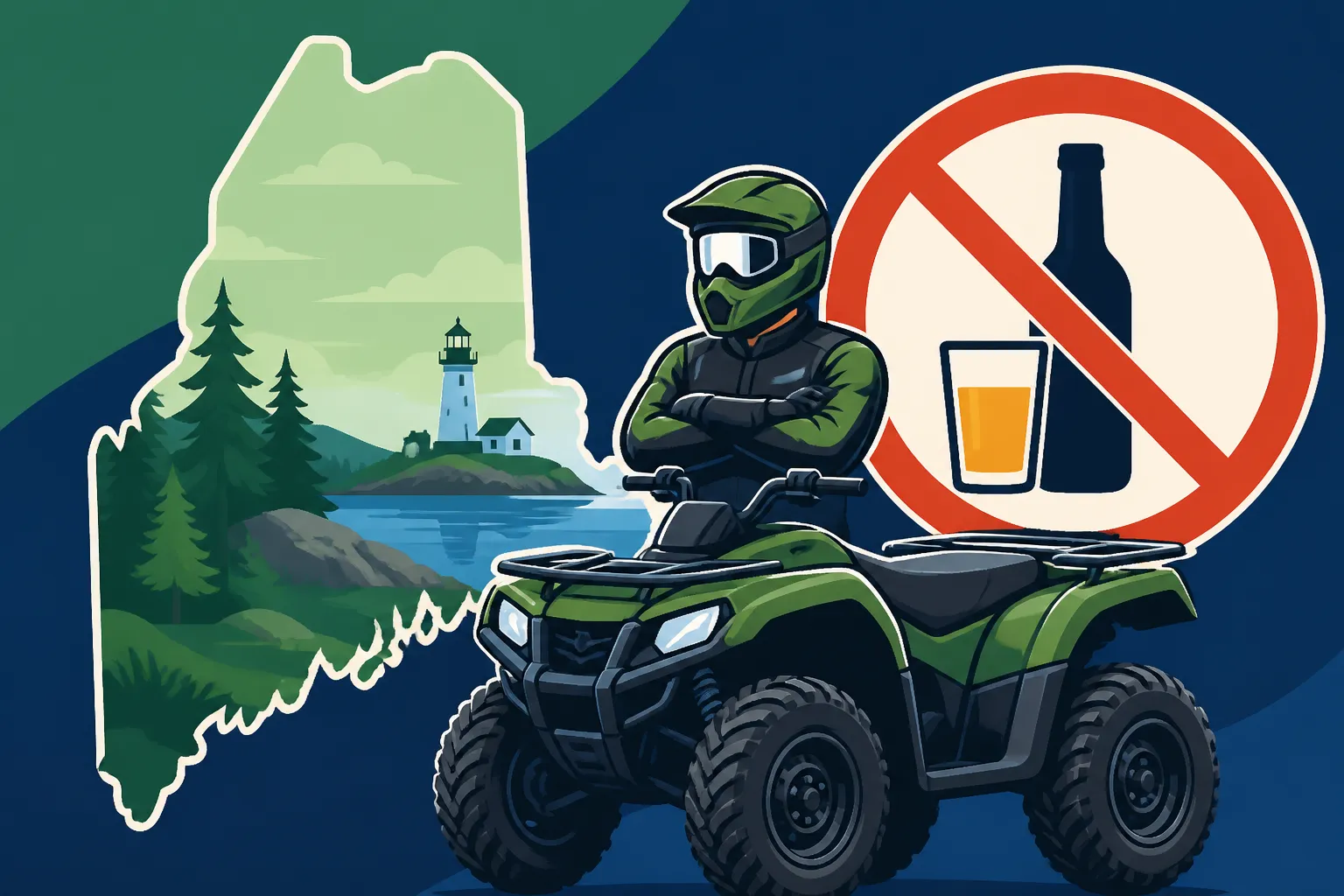
Let's get straight to the heart of it: Maine's legal alcohol limit for ATV operators is exactly the same as it is for operating a car or truck on a public road. That means a blood alcohol content (BAC) of 0.08% or higher will result in a charge of operating under the influence (OUI). This isn't a suggestion; it's the law.
Think about it this way: your ATV is a powerful machine, often ridden on varied, unpredictable terrain. Navigating rocks, roots, muddy sections, and tight turns demands quick reflexes, sharp vision, and sound judgment. Alcohol, even in small amounts, impairs all of these critical faculties. The .08% limit is what's known as a "per se" limit. This means that if your BAC is measured at or above this percentage, you are legally considered to be under the influence, regardless of whether you feel impaired. There's no arguing it; the number speaks for itself. This applies whether you're on a designated trail, a private woods road with permission, or even briefly crossing a public way, as is sometimes necessary when [Riding an ATV on the Road in Maine]. The moment you sit behind the handlebars and put that machine in motion, these rules apply.
It's a common misconception that because you're "off-road," the rules are different. Perhaps people think wardens won't patrol as strictly or that the consequences aren't as severe. Both of these assumptions are dangerously false. Maine's Inland Fisheries & Wildlife (IF&W) wardens are specifically tasked with enforcing these laws on the trail, and they are incredibly diligent. They understand the dangers of impaired riding and are out there to ensure everyone's safety.
"Operating Under the Influence" Goes Beyond the Number
Here’s another critical point that many riders overlook: even if your blood alcohol content is below the 0.08% legal limit, you can still be charged with OUI if your ability to operate the ATV is impaired "to any degree" by alcohol or drugs. This is often where riders get into trouble, assuming that a beer or two is "fine" because they "feel okay."
Wardens are trained to observe signs of impairment that go beyond a simple breathalyzer reading. These signs can include:
- Erratic operation: Swerving, difficulty maintaining a straight line, excessive speed, or riding too slowly for conditions.
- Poor coordination: Fumbling with paperwork, difficulty dismounting or mounting the ATV, or struggling with simple physical tasks.
- Slurred speech or confusion: Difficulty answering questions clearly or understanding instructions.
- Bloodshot or glassy eyes: Another common physical indicator.
- Odor of alcohol: While not proof of impairment, it's often an initial indicator that leads to further investigation.
- Involvement in an accident: Even a minor fender-bender or a tip-over can trigger an OUI investigation if alcohol is suspected.
Imagine trying to navigate a challenging section of trail – a steep incline with loose rocks, or a sharp turn over a bog bridge – while your reaction time is even slightly dulled by alcohol. The margin for error on an ATV is already much smaller than in a car. A momentary lapse in judgment can lead to a serious accident, not just for you, but potentially for passengers or other riders. This "any degree" clause is a powerful tool for law enforcement to ensure safety, because even a little bit of alcohol can compromise your ability to operate a machine that demands your full attention and quick decision-making.
The dangers are amplified when you consider the terrain, the speed, and the lack of protective enclosure that an ATV offers compared to a car. Operating an ATV requires a heightened sense of awareness and quick reactions, and alcohol directly compromises these abilities. It's not just about avoiding a ticket; it's about avoiding a life-altering crash.
What Happens if You're Caught Operating an ATV Under the Influence in Maine
Facing an OUI charge on an ATV in Maine is a serious matter, with immediate and far-reaching consequences that can impact your riding privileges, your wallet, and even your standard driver's license. Maine's enforcement agencies, particularly the Warden Service, are diligent in patrolling the trails and roads where ATVs are permitted, ensuring that everyone adheres to safety regulations, including those related to alcohol consumption.
Immediate Consequences and Warden Encounters
Picture this: you're out on the trail, perhaps thinking you're just having a good time, when suddenly you see a Maine Warden Service truck or an ATV coming toward you. Warden Service checkpoints are not uncommon, especially in popular riding areas or during peak seasons. [Maine Warden Service ATV Checkpoints] are set up to ensure compliance with all ATV laws, and that certainly includes OUI enforcement.
If a warden suspects you've been drinking, they will initiate a stop. This typically involves a series of questions, observations of your behavior, and potentially requests for field sobriety tests (FSTs) or a preliminary breath test (PBT). These tests are designed to assess your physical and mental faculties. Refusing to submit to a PBT or other tests requested by an officer can have immediate administrative consequences, including the suspension of your driver's license, even before any court conviction.
If the warden determines you are operating under the influence, your ride is immediately over. Your ATV will be impounded, which means it will be towed away, and you'll be responsible for hefty towing and storage fees. You'll likely be arrested, taken to a police station, and asked to submit to an evidentiary breath or blood test. This is where the actual BAC reading that will be used in court is taken. You'll then be booked, processed, and eventually released, but the legal process has just begun. This immediate disruption isn't just an inconvenience; it's a stark reminder of the serious nature of an OUI charge.
Penalties for Maine OUI on an ATV
The penalties for an OUI conviction on an ATV in Maine are severe and are typically structured with increasing harshness for repeat offenses. It’s important to understand that an OUI on an ATV can have the same or similar impacts as a vehicular OUI on your driving record.
For a first offense, you can expect:
- Significant Fines: These can easily run into the hundreds, if not thousands, of dollars.
- Mandatory License Suspension: Your privilege to operate an ATV will be suspended, and crucially, your driver's license (for operating a car) can also be suspended for a period of time, even if you were only on an ATV. This is a critical point often overlooked by riders who assume it "only affects their ATV license."
- Jail Time: While not always imposed for a first offense with no accident, it is absolutely a possibility, particularly if there were aggravating factors or reckless operation involved.
- Mandatory OUI Education Programs: You will likely be required to complete an approved alcohol and drug education program at your own expense.
- Criminal Record: An OUI conviction is a criminal offense, which can have long-lasting effects on employment, insurance rates, and even travel.
Repeat offenses escalate dramatically:
- Higher Fines: Each subsequent offense carries a significantly higher financial penalty.
- Longer Suspensions: Operating privileges for both ATVs and motor vehicles will be suspended for extended periods, sometimes for several years.
- Mandatory Jail Time: Repeat offenders often face mandatory minimum jail sentences, which can increase with each conviction.
- Vehicle Forfeiture: In severe cases, particularly for multiple offenses, your ATV could be seized and forfeited to the state.
It's a common misconception that because an ATV isn't a "car," the penalties are lighter. This is not the case. The state views impaired operation as a threat to public safety, regardless of the vehicle type. For a deeper dive into the legal process, you might want to read [Maine OUI on an ATV: What Happens]. These penalties are designed to deter impaired driving and emphasize the responsibility that comes with operating any motorized vehicle. Remember, these consequences are separate from any penalties for other violations, such as a [Fine for an Unregistered ATV in Maine] or [Penalties for Riding an Unregistered ATV in Maine], which could be tacked on if applicable.
Long-Term Impacts Beyond the Trail
The repercussions of an ATV OUI extend far beyond the immediate fines and suspensions. A criminal record can cast a long shadow over various aspects of your life.
One of the most immediate and tangible long-term impacts is on your insurance rates. An OUI conviction, even on an ATV, is a major red flag for insurance companies. You'll likely see a substantial increase in premiums for all your vehicles—car, truck, and certainly any ATV or UTV insurance you carry. Some insurers may even refuse to cover you, forcing you to seek high-risk policies that are significantly more expensive.
Beyond insurance, an OUI can complicate employment opportunities. Many jobs, especially those requiring driving, operating heavy machinery, or positions of trust, conduct background checks. A criminal record, particularly one involving an OUI, can make it challenging to secure or maintain employment. This can be particularly frustrating for those whose livelihoods depend on driving or a clean record.
Furthermore, an OUI conviction can affect your ability to travel internationally, especially to Canada, which has strict rules regarding entry for individuals with criminal records, including OUIs. If you've ever dreamed of taking your ATV across the border to ride some of the incredible trails in Quebec or New Brunswick, an OUI conviction could put a permanent halt to those plans.
Finally, there's the less tangible but equally significant impact on your reputation and relationships. An OUI is not just a legal infraction; it's a breach of trust, particularly within the close-knit ATV riding community. It can lead to strained relationships with friends and family, and it contributes to a negative perception of ATV riders in general, potentially jeopardizing future trail access for everyone.
Safety and Responsibility: Why Knowing the Limit Matters
The legal limits and potential penalties for operating an ATV under the influence are clear, but the overarching reason these rules exist boils down to one thing: safety. Responsible riding isn't just about following the letter of the law; it's about making choices that protect yourself, your loved ones, and the entire ATV community in Maine.
The Dangers of Impaired ATV Operation
Let's be brutally honest: ATVs are inherently dangerous machines if not operated with extreme care and focus. They are not forgiving. Adding alcohol or drugs into the mix exponentially increases that danger. When your judgment is clouded, your reaction time is slowed, and your coordination is off, the risks skyrocket.
- Increased Risk of Accidents, Injuries, and Fatalities: This is the most obvious and tragic consequence. An impaired operator is far more likely to misjudge terrain, lose control, collide with another rider or an obstacle, or roll their machine. These accidents often result in severe injuries—broken bones, head trauma, spinal cord damage—or even death. It's not just the operator at risk; passengers, especially children, are incredibly vulnerable.
- Damage to Property: Beyond personal injury, impaired operation frequently leads to property damage. This could be your own ATV, another rider's machine, or even damage to bridges, culverts, or signage along the trail.
- Impact on Trail Access and Landowner Relations: This is a huge, often underestimated, consequence for the broader ATV community in Maine. A significant portion of Maine's incredible ATV trail system runs over private land, generously granted access by landowners. Incidents involving impaired riders, accidents, property damage, or [Reporting an ATV Trespass to the Warden Service] due to irresponsible behavior quickly erode that trust. When landowners feel their property or safety is at risk, they are entirely within their right to revoke trail access. We've seen it happen. Maintaining positive [Landowner Relations on Maine ATV Trails] is paramount to preserving our riding opportunities, and irresponsible actions by a few can spoil it for everyone. Every OUI incident on the trails is a black eye for the entire sport.
It's also worth considering the burden on emergency services. An ATV accident in a remote area can be incredibly challenging and time-consuming for first responders to reach. Impaired riding increases the likelihood of these incidents, diverting valuable resources and putting responders at risk. This is why knowing and adhering to rules like [Maine ATV Accident Reporting Rules] is vital, though prevention is always the best approach.
Avoiding Risky Situations and Making Smart Choices
The good news is that avoiding these dangers is entirely within your control. It boils down to making responsible choices before you even start your engine.
- Plan Ahead: If You Plan to Drink, Don't Plan to Ride. This is the golden rule. If you anticipate consuming alcohol, make arrangements before you leave for the trails. This might mean having a designated driver for your ATV group – someone committed to staying sober and operating the machines. Or, perhaps you plan to enjoy some beverages back at camp after the day's riding is completely done and the machines are parked for the night. There's no shame in parking your quad and enjoying a campfire with friends, as long as you're not getting back on the machine.
- Utilize Alternative Transportation or Stay Put: If you're staying at a lodge or camp that offers trail access, consider walking or using a non-motorized option if you plan to visit a local establishment where alcohol might be served. If that's not feasible, simply stay put. The trails will be there tomorrow.
- Education and Awareness: Ensure that everyone in your riding group, particularly younger riders, understands the rules. While [Maine ATV Safety Course Requirements] are mandatory for youth riders, they offer valuable lessons for all ages. It's about instilling a culture of safety and responsibility from the start. We often focus on gear like helmets, which are crucial (especially with rules like [Maine Helmet Rules for Riders Under 18]), but sober operation is perhaps the most important safety measure of all.
- Be a Role Model: For adults, especially those riding with children or teenagers, being a responsible operator sets an example. Showing respect for the rules, the trails, and other riders ensures that the next generation learns safe practices. [Maine ATV Rules for Riders Under 16 on Roads] are very strict, underscoring the state's commitment to youth safety; adults should embody that same commitment.
Ultimately, the vibrancy of Maine's ATV and UTV culture depends on every rider making responsible decisions. By understanding and respecting the alcohol limits, you're not just avoiding fines and jail time; you're safeguarding lives, protecting our invaluable trail systems, and ensuring that the thrill of riding in Maine remains accessible for generations to come. Ride safe, ride smart, and enjoy the beauty Maine has to offer!
| Type of Consequence | Immediate Impact (Trailside) | Legal/Administrative Impact (Short-Term) | Broader/Long-Term Impact |
|---|---|---|---|
| Operating Privileges | ATV operation ceases, potential arrest | Suspension/Revocation of ATV and possibly vehicle driver's license | Difficulty regaining licenses, significantly increased insurance premiums |
| ATV/Property | ATV impounded, towed | Storage/towing fees, potential repairs for damage | Potential vehicle forfeiture, increased insurance costs for future machines |
| Legal | Arrest, booking, possible bail | Fines, court costs, legal fees, mandatory OUI education | Criminal record, employment challenges, international travel restrictions |
| Personal Safety | Increased accident risk, potential injury | Medical bills, rehabilitation costs | Life-altering injuries, emotional trauma, impact on quality of life |
| Community/Sport | Negative public perception of ATV riders | Strain on law enforcement/emergency services | Jeopardized trail access, erosion of landowner trust, potential trail closures |
Disclaimer
This article is for general informational purposes only and does not constitute professional advice. Laws, prices and regulations vary by location and change over time. Consult a qualified professional for guidance on your specific situation.