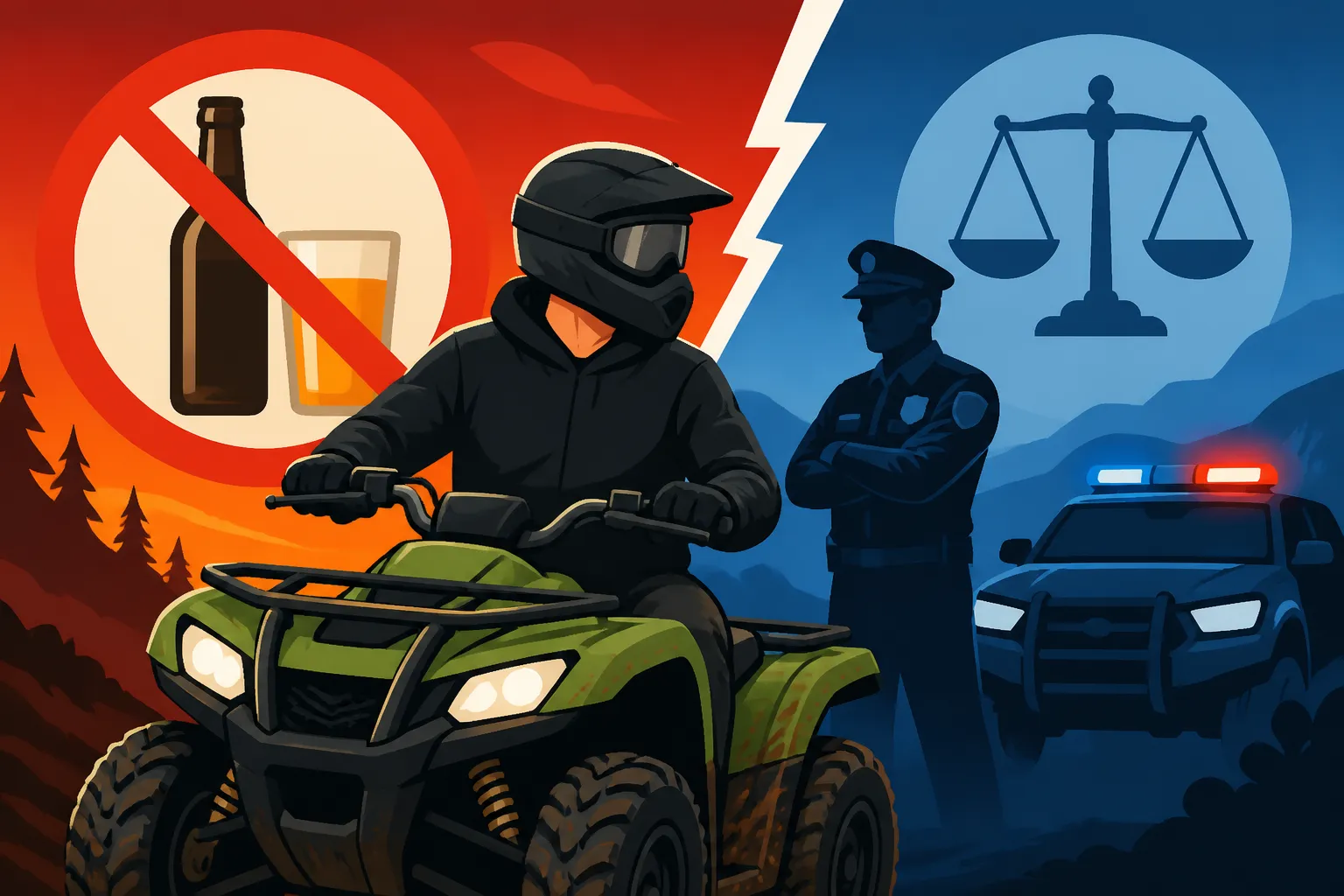
Maine OUI on an ATV: What Happens
Getting behind the controls of an ATV or UTV in Maine is an exhilarating experience, offering unparalleled access to our state's incredible wilderness. But it's also a serious responsibility that many riders, unfortunately, underestimate when alcohol or other substances enter the picture. The assumption that "it's just an ATV" and therefore the rules are different or less severe than driving a car can lead to a rude awakening and devastating consequences. This guide is here to shed light on what exactly happens when you're charged with an OUI on an ATV in Maine, dispelling common myths and outlining the harsh realities, from immediate trailside interactions to long-term impacts on your driving privileges and personal life.
Understanding Maine's OUI Laws and ATVs
It's a common misconception that Maine's OUI (Operating Under the Influence) laws are somehow softer or different when it comes to off-road vehicles like ATVs and UTVs. Many riders assume that because they're not on a public highway in a car, the rules don't apply, or the penalties won't be as severe. This couldn't be further from the truth.
The Legal Framework: Why an ATV OUI is Treated Like a Car OUI
In Maine, an ATV is legally defined as a "motorized recreational vehicle" and its operation falls under the same general OUI statutes that govern cars, trucks, and other motor vehicles. This means that whether you're driving your pickup truck down Route 1 or operating your quad on a remote logging road, the legal standard for impairment is the same, and the potential penalties are equally, if not more, impactful. The state's primary concern is public safety, and an impaired operator, regardless of the vehicle type, poses a significant risk to themselves, their passengers, and anyone else on the trails or adjacent areas.
Think of it this way: the raw power, speed, and maneuverability of a modern ATV or side-by-side demand a high level of focus and quick reflexes. These machines, especially if they've been enhanced with performance parts like those from SuperATV, can accelerate rapidly and tackle challenging terrain. When your judgment, coordination, and reaction time are compromised by alcohol or drugs, the risk of a serious accident skyrockets. The law doesn't differentiate between the potential for harm caused by a drunk driver in a car versus a drunk operator on an ATV; both are considered equally dangerous. It's not about the type of tires on the ground; it's about the state of mind of the person at the controls. [Maine ATV Safety Course Requirements] emphasize responsible operation precisely for these reasons.
Defining "Operating Under the Influence" in Maine
Maine's OUI law is comprehensive and covers impairment from alcohol, illicit drugs, prescribed medications that impair ability, or any combination thereof. The key here is "impairment," meaning your mental or physical faculties are compromised to a degree that you cannot safely operate the vehicle.
For alcohol, the legal limit for blood alcohol content (BAC) for operators 21 years of age or older is 0.08%. If your BAC is at or above this level, you are presumed to be operating under the influence, even if you feel perfectly fine. For operators under 21, Maine has a zero-tolerance policy, meaning any detectable amount of alcohol (a BAC of 0.00% or higher) can result in an OUI charge. But it's crucial to understand that even if your BAC is below 0.08%, you can still be charged with an OUI if a law enforcement officer observes signs of impairment, such as erratic driving, slurred speech, poor coordination, or inability to perform field sobriety tests. Drugs, whether legal (like certain prescription medications) or illegal, also fall under this umbrella. If a drug impairs your ability to operate your ATV safely, you can be charged. This includes marijuana, even though it's legal for recreational use in Maine; operating an ATV while impaired by cannabis is still an OUI offense. The core principle is simple: if you're not fully capable of safely handling your machine, you're breaking the law.
The Immediate Consequences of an ATV OUI Stop in Maine
An ATV OUI stop in Maine isn't like getting a simple speeding ticket. It's a serious legal encounter that can quickly escalate, leading to immediate detention and the loss of your vehicle. Many riders are caught off guard by the severity of these initial interactions.
The Warden Service Encounter: What to Expect
Maine's Warden Service is highly visible and active on the state's extensive trail networks and public lands. They are specifically trained and authorized to enforce all state laws, including OUI laws, whether you're on a designated trail, a logging road, or even a private woods road where public access is granted. If a warden suspects you are operating your ATV under the influence, they will pull you over. This interaction will typically begin with questioning about your activities, where you've been, and where you're going. They'll be observing for any signs of impairment, such as the odor of alcohol, slurred speech, bloodshot eyes, or fumbling for your paperwork like your [Maine ATV registration].
Should their suspicions deepen, the warden will likely ask you to perform field sobriety tests (FSTs). These tests, like walking a straight line or standing on one leg, are designed to assess your coordination, balance, and ability to follow instructions – all of which are impaired by alcohol or drugs. While you generally have the right to refuse FSTs, this refusal can sometimes be used as evidence against you in court. More significantly, Maine has "implied consent" laws. This means that by choosing to operate a motor vehicle (including an ATV) in the state, you implicitly consent to chemical testing (breath, blood, or urine) if a law enforcement officer has probable cause to suspect OUI. Refusing a chemical test after arrest carries its own set of administrative penalties, including an automatic suspension of your driver's license, separate from any OUI conviction penalties. This can be a major point of contention and frustration for many, but the law is clear on this front. [Maine Warden Checks and What They Ask] is a common concern among riders, and OUI is always a top priority for them.
Arrest, Detention, and Vehicle Impoundment
If the warden determines there's probable cause for OUI based on their observations and your performance on FSTs (or refusal to take a chemical test), you will be arrested. This means handcuffs, a ride in a patrol vehicle, and a trip to the nearest law enforcement facility for booking. At the station, you'll be processed, which includes fingerprinting, photographs, and the formal administration of a chemical test (typically a breath test on an Intoxilyzer machine).
One of the most immediate and inconvenient consequences is what happens to your ATV. Your machine will be impounded. This means it will be towed away, often at your expense, and stored at a secure location. Recovering your ATV can be a logistical and financial nightmare. You'll be responsible for towing fees, daily storage fees, and potentially other administrative charges. Depending on the location of the stop—say, deep in the Katahdin region trails or remote Aroostook County—arranging for a tow can be incredibly difficult and expensive. Furthermore, if your ATV is equipped with specialized accessories, like heavy-duty winches or suspension kits from SuperATV, ensuring it's towed properly without damage adds another layer of stress. You won't be able to simply walk back to your machine and retrieve it later; it will be held until you can legally claim it, which often means after your OUI case has been addressed and you've paid the associated impoundment costs.
| Offense Type | Minimum Fine (Estimated) | Minimum Jail Time (Estimated) | Driver's License Suspension (Minimum) | ATV Registration Suspension |
|---|---|---|---|---|
| 1st OUI | Several Hundred Dollars | 48 Hours | 150 Days | 150 Days |
| 2nd OUI | Over One Thousand Dollars | 7 Days | 3 Years | 3 Years |
| 3rd OUI | Over Two Thousand Dollars | 30 Days | 6 Years | 6 Years |
| Refusal to Test | Additional Fines & Suspensions, Separate from OUI Conviction | N/A | Additional 275 Days (1st Refusal) | Additional 275 Days (1st Refusal) |
Note: These figures are general estimates. Actual fines, jail time, and suspension periods can vary based on specific circumstances, prior convictions, and legal changes. Always consult with a legal professional for precise and current information.
Long-Term Penalties and Repercussions
The immediate aftermath of an ATV OUI stop is just the beginning. The long-term penalties can be severe and far-reaching, impacting not only your ability to ride an ATV but also your everyday life, driving privileges, and financial stability.
Fines, Jail Time, and License Suspensions
Maine law imposes strict penalties for OUI convictions, and these apply directly to ATV OUI cases. For a first offense, you can expect significant fines, which can quickly add up to hundreds or even over a thousand dollars when court costs and surcharges are included. There's also a mandatory minimum jail sentence, typically 48 hours for a first offense, which can increase if aggravating factors like excessive speed, a high BAC, or an accident causing injury were involved. However, one of the most impactful penalties is the mandatory suspension of your motor vehicle driver's license. Yes, that's right – even if you were operating an ATV and not your car, a Maine OUI conviction will result in the suspension of your privilege to drive any motor vehicle, including your car, for a minimum of 150 days for a first offense. This is a crucial point that many ATV riders fail to grasp, often leading to severe disruption in their daily lives. Additionally, your [Maine ATV registration] will also be suspended for the same period.
Subsequent OUI convictions carry increasingly harsh penalties. A second OUI offense within ten years can result in higher fines (well over a thousand dollars), a mandatory minimum of seven days in jail, and a three-year suspension of your driver's license and ATV registration. A third offense within ten years pushes the minimum jail time to 30 days and a six-year license and registration suspension. Beyond these criminal penalties, you'll also likely be required to complete an OUI education program, often at your own expense, and may have to use an ignition interlock device on your car once your license is reinstated. These penalties are designed to be deterrents, reflecting the state's serious stance on impaired operation.
Collateral Damage: Insurance, Employment, and Reputation
Beyond the direct legal penalties, an ATV OUI conviction creates a ripple effect throughout your life. One of the most immediate financial hits comes from your insurance. An OUI conviction on your record will almost certainly cause your auto insurance premiums to skyrocket, potentially for several years. Many insurance companies will classify you as a high-risk driver, making it difficult and expensive to obtain coverage. Some may even cancel your policy outright, forcing you to seek out specialized, high-cost insurance. Similarly, your [Maine ATV insurance] might become more expensive or difficult to secure.
The impact on your employment can be equally devastating. If your job requires you to drive a company vehicle, hold a commercial driver's license, or simply commute by car, a license suspension can mean losing your livelihood. Even if driving isn't a direct part of your job, many employers conduct background checks, and an OUI conviction can be a significant red flag, hindering future job prospects or career advancement. The stigma associated with an OUI can also affect your personal reputation, both within your community and among your fellow ATV riders. Maine's tight-knit ATV community values responsible riding, and an OUI conviction can lead to a loss of respect and trust. Furthermore, having a criminal record can impact other areas of your life, such as housing applications, credit opportunities, and even international travel.
Avoiding an ATV OUI and Staying Safe on Maine Trails
The best way to deal with an ATV OUI is to avoid it entirely. Responsible planning and a clear understanding of the risks involved are your best defenses against facing these serious consequences.
Responsible Choices: Planning Ahead
Operating an ATV responsibly starts long before you ever turn the key. If you plan on consuming alcohol or any impairing substance, even legally, you must make arrangements beforehand to ensure you absolutely do not operate your ATV. This means having a designated sober operator or planning alternative transportation. If you're out camping or at a remote camp with friends, ensure there's a clear understanding that once alcohol is consumed, the keys to the ATV are put away until everyone is sober. It's often easier to make these rules clear at the beginning of an outing than to try and enforce them in the middle of a good time.
Consider non-alcoholic alternatives for trailside gatherings. Many riders enjoy the camaraderie of a group ride and a meal or snack break, which doesn't have to involve alcohol. Staying hydrated with water, juice, or non-alcoholic beverages is a much safer choice, especially when you're out in the elements and performing physically demanding activities like riding an ATV. Planning your route, knowing your limits, and prioritizing safety are paramount. Remember that [Maine's 500-Yard Limit on a Public Way] and other specific [Maine ATV Road Rules for Young Riders] are strict, and impairment makes following any rules much harder.
Understanding the Risks: It's Not "Just an ATV"
It's critical to banish the thought that an ATV is "just a toy" or somehow less serious than a car. These are powerful, heavy machines capable of high speeds and complex maneuvers over varied and often unpredictable terrain. Whether you're navigating rocky sections, crossing water, or cruising along a smooth trail, operating an ATV demands your full attention, sharp reflexes, and sound judgment. Even a slight impairment can drastically reduce your ability to react to sudden obstacles, maintain control, or judge distances. The risk of serious injury or even fatality is significantly higher when operating under the influence, not just for you but for any passengers you might be carrying.
Beyond the physical risks, there's the legal reality that Maine treats an ATV OUI with the same gravity as a car OUI. The fines, jail time, and the complete loss of your driver's license (for all vehicles, not just your ATV) are not minor inconveniences; they are life-altering consequences. Maintaining your ATV with quality parts, perhaps even robust upgrades from SuperATV, ensures your machine is mechanically sound. But even the best-equipped and most well-maintained ATV is only as safe as its operator. The best "upgrade" you can give your ATV is a sober, attentive rider. Prioritizing safety and responsible choices will keep you and others safe on Maine's beautiful trails for years to come.
Disclaimer
This article is for general informational purposes only and does not constitute professional advice. Laws, prices and regulations vary by location and change over time. Consult a qualified professional for guidance on your specific situation.