Maine ATV Rules on State Route Shoulders
Many ATV and UTV enthusiasts in Maine grapple with the often confusing and strict regulations around riding on public roads, especially state route shoulders. It’s a common frustration when you're just trying to connect two trail sections or access a local gas station, only to realize the rules aren't as simple as they might seem. Navigating these public ways safely and legally is paramount, not just for avoiding hefty fines but for everyone's safety. This guide will meticulously break down the specific rules and limitations regarding ATV and UTV use on state route shoulders in Maine, helping you understand the nuances and ride responsibly.
The Strict Reality of State Route Shoulder Riding in Maine
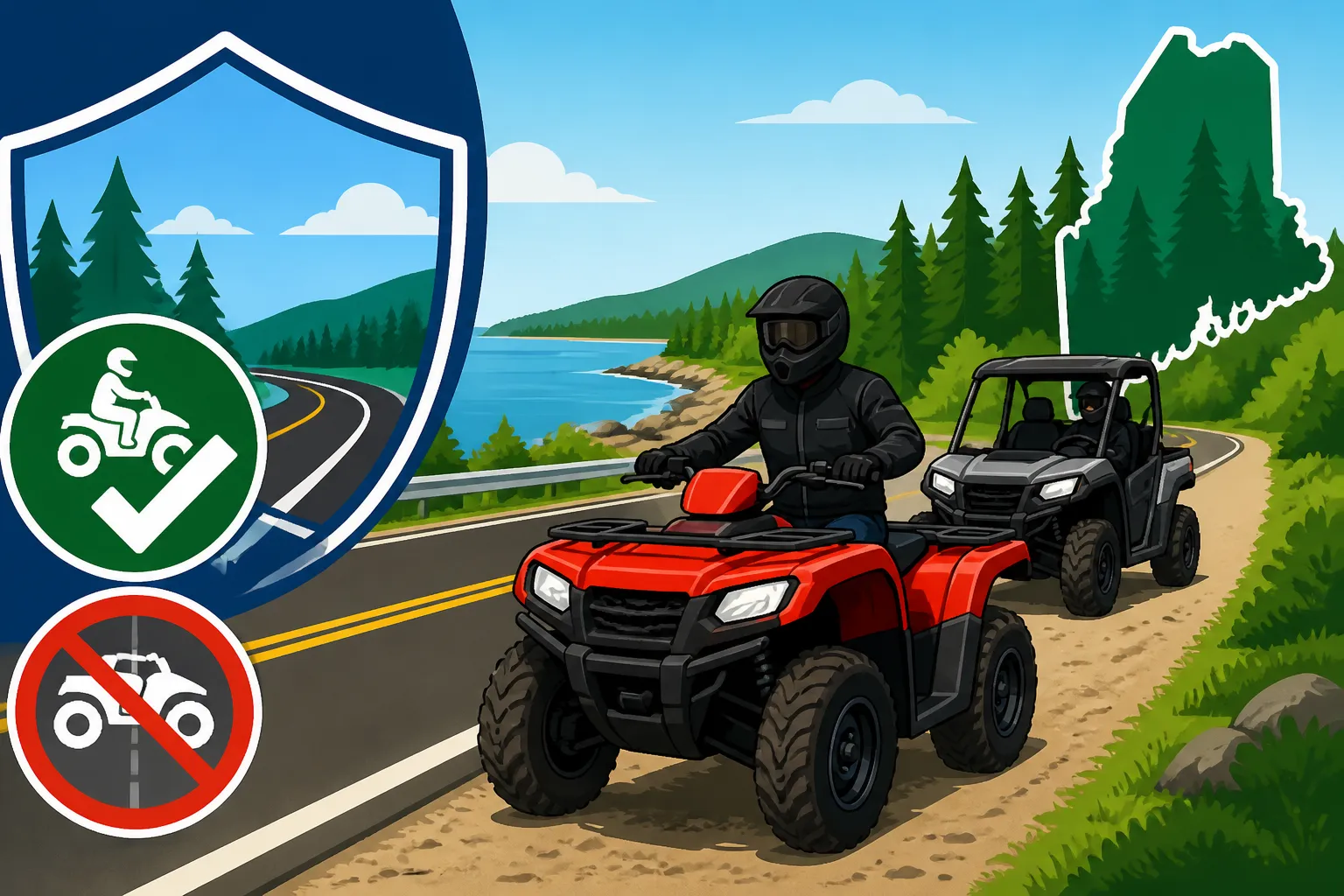
Let's get right to it: the idea of cruising down the shoulder of a state route on your ATV or UTV in Maine is, with very few and specific exceptions, generally not allowed. I know, it's tempting to think that "shoulder" means "off the main road, so it's probably fine," but that's a common misconception that can land you in hot water with a Maine Warden. The state's laws are designed to keep these powerful machines off high-speed roadways where they can pose a significant danger to themselves and other motorists.
Why State Route Shoulders Are Generally Off-Limits
The primary reason state route shoulders are largely off-limits to ATVs and UTVs boils down to safety and the inherent differences between these machines and street-legal vehicles. ATVs and UTVs, while incredibly capable off-road, typically aren't designed for sustained high-speed travel, don't always have the same visibility features as cars, and their operators aren't often accustomed to the flow of highway traffic. Imagine trying to navigate a narrow shoulder with a big rig thundering past you at 65 mph – it's just not a safe scenario for anyone involved.
Furthermore, these shoulders are considered part of the "public way" under Maine law, even if they're not the paved driving lane. Unlike some states that might have more permissive rules, Maine has adopted a more cautious approach to integrate ATVs and UTVs into its road network, focusing instead on designated routes and specific crossing protocols. This protects both riders and the motoring public from potential collisions or hazards.
The Distinction Between State Routes and Local Town Roads
It’s crucial to understand that not all "roads" are created equal in Maine, especially when it comes to ATV and UTV access. What might be perfectly legal on a quiet dirt town road could be a major violation on a paved state route. Town roads, particularly those in rural areas, often have specific local ordinances or designated access routes that permit ATV and UTV travel. You might see signs explicitly stating "ATV Access Permitted" or "Shared Use."
State routes, on the other hand, are typically higher-traffic roads maintained by the Maine Department of Transportation (MaineDOT) and are subject to stricter statewide regulations. They're built for cars, trucks, and other highway-legal vehicles. The legal framework treats them differently because of their higher speed limits, greater traffic volumes, and generally less forgiving environments for off-highway vehicles. Confusing the two can lead to significant problems. Always assume a state route is off-limits unless you see very clear, specific signage indicating otherwise for a very limited purpose.
What Constitutes a "State Route" in Maine?
So, how do you know if you're on a "state route" versus a "town road"? Generally, state routes are identified by route numbers (e.g., Route 1, Route 2, Route 9, Route 201, Route 15) and are often paved, though some sections in more rural areas might be gravel. You'll usually see distinct green or brown highway signs indicating the route number. These roads connect towns, traverse longer distances, and are part of the broader state highway system.
Local town roads are typically maintained by the municipality itself. They might be paved, gravel, or even dirt, and often don't have the same clear route numbering system. When in doubt, especially if you're exploring an unfamiliar area, it's always best to consult a detailed map or local ATV club resources which often highlight designated ATV trails and legal road crossings. A good rule of thumb: if it looks like a major artery or has a state route number, be very wary of riding on its shoulder.
Understanding Maine's Limited Exceptions for ATV Road Use
While general riding on state route shoulders is a big no-no, Maine law does provide a few very specific and limited circumstances where ATVs and UTVs can interact with public ways, including state routes. These aren't broad permissions to cruise down the shoulder but rather precise allowances for specific maneuvers. It's really important to understand the exact letter of the law here, because misunderstanding can lead to tickets and fines.
The "500-Yard Rule" and Its Specific Application
Perhaps the most commonly misunderstood rule is Maine's "500-yard limit on a public way." This rule allows a registered ATV or UTV to operate on the extreme right of a public way for a maximum distance of 500 yards for the sole purpose of gaining access to a trail or another legal riding area. It's not for cruising to the store, connecting long trail segments, or just going for a joyride down the shoulder. It's a very short, temporary allowance.
Crucially, this 500-yard rule generally applies to municipal ways where not otherwise prohibited, and its application to state routes is even more restrictive. On a state route, you typically only get this 500-yard allowance if the town or municipality has explicitly designated that section of the state route for ATV access, usually through an ordinance and proper signage. Without that explicit designation by the local authority, that 500-yard allowance on a state route shoulder is likely still illegal. [Maine's 500-Yard Limit on a Public Way] can give you even more context on this often-confusing regulation. Always look for signage, and if there's no sign, assume it's prohibited.
Legally Crossing a State Route on Your ATV
Crossing a state route is another situation where your ATV or UTV can briefly be on the public way, but it comes with a strict set of rules. You can't just zip across whenever you feel like it. Maine law requires you to:
- Come to a complete stop: This isn't just a rolling stop; it's a full, absolute halt before entering the paved portion of the road.
- Yield to all traffic: Just like a car at a stop sign, you must ensure the way is clear in both directions before proceeding.
- Cross at a right angle: Don't try to cross diagonally or follow the road for a short distance before completing your crossing. Go straight across, perpendicular to the road, using the shortest possible distance.
- Do not impede traffic: Your crossing should be quick and efficient, not causing other vehicles to slow down or swerve.
These rules are in place for your safety and the safety of motorists. State route crossings can be especially dangerous due to higher speeds and traffic volume. Always be extra vigilant, look twice, and if you're unsure, find a safer, designated crossing point, or reconsider your route. [Maine's Stop-and-Yield Rule Before a Public Way] provides more detail on these essential safety steps.
When a Town or Municipality Designates an ATV-Access Route
The best and most reliable way to legally use any part of a public way, including a state route shoulder, is when a local town or municipality has officially designated it as an "ATV-Access Route." These routes are approved by local ordinance and are typically marked with clear signage. These signs explicitly indicate that ATVs and UTVs are permitted on that specific section of the road or shoulder, and they usually outline any specific rules that apply, such as speed limits or hours of operation.
Without these specific signs, even if you see tracks, you should not assume it's a legal route. Towns go through a process to approve and mark these routes, and they often involve collaboration with local ATV clubs. [Maine ATV-Access Routes and How Towns Post Them] delves deeper into how these crucial routes are established and identified. If you're relying on a state route shoulder to get somewhere, make sure it’s part of a clearly marked access route. This is where quality aftermarket accessories, like bright LED lights from a company like SuperATV, can really enhance your visibility on any designated access route, helping you be seen by other traffic.
Navigating Designated ATV-Access Routes and Crossings
When a town has done the hard work of creating a legal ATV-access route, it's a huge benefit for riders. However, even on these designated routes, there are still important protocols to follow to ensure safety and maintain good relations with landowners and the public. These aren't free-for-all zones, but rather shared spaces with specific rules.
Identifying Legally Marked ATV-Access Routes
Identifying a legally marked ATV-access route is paramount to staying on the right side of the law. These routes are usually marked by distinct signs, often green and white or brown and white, clearly stating "ATV Access" or "Shared Use with ATVs." They'll typically have an arrow indicating the direction of travel or where the access begins and ends. You won't see these signs just anywhere; they'll be strategically placed at the beginning and end of the designated sections, and often at critical turns or intersections.
It's important to remember that these signs don't suddenly make the entire state route open to ATVs. They are specific to the designated segment only. Relying on unofficial maps, word-of-mouth, or simply seeing other tracks can be misleading and lead to trespassing or illegal operation. Always consult official ATV Maine club maps, the Bureau of Parks and Lands website, or local town offices for the most up-to-date and accurate information on where these routes are. Using a robust GPS system, perhaps enhanced with a protective case for rugged terrain, can also help ensure you stay on these legal paths.
Crossing Procedures: Stopping, Yielding, and Angles
We talked about crossing rules earlier, but let's reinforce them because they are so critical, especially on state routes. When you encounter a state route that you need to cross to get to another trail segment, think of it as a mandatory driving test.
- Stop: A complete, dead stop. Every time. No exceptions.
- Look and Listen: Actively scan for oncoming traffic from both directions. Don't assume anything. Remember, cars are moving much faster than you are.
- Yield: You must yield to all vehicular traffic on the public way. You only proceed when it is completely safe and clear to do so, and you won't cause any motorist to brake or swerve.
- Cross at a Right Angle: Go straight across. Do not ride along the road for any distance. The goal is to minimize your time on the paved surface.
- Be Quick but Controlled: Accelerate smoothly to get across efficiently, but maintain full control of your machine.
These steps are not suggestions; they are legal requirements designed to prevent serious accidents. [Crossing a Maine Highway on an ATV] highlights the extreme importance of these rules for your safety.
Riding the "Extreme Right" on Approved Sections
If you are on a designated ATV-access route that allows you on a state route shoulder (typically for a short distance under the 500-yard rule within a municipal ordinance), the law requires you to ride on the "extreme right" of the public way. This means as far to the right as safely possible, off the paved travel lane, often directly on the gravel or dirt shoulder. You are essentially trying to be as invisible and out of the way of vehicular traffic as you can be.
This is not a suggestion for where to ride; it's a requirement. You're not meant to hog any part of the active traffic lane. Maintaining a safe distance from passing vehicles is key. This is where visibility enhancements can be a lifesaver. Reflective tape, bright flags, or even an aftermarket horn from a brand like SuperATV can help make your presence known to motorists, even when you're keeping to the far right. Always be aware of your surroundings and expect that drivers in cars may not see you immediately, especially on roads not commonly used by ATVs.
Consequences and Safe Practices for ATV/UTV Operators
Ignoring Maine's strict rules regarding ATV and UTV use on state route shoulders and other public ways can lead to significant repercussions, ranging from financial penalties to the loss of riding privileges. Beyond the legal ramifications, there's the very real danger of an accident. Being prepared and informed is your best defense.
Penalties for Illegally Riding on State Route Shoulders
The penalties for illegally riding an ATV or UTV on a state route shoulder or other prohibited public way in Maine are not trivial. A Maine Warden stopping you for this offense will likely issue a summons, and the fines can be substantial. These aren't just minor infractions; they're taken seriously by law enforcement because of the potential safety hazards involved.
For example, riding an unregistered ATV on any public way can lead to fines, but even with a registered machine, simply operating where prohibited is a violation. [Fine for an Unregistered ATV in Maine] gives you a sense of the financial penalties. Repeated offenses or operating in a reckless manner could lead to even harsher penalties, potentially including impoundment of your machine or suspension of your right to operate. It’s simply not worth the risk. Always verify the legality of your route beforehand.
Best Practices for Connecting Trails Safely
Since direct shoulder riding on state routes is so restricted, connecting trails safely often involves alternative strategies:
- Consult Trail Maps: Use up-to-date maps from ATV Maine, local clubs, or mapping apps like onX Offroad to find designated road crossings, ATV access routes, and alternative routes that avoid state highways entirely. Many clubs work tirelessly to secure landowner permission for trails that bypass road sections. [Maine ATV Trail Maps and Club Boundaries] are invaluable resources.
- Utilize Local Town Roads: Many towns have ordinances allowing ATV/UTV use on certain town roads. These are often the best options for short connections, provided you adhere to local rules and speed limits. Always look for signage. [Riding an ATV on the Road in Maine] provides broader context for road use.
- Trailer Your Machine: For longer distances between legal riding areas that involve state routes, the safest and most legal option is almost always to trailer your ATV or UTV. This eliminates any risk of violating road-use laws and ensures you arrive at your next trailhead ready to ride legally.
- Plan Ahead: Never assume. Always plan your route in advance, identifying all legal crossings and access points. A quick check of a map or a call to a local club can save you a lot of trouble.
Equipping Your Machine for Road Interactions
Even when you're only on a public way for a very short, legal crossing or a designated access route, your machine should be equipped for maximum visibility and safety. While Maine doesn't require a full "street legal" conversion for typical ATV trail use, certain features become critical when interacting with traffic:
- Lighting: Bright headlights and taillights are essential, especially when crossing roads. Consider adding extra LED light bars or auxiliary lights, perhaps from a reputable brand like SuperATV, for enhanced visibility to other motorists, day or night. [Maine Lighting Requirements for Night Riding] covers the legal minimums.
- Mirrors: While not always strictly required for off-road use, adding side mirrors can significantly improve your awareness of approaching traffic during crossings or when riding on designated access routes.
- Horn: A working horn allows you to signal your presence if needed, though relying on it should be a last resort.
- Helmet and Eye Protection: Always wear an approved helmet and eye protection. This isn't just for trail riding; it's a critical safety measure if you're ever involved in an incident on or near a public way. [Maine Helmet Rules for Riders Under 18] outlines specific age requirements, but good practice dictates everyone wears one.
- Registration and Insurance: Ensure your machine is properly registered and that you understand your insurance coverage. While insurance isn't always mandated for trail riding, it becomes crucial when interacting with public roads and potential liability.
By understanding these regulations and adopting safe practices, you can enjoy Maine's incredible ATV and UTV trail network while staying legal and protecting yourself and others.
Disclaimer
This article is for general informational purposes only and does not constitute professional advice. Laws, prices and regulations vary by location and change over time. Consult a qualified professional for guidance on your specific situation.