ATV Parking at a Trailhead Store
There’s nothing quite like rolling off the trail in Maine, engine still warm, and seeing the welcoming sight of a small country store or a gas station. You’re ready for a cold drink, a bag of chips, or maybe some forgotten bug spray. But then the familiar anxiety creeps in: where on earth do I park this thing? Maneuvering an ATV, let alone a UTV with a long trailer, into a cramped parking lot can feel like a high-stakes game of Tetris. This guide is here to help you navigate the ins and outs of parking your ATV or UTV at those essential trailhead stores in Maine, ensuring your pit stops are as stress-free as your ride.
The Convenience and Challenge of Trailhead Store Access
We’ve all been there: miles into a fantastic ride, and suddenly the craving for a cold soda hits, or you realize you forgot those extra gloves. Trailhead stores are a lifeline, offering everything from snacks to emergency fuel, but pulling up to one can sometimes be more of an adventure than the trail itself.
Why You Want to Park at a Trailhead Store
These local businesses are often the heart of the ATV community in many Maine towns. They’re not just places to grab a quick snack; they're hubs of local knowledge, sometimes offering the best real-time updates on [Maine ATV Trail Conditions] or local regulations. Picture this: you've been riding the expansive trails near Jackman, your stomach growling, and you spot a general store. Inside, you can find a hot coffee, a sandwich, or even a spare spark plug if you're lucky. Many even have maps or friendly staff who can give you pointers on nearby routes, like riding to [Pittston Farm by ATV]. They represent a crucial comfort stop, a chance to refuel (both yourself and your machine), and often, a much-needed restroom break. Being able to access these spots directly from the trail without having to de-gear and drive your truck can be a huge time-saver and makes for a more immersive riding experience.
The Reality of Limited Parking
While the idea of rolling right up to the store sounds great, the reality on a busy summer weekend or during peak foliage season can be quite different. Many of these small-town stores were built long before ATVs and UTVs became popular, meaning their parking lots were designed for a handful of cars, not multiple trucks with trailers or even a line of side-by-sides. You might find yourself circling the lot, trying to figure out how to squeeze your machine in without blocking traffic or taking up five car spots. It’s a common frustration that can quickly turn a pleasant pit stop into a headache. We've heard countless stories of riders almost giving up on a snack run because they just couldn't find a sensible place to park, especially if they're trying to meet friends who are arriving by truck and trailer. The tight corners and limited visibility can make maneuvering a larger UTV feel like threading a needle, leading to unnecessary stress on what should be a relaxing day.
Understanding Store-Specific Rules
One of the biggest hurdles is that there's no universal "ATV parking law" for private businesses. Each trailhead store might have its own unwritten rules or, if you're lucky, clearly posted signs. Some establishments actively welcome ATV traffic and even have designated spots, while others might view large groups of machines as a nuisance or a parking challenge. It's not uncommon to pull into a lot and see a sign specifically asking ATVs to park in a certain area, or even prohibiting them entirely if the lot is truly too small or frequently congested. Before you even think about swinging in, a quick glance for signage is always a good idea. If you don't see anything, a friendly wave to an employee or asking another rider is your best bet. Ignoring these unwritten rules can lead to blocked driveways, annoyed locals, or even a store owner asking you to move, which is the last thing you want in the middle of a ride.
Navigating Parking Options for Your ATV or UTV
Once you've decided to make that quick stop, the actual act of parking requires a bit of strategy. It’s rarely as simple as pulling into a grocery store spot.
Dedicated ATV/UTV Parking Areas
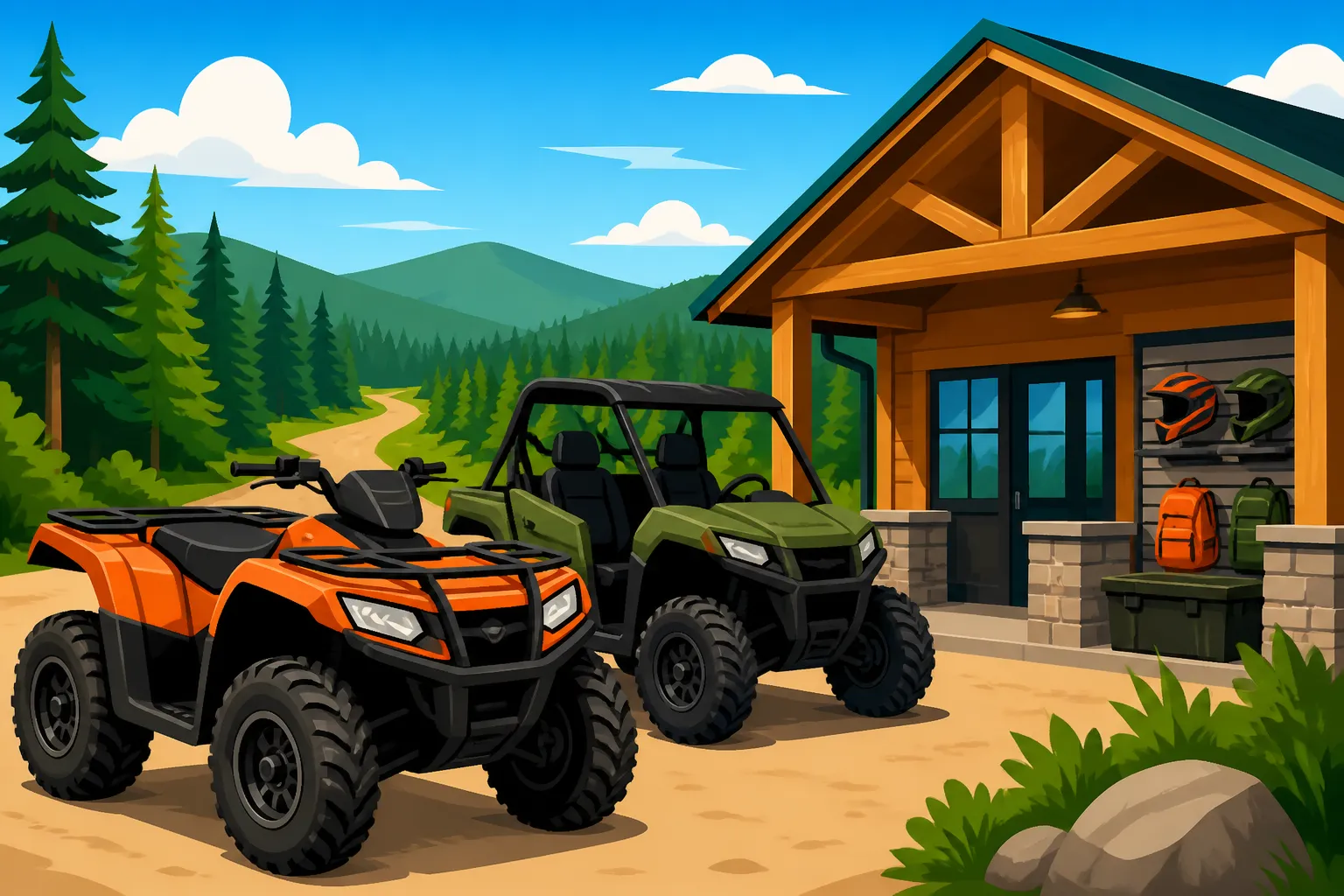
The absolute best-case scenario is when a trailhead store has thoughtfully provided dedicated parking for off-road vehicles. These spots are usually larger, sometimes on a separate gravel area, or clearly marked with signs indicating "ATV/UTV Parking Only." You might find them off to the side of the main parking lot, behind the building, or even on a grassy area near the trail access point. These are a godsend because they're designed with the size and maneuverability of your machine in mind.
For example, a store along a popular route, like those near the [Moosehead Lake Region by ATV], might have a large, open gravel lot perfect for a dozen machines. These dedicated areas not only make parking easier but also often ensure you're not interfering with regular car traffic or delivery trucks. Look for painted lines, rope barriers, or even simple signs indicating these zones. If you see one, congratulations! That's your golden ticket for a hassle-free stop. Often, these spots are placed strategically to allow you to ride directly off the trail and into the parking area, minimizing the need to travel on a public way, which has its own set of [Maine ATV Road Rules for Young Riders] and adults.
Trailer Parking Considerations
This is where things get really tricky, especially for those venturing out with a truck and a sizable ATV trailer. If you're planning to unhitch and park, you're now dealing with two vehicles that need space. Most trailhead stores simply don't have the room for multiple truck-and-trailer setups.
Your options often boil down to:
- Finding a separate lot: Some towns have public "park and ride" lots or designated [Maine ATV Trail Parking and Staging] areas that can accommodate trailers. You might have to park your truck and trailer there, unload your ATV, and then ride the short distance to the store. This is often the most sensible approach if you plan to stage for a longer ride anyway.
- Strategic street parking (where allowed): In some very small towns, you might be able to park your truck and trailer safely along a wide shoulder or a quiet side street. However, you absolutely must check for local ordinances or "no parking" signs. You don't want to come back to a ticket or, worse, a towed vehicle. Always be mindful of traffic flow and never block residential driveways.
- Creative maneuvering: If you’re just dropping by quickly with an ATV on a trailer, sometimes you can find a spot that lets you pull through or allows for easy backing out without unhitching. This usually means picking off-peak times or getting very lucky.
Remember, the goal is not just to find a spot, but to be able to leave safely and easily. A quick stop at a store in the [Katahdin Region Trails] might mean you need to scope out a spot that lets you pull forward rather than needing a complex reverse maneuver with a trailer.
Overflow and Nearby Options
When the main trailhead store lot is completely full, it's time to get creative and resourceful. This is where local knowledge or a good trail map comes in handy.
- Town Lots: Many small towns that embrace ATV tourism have dedicated public parking lots, sometimes near the town office or a park. These are often designed for larger vehicles and trailers. You might have to ride your ATV a short distance on a permitted [Maine ATV-Access Routes and How Towns Post Them] to get to the store, but it’s a much better alternative than causing a jam.
- Club Parking: Local ATV clubs, like the [Star City ATV Club and Its 63 Miles], often maintain their own staging areas or parking lots. While primarily for members, some are open to the public, especially if you're just making a quick stop. These are usually well-maintained and designed for ATV traffic.
- Asking Nearby Businesses: If you're truly stuck, and there's a neighboring business (like a diner or a small garage) with ample space, it doesn't hurt to politely ask if you could park your ATV there for 10-15 minutes. A quick explanation and a promise to be brief usually works wonders. Just never assume; always ask first.
- Park and Ride/Staging Areas: For longer stops or if you're planning an all-day ride that begins and ends at the store, consider using a formal staging area a bit further down the trail. Many of these are specifically designed for [Trailhead Parking That Fits a Trailer] and offer ample space. You can then ride in a group or individually to the store.
The "Park and Ride" Concept for Longer Stays
For those planning an extended ride or staying for lunch, simply pulling into a store's cramped parking lot for an hour or more isn't practical or courteous. This is where the "park and ride" strategy comes into its own. Many trail systems, particularly in popular areas like Aroostook County or the [Moosehead Lake Region by ATV], have designated staging areas specifically for trucks and trailers. You'd park your tow rig there, unload your ATV or UTV, and then ride to your chosen trailhead store.
This approach offers several advantages:
- Ample Space: These staging areas are typically large gravel lots, often managed by the town or a local ATV club, designed to accommodate multiple trucks and trailers without hassle.
- Reduced Congestion: By using these dedicated lots, you're keeping the smaller store parking lots free for quick-stop customers, which helps everyone.
- Security: While no parking is completely secure, these larger, often more visible staging areas can sometimes offer a perceived increase in security over a hidden corner of a busy store lot. Plus, it frees you up to fully enjoy your meal or shop without worrying about blocking someone in.
- Organized Group Rides: If you're riding with a group, a park and ride is the ideal meeting point. Everyone can offload their machines, get geared up, and then ride together to their first stop, whether it's [Riding to a Gas Station] or [Riding to Dinner on an ATV Route].
Remember, many of these "park and ride" locations are just a short, designated ride from various points of interest, including town centers and popular trailside establishments. They're an integral part of Maine's extensive [Maine's 6,000 Miles of ATV Trails].
Etiquette and Safety When Parking at a Trailhead Store
Parking your ATV or UTV at a local store isn't just about finding a spot; it's about being a good neighbor and ensuring your machine is safe.
Respecting the Store and Other Patrons
This cannot be stressed enough: courtesy goes a long way. When you're pulling into a small business parking lot, remember that it's their livelihood, and they're often trying to serve a mix of customers.
- Don't block the entrance or exit: This seems obvious, but it's easy to misjudge the swing of a UTV. Ensure delivery trucks can still get in and out, and that cars aren't struggling to leave.
- Avoid blocking fire lanes or emergency access: These are non-negotiable.
- Be mindful of pedestrian traffic: Trailhead stores are often bustling. Watch for children, older folks, and people not expecting a large off-road vehicle to be maneuvering nearby.
- Keep noise down: Idling engines, loud exhaust (especially aftermarket systems), and shouting conversations can be disruptive to other patrons and nearby residents. A quick stop should be just that – quick and quiet.
- Don't litter: Always pack out what you pack in. Leaving trash behind reflects poorly on all ATV riders and can lead to stores being less welcoming in the future.
- Buy something: Even if it’s just a bottle of water, make a purchase. These businesses rely on rider traffic, and it’s a small way to say "thank you" for their hospitality and for providing a convenient stop along the trail. This positive interaction helps maintain those vital [Landowner Relations on Maine ATV Trails] that keep so many routes open.
Security for Your Machine
While Maine is generally a safe place, it's always wise to take precautions when leaving your ATV or UTV unattended, even for a short time.
- Lock it up: If your machine has a steering lock or ignition key, use it. A simple cable lock around a wheel or frame, secured to an immovable object (if possible), can deter opportunistic theft.
- Remove valuables: Take your phone, wallet, GPS, and anything else small and expensive with you. Even an unlocked helmet can be a target.
- Consider aftermarket security: Products like robust cargo boxes or secure tie-down systems from brands like SuperATV can offer an added layer of security for your gear, making it harder for someone to quickly grab items from your machine. While no system is foolproof, making it difficult can often be enough to make a thief move on to an easier target.
- Park smart: Try to park in a well-lit, visible area, ideally where store cameras might be present. Avoid parking in secluded corners if you can.
- Quick Scan: Before you walk away, just take a moment to look around. Are there any suspicious individuals? Does your machine look secure? It's a quick habit that can save a lot of heartache.
Trailhead Store Best Practices Checklist
Here’s a quick rundown of things to keep in mind for a smooth and respectful stop:
| Action Item | Why It Matters |
|---|---|
| Look for specific ATV/UTV parking signs. | Avoids confusion, keeps you out of car-only spots. |
| If you have a trailer, plan for overflow. | Store lots are rarely trailer-friendly; consider a staging area first. |
| Park carefully, avoid blocking access. | Respects other patrons, delivery drivers, and emergency vehicles. |
| Keep engine noise to a minimum. | Good neighbor policy; reduces disturbance to locals and other customers. |
| Secure your machine and valuables. | Deters opportunistic theft; peace of mind while you're inside. |
| Make a purchase, even a small one. | Supports the local business that supports trail access. |
| Be friendly and polite. | Fosters positive relationships between riders and local communities. |
| Check local ordinances for road use. | Essential if riding on a public way to reach the store from a staging area. |
| Don't leave trash behind. | Maintains a clean environment and a good reputation for ATV riders. |
What to Look For and How to Plan Ahead
A little planning can save a lot of frustration when it comes to parking at those crucial trailside stops. Being prepared means you spend less time worrying about your parking spot and more time enjoying the trails.
Researching Ahead of Time
The best way to avoid parking headaches is to do a little homework before you even leave home.
- Check online maps: Use satellite view on mapping apps to get a bird's-eye view of the store and its parking lot. You can often spot potential ATV parking areas, trailer parking zones, or nearby overflow lots. Look for large gravel areas or unpaved sections that might be suitable.
- Call ahead: If you're planning a stop at a specific store, especially with a large group or a trailer, a quick phone call can save you a lot of hassle. Ask about their ATV parking options, if they have designated spots, or if they recommend a nearby public lot.
- Consult [Maine ATV Trail Maps and Club Boundaries]: Many club maps will highlight amenities like gas stations, stores, and designated parking areas. These maps are invaluable for planning your route and knowing where to expect rider-friendly stops.
- Read reviews/forums: Other riders often share their experiences online. A quick search for the store name might reveal tips or warnings about parking. Someone might mention a great spot they found, or caution against a particularly tight lot.
Observing Signage and Markings
When you pull into any lot, your first instinct should be to scan for signs. They are your primary source of information on what's allowed and what's not.
- "ATV Parking" or "UTV Parking" signs: These are your green light! They indicate the store actively welcomes off-road vehicles and has allocated space.
- "No Parking," "Fire Lane," or "Tow Away Zone" signs: These are your absolute red lights. Do not park there, even "just for a minute." The consequences aren't worth the risk.
- Private property signs: Be respectful of adjacent private land. Just because it looks like an empty field doesn't mean it's fair game for parking. This ties back to overall [Maine Trail Etiquette With Landowners].
- Painted lines and arrows: Pay attention to traffic flow, one-way aisles, and designated parking spots. Even if it's a gravel lot, there might be painted lines or informal areas for parking that signify where they want vehicles. Sometimes these markings are subtle, so take a moment to look closely.
When to Avoid Peak Times
Timing is everything, especially in popular tourist areas. If you have flexibility, try to schedule your trailhead store stops during off-peak hours.
- Weekdays vs. Weekends: Weekdays are almost always less crowded than weekends. If you're riding Monday through Friday, you'll likely have a much easier time finding parking.
- Early Morning or Late Afternoon: Before the midday rush or after the main surge of riders has dispersed can be ideal. Most people stop for lunch or a mid-morning break, so plan your snack stop accordingly.
- Off-Season: If you're riding during the shoulder seasons (early spring after trails open, or late fall before snow), you'll generally encounter fewer people and therefore, less competition for parking spots. Maine's [Best Month to Ride Maine ATV Trails] often influences how busy these spots get.
Gear for a Smooth Stop
Having the right gear on your machine can also make parking and quick stops more efficient and secure.
- Easy-access storage: Having a readily accessible compartment or bag for your wallet, phone, and keys means you don't have to dig through a backpack every time you stop. Secure storage is also great for keeping a [Satellite Messengers for Backcountry Riders] safe.
- Simple tie-downs/locks: A small cable lock or even a quick-release strap might be useful if you're worried about your machine's security and want to quickly secure it to a fence post or another immovable object. For UTVs, a basic steering wheel club can offer a visual deterrent.
- Cargo management: If you're hauling extra gear, like an emergency fuel can or a cooler, ensure it's well-secured so nothing spills or falls off during parking maneuvers. SuperATV makes a variety of cargo racks and storage solutions that can keep your essentials safe and organized, preventing items from becoming projectiles or tripping hazards as you navigate a busy lot.
- Helmet hook/bag: If you're not carrying your helmet inside, having a dedicated hook or a secure helmet bag can prevent it from rolling off your seat and getting scratched or damaged.
Taking a few moments to plan your stop and be mindful of your surroundings ensures that your visit to a trailhead store remains a pleasant part of your Maine ATV or UTV adventure, rather than a frustrating parking puzzle.
Disclaimer
This article is for general informational purposes only and does not constitute professional advice. Laws, prices and regulations vary by location and change over time. Consult a qualified professional for guidance on your specific situation.