Maine ATV Mirror Rules
Riding an ATV or UTV in Maine offers an incredible sense of freedom, but that freedom comes with responsibilities, especially when you encounter public roads. Many riders get frustrated and confused about what equipment is truly necessary, particularly when it comes to mirrors. This guide is here to clear up the muddy waters around Maine's ATV mirror rules, explain why they're important, and help you ensure your machine is compliant for those brief stretches on public ways.
The Core Question: Do You Need Mirrors on Your ATV or UTV in Maine?
This is where the rubber meets the road, quite literally, for many riders. The answer isn't a simple yes or no, because Maine law differentiates between ATVs and UTVs, and also between riding on designated trails versus accessing public ways. It's a common point of confusion, and frankly, a source of worry for riders who just want to make sure they're legal without over-equipping their machine.
Maine's Specific Law for ATVs
Let's talk about traditional ATVs first – your quads and three-wheelers (yes, even the old ones still need to be registered and follow rules!). For ATVs, Maine law doesn't explicitly mandate mirrors for general trail riding. This makes sense; when you're deep in the woods, navigating tight turns and narrow trails, a mirror might just be another thing to catch on a branch or get caked in mud. However, the game changes when you encounter a public way.
Maine law is pretty specific about what you need when you're operating an ATV on a public way, even for those short, necessary crossings or access routes. While it doesn't always specifically call out "mirrors" for an ATV as it might for a car, the general expectation is that you operate safely and have visibility of your surroundings. Most wardens and law enforcement would agree that having a rearview mirror, particularly if you're traveling along the shoulder for a short distance or crossing a road with traffic, is a smart and safe practice. It falls under the umbrella of responsible operation, even if the letter of the law for ATVs is a bit less prescriptive than for UTVs.
UTVs and Side-by-Sides: A Different Standard
Now, if you ride a UTV or side-by-side, pay very close attention, because the rules are generally more stringent. Maine law often treats UTVs more like small, off-road vehicles that sometimes venture onto public ways, and thus requires them to have equipment similar to what you'd find on a car. This is often where the mirror requirement really kicks in.
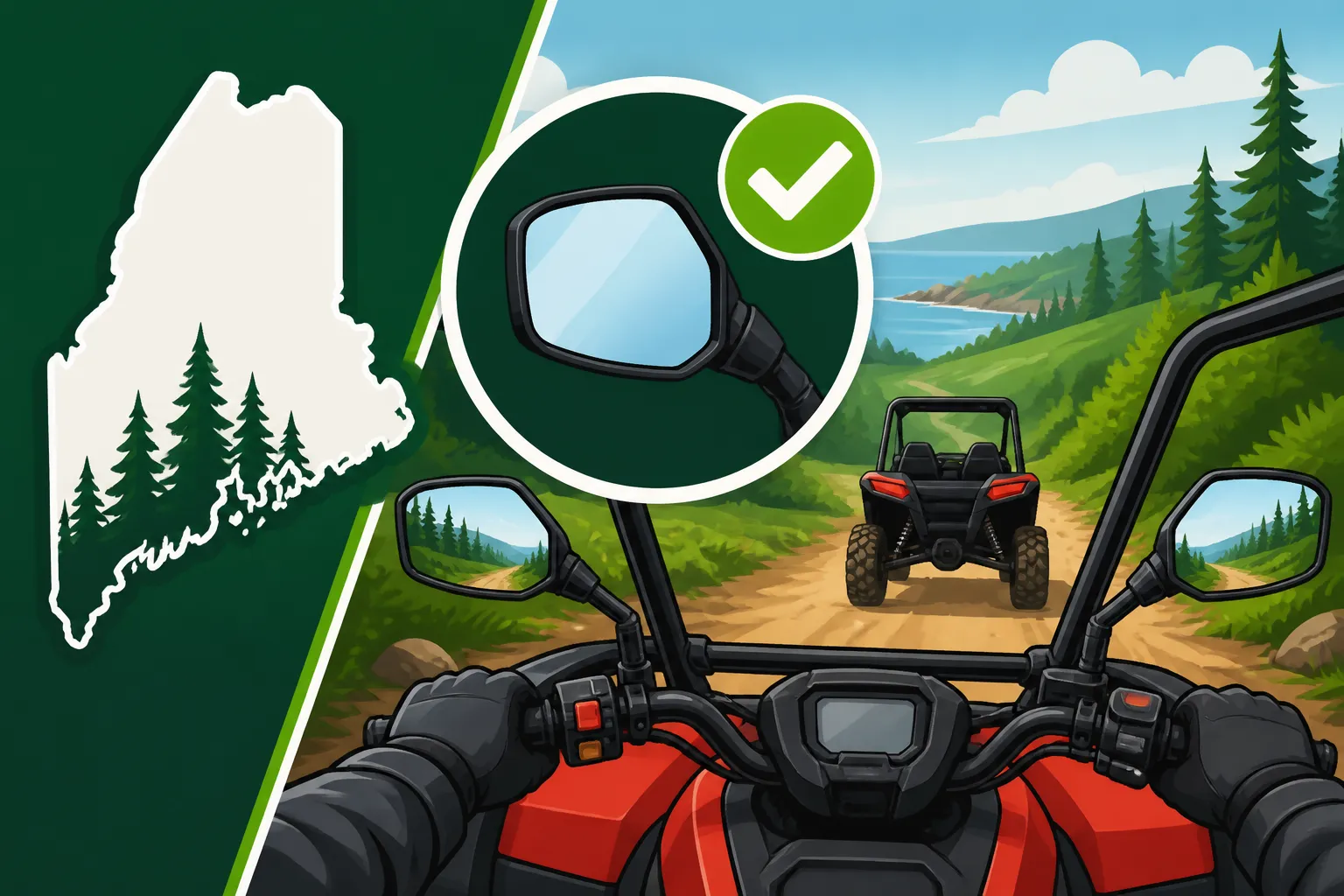
For UTVs, it's pretty clear: if you intend to operate on public ways, even briefly, you are generally expected to have at least one rearview mirror. Many UTVs come from the factory with a center-mounted rearview mirror, but some models might not have side mirrors as standard. If your UTV only has a center mirror, that's often sufficient for compliance, but having two side mirrors can dramatically improve your visibility, especially when pulling out onto a road or making a turn. The intent here is clear: UTVs are wider, often carry passengers, and their drivers sit more like they're in a car, necessitating the same level of rearward visibility. If you're pondering [Can a UTV Be Made Street Legal in Maine?], mirrors are definitely part of that conversion checklist.
Riding on Public Ways vs. Designated Trails
This distinction is crucial for understanding mirror requirements. If you're exclusively sticking to private property or Maine's vast network of designated ATV trails that do not intersect or run alongside public roads, the mirror requirement is largely moot. Your focus in these environments is on trail safety, navigating obstacles, and keeping an eye on your riding buddies.
However, Maine's trail system often includes sections where you must utilize a public way. This could be a short dash across a paved road, a brief stretch along a dirt road shoulder to connect to another trail, or even designated [Maine ATV-Access Routes and How Towns Post Them] through a village. It's in these moments that your machine's equipment, including mirrors, becomes subject to the rules of the road. Even if you're only on the road for a few hundred yards, you need to be prepared for that transition. It’s not just about avoiding a ticket; it’s about being able to see traffic approaching from behind you while you keep your eyes forward on the road ahead.
The 500-Yard Rule and Its Impact
Speaking of public ways, Maine has the infamous [Maine's 500-Yard Limit on a Public Way]. This rule allows ATVs to operate on the extreme right of the traveled way on a public road for a maximum distance of 500 yards to connect trails, reach a gas station, or access a service. This is not permission to joyride down the road; it's a very limited exception for connectivity.
If you're utilizing this 500-yard rule, or any other approved public way access point, having proper mirrors becomes even more critical. You're sharing the road, however briefly, with cars and trucks that are moving at higher speeds. Being able to see what's coming up behind you, especially when you might be merging, turning, or slowing down to exit the road, is paramount for your safety and the safety of others. While the letter of the law might be slightly ambiguous for ATVs specifically regarding mirrors during this 500-yard traverse, the spirit of safe operation absolutely demands them.
Why Mirrors Matter: Safety and Compliance
Beyond just the legalities, equipping your ATV or UTV with mirrors is a smart move for many reasons. No one wants to deal with a warden stop, but more importantly, no one wants to be involved in an accident. Mirrors are a fundamental safety device that extends your field of vision, helping you make informed decisions on the trail and, especially, on the road.
Visibility on Shared Roads
Imagine you're rolling down a town's ATV-access route, perhaps heading to a local diner that welcomes riders. You need to turn left onto a side street. Without mirrors, your only option is to crane your neck, taking your eyes off the road in front of you and potentially swerving your machine. This is not only uncomfortable but dangerous. With properly adjusted mirrors, you can quickly glance to check for approaching vehicles, making your turns much safer.
Even when simply riding along the shoulder, knowing if a car is coming up fast behind you can help you react appropriately – perhaps moving further to the right or being prepared for their passing. This is especially true for UTVs, which can be wider and might take up more of the shoulder, requiring drivers to be even more aware of their surroundings when sharing space with larger vehicles.
Signaling and Awareness in Group Rides
Mirrors aren't just for cars; they're incredibly useful for group riding, too. If you're leading a group of riders through an area that includes road crossings or short public way sections, a rearview mirror allows you to quickly check on your convoy without completely turning around. You can ensure everyone is staying together, spot if someone has fallen behind, or even use hand signals more effectively knowing who is behind you.
When riding in a group, awareness is key to preventing collisions. If you need to slow down or stop suddenly, a quick glance in the mirror can confirm if the rider behind you is paying attention and has seen your brake lights. This simple act of checking your mirrors contributes to a much smoother and safer group riding experience, reducing the chances of a fender-bender between machines.
Avoiding Fines and Warden Stops
Let's face it, no one wants a ticket. While wardens are generally understanding, operating unsafely or without required equipment on public ways can absolutely lead to a citation. If you're stopped by a Maine Game Warden for a routine check, they'll be looking at your registration, safety course certificate (if applicable), and the overall condition and equipment of your machine, especially if you've been on a public way.
If you're operating a UTV on a road, and you don't have a rearview mirror, that's an easy-to-spot violation. For ATVs, while less black-and-white, a warden might still issue a warning or citation if they feel your lack of mirrors contributed to an unsafe situation or if you're deemed to be operating recklessly. It's far better to invest a small amount in a decent mirror than to pay a [Fine for an Unregistered ATV in Maine] or other equipment-related violation. Being compliant simply makes everyone's day easier.
How Mirrors Prevent Accidents
Ultimately, the goal of any safety equipment is accident prevention. Mirrors give you eyes in the back of your head, which is invaluable whether you're backing up, merging onto a road, or simply navigating a busy trailhead parking lot.
Consider backing up. ATVs and UTVs have blind spots, especially the wider side-by-sides. A good rearview mirror, complemented by side mirrors, allows you to see obstacles, other riders, or even children playing, that might be hidden directly behind you. This can prevent costly damage to your machine or, more importantly, serious injury to someone else. On the road, mirrors are your first line of defense against rear-end collisions or being T-boned when changing lanes or making turns. They are a passive safety device that actively contributes to your ability to make safe choices in dynamic riding environments.
Types of Mirrors and What to Look For
So, you've decided to add mirrors, or you need to upgrade your UTV's setup. Great! The market is full of options, and understanding the different types and features will help you pick the best fit for your machine and riding style. You want something that's durable, provides good visibility, and can handle the rigors of off-road use.
Bar-End, Clamp-On, and Roll Cage Mounts
The mounting style is one of the biggest differentiators in ATV and UTV mirrors.
- Bar-End Mirrors: These are typically for traditional ATVs. They mount to the end of your handlebars, extending slightly past the grips. They offer a relatively wide field of view and are usually quite adjustable. The downside is they can be vulnerable to impacts if you're riding through very tight trails or tip your quad.
- Clamp-On Mirrors: These are versatile and can be used on either ATVs or UTVs. For ATVs, they often clamp directly to the handlebar near the grips. For UTVs, they clamp to the roll cage or specific mounting points on the cage. They are popular because they offer a secure mount and can be positioned almost anywhere along a tube. Many aftermarket brands offer robust clamp-on options specifically designed for the diameter of ATV handlebars or UTV roll cages.
- Roll Cage Mounts (UTV Specific): These are designed exclusively for UTVs and side-by-sides. They attach directly to the tubular roll cage frame. You'll find options for side mirrors that clamp to the A-pillar tubes or center-mounted rearview mirrors that clamp to the crossbar above the windshield. These are generally the most stable and purpose-built for UTVs, making them ideal for any rider looking to complete their [Street-Legal UTV Equipment Lists].
Materials and Durability for Off-Road Use
Off-road conditions are brutal on equipment. You're going to encounter bumps, vibrations, dust, mud, rain, and possibly even impacts from branches or rollovers. Therefore, the materials and construction of your mirrors are paramount.
Look for mirrors with:
- Robust Housings: High-impact ABS plastic, aluminum, or reinforced nylon are common. Avoid flimsy plastic that will crack or shatter easily.
- Shatter-Resistant Glass: While no glass is truly unbreakable, many off-road mirrors use tempered glass or acrylic lenses designed to resist shattering into sharp fragments upon impact. Some even feature convex shapes to increase the field of view while sacrificing a bit of true-to-life distance perception.
- Durable Mounts: The clamping mechanism or arm should be made of strong metal (aluminum or steel) and have vibration-dampening features to prevent the mirror from constantly shifting or vibrating excessively at speed. No one wants to constantly adjust a mirror that won't stay put.
Brands like SuperATV are known for producing a wide range of UTV mirrors that are specifically engineered for the abuse of off-road riding. Their designs often focus on heavy-duty materials and secure mounting solutions that can withstand rugged terrain and the occasional bump.
Field of View and Adjustment Options
What good is a mirror if you can't see anything in it, or if it keeps pointing at the sky?
- Field of View: Convex mirrors offer a wider field of view, allowing you to see more of what's behind and to the sides. While they make objects appear smaller and farther away, this trade-off is often worth it for the increased situational awareness, especially with side mirrors. For a center rearview mirror, a flat mirror can provide a more accurate depiction of distance directly behind you.
- Adjustment Options: Look for mirrors that offer easy, tool-free adjustment. Ball joints are common and allow for a wide range of motion. Once adjusted, the mirror should lock firmly into place and not vibrate loose. Some side mirrors for UTVs also offer break-away features, allowing them to fold inward if they hit a tree branch, preventing damage. This is a huge plus if you ride tight trails.
When choosing, consider your typical riding environment. If you're mostly on open trails and dirt roads, a wide field of view is great. If you're often squeezing through dense woods, a more compact, break-away design might be more suitable for your side mirrors, perhaps from a reputable brand like SuperATV that offers such protective features.
Beyond Mirrors: Other Road-Legal Requirements
While mirrors are a key piece of the puzzle, they're not the only equipment you need to consider when operating your ATV or UTV on Maine's public ways. To avoid problems with wardens and ensure your safety, it's wise to be familiar with all the requirements. Think of it as a comprehensive pre-ride check before you even think about putting a tire on pavement or a well-traveled dirt road.
Headlights, Taillights, and Reflectors
Visibility is paramount, especially when sharing roads with other vehicles.
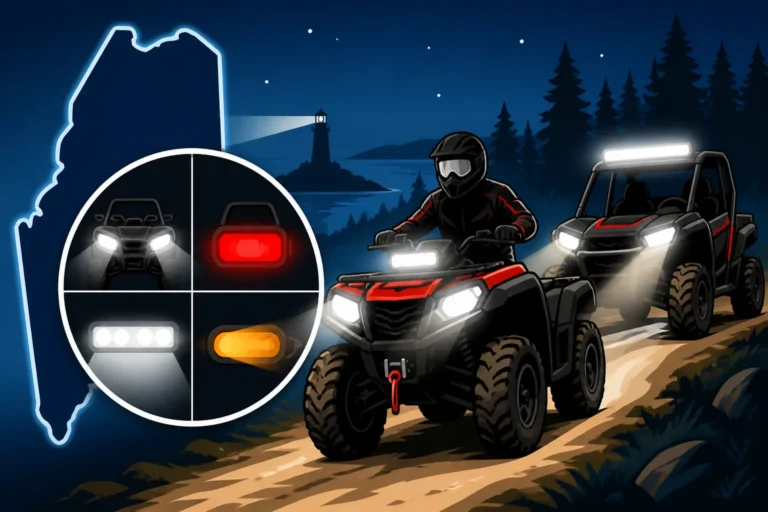
- Headlights: Your ATV or UTV must have at least one working headlight that emits a white light and is visible for at least 200 feet during darkness or inclement weather. If you're riding after dusk, or even on a cloudy day, ensure your headlight is on and properly aimed. [Maine Lighting Requirements for Night Riding] covers this in more detail.
- Taillights: A working taillight that emits a red light and is visible from at least 200 feet to the rear is also mandatory. This is crucial for preventing rear-end collisions, especially if you're slowing down or stopping.
- Brake Lights: Most modern ATVs and UTVs come standard with brake lights that illuminate when the brakes are applied. Ensure these are functional. They are a critical signal to anyone behind you.
- Reflectors: While not always explicitly stated as a separate item for ATVs, having reflectors (red to the rear, amber to the sides) can significantly enhance your visibility, especially at night, even if your lights fail.
Horn Requirements for Road Travel
Yes, you read that right. If you're going to be operating your ATV or UTV on a public way, having a functional horn can be a legal requirement and, more importantly, a crucial safety device. [Maine Horn Requirements for Road Riding] states that a motor vehicle (which includes ATVs/UTVs when on a public way) must have an audible warning device. This isn't just for fun; it's to signal your presence to other drivers, pedestrians, or even wildlife if necessary. Many ATVs and UTVs come with a stock horn, but if yours doesn't, or if it's broken, an aftermarket horn is an easy and inexpensive addition that could prevent an accident.
Mufflers and Spark Arrestors
These are generally more about environmental and noise regulations, but they are absolutely part of legal operation in Maine.
- Muffler: Your machine must be equipped with an adequate muffler that is in good working order and effectively prevents excessive or unusual noise. Modifying your exhaust system to make your machine louder is a sure way to attract unwanted attention from wardens and upset landowners, which can lead to trail closures. [Maine Muffler and Exhaust Noise Limits] are in place for a reason – respect them.
- Spark Arrestor: This is a safety device designed to prevent hot carbon particles from exiting the exhaust system and potentially starting a wildfire. It is a mandatory piece of equipment for ATVs and UTVs operating in Maine's woods. Always ensure your spark arrestor is clean and properly maintained.
Helmets and Eye Protection
While not directly about the machine, rider safety gear is absolutely part of being road-legal and trail-safe.
- Helmets: In Maine, all ATV and UTV operators and passengers under 18 years of age are required to wear a helmet. The helmet must meet specific safety standards (like ANSI or DOT). Even if you're over 18, wearing a helmet is highly recommended for your safety, whether on the trail or road. This rule is often overlooked but strictly enforced. Find out more about [Maine Helmet Rules for Riders Under 18].
- Eye Protection: When operating an ATV or UTV, especially on public ways where dust and debris from other vehicles can be an issue, eye protection is essential. Goggles or a face shield on your helmet will protect your eyes from wind, dust, insects, and projectiles. [Eye Protection on a Road Ride] is not just good practice, it's often an expectation for safe operation, and can be a requirement if your machine doesn't have a full windshield.
By taking the time to understand and equip your ATV or UTV according to Maine's regulations, you're not just avoiding a potential fine; you're actively contributing to a safer and more enjoyable riding experience for yourself and everyone else on the trails and roads.
| Equipment Item | ATVs (General Trail Use) | ATVs (On Public Ways) | UTVs (On Public Ways) |
|---|---|---|---|
| Rearview Mirror | Not explicitly required | Recommended for safety; can be implied for safe operation | Required (at least one) |
| Headlight | Required at night | Required at night/inclement weather, visible 200 ft | Required at night/inclement weather, visible 200 ft |
| Taillight | Required at night | Required at night/inclement weather, visible 200 ft | Required at night/inclement weather, visible 200 ft |
| Brake Light | Standard on most | Functional and visible | Functional and visible |
| Horn | Not explicitly required | Required as an audible warning device | Required as an audible warning device |
| Muffler | Required | Required (no excessive noise) | Required (no excessive noise) |
| Spark Arrestor | Required | Required | Required |
| Helmet (Under 18) | Required | Required | Required |
| Eye Protection | Recommended | Recommended/Expected | Recommended/Expected (unless full windshield) |
| Seat Belts (UTV only) | N/A | N/A | Required if equipped, for all occupants on public ways |
Disclaimer
This article is for general informational purposes only and does not constitute professional advice. Laws, prices and regulations vary by location and change over time. Consult a qualified professional for guidance on your specific situation.