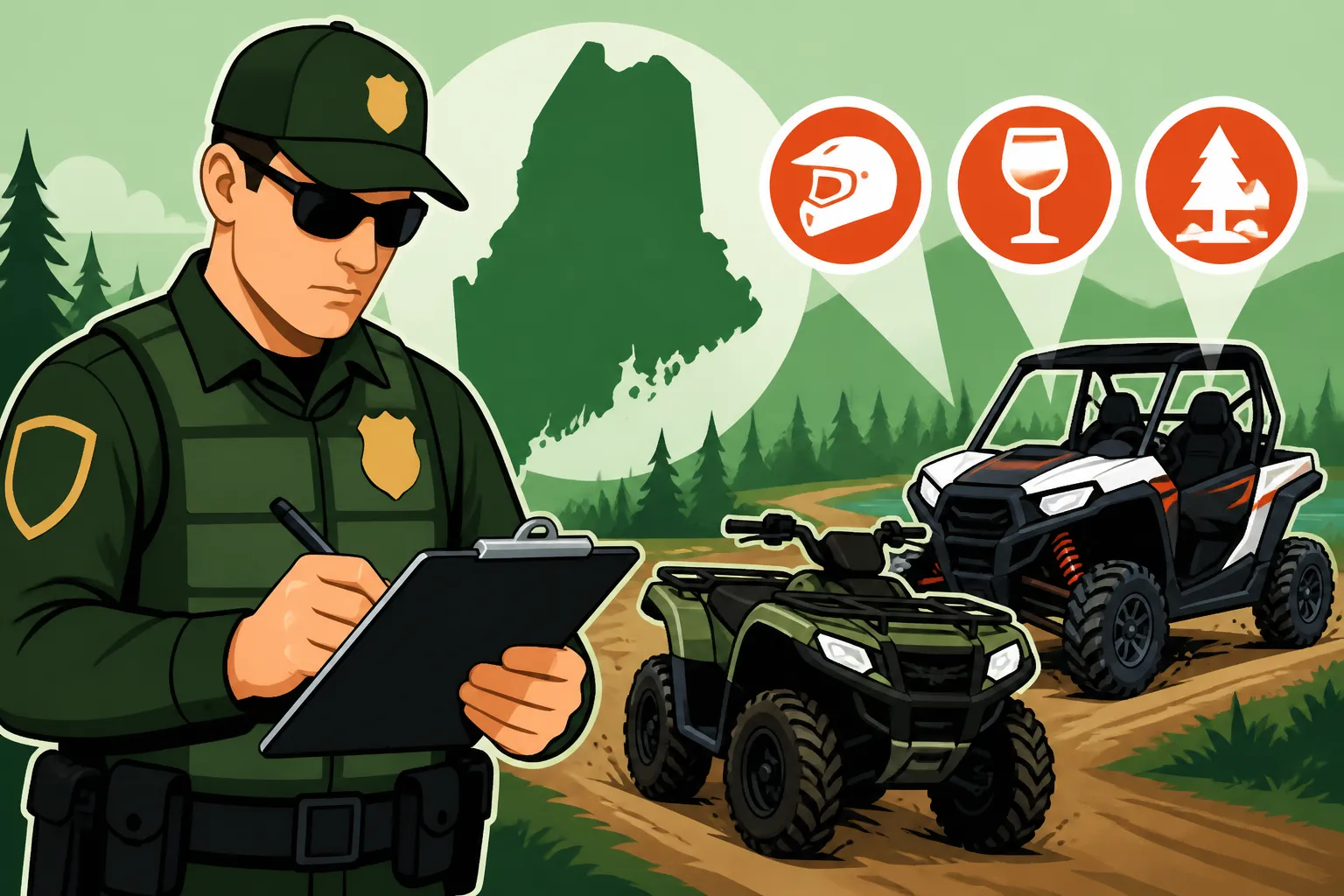
Fines Maine Wardens Write Most Often
There's nothing quite like the feeling of hitting the trails on your ATV or UTV, cruising through the Maine woods, or exploring an old logging road. It's freedom, pure and simple. But that feeling can turn to dread in a heartbeat when you see the green uniform of a Maine Warden Service officer in your rearview mirror or stepping out from behind a stand of pines. Getting stopped is a bummer, but getting a ticket? That's a real hit to the wallet and your trail time. This guide is all about shedding light on the most common reasons Maine Wardens issue citations, so you can ride smarter, safer, and avoid those frustrating fines.
The Frustration of a Citation: Why Wardens Write Tickets
It's easy to feel targeted when you get a ticket, especially when you feel like you're just out enjoying yourself. But for Maine Wardens, enforcement isn't about ruining your fun; it's about ensuring safety, preserving access, and upholding the laws designed to protect both riders and the delicate environment we all love. They're out there to make sure everyone can continue to enjoy Maine's vast trail network responsibly.
It's About Safety and Landowner Trust
When Wardens issue tickets, it often boils down to two critical factors: rider safety and maintaining landowner goodwill. The vast majority of Maine's incredible ATV trail system runs over private land, granted by generous landowners. A single instance of trespassing, excessive noise, or reckless riding can jeopardize miles of trail access for everyone. Wardens act as guardians of this trust, knowing that consistent, fair enforcement is key to keeping those gates open. They see firsthand the consequences of irresponsible riding, from serious injuries to landowners posting "No Trespassing" signs. It's a tough job, but essential for the long-term health of our riding community.
Common Reasons for Enforcement
Wardens encounter a wide range of situations, but some violations pop up far more frequently than others. Often, these aren't malicious acts but rather oversights, a lack of awareness of specific rules, or sometimes, just a moment of poor judgment. Understanding these common pitfalls is your first step to avoiding them. It's not always about outright defiance; sometimes it's simply not knowing the nuanced rules, especially when riding in unfamiliar areas or on access routes that interact with public ways. Wardens are also tasked with ensuring youth rider compliance, making sure everyone is following the rules designed to keep younger operators safe and skilled.
Unregistered and Uninsured: The Big Ones
If there's one area where Maine Wardens are consistently writing tickets, it's for issues related to registration and, increasingly, for lack of proper insurance coverage. These are fundamental requirements for operating an ATV or UTV on Maine's trail system and public access routes.
Riding Without a Valid Registration
This is probably the number one reason riders get stopped and fined. Whether you're a Maine resident or visiting from out of state, your ATV or UTV must be registered to ride on designated trails or public ways that allow ATV access. I can't tell you how many times I've heard stories of folks, usually non-residents, who thought their home state registration was sufficient, only to find themselves facing a citation. Maine has specific rules for [Maine's Non-Resident ATV Registration Options], including both annual and [Maine Non-Resident Seven-Day ATV Registration] options, so there's no excuse not to be compliant.
The issue isn't always that people never registered; sometimes it's that their registration has simply expired. Life gets busy, and it's easy to forget that renewal date. Wardens will check those decals, and if they're out of date, you're looking at a penalty. Make it a habit to check your sticker before your first ride of the season. If you've just bought a machine, you need to ensure you understand the process for [Maine ATV Registration After a Private Sale] or from a dealer, and how quickly you can get that temporary confirmation to ride.
The Lack of ATV Insurance (and Why It Matters)
While Maine doesn't require ATV insurance for all riding, it absolutely does for operation on designated public ways that are open to ATV use. This includes road crossings, ATV access routes, and any other public way where ATVs are allowed. Many riders operate under the assumption that their homeowner's insurance will cover them, but that's often not the case, especially for liability when riding off their own property. You really need to check your policy carefully or get a dedicated ATV policy.
Wardens aren't just checking for a physical insurance card; they're ensuring that if an accident were to happen, especially involving other vehicles or property on a public way, there would be coverage. Imagine a fender bender with a pickup truck while you're crossing a rural road; without proper insurance, you could be on the hook for significant damages. It's not just about avoiding a fine; it's about protecting your assets and making sure you're covered in unfortunate situations. [Maine ATV Insurance and When You Need It] is a critical read for anyone planning to ride here.
Rules of the Road (and Trail): Operating Violations
Beyond registration and insurance, a significant number of fines stem from how ATVs and UTVs are operated. These rules are designed to prevent accidents, maintain order, and protect the fragile trail system and adjacent private properties.
Speeding and Reckless Operation
Maine has specific speed limits for ATVs and UTVs, especially when you're near buildings, within residential areas, or on shared public access routes. It's not always about flat-out racing; sometimes it's simply going too fast for the conditions or the location. Blasting past a farmhouse at 40 MPH when the limit is 15 MPH is not only dangerous, but it's also a surefire way to get a ticket and sour landowner relations. Wardens often patrol these sensitive areas precisely because of noise complaints and safety concerns from residents.
Reckless operation can cover a broad range of behaviors: wheelies, doughnuts, intentionally damaging trails, or riding in a manner that endangers yourself or others. These aren't just minor infractions; they can carry substantial fines and even lead to losing your riding privileges. The goal of ATV riding is enjoyment, but it has to be done with respect for the rules and for everyone else who uses or lives near the trails.
Trespassing: A Landowner's Worst Nightmare
As mentioned, most of Maine's trails exist because of the generosity of private landowners. Riding on posted land, or venturing off designated trails onto someone's private property without explicit permission, is a serious offense and one that Wardens take very seriously. Trespassing can erode years of good landowner relationships and lead to entire sections of trails being shut down. Keep an eye out for "No Trespassing" signs or, increasingly, purple paint marks on trees, which also signify private property and no access.
It’s crucial to stick to marked trails and know where you’re going. Even if a trail looks clear and inviting, if it's not marked as an official ATV trail, assume it's private land. Carrying a reliable map, whether it's a physical one or a GPS app, is paramount. [Maine Trespass Law for ATV Riders] is something every rider should familiarize themselves with to avoid this costly mistake.
Helmet and Age-Related Violations
Maine has clear rules regarding helmets, particularly for younger riders. All ATV operators and passengers under 18 years of age are required to wear a helmet. This isn't just a suggestion; it's law, and Wardens enforce it strictly for obvious safety reasons. A simple glance at a rider's age and headwear can lead to a quick stop.
Beyond helmets, there are also age restrictions for operating ATVs, including requirements for a Maine ATV Safety Course for riders aged 10-15, and rules about supervision for younger operators. Parents and guardians need to be acutely aware of these regulations. It's not just about getting a fine; it's about ensuring children are safe and properly trained to handle these machines. Wardens often pay close attention to youth riders, knowing that proper education and equipment are vital. For more details, check out [Maine ATV Safety Course Requirements] and [Maine ATV Age Rules for Riders Under 16].
Equipment and Environmental Violations
It's not just how you ride, but what you ride and how you maintain it that can lead to fines. Maine has regulations about ATV equipment and how you interact with the environment, all designed to promote safety and preserve the natural beauty of the trails.
Exhaust Noise and Spark Arrestors
Excessive exhaust noise is a common complaint from residents living near trails and is often a target for Wardens. While that aftermarket exhaust might sound cool, if it exceeds Maine's noise limits, you're risking a citation. These regulations are in place to minimize disturbance to wildlife and nearby communities, a critical factor in maintaining trail access.
Equally important, and often overlooked, is the requirement for a properly functioning spark arrestor. This device prevents hot carbon particles from exiting the exhaust system and potentially starting a forest fire, which is a massive concern in Maine's wooded areas. Wardens can and do check for these, especially during dry seasons. If yours is missing or not functioning, it’s not only a fire hazard but also a ticket waiting to happen. Companies like SuperATV offer aftermarket exhausts and spark arrestors, but always make sure any modifications comply with state laws before installing them.
Illegal Modifications (and Their Consequences)
While customizing your ATV or UTV can be fun, certain modifications can lead to fines. This can include things like removing safety equipment, installing non-compliant lighting for night riding, or altering the machine in a way that makes it unsafe or excessively wide for the trails. For example, some trails have width restrictions, and a side-by-side that has been widened beyond the legal limit might not be allowed and could damage trail infrastructure.
Wardens are trained to spot these modifications. While a lift kit or a custom bumper from a brand like SuperATV might enhance your riding experience, always verify that such additions don't violate Maine's operating laws, especially if you plan on using public access routes or crossing roads.
Littering and Resource Damage
This should be a no-brainer, but unfortunately, littering on trails and causing damage to natural resources are persistent problems that Wardens actively enforce. Leaving trash behind, whether it's an empty water bottle or a broken part, is not only disrespectful but illegal. Similarly, intentionally damaging trails by tearing up sensitive areas, creating new unauthorized paths, or disturbing wildlife habitats are serious offenses.
Wardens often respond to reports of these types of activities, and evidence like tire tracks can sometimes lead them to offenders. These actions directly threaten the continued existence of trails, as landowners are quick to close off access if their property is being abused. Always practice Leave No Trace principles when enjoying the outdoors.
What Happens After a Ticket?
So, you've been stopped, and a Maine Warden has handed you a citation. What's next? It's important to understand the process, potential penalties, and your options.
The Fine Schedule and Penalties
The specific fine amount for an ATV violation varies widely depending on the nature and severity of the offense. For instance, an expired registration might be a relatively minor monetary fine, while trespassing on private land or operating under the influence can lead to significantly higher penalties, potential loss of riding privileges, and even criminal charges. Many fines also carry administrative fees and assessments that increase the total amount you'll pay.
Here’s a simplified look at how some common violations might stack up, though actual amounts can vary and are subject to change. This table is for illustrative purposes only, and you should always refer to the specific citation for exact charges.
| Violation Type | Potential Consequences |
|---|---|
| Unregistered ATV/UTV | Monetary fine, potentially impoundment |
| No Insurance (on public ways) | Monetary fine, potential suspension of privileges |
| Trespassing | Monetary fine, restitution, loss of trail access |
| Operating Under the Influence (OUI) | Significant monetary fines, license suspension, jail time |
| Exceeding Speed Limits | Monetary fine, points on record |
| No Helmet (under 18) | Monetary fine, parental responsibility |
| Missing/Defective Spark Arrestor | Monetary fine, requirement to fix |
| Reckless Operation | Substantial monetary fine, loss of privileges |
| Littering | Monetary fine, potential community service |
It's also important to remember that repeat offenses can lead to escalating penalties, so a second or third violation will likely be much more severe than a first offense. The goal of these penalties is not just punishment, but deterrence, encouraging all riders to adhere to the rules. Understanding [Maine ATV Ticket Costs by Violation] can help you prepare, but the best approach is to avoid them entirely.
Appealing a Citation and What to Expect
If you believe you were unjustly cited, you do have the right to appeal the citation in court. The process typically involves appearing before a judge in the district court that covers the area where the infraction occurred. You'll have the opportunity to present your side of the story, bring witnesses, or offer evidence.
However, appealing a citation requires preparation. You'll need to understand the charges against you, gather any supporting documentation (like a valid registration or insurance card you might have simply forgotten to carry), and clearly articulate why you believe the ticket was issued in error. While you have this right, it's often more straightforward and less stressful to ensure compliance before you ride. If you do choose to appeal, be respectful, stick to the facts, and understand that the Warden will also be present to provide their account of the situation. [Fighting a Maine ATV Ticket] is a process that requires a clear understanding of the law and the facts surrounding your specific situation.
Disclaimer
This article is for general informational purposes only and does not constitute professional advice. Laws, prices and regulations vary by location and change over time. Consult a qualified professional for guidance on your specific situation.