Stopping Where a Road Crosses a Trail
It's a common scenario for ATV and UTV riders across Maine: you're enjoying a fantastic ride on a winding trail, the sun on your face, the scent of pine in the air, when suddenly, a sign warns you about an upcoming road crossing. This moment of transition, from the freedom of the trail to the structured world of public roads, is where many riders get confused or, worse, make dangerous mistakes. This guide will walk you through Maine's specific requirements and best practices for safely and legally navigating those crucial road crossings, ensuring your adventures stay fun and incident-free.
The Critical Importance of Stopping Before a Road Crossing
You might be thinking, "Of course I stop at a road, it's common sense!" And while that's true, the nuances and the absolute necessity of a complete stop are often underestimated, leading to close calls or even serious accidents. Maine's trail system, with its incredible access and connections, often intertwines with countless public ways, from quiet town roads to busier state routes. Each time you approach one of these intersections, you're entering a high-risk zone that demands your full attention and adherence to the law.
Why "Stop and Yield" Isn't Just a Suggestion
Let's be blunt: the rules aren't there to annoy you. They're literally there to save lives and prevent injuries. When you're on an ATV or UTV, you're operating a machine that weighs hundreds, sometimes over a thousand, pounds. Road vehicles, from sedans to logging trucks, weigh exponentially more. In a collision between an ATV and a car, the ATV rider is almost always at a severe disadvantage. The "stop and yield" rule, which is actually more stringent than some might realize, is Maine's way of minimizing this risk. It's a fundamental part of responsible riding and something every warden looks for during their patrols. Failing to observe this simple rule can lead to significant fines, a ruined day, or much, much worse. Remember, it's about making sure everyone, both on the trail and on the road, gets home safely.
Understanding the Blind Spots and Speed Differentials
One of the biggest dangers at road crossings isn't just about whether you see a car, but whether the car sees you. Your ATV or UTV, even a full-size side-by-side, is relatively small compared to other vehicles on the road. A driver might be focused on other cars, looking for road signs, or simply not expecting an off-road vehicle to emerge from the woods. They have blind spots, and you, as the rider, have to account for them. Imagine a delivery truck approaching a crossing; their high cab might give them a good view of larger obstacles, but a low-profile quad could easily be obscured by bushes, dips in the road, or even the sun's glare.
Furthermore, there's a huge difference in speed. You might be cruising along the trail at 15-20 mph, but a car on the road could easily be doing 45-55 mph. That speed differential means a vehicle can cover a lot of ground in the blink of an eye. What looks like plenty of time to cross when you're rolling slowly can quickly become a harrowing near-miss if you misjudge the car's speed or distance. Taking a complete stop allows you to fully assess the situation, both visually and audibly, before committing to crossing. It buys you those precious extra seconds to make a safe decision.
Avoiding Collisions and Protecting Your Riding Privileges
A collision at a road crossing is not just about physical injury; it can have profound legal and financial consequences. If you're deemed at fault for failing to stop and yield, you could be liable for property damage to the other vehicle, medical bills for anyone injured, and face significant legal fees. Beyond that, the state takes these infractions very seriously. You could face a [Fine for an Unregistered ATV in Maine] (if applicable) or a substantial fine specifically for violating road crossing laws. In some cases, repeated or egregious violations could even lead to the suspension of your riding privileges or restrictions on trail access in that area. Maine's trail system relies heavily on positive landowner relations, and irresponsible behavior at road crossings is a surefire way to erode that trust and potentially lead to trail closures. Every time you come to a public road, remember that your actions reflect on the entire riding community. A safe crossing isn't just for your benefit; it's for the longevity and reputation of ATV and UTV recreation across the state.
Maine's Specific Rules for ATV Road Crossings
Maine's laws regarding ATV and UTV use are designed to balance rider access with public safety. When it comes to crossing public ways, these laws become particularly strict and unforgiving. It’s not just about common courtesy; it’s about legal obligation that, if ignored, carries real penalties. Understanding these specific mandates is non-negotiable for any rider.
The Absolute "Complete Stop" Requirement
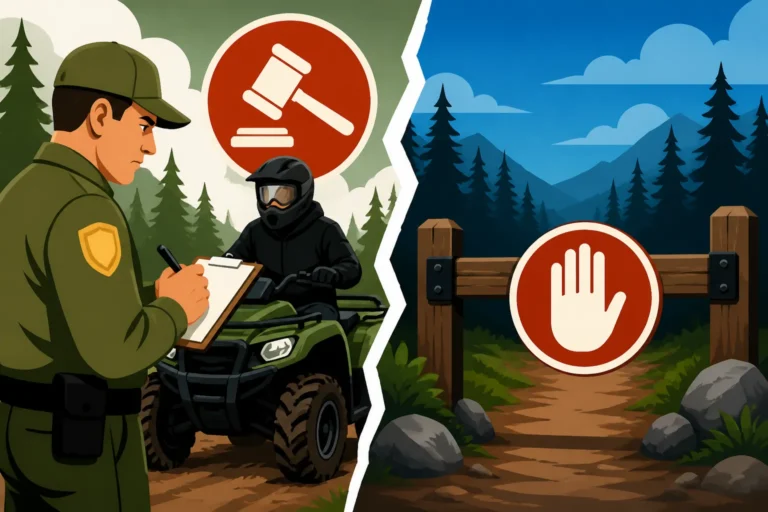
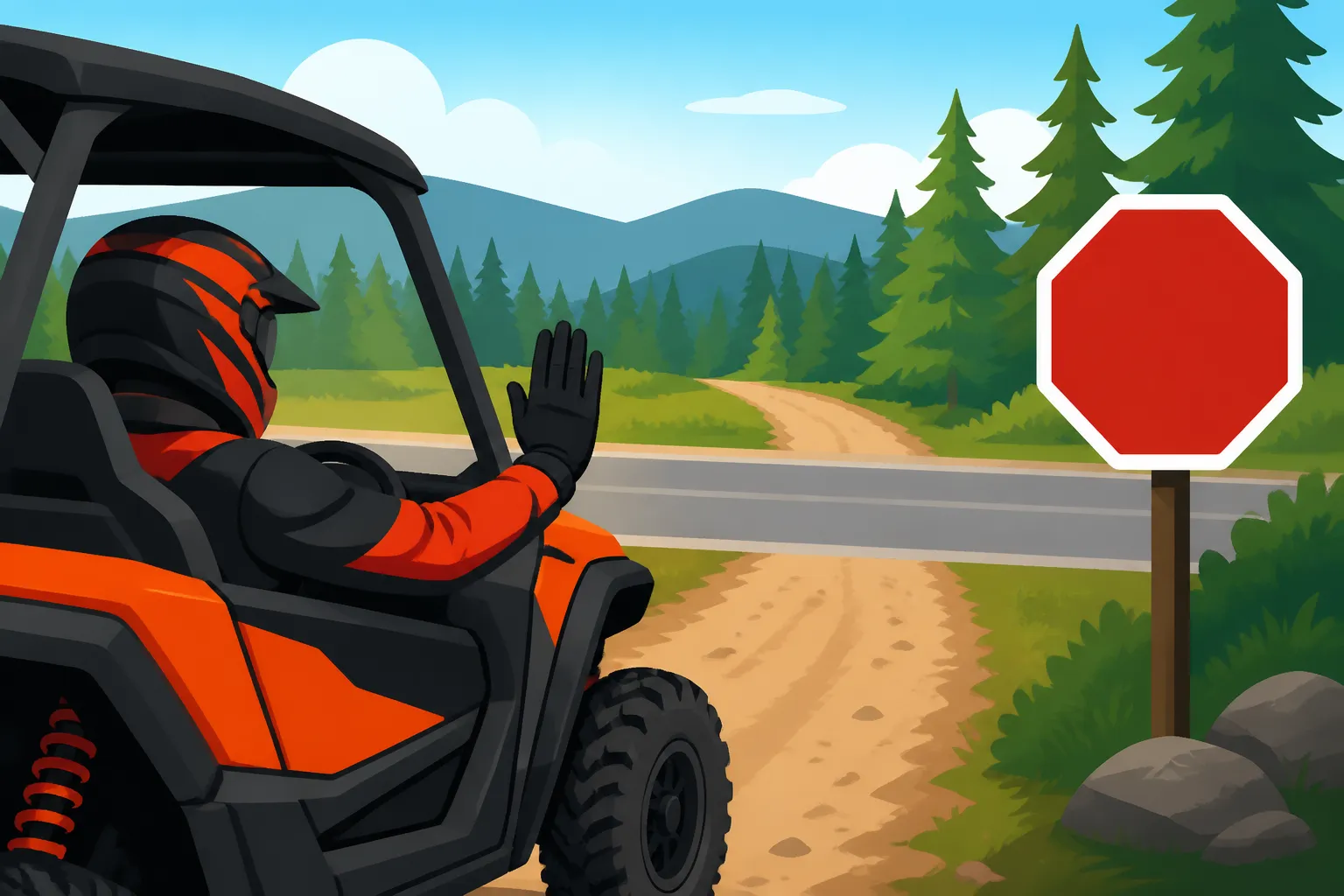
Let's clarify what Maine law explicitly states. When an ATV or UTV trail intersects with a public way, you are required to come to a complete stop before proceeding. This isn't a suggestion; it's a legal mandate. This means your wheels must cease all forward motion. A "rolling stop," where you slow down but don't quite stop, is a violation. Think of it exactly like a stop sign at a road intersection in your car – you wouldn't just creep through it, and the same applies here. The purpose is to allow you, the operator, ample time to look both ways, listen for approaching traffic, and ensure the crossing is absolutely clear before entering the public way. You need to stop, scan, and only then, when safe, proceed. This is part of the [Maine's Stop-and-Yield Rule Before a Public Way] that all riders must internalize.
Yielding to All Traffic: Vehicles, Pedestrians, and Bikes
Once you've come to that complete stop, the next critical component is yielding the right-of-way. Maine law is very clear: you must yield to all vehicular traffic, all pedestrians, and all bicyclists on the public way. This means that if there's any car, truck, motorcycle, person walking, or person riding a bicycle even remotely close to your crossing point, you wait. You wait until they have passed and the road is entirely clear. Do not assume they see you, and never try to "beat" them across the road.
This rule applies equally whether you're on a vast, rural logging road or a quieter town road. The status of the road doesn't change your obligation. It's not a negotiation; it's an absolute. The safety of yourself and others depends on your patience and strict adherence to this yielding rule. Even if you think you have time, if another vehicle is approaching, you wait.
Approaching the Crossing: Speed, Observation, and Caution
The approach to a road crossing isn't just about the last few feet before the pavement. Safe crossing begins much earlier. As soon as you see a sign indicating a road crossing ahead, or even if you just know one is coming up on your route, you should begin to reduce your speed significantly. This isn't the time for high-speed thrills. Slow down to a pace that allows you to react quickly to unexpected situations, whether it's a car suddenly appearing or another rider in your group making a mistake.
Use your senses: look for signs of traffic well before the crossing. Are there dust plumes in the distance? Can you hear engine noise? Are there any hidden driveways or fields that might obscure your view of the road? Take a moment to scan the surrounding area for potential hazards. This heightened level of observation needs to be maintained until you have safely crossed the public way and are back on the trail. Sometimes, an aftermarket side mirror from a brand like SuperATV can provide an extra angle of vision to help you see approaching traffic, though it's never a substitute for turning your head and making a direct visual check. Maintaining extreme caution from the moment you detect a crossing until you’re clear of the road is paramount for [Riding an ATV on the Road in Maine] safely for those brief moments.
Practical Steps for a Safe Road Crossing
Successfully navigating a road crossing involves more than just knowing the law; it's about developing good habits and executing a consistent, safe procedure every single time. This is where practice, awareness, and sometimes, a little extra gear can make all the difference.
Situational Awareness: Reading the Road and Surroundings
Before you even reach the stop line, start assessing the situation. Is the crossing on a blind curve? Is there dense foliage blocking your view in one direction? Are there houses or businesses nearby that might mean more local traffic or pedestrians? Listen actively for the sound of approaching vehicles, even if you can't see them yet. This is especially crucial for motorcycles or quiet electric vehicles that can be difficult to spot.
Once you come to a complete stop, lean forward slightly and try to get the best possible line of sight in both directions down the road. Sometimes, you might need to inch forward very slowly to improve your view, but only if you are certain there is no immediate traffic. Pay attention to road signs on the public way itself, as they might indicate a school zone, a residential area, or a curve, all of which could affect vehicle speeds. Never assume the road is clear; always verify. Your "situational awareness" is your first and best defense against an accident. [Maine ATV Rules for Riders Under 16 on Roads] emphasize even greater caution, often requiring adult supervision during these crossings.
Group Riding Etiquette at Crossings
Riding with a group adds another layer of complexity to road crossings, and it's essential to have a clear system in place.
- Leader Leads, Others Follow Safely: The lead rider is responsible for making the initial stop, assessing traffic, and initiating the crossing when safe. They should signal clearly when it's safe to cross.
- Single File, Maintain Distance: Riders should approach the crossing in single file and maintain enough distance between machines to allow each rider to make a complete stop and assess the road independently. Don't crowd the rider in front of you.
- Cross One at a Time (Typically): Generally, it's safest for each rider to cross individually after confirming the road is clear for their crossing. Don't assume that just because the first rider made it across, the road remains clear for everyone else. Traffic can change quickly.
- Buddy System for Busy Roads: On busier roads, it can be helpful for the lead rider to ensure the immediate crossing is clear, and once they're across, signal to the next rider. That next rider then verifies again before crossing. This relay system ensures continuous vigilance.
- Don't Block the Trail: Once you've crossed, pull well off the public way onto the trail on the other side, allowing ample room for the rest of your group to cross without creating a bottleneck.
Clear communication and patience are key when crossing as a group. A quick hand signal, or even a pre-arranged radio communication for larger groups, can prevent confusion and ensure everyone crosses safely.
Equipment and Visibility Considerations
While Maine doesn't have specific requirements for all visibility accessories at road crossings, having the right gear can significantly enhance your safety.
- Headlights and Taillights: Even during the day, having your headlights and taillights on can make your machine more visible to approaching traffic. If you're [Maine Lighting Requirements for Night Riding], these are mandatory, but good practice for daytime too. Many riders choose aftermarket LED lighting for increased brightness and durability.
- Flags: Some riders use tall safety flags, especially for dune riding, but they can also be beneficial at road crossings. A bright, high-mounted flag can extend above natural obstructions like bushes, giving drivers an earlier warning of your presence. Look for durable flag mounts, perhaps from a reputable accessory brand like SuperATV, to ensure it stays put on rough trails.
- Reflective Gear: Wearing high-visibility clothing, especially bright colors or reflective vests, can also make you stand out more to drivers. While not mandatory, it's a smart choice, particularly if your machine is a darker color.
- Mirrors: As mentioned, side mirrors can aid in situational awareness, but remember they have blind spots too. Always combine mirror checks with a physical head turn to scan the road.
Remember, the goal is to be seen and to see. Any equipment that helps achieve this goal is an investment in your safety.
| Action Step | Description | Why it's Important |
|---|---|---|
| Reduce Speed Early | Slow down well before the crossing, not just at the last second. | Allows more time to react, identify potential hazards, and come to a smooth, controlled stop. |
| Complete Stop | Bring your ATV/UTV to a full, absolute stop before entering the public way. | Mandated by law. Ensures you have sufficient time to thoroughly check for traffic, rather than just a quick glance. |
| Look Left, Right, Left | Actively scan both directions multiple times, paying attention to hidden driveways or obstructions. | Compensates for blind spots and rapidly changing traffic conditions; human perception can miss things on the first pass. |
| Listen Actively | Turn off loud music or communicate to listen for approaching vehicle sounds, especially quiet ones. | Provides an audible warning for vehicles you might not yet see, crucial on blind corners or at night. |
| Yield to All Traffic | Wait for all vehicles, pedestrians, and cyclists to pass before proceeding. | Legally required. Prevents collisions where the ATV/UTV is at a disadvantage. |
| Cross Directly | Once clear, cross the road perpendicular to the public way in a swift, controlled manner. | Minimizes your time spent in the roadway, reducing exposure to potential hazards. [Maine ATV Road Crossing at an Angle] is generally not advised unless necessary. |
| Clear the Roadway | Pull completely off the public way onto the trail entrance on the other side. | Avoids obstructing traffic or creating a hazard for others, especially in group rides. |
| Signal in Groups | Lead rider signals clear, next rider re-verifies before crossing. | Enhances safety for multiple riders, ensuring each individual takes responsibility for their crossing. |
Common Mistakes and How to Avoid Them
Even experienced riders can sometimes get complacent, especially if they ride the same trails frequently. However, complacency is the enemy of safety, particularly at road crossings. Being aware of common pitfalls and actively working to avoid them can prevent unnecessary risks and keep your ride enjoyable.
The "Rolling Stop" and Its Risks
This is perhaps the most common mistake riders make: thinking that slowing down significantly is equivalent to a complete stop. It's not. A "rolling stop" or a "California stop" is when your wheels never fully cease rotating, even for a split second. You might have slowed to 1-2 mph, but you are still in motion. As we discussed, Maine law specifically requires a complete stop.
Why is a complete stop so critical? When you're rolling, even slowly, your brain is still processing forward motion. It's harder to truly pause and absorb the full traffic situation. You might glance quickly, assume it's clear, and continue, only to find a fast-approaching vehicle that you didn't quite register. A complete stop forces you to halt your momentum, shift your focus entirely to the road, and make a deliberate decision to proceed. It eliminates the ambiguity of "almost stopped" and replaces it with an undeniable moment of assessment. A Maine Warden won't hesitate to issue a [Fines Maine Wardens Write Most Often] for this infraction.
Distractions at the Crossing Point
In today's connected world, distractions are everywhere, and they are particularly dangerous at road crossings. This includes:
- Cell Phones: Checking a map, taking a quick photo, or responding to a text message can wait until you are well clear of the public way. A split-second distraction can have lifelong consequences.
- Group Conversations: While group riding is fun, intense conversations or horseplay should cease as you approach a crossing. Everyone needs to be focused on the task at hand.
- Looking at Scenery: It's tempting to admire the view, but the crossing point is not the place for it. Your eyes should be fixed on the road and potential traffic.
- Adjusting Gear: Helmet straps, gloves, water bottles – any adjustments should be made before you approach the crossing or once you are safely on the other side.
The best practice is to make a conscious effort to eliminate all potential distractions as you near a road crossing. Focus solely on the task of stopping, looking, listening, and crossing safely. That moment of undivided attention is a small price to pay for your safety and the safety of others.
Understanding Posted Signs and Local Ordinances
While state law sets the fundamental rules, local towns and ATV clubs can implement additional restrictions or create specific access routes. For instance, some towns might have [Maine Towns That Restrict ATVs on Public Ways] more stringently or designate very specific crossing points. You might see signs indicating a particularly dangerous crossing, or signs requesting extra caution for children in the area.
Always pay close attention to all signage at and around road crossings. These signs are often the result of local knowledge, accident history, or community concerns. Ignoring them isn't just disrespectful; it could put you in violation of a local ordinance, leading to a ticket or, worse, contributing to an accident. Many of these local rules are established in cooperation with [Maine ATV-Access Routes and How Towns Post Them]. By respecting both state law and local rules, you contribute positively to the riding community and help ensure continued access to Maine's fantastic trail network.
Disclaimer
This article is for general informational purposes only and does not constitute professional advice. Laws, prices and regulations vary by location and change over time. Consult a qualified professional for guidance on your specific situation.