Maine Trail Restaurants Riders Stop At
A good ATV ride can turn into a frustrating detour when lunch is miles away, a restaurant is closed, or the route to town is not legally open to machines. This guide explains how to plan Maine trail rides around reliable food stops, which riding regions offer the most practical choices, and how to check access before you set off.
How to Plan a Maine ATV Ride Around a Restaurant Stop
Confirm the trail connection before you count on it
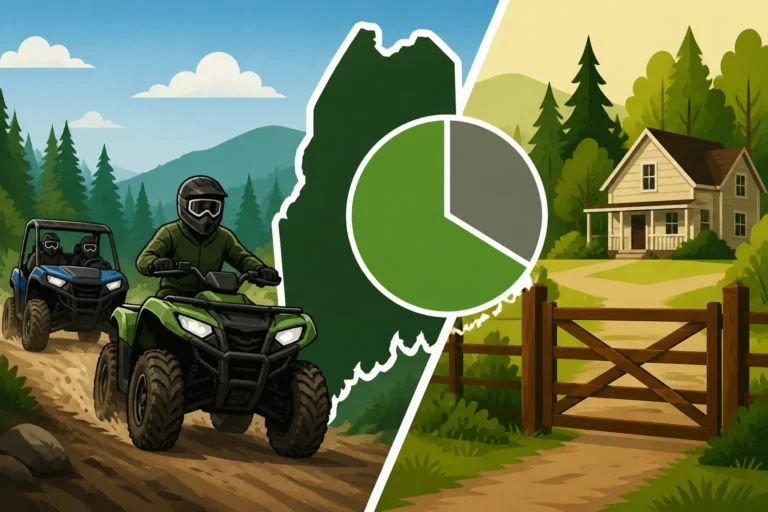
A restaurant appearing close to a trail on a map does not necessarily mean you can ride directly to its door. Maine ATV trails often cross private land, and access depends on permission, club agreements, municipal rules, and seasonal trail status. A short gap on a map may require a legal road connection, a longer detour, or parking the ATV and walking.
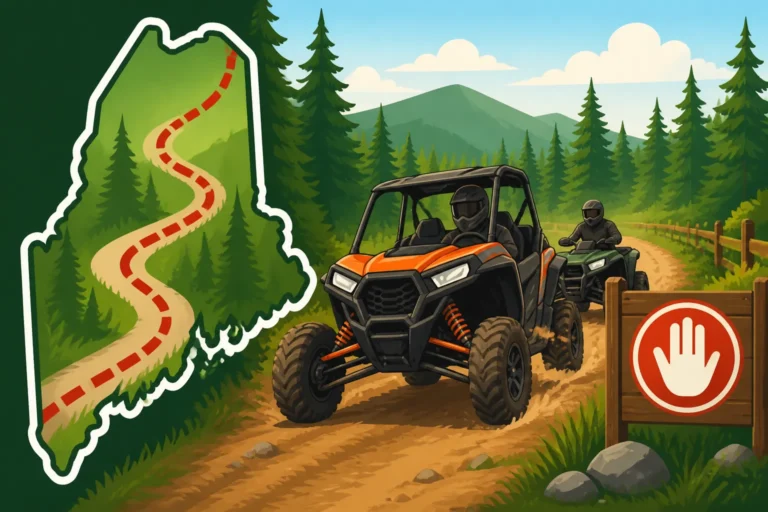
Before planning a meal stop, look for a route that is clearly marked as open to ATVs and confirm that any connecting road is an authorized ATV-access route. Local club maps and trail signs are especially useful because they can clarify where a trail ends, where a road section begins, and whether an access point reaches the village center. For broader background, see [Maine ATV Trails That Reach a Restaurant] and [Maine ATV-Access Routes and How Towns Post Them].
It is also worth checking with the restaurant or a nearby business about where riders should park. A machine-friendly route does not automatically make a restaurant’s lot an approved ATV parking area. If there is no clearly designated place to leave your machine, park at an authorized staging area and walk, or choose another stop. That small check can prevent a meal break from becoming an awkward conversation with a property owner.
Make the meal part of the route, not an afterthought
Start with the kind of ride you want, then choose a food stop that fits. A short family outing may call for a café or casual lunch in a nearby village. A longer day in a remote area may work better with a planned stop in a service town, plus water and snacks packed for the trail. Avoid building a tight schedule around a restaurant’s opening time: trail conditions, group pace, and road crossings can all add time.
Use a map to compare the trail network, staging locations, and food options, but verify important details separately. onX Offroad can help you see the relationship between trails, roads, and nearby towns while you plan. Treat the map as a planning aid rather than permission to ride: confirm access with the local ATV club or town, and follow posted closures and signs on the ground.
| Riding area | Useful food-stop town | What to plan for |
|---|---|---|
| Moosehead Lake region | Greenville | Check route access into town and plan around busy seasonal periods |
| The Forks and Jackman area | The Forks or Jackman | Carry snacks and water; services can be farther apart on remote rides |
| Katahdin region | Millinocket | Confirm the route from the trail network and identify legal parking |
| Aroostook County | Presque Isle, Caribou, or Fort Kent | Choose a stop that fits the day’s loop and check club trail connections |
| Western Maine | Rangeley | Verify seasonal trail status and whether the route reaches the village area |
The table is a starting point, not a promise that a specific trail reaches a specific restaurant. Trail connections, business hours, and parking arrangements can change. Before loading the trailer, review [Maine ATV Trail Maps and Club Boundaries], [Maine ATV Trail Parking and Staging], and [Checking Maine Trail Status Before You Drive].
Maine Riding Areas With Practical Food Stops
Greenville and the Moosehead Lake region
Greenville is a natural place to plan a meal during a ride in the Moosehead Lake region. Riders may find a range of casual dining and takeout options in town, making it a useful place to pause before or after exploring the surrounding trail network. But don’t assume that every trail leads into the village or that a machine can be ridden right to a business. Check the specific route, including any public-way segments, before you set out.
If your ride heads toward Kokadjo or other remote riding areas, think carefully about where you want to eat. A stop in Greenville may work well at the beginning or end of the day, while a mid-ride meal could require backtracking. Plan fuel, daylight, and the slowest rider’s pace into the same schedule. For route ideas and local context, see [Greenville and Rockwood ATV Trails] and [Riding From Greenville to Kokadjo].
In a group, agree on a rendezvous point before leaving the staging area. Cell reception can be limited in rural parts of the region, so a group that gets separated may not be able to coordinate a new lunch plan by phone. Share the route, decide what to do if someone needs to turn back, and carry a paper map or offline navigation as a backup. onX Offroad may help you inspect the route and nearby roads in advance, but it should not replace trail signs or local access information.
The Forks and Jackman
The Forks and Jackman are useful reference points for riders exploring western Maine, but the practical distance between food, fuel, and trail access can feel different from what it looks like on a road map. A trail ride may take longer than a car trip over the same general area, and a direct-looking line may not be an approved route. Plan the stop around known legal connections rather than assuming you can ride along any road or cut across private property.
For a remote ride, eat before departure or choose a meal stop near the start or finish of the loop. Bring enough water and snacks to handle delays, especially if weather, mud, or a downed tree slows the group. It’s tempting to rely on a quick meal becoming available exactly when you arrive, but a kitchen may have limited hours or a business may be busy during peak riding days. Check directly before committing your group to a particular stop.
Use [ATV Riding Around The Forks and Jackman, Maine] to explore the area’s riding context, and check [Maine ATV Trails With Roadside Fuel] if fuel access is also part of your route planning. Keep fuel and food stops distinct in your plan: a place that sells fuel may not offer a meal, and a restaurant may not be near a legal refueling option.
Millinocket and Aroostook County
Millinocket can be a practical meal stop for riders exploring the Katahdin region, while Presque Isle, Caribou, and Fort Kent serve as useful planning anchors in Aroostook County. In either region, the key question is not simply whether food is available in town. It is whether your planned trail route connects legally to the town, whether there is suitable parking, and whether the timing works for your group.
Aroostook County’s distances can make a meal stop feel like a major part of the day rather than a quick break. Decide whether you are riding a local loop, connecting between communities, or returning to the same staging area. Riders heading toward Fort Kent can review [Riding to Fort Kent by ATV] as part of their planning, then verify current trail conditions and access with the relevant local club.
If you are unfamiliar with the region, keep your first day conservative. Choose a shorter loop with a town stop you can reach without rushing, and leave room for a route change. A place that seems “just over there” on a phone screen may be separated from your trail by a closed segment, a private road, or a crossing that is not permitted. This is where local maps and club updates matter more than a straight-line estimate.
Choosing a Stop and Preparing for the Meal Break
Pick food that suits your group and schedule
For a short outing, a simple takeout meal or café stop may be easier to fit in than a long sit-down lunch. Families with children, newer riders, and groups with different energy levels often do better with a predictable break and a clear departure time. On longer rides, a sit-down meal can be a welcome chance to rest, but it may extend the day more than expected.
Think about what your group actually needs. A quick snack stop may be enough for riders who packed lunch, while a full meal can make sense after a long loop or before a return ride. If someone in the group has dietary needs, call ahead rather than assuming a small-town menu will have an option that works. Bring a backup snack for the trail so a delayed meal does not become a safety or mood issue.
Seasonality matters as well. Restaurants and other businesses in trail towns may adjust hours with the season, day of the week, or local events. Check the business directly before riding, and have a second option in mind. That backup can be another restaurant, a packed lunch at a legal rest area, or an earlier stop in a larger service town.
Treat parking and rider conduct as part of the plan
Arrive at a restaurant only by a legal route, and use parking that the business or town has approved for ATVs. Don’t block entrances, sidewalks, fire lanes, or customer parking while you look for a place to leave your machine. If there is no obvious arrangement, ask before unloading or parking. A polite question can protect both your group and future riders.
Keep helmets, gloves, and muddy gear organized, and be considerate of customers who are not riding. If your group is dusty, muddy, or noisy after a long day, take a moment to clean up as best you can before going inside. Keep engines off while parked and avoid unnecessary revving near homes or businesses. Small gestures like these help maintain good relationships between riders and local communities.
Maine’s trail access depends heavily on landowner goodwill, so your conduct at a restaurant stop can matter beyond the meal itself. Respect property boundaries, follow signs, and do not use a business lot as a shortcut to a trail unless the owner has clearly allowed it. For more on responsible riding, read [Maine ATV Trail Etiquette With Landowners].
A Simple Checklist for a Food Stop on Your Ride
Before leaving home
Choose your trail loop and identify one primary meal stop plus a backup. Confirm that the trail is open and that the route into the town is authorized. Check restaurant hours, ask about ATV parking, and make sure the group knows where to meet if anyone gets separated. Download or save the maps you need in case cell coverage drops.
Use onX Offroad to review the general layout of your route and nearby roads, then compare that plan with local club information and signs. Check the trail status again before you drive to the staging area; rain, maintenance work, or seasonal conditions can change what is rideable. Review [Maine Trail Opening Announcements] if your trip is near the start of the riding season.
Pack water, a snack, basic first-aid supplies, and clothing suitable for the weather. Even if lunch is planned, a delay can push the stop later than expected. If you are riding with children or newer riders, build in extra time rather than relying on a fast pace to meet a reservation or closing time.
Before leaving the trail for town
Confirm that the next section is open and that you are following the posted route. Slow down near homes and businesses, keep your group together, and obey all road-crossing and town rules. If a sign or closure conflicts with your saved route, follow the sign and choose a legal alternative rather than trying to improvise across private land.
When you reach town, use only approved parking and be courteous to other customers. After the meal, retrace the route you planned or continue on a verified trail connection; don’t assume the return route is identical if your ride has changed. A little flexibility makes the stop more enjoyable and helps keep access open for everyone.
A well-planned restaurant break can make a Maine ATV day more comfortable, but the meal should fit the ride—not determine whether you take an uncertain route. Choose a realistic town stop, verify trail and road access, check business details directly, and carry enough food and water to handle delays. That preparation leaves more room to enjoy the ride and less chance of discovering a closed trail or full parking lot when everyone is hungry.
Disclaimer
This article is for general informational purposes only and does not constitute professional advice. Laws, prices and regulations vary by location and change over time. Consult a qualified professional for guidance on your specific situation.