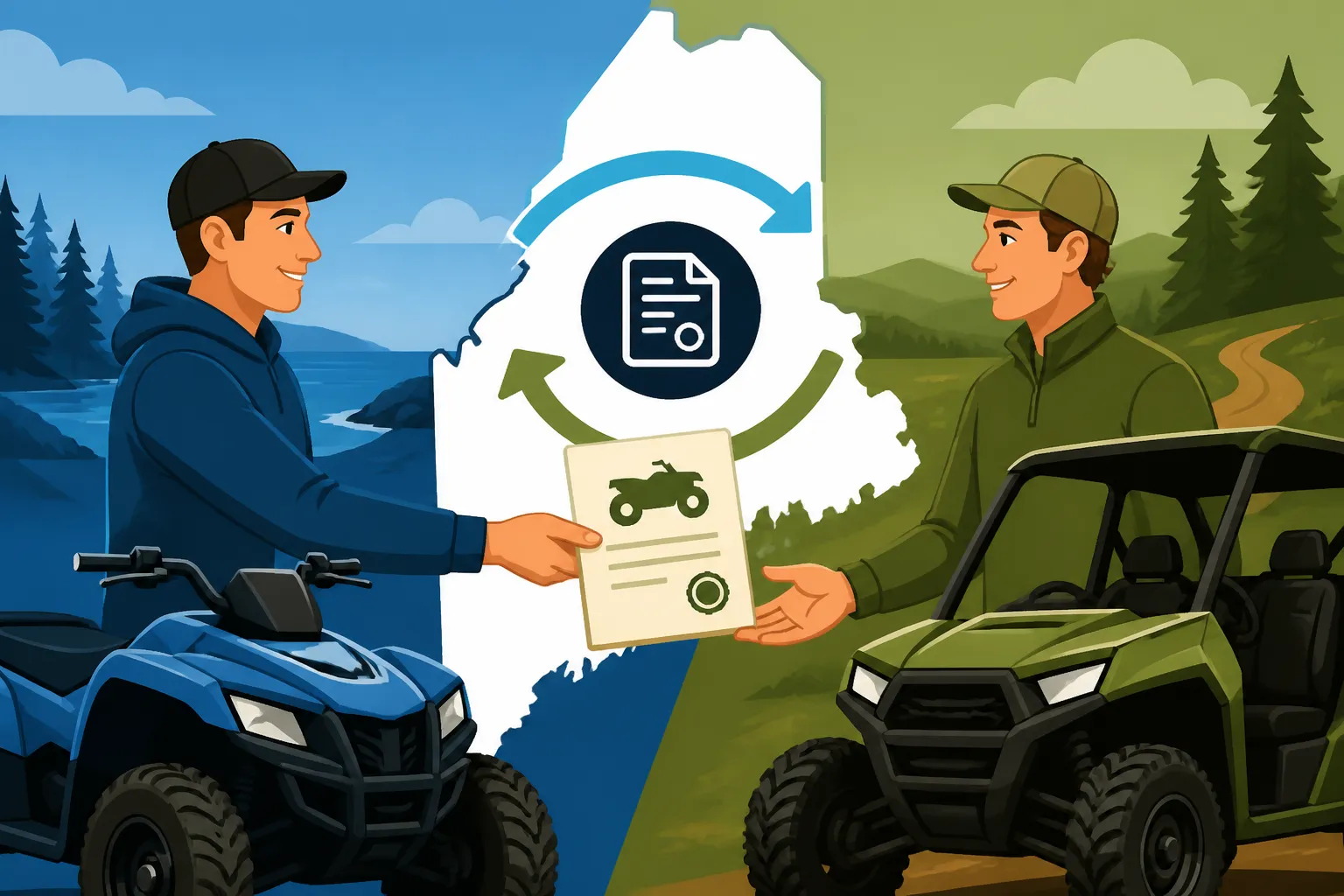
ATV Registration Transfers Between Owners
There’s nothing quite like the excitement of bringing home a new-to-you ATV or UTV, whether you’ve just sealed the deal on a private sale or inherited a trusty machine from a family member. But that initial thrill can quickly turn into a headache when you realize the registration isn’t just a simple name change. Navigating the paperwork, understanding sales tax, and figuring out what Maine officials need can feel like a maze. This guide is here to untangle that process, walking you through everything you need to know about transferring an ATV registration between owners in our beautiful state, so you can spend less time at the town office and more time on the trails.
Understanding the Maine ATV Registration Transfer Process
When you acquire an ATV or UTV in Maine, whether it's through a purchase, a gift, or inheritance, the existing registration doesn't automatically transfer with the machine. It's a bit different than buying a car, where the title is the primary focus. With ATVs and UTVs in Maine, the registration is key, and it requires a specific process to get it into your name. This isn't just a bureaucratic hoop; it's a vital step to ensure legal ownership and trail access.
Why Transfers Are Crucial After a Sale
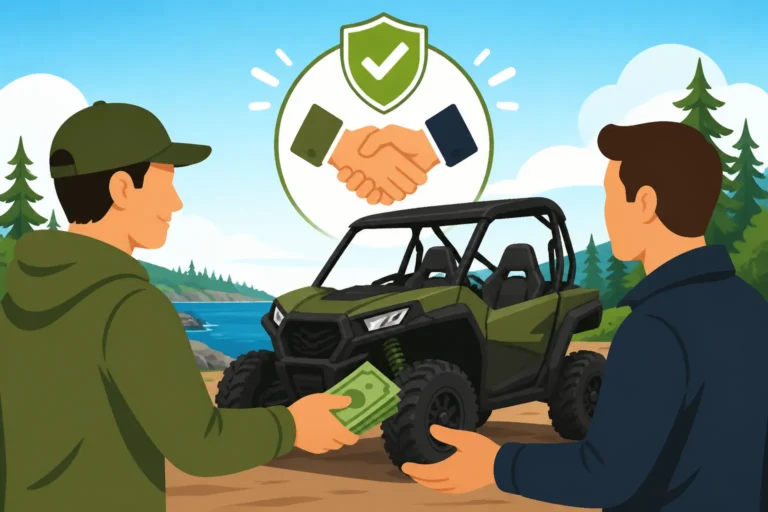
Imagine you've just bought a gleaming quad from a private seller in a neighboring town. You shake hands, hand over the cash, and load it onto your trailer, eager to hit the trails next weekend. Without properly transferring the registration, however, that machine is still legally tied to the previous owner. This can lead to all sorts of issues. If the old owner reported it stolen for some reason, or if a warden stops you and the registration doesn't match your identity, you could face significant legal hurdles. A proper transfer updates the state's records, officially recognizing you as the new owner and linking the machine's unique identification number (VIN) to your name and address. It's your legal proof that you belong on the trails, and it's essential for avoiding [Penalties for Riding an Unregistered ATV in Maine].
More than just legalities, a clean transfer ensures that the machine's history is clear. If, down the road, you decide to sell it, having a continuous chain of ownership on record makes your machine more legitimate and easier for the next buyer to register. Skipping this step can create headaches for future transactions, potentially decreasing the resale value or making it difficult to prove your right to sell.
When a New Registration Isn't a Transfer
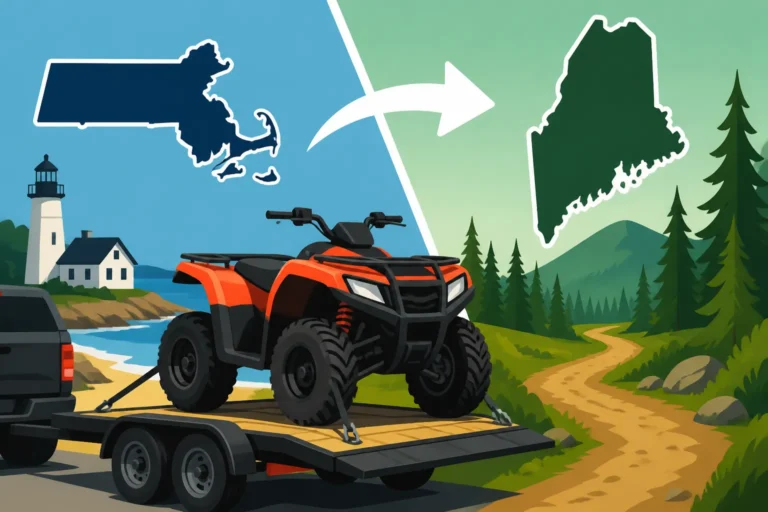
Sometimes, what feels like a "transfer" to you might actually be treated as a brand new registration by the state. This usually happens if the ATV has never been registered in Maine before, or if its previous Maine registration has lapsed for a significant period. For instance, if you're bringing an ATV into Maine from another state like New Hampshire or Massachusetts, even if you bought it from a previous owner, Maine will consider this a first-time registration in the state. Similarly, if you acquire an older machine that's been sitting in a barn for years with no current registration, you'll be starting fresh.
The distinction is important because the documentation requirements can vary slightly. For a true "transfer" (meaning, the machine was recently registered in Maine by the previous owner, and you're simply updating the ownership details), the process is generally more streamlined, often leveraging existing information. For a new registration, you might need more extensive proof of origin or sales tax documentation that wouldn't apply to a simple owner change on an already registered machine. It’s always best to prepare for a first-time registration scenario if there’s any doubt about the machine’s recent registration history. You might find our guide on [Maine ATV Registration After a Private Sale] helpful here.
Resident vs. Non-Resident Transfers
The process for transferring an ATV registration in Maine largely depends on whether the new owner is a Maine resident or a non-resident. For Maine residents, the transfer typically happens at your local town office or, in some cases, directly through the Maine Inland Fisheries & Wildlife (IF&W) online system for renewals. This localized approach allows for quicker processing and usually involves the town clerk verifying your residency.
For non-residents, the process is a bit different. You won't be registering through a Maine town office. Instead, non-resident registrations are handled directly through the Maine IF&W. While you can often complete a new non-resident registration online, understanding the specific requirements for proving ownership and tax payment for a transfer, especially if the ATV was previously owned by a Maine resident, is crucial. It's worth noting that Maine does not require non-residents to apply for a "transfer" of an existing Maine registration in the same way a resident might; rather, it’s usually treated as a new [Maine Non-Resident Annual ATV Registration] or [Maine Non-Resident Seven-Day ATV Registration] in their name, with proof of ownership being the primary requirement.
Required Documents for an ATV Registration Transfer
The key to a smooth ATV registration transfer is having all your ducks in a row when it comes to paperwork. There's nothing more frustrating than getting to the counter, waiting in line, and then being told you're missing a crucial piece of documentation. Understanding what's needed upfront will save you time and hassle.
Proof of Ownership: The Foundation
This is arguably the most critical document you'll need. Maine doesn't title ATVs and UTVs in the same way it titles cars, so your proof of ownership usually comes down to a bill of sale, a previous registration from another state (if applicable), or a manufacturer's certificate of origin (MCO) for a brand new machine. For a transfer between owners, especially in a private sale, a well-written bill of sale is your golden ticket. It clearly states who sold the machine, who bought it, the date of the sale, the purchase price, and a description of the ATV, including its Vehicle Identification Number (VIN).
Without clear proof of ownership, town clerks or IF&W staff cannot process your registration. They need to confirm that you legally own the machine you're trying to register. If you’re coming from a state that does title ATVs, bring that title with you, even though Maine doesn't issue one. It serves as excellent proof of prior ownership. Our guide on [Proof of Ownership for a Maine ATV Registration] delves deeper into these specifics.
The Importance of Your Prior Registration
While you, as the new owner, aren't directly "transferring" the old owner's registration in the sense of just changing the name on it, having the prior registration document is incredibly helpful. This is particularly true if the ATV was previously registered in Maine. The old registration contains vital information like the machine's VIN, make, model, and the previous owner's details, which can help verify the machine's identity and history. If the previous owner can provide their most recent Maine registration, it streamlines the process significantly for the town clerk.
If the previous owner cannot provide it, don't panic. A robust bill of sale will often suffice, especially if the machine's VIN is clearly stated. However, if the machine's history is murky or the VIN is hard to read, the absence of a prior registration might lead to additional scrutiny or requests for further verification. It's always best practice to ask the seller for their most recent registration card.
What Maine Town Clerks Look For
When you head to your local town office for an ATV registration transfer, the town clerk will be looking for a few specific things to process your request efficiently. First and foremost, they'll want to see your proof of ownership, typically a bill of sale. They'll scrutinize this document for completeness, ensuring all necessary fields are filled out, including the seller's signature and the machine's VIN. They'll also verify your residency if you're registering as a Maine resident. This usually means seeing a Maine driver's license or another form of identification that confirms your current address.
They'll also confirm if sales tax is due (more on that in a moment). Be prepared to pay the applicable registration fee and any sales tax directly at the counter. Having all your paperwork organized, perhaps in a folder, and being ready with payment, will make the process much smoother. Don't be shy about asking questions if you're unsure about anything; [Maine ATV Registration Questions Town Clerks Hear Most] might cover some of your initial thoughts, but a direct conversation is always best.
The Role of a Bill of Sale in Transfers
For most private ATV sales and subsequent registration transfers in Maine, the bill of sale isn't just a formality; it's a non-negotiable cornerstone. Without it, proving you own the machine and are therefore entitled to register it becomes incredibly difficult. Think of it as your primary legal contract documenting the exchange.
Crafting a Comprehensive Bill of Sale
A good bill of sale doesn't need to be fancy, but it does need to be thorough. It should clearly identify both the buyer and the seller, including their full names, addresses, and contact information. The date of the transaction is crucial, as is the exact purchase price agreed upon. Perhaps most importantly, the bill of sale must provide a detailed description of the ATV or UTV being sold. This includes the make, model, year (if known), color, and, critically, the full Vehicle Identification Number (VIN). The VIN is the unique identifier for the machine, and without it, the document is essentially useless for registration purposes.
Both the buyer and the seller should sign and date the document. While Maine doesn't typically require notarization for a bill of sale for ATV registration, having two copies – one for the buyer and one for the seller – is always a smart move. A comprehensive bill of sale protects both parties by documenting the terms of the sale and providing clear proof of ownership for the buyer, which is essential for your [Proof of Ownership for a Maine ATV Registration].
What to Include on Your Bill of Sale
When you're putting together a bill of sale, whether you're buying or selling, make sure these key pieces of information are present:
- Seller's Information: Full legal name, current address, phone number.
- Buyer's Information: Full legal name, current address, phone number.
- Date of Sale: The exact date the transaction took place.
- Purchase Price: The agreed-upon amount the buyer paid. If it was a gift, state "Gift" and list a nominal value for documentation if required by the town office (e.g., $1.00 or $0.00).
- ATV/UTV Description:
- Year (if known)
- Make (e.g., Polaris, Can-Am, Honda)
- Model (e.g., Sportsman, Outlander, Rancher)
- Color
- Engine Size (e.g., 500cc, 850cc)
- Full VIN: This is non-negotiable. Double-check it against the actual machine.
- Signatures: Both the buyer and seller must sign and print their names.
- "As-Is" Clause (Optional but Recommended for Sellers): A statement that the machine is being sold "as is, where is" without any warranties, express or implied. This helps protect the seller from future claims.
If you're looking for a reliable template, resources like LawDepot offer customizable bill of sale forms that can be easily adapted to include all the necessary details for an ATV sale in Maine. Using a professional template ensures you don't miss any critical information, making your trip to the town office much smoother. Having a complete and accurate document like this is crucial, especially when considering [Maine ATV Bill of Sale: What to Include].
Why a Bill of Sale Protects Both Parties
For the buyer, a bill of sale is their irrefutable proof that they now own the ATV. It proves they paid for it (or received it as a gift) and that the seller relinquished all rights to the machine. This is essential for registration, insurance, and in the unlikely event of a dispute over ownership. Without it, you could face significant challenges proving the machine is yours, especially if the previous owner decided to claim it was stolen or never sold.
For the seller, a bill of sale acts as a legal record that they no longer own the ATV. This is incredibly important for liability reasons. Once the bill of sale is signed, dated, and the machine has changed hands, the seller is no longer responsible for any incidents, accidents, or unpaid registrations related to that specific ATV. It closes the chapter on their ownership and protects them from potential legal issues down the line. It clearly defines the date of transfer of responsibility.
Sales Tax and Transfers in Maine
One of the most common questions and points of confusion when transferring an ATV registration in Maine revolves around sales tax. It's not always straightforward, and understanding when and how you'll pay it is key to avoiding surprises at the town office.
Understanding Maine Sales Tax on ATV Purchases
In Maine, you generally pay sales tax on the purchase of an ATV, just like you would on most other goods. This tax is typically calculated based on the purchase price listed on your bill of sale. If you're buying a new ATV from a dealer, they will collect the sales tax from you directly at the time of purchase and remit it to the state. This means when you go to register, you'll simply show proof that the sales tax has already been paid (usually via the dealer's invoice or paperwork), and you won't owe it again.
However, if you're buying a used ATV from a private seller, you as the buyer are responsible for paying the sales tax directly to the state when you register the machine. The town clerk processing your registration will calculate the sales tax based on the purchase price declared on your bill of sale. It's important to be honest about the purchase price, as deliberately understating it can lead to penalties if discovered. Be prepared to pay this amount, in addition to the registration fees, at the time of your visit. Our comprehensive guide on [Maine Sales Tax on an ATV Purchase] provides even more detail on this topic.
Use Tax: When You Bring an ATV into Maine
What if you bought your ATV outside of Maine and are now bringing it into the state to register? This is where "use tax" comes into play. If you purchased an ATV in another state and did not pay Maine sales tax on it, you're generally liable for Maine's use tax when you register it here. The use tax rate is typically the same as the sales tax rate. The idea is to ensure that vehicles brought into Maine are subject to the same tax burden as those purchased within the state, preventing people from avoiding sales tax by buying out-of-state.
There's often a credit for sales tax paid in another state. If you paid sales tax on the ATV in the state where you bought it, and that state's sales tax rate was equal to or higher than Maine's, you typically won't owe any additional use tax in Maine. However, if the out-of-state sales tax rate was lower, you might owe the difference. You'll need to provide proof of the sales tax paid in the other state when you register your ATV in Maine. This is a common scenario, and you can find more specific guidance in our article, [Use Tax When You Bring an ATV Into Maine].
Exemptions and Special Cases
There are a few situations where sales tax might not apply to an ATV transfer in Maine. The most common exemption is for gifts between immediate family members. If an ATV is genuinely given as a gift, and no money changes hands, it may be exempt from sales tax. However, you'll still need a bill of sale or a written statement clearly indicating it's a gift, and some town offices may require a nominal value (like $1.00) to be listed for their records. Always check with your local town office beforehand to understand their specific requirements for gift transfers.
Another potential exemption might involve trade-ins, where the value of a trade-in reduces the taxable amount of a new purchase. However, this usually applies to dealer transactions. If you're unsure whether your specific situation qualifies for an exemption, the best course of action is to contact your local town office or the Maine Revenue Services directly. They can provide definitive guidance based on the latest regulations.
Here's a quick reference table for sales tax scenarios:
| Scenario | Sales Tax Due? | How/When to Pay | Documents Needed for Proof |
|---|---|---|---|
| New ATV from Dealer in ME | Yes | Paid to dealer at time of purchase | Dealer's invoice/paperwork |
| Used ATV from Private Seller in ME | Yes | Paid to town office/IF&W at registration | Bill of sale showing purchase price |
| ATV Bought Out-of-State | Yes (Use Tax) | Paid to town office/IF&W at registration | Bill of sale, proof of out-of-state sales tax paid (if any) |
| ATV Received as a Gift | Usually Exempt (check local office) | Not applicable, or nominal value may be subject to tax | Gift letter/bill of sale stating "gift" |
Special Scenarios in ATV Registration Transfers
While most transfers involve a straightforward sale, life sometimes throws curveballs. Knowing how to handle less common situations, like inheritance or gifting, can save you a lot of stress when it comes time to register the machine in your name.
Inheriting an ATV in Maine
It's never easy to deal with paperwork when you're grieving, but if you've inherited an ATV or UTV in Maine, there's a process to transfer its registration. Typically, you'll need documents proving you are the legal heir or executor of the estate. This might include a copy of the death certificate, the will (if applicable), and court documents (such as letters of administration or testamentary) that designate you as the person authorized to manage the deceased's assets.
When you go to register the ATV, you'll generally present these documents along with a completed bill of sale (or an affidavit of inheritance if a formal bill of sale isn't possible, often stating a nominal value like $1.00). The town clerk will need to see clear evidence that the machine has legally passed to you. This ensures that the state's records accurately reflect ownership and that you can legitimately operate the ATV on public trails. For more detailed information on this sensitive topic, refer to our article on [Inheriting an ATV in Maine].
Gifting an ATV to a Family Member
Gifting an ATV or UTV to a family member is a wonderful gesture, but it still requires proper documentation for registration. While it might be exempt from sales tax in many cases (as discussed earlier), you still need a written record of the transfer of ownership. A bill of sale, even if it states a nominal purchase price of $0.00 or $1.00 and clearly marks the transaction as a "gift," is usually the best approach.
This document should include all the standard information: the donor's name and address, the recipient's name and address, the date of the gift, and a full description of the ATV, including its VIN. Both parties should sign it. This ensures that the recipient has valid proof of ownership to present at the town office. Without this formal documentation, the town clerk might be unable to process the new registration, as they need to establish a clear chain of ownership, even for gifts. Our guide on [Gifting an ATV and the Registration That Follows] can offer more insights here.
Transferring a Registration After an Engine Swap or Rebuild
Sometimes, an ATV or UTV undergoes significant modifications, such as an engine swap or a complete rebuild. If the original frame and VIN remain intact, the process is generally a standard registration transfer based on your proof of ownership (bill of sale). However, if the VIN plate is damaged, missing, or the machine is essentially a "homemade" creation using various parts, the situation becomes more complex.
For a simple engine swap where the frame VIN remains clear, you usually won't need to do anything special beyond the regular transfer process. The registration is tied to the VIN on the frame, not the engine. However, if you're dealing with a rebuilt ATV where the VIN might be an issue, or if you've assembled a machine from scratch (like a homemade UTV frame), you might need to apply for a state-issued VIN or undergo a VIN verification process. This often involves an inspection by law enforcement or IF&W to ensure the machine is not stolen and to assign a new, legitimate identifier. This is a much rarer scenario, but one that warrants direct communication with IF&W or your town office before attempting to register. Our article on [Registering a Machine After an Engine Swap] can provide context for this situation.
Completing Your Transfer and Getting on the Trails
You've got your paperwork, you understand the tax implications, and you've navigated any special scenarios. Now, it's time for the final step: getting that registration into your name and hitting the trails! The process is generally straightforward once you're prepared.
Where to Complete Your Transfer
For Maine residents, the most common and often quickest place to complete your ATV registration transfer is at your local town office. Many towns in Maine are designated registration agents for IF&W and can process ATV and UTV registrations on the spot. You'll simply bring all your required documents, pay the necessary fees and any applicable sales tax, and walk out with your new registration card. This is also usually where you'll receive your temporary paper permit to ride immediately. Our guide [Registering an ATV at Your Maine Town Office] explains this process in detail.
If you are a non-resident, or if your town office is not equipped to handle ATV registrations (though most are), you can also register through the Maine Inland Fisheries & Wildlife (IF&W) directly. Their website often provides options for online registration renewals and sometimes new registrations, though first-time private sale transfers might still necessitate a mail-in process with original documents. Always check the IF&W website for the most current options and procedures, especially if you're a non-resident or live in an unorganized territory.
Immediate Riding with a Confirmation Page
Once your registration transfer is successfully processed, whether at the town office or through the IF&W, you'll typically receive a temporary registration permit or a confirmation page. This document is crucial because it allows you to legally operate your ATV or UTV immediately while you wait for your official decals to arrive in the mail. Maine law generally allows you to ride with this temporary permit for a specific period (often 30 days) provided you carry it with you.
It's vital to print this confirmation page or keep the temporary permit physically with you whenever you're riding. Maine Wardens will often ask for it if your official stickers aren't yet affixed to your machine. Don't risk a fine by riding without it! Remember, the temporary paper shows your machine is registered and you are the owner, even if the physical decals haven't made their way to your mailbox yet. Learn more about this in [Printing a Registration Confirmation Page].
How Long to Wait for Your New Decals
After completing your registration transfer, the official registration decals (stickers) for your ATV or UTV are usually mailed to you by the Maine IF&W. The turnaround time can vary, but generally, you can expect to receive them within a few weeks. Peak registration periods, such as the spring riding season or late fall before snowmobiling, might see slightly longer delays due to increased volume.
As mentioned, you can ride legally with your temporary permit during this waiting period. Once your decals arrive, make sure to affix them properly to your machine as required by Maine law. They typically go on the side of your machine, clearly visible. Keeping your registration current and your decals properly displayed is part of being a responsible ATV owner in Maine. For a more precise idea of timelines, check out [Maine ATV Registration Sticker Delivery Time].
Disclaimer
This article is for general informational purposes only and does not constitute professional advice. Laws, prices and regulations vary by location and change over time. Consult a qualified professional for guidance on your specific situation.