Speed Limits on a Maine ATV-Access Route
Navigating Maine's vast and beautiful trail network on your ATV or UTV is one of the greatest joys of living here or visiting. But let's be honest, those moments when the trail suddenly spits you out onto a section of public way – an "ATV-access route" – can be a bit confusing. You're trying to figure out if you're even allowed to be there, let alone what the speed limit might be. It's a real head-scratcher for many riders, and nobody wants to risk a ticket or, worse, an accident because they weren't clear on the rules. This guide is here to untangle the specifics of speed limits on Maine's ATV-access routes, giving you the clarity and confidence to ride responsibly and enjoy your time on the trails and roads less traveled.
Understanding Maine's ATV-Access Route System
Before we dive into the numbers, it’s really helpful to understand what an ATV-access route is and why it exists in the first place. Maine has done an incredible job creating a comprehensive trail system, but sometimes, to connect one section of trail to another, or to allow riders to access a gas station, restaurant, or lodging, there's no choice but to utilize a segment of a public road. That's where these special routes come into play.
What Exactly is an ATV-Access Route?
An ATV-access route isn't just any old road you decide to ride your quad on. These are specific sections of public ways that a town or municipality has officially designated and marked for ATV and UTV use. Think of them as bridges between trail sections or pathways to essential services. They are typically established by local ordinance after a lot of consideration by town officials, often in cooperation with local ATV clubs. [Maine ATV-Access Routes and How Towns Post Them] goes into more detail about how these routes come to be. You'll usually see clear signage indicating that ATVs and UTVs are permitted, often with specific hours of operation or other restrictions. Without that official designation and signage, that public road is generally off-limits to your off-road machine, except for very limited, specific situations like the [Maine's 500-Yard Limit on a Public Way] for crossing.
These routes are crucial for making our interconnected trail system functional. Without them, riders would be forced to trailer their machines for short distances between trailheads, which defeats a lot of the convenience and pleasure of a long ride. When you see one of these signs, it's a welcome sight, indicating you're on a legal thoroughfare for your ATV or UTV. However, this permission comes with responsibilities, especially regarding how you operate your machine.
The "Why" Behind Designated Routes
The primary purpose of designating ATV-access routes is to facilitate access and connectivity. Imagine you're on a fantastic 50-mile loop, but there's a river crossing that requires you to use a short bridge on a town road. Or maybe you're running low on fuel and the nearest gas station is just a quarter-mile down a public street. These routes allow you to legally bridge those gaps. They're not intended for joyriding on public roads for extended periods, but rather as necessary connectors to keep your adventure flowing. They enable riders to reach amenities like stores, repair shops, and dining establishments, which in turn supports local businesses in many rural Maine communities.
Another key reason for these routes is safety and regulation. By officially designating specific roads, towns can control where ATVs and UTVs operate, minimizing conflicts with other traffic and pedestrians. They can also set specific rules for these routes, including speed limits, which brings us to the core of our discussion. These routes are a testament to the collaborative spirit between ATV enthusiasts, clubs, and local governments, all working together to create a safe and enjoyable riding environment for everyone.
Navigating Speed Limits on These Routes
Now, let's get down to the nitty-gritty: what speed can you actually go when you're on one of these designated ATV-access routes? This is where many riders get confused, often assuming that because it's an ATV route, normal road rules don't fully apply. That assumption can lead to trouble.
The General Rule: Default Speed Limits
In Maine, when you're on an ATV-access route, you're essentially operating your ATV or UTV on a public way. This means you must adhere to the posted speed limits for that road. If there's a sign saying 25 MPH, that's your limit. If it's a gravel road with no specific posted speed limit for that section, you should still default to what's reasonable and prudent, but legally, many of these access routes have a statutory default speed limit that applies to ATVs. For instance, in areas not otherwise posted, such as a compact or built-up section of a city or town, the speed limit for ATVs on access routes is often 20 miles per hour, or even lower in certain circumstances.
It’s crucial to remember that your ATV or UTV, especially if it’s equipped with performance parts from a company like SuperATV, might feel capable of going much faster. However, the legal limit is the legal limit, and operating above it carries the same risks and penalties as it would in a car. Always be aware of your surroundings, and don't assume that because the road looks empty, you can open it up.
Posted Limits vs. Statutory Limits
So, how do you tell the difference?
- Posted Limits: These are easy to spot. Look for the white rectangular signs with black numbers indicating speeds like "25 MPH" or "35 MPH." These signs override any general statutory speed limits. If a town has designated an access route and put up a 35 MPH sign, then 35 MPH is your limit, provided it's safe to do so.
- Statutory Limits: These are the default speeds set by state law for areas where no signs are posted. For ATVs on access routes, particularly in residential or compact areas, this default is often 20 MPH. However, a town could have a specific ordinance that sets a different default for their ATV access routes if not otherwise posted.
The key takeaway here is to always look for the signs first. If you don't see a sign, then you must revert to the general statutory limits for ATVs on public ways, which are typically much lower than what you might be used to on open trails. Always err on the side of caution. [Maine ATV Speed Limits Near Buildings] delves into the reasons behind these lower limits in populated areas.
| Scenario on ATV-Access Route | Speed Limit Rule | Typical Speed | Enforcement Focus |
|---|---|---|---|
| Clearly Posted Sign | Adhere strictly to the posted speed limit. | Varies (e.g., 25 MPH, 35 MPH) | Visible signage, radar, common sense |
| No Posted Sign (Residential/Built-up Area) | Default statutory limit for ATVs on public ways in compact areas. | Often 20 MPH (or less by local ordinance) | Safety, noise, dust, pedestrian proximity |
| No Posted Sign (Rural/Open Gravel Road) | Default statutory limit, but always "reasonable and prudent." | Often 20-30 MPH (if not otherwise specified) | Road conditions, visibility, wildlife |
| Near Schools/Churches | Strict adherence to lower posted limits, extreme caution. | Often 15 MPH or less (if posted) | Child safety, quiet zones |
Factors Influencing Safe Speeds
Even if a speed limit is posted, it doesn't mean you should always go that fast. Operating an ATV or UTV requires constant vigilance, and external factors can significantly impact what a "safe" speed truly is.
- Road Conditions: Is it paved, gravel, dirt, or heavily rutted? Wet leaves, loose gravel, or mud can dramatically reduce traction and require a slower pace.
- Visibility: Fog, heavy rain, snow, or even bright sunlight can obscure your view of pedestrians, oncoming traffic, or obstacles. Night riding also inherently requires slower speeds, even with good headlights.
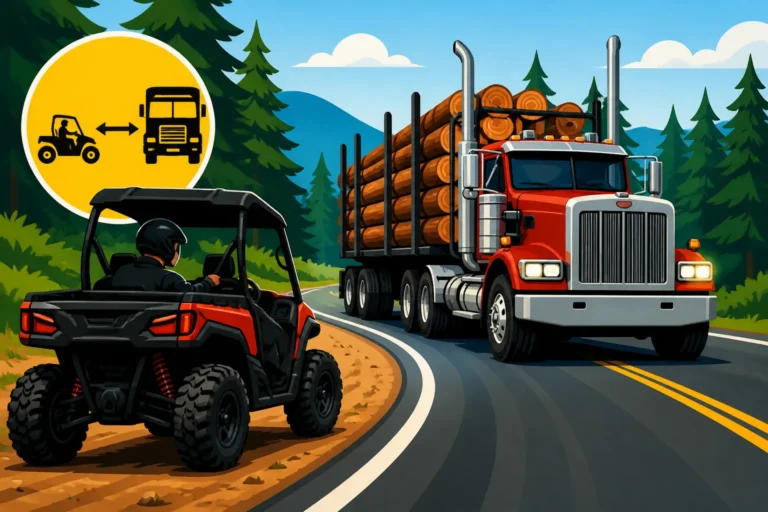
- Traffic and Pedestrians: ATV-access routes are shared spaces. You must be prepared for cars, trucks, bicycles, and people walking, especially in residential or village areas. A SuperATV mirror kit can be a huge help here, giving you better awareness of what’s behind you. Slow down, be courteous, and anticipate others.
- Residential Areas: Even if not specifically posted lower, the presence of homes, driveways, and children playing means you should significantly reduce your speed to minimize noise, dust, and the risk of an unexpected encounter.
Remember, the "reasonable and prudent" rule always applies, regardless of the posted speed. If conditions are poor, go slower than the posted limit. It's about safety first, for you and everyone else on or near the route.
Specific Scenarios and Safety Considerations
Riding on ATV-access routes presents unique challenges. Unlike dedicated trails where you primarily worry about natural obstacles and other ATVs, here you're mingling with traditional road traffic and people who might not be expecting an ATV.
Riding Through Congested Areas
When you're rolling through a village center, past homes, or near businesses on an ATV-access route, your speed and awareness need to be at their peak. These are the areas where complaints about noise, dust, and perceived recklessness often arise, leading to towns imposing [Maine Town Ordinances That Restrict ATVs].
- Be Mindful of Noise: The roar of an engine that sounds thrilling on an open trail can be incredibly disruptive in a residential neighborhood. Keep your speed down, avoid excessive revving, and ensure your machine has a properly functioning muffler and spark arrestor.
- Control Your Dust: On dry, gravel access routes, ATVs and UTVs can kick up significant dust. This isn't just a nuisance; it can impair visibility for other drivers and cover homes and businesses. Slowing down considerably in dry conditions is a simple act of courtesy that goes a long way toward maintaining good landowner relations.
- Watch for Pedestrians and Pets: Children, dog walkers, and other pedestrians might not be expecting an ATV, especially if they're used to a quiet road. Maintain a very slow speed, be ready to stop, and make eye contact if possible.
Road Conditions and Equipment
The type of road you're on can drastically affect how your ATV handles, and your equipment plays a role too.
- Gravel Roads: Many ATV-access routes are on gravel. Loose gravel can be treacherous, especially when turning or braking. Your off-road tires, while great for trails, might behave differently on these surfaces than a car tire would. Speed needs to be tempered to maintain control. [Maine ATV Rules on Dirt Town Roads] provides further context on these types of surfaces.
- Paved Sections: While less common, some access routes might include short paved sections. Here, your knobby tires have less grip than on dirt, and sudden braking or sharp turns can be tricky. Be extra cautious of traffic and painted lines.
- Equipment Upgrades: Investing in quality accessories can enhance safety on these routes. For instance, SuperATV offers various components like improved brake lines, lighting kits, and suspension upgrades that can make your machine more predictable and visible on public ways, allowing you to operate safely within the legal speed limits. Ensuring your lights, signals, and horn are all in perfect working order is not just smart, it's often legally required.
Avoiding Common Pitfalls and Penalties
Riding an ATV or UTV on a public road, even a designated access route, means you're subject to state motor vehicle laws as well as specific ATV statutes.
- Wardens Are Watching: The Maine Warden Service regularly patrols these routes. They are looking for speed violations, unregistered machines, improper helmets, and, unfortunately, operators under the influence. [Maine Warden Enforcement on Public Ways] is a good read to understand their purview.
- Penalties Are Real: Getting caught speeding on an ATV-access route can lead to fines, just like in a car. More serious violations, like reckless operation, can result in significant penalties and even loss of riding privileges. [Maine Fines for Reckless ATV Operation] outlines some of these consequences. It's simply not worth the risk to yourself or others.
- Be Prepared: Always carry your valid ATV registration, proof of insurance (if required), and any safety course certificates. These are often the first things a warden will ask for if you're stopped.
Beyond Speed: Other Important Rules on Access Routes
While speed limits are crucial, they are just one piece of the puzzle. Operating safely and legally on an ATV-access route involves adherence to a broader set of rules. Think of it like driving a car; there's more to it than just watching your speedometer.
Yielding and Right-of-Way
When you're on an ATV-access route, you are sharing the road with other vehicles – cars, trucks, motorcycles, and bicycles. You must treat every intersection and driveway with the same caution and adherence to right-of-way rules as you would in a car.
- Stop Signs and Yield Signs: Always come to a complete stop at stop signs and yield to traffic at yield signs. There's no exception for ATVs on access routes. Failing to do so is not only dangerous but a direct violation that wardens frequently enforce. [Maine's Stop-and-Yield Rule Before a Public Way] emphasizes the importance of these basic traffic laws.
- Entering Public Ways: When an access route connects to or crosses a main public road, you generally must yield to all existing traffic on that public way. It's often safer to stop, look both ways thoroughly, and proceed only when it's completely clear.
- Interactions with Vehicles: Be aware that some drivers might not expect an ATV. Drive predictably, use hand signals if appropriate, and always assume other vehicles might not see you. Making eye contact with other drivers can help ensure you've been noticed.
Operating Under the Influence
This cannot be stressed enough: never operate an ATV or UTV on an access route, or any trail, under the influence of alcohol or drugs. Maine has a zero-tolerance policy for operating under the influence (OUI) on recreational vehicles. The laws are just as strict as they are for cars, and the penalties are severe, including hefty fines, loss of license, and even jail time. There is no distinction between riding on a remote trail and riding on a designated public way when it comes to OUI enforcement. It's incredibly dangerous, puts everyone at risk, and is simply not worth it. If you're planning on enjoying adult beverages, make sure your ATV is parked for the duration, or designate a sober driver.
Passenger and Helmet Rules
Just like on trails, specific rules apply to passengers and helmet use when on ATV-access routes. These are typically dictated by age and can vary slightly.
- Helmet Requirements: While adults over a certain age may not be required to wear a helmet on private land, Maine law generally mandates helmets for riders and passengers under the age of 18 when operating an ATV or UTV on a public way, including designated access routes. Always double-check the current regulations, but it's always safest for everyone to wear a DOT-approved helmet. [Maine Helmet Rules for Riders Under 18] explains this in detail.
- Carrying Passengers: Your ATV must be designed by the manufacturer to carry more than one person to legally carry a passenger. Riding double on a single-rider ATV is illegal and extremely dangerous, whether on a trail or an access route. UTVs, designed for multiple occupants, have specific rules regarding seat belts and passenger containment, which should always be followed.
- Age Restrictions: Maine has age restrictions for ATV operators, particularly for younger riders. These rules apply equally to ATV-access routes. Be sure any young rider is of legal age and has completed the mandatory safety course before operating on any public way.
By understanding and adhering to all these rules, not just the speed limits, you contribute to a safer, more sustainable riding environment for everyone. Maine's trail system, including its access routes, is a privilege that we all need to protect through responsible operation.
Disclaimer
This article is for general informational purposes only and does not constitute professional advice. Laws, prices and regulations vary by location and change over time. Consult a qualified professional for guidance on your specific situation.