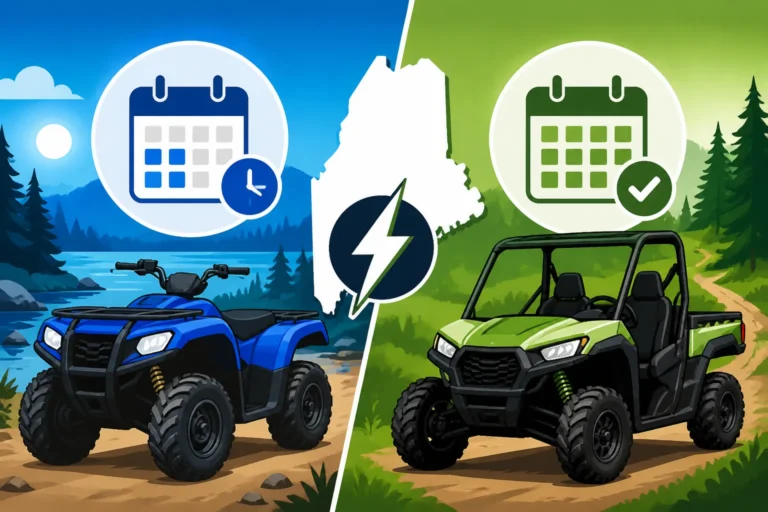
Maine’s Non-Resident ATV Registration Options
It’s incredibly frustrating to plan a perfect Maine ATV or UTV trip, load up your machine, drive all the way here, and then realize you haven't handled the necessary paperwork to legally hit our amazing trails. Many out-of-state riders, whether you're coming up from Massachusetts, New Hampshire, New York, or even our Canadian neighbors, don't realize that Maine requires every ATV and UTV to be registered within the state, even if it's already registered back home. This comprehensive guide is here to walk you through all of Maine's non-resident ATV registration options, ensuring you know exactly what you need to do before your tires ever touch a trail.
Navigating Maine's Non-Resident ATV Registration: Why It Matters
Maine boasts thousands of miles of incredible ATV and UTV trails, weaving through dense forests, along scenic lakes, and over rolling hills. It's a rider's paradise, no doubt about it. But enjoying these trails responsibly means understanding and adhering to our state's regulations, and for non-residents, that starts with proper registration. It's not just about avoiding a fine; it's about contributing to the maintenance and expansion of the very trails you're here to enjoy.
Who Needs a Maine Non-Resident ATV Registration?
Simply put, if you live outside of Maine and plan to operate an ATV or UTV on any Maine trail, private land (unless you own it or have explicit, direct permission and are operating only on that land), or designated ATV access route, you need a non-resident registration. This applies whether you're visiting for a day, a weekend, a week, or the entire season. It doesn't matter if your machine is fully registered in your home state or province; Maine's laws require its own registration sticker and accompanying paperwork for operation within our borders. Think of it like a temporary driver's license for your machine – it grants you permission to ride here. This includes everyone from the occasional vacationer to the seasonal camp owner who keeps their machine here all summer.
When you're eyeing a used machine, especially from an out-of-state seller, it's always smart to perform a [Checking Whether a Used ATV Is Registered] search beforehand, even if you plan to register it in Maine anyway. It can give you some peace of mind about the machine's history.
The Importance of Registering Before You Ride
Many riders think they can just show up and register their ATV on the fly. While some options offer quick turnaround, it's never a good idea to operate an unregistered machine. Not only is it illegal, carrying potential fines and headaches, but it also demonstrates a lack of respect for the system that maintains our beloved trail network. Maine's trail systems rely heavily on registration fees to fund grooming, maintenance, signage, and landowner relations. By registering your machine, you're directly contributing to the quality and availability of the trails for everyone, including future generations of riders. Plus, if you're involved in an incident, even a minor one, riding unregistered can complicate matters significantly. Wardens take this seriously, so it's always best to be squared away before you even unload your quad.
The End of Reciprocity: A Look Back
It might surprise some long-time riders to learn that Maine once had reciprocity agreements with certain states, allowing out-of-state registrations to be honored here. However, those days are largely gone. For many years, you could roll into Maine from New Hampshire or other states and ride on your home state's registration, but that changed back in 2004. This shift meant that virtually all non-resident riders, regardless of their home state, needed to obtain a specific Maine non-resident registration. The reasoning behind this change was primarily to ensure that all riders using Maine's trails were contributing financially to their upkeep, creating a more equitable system for funding the extensive network that we all enjoy. This is why you'll often hear about [Why Maine Repealed ATV Reciprocity in 2004] when discussing non-resident registration. The only significant exception remaining is for our Canadian friends, which we'll delve into a bit later.
Annual Non-Resident Registration: For Frequent Visitors
If you're someone who loves Maine enough to visit multiple times a year for ATV adventures, or you own a camp here and keep your machine in the state for extended periods, the annual non-resident registration is almost certainly your best bet. It provides year-round legality and peace of mind without the need to constantly re-register for shorter trips.
Benefits of the Annual Option
The primary benefit of the [Maine Non-Resident Annual ATV Registration] is its convenience. Once you're registered, you're good to go for the entire season. This means no scrambling for last-minute registrations, no worrying about whether your seven-day pass has expired, and no missing out on a spontaneous ride because you're not legal. For those who frequently cross state lines to enjoy Maine's diverse trail offerings, the annual registration removes a significant logistical hurdle. It also often proves more cost-effective if you plan on visiting Maine for more than one short trip within a registration year. If you're comparing the [Seven-Day vs Annual Maine ATV Registration], you'll quickly see the value.
Consider a scenario where you visit Maine for a week in June, then again for a long weekend in August, and perhaps a fall foliage trip in October. Three separate seven-day registrations would quickly add up and likely exceed the cost of one annual pass. The annual option is especially popular with those who have a strong connection to Maine, whether through family, property, or simply a deep appreciation for the state's outdoor recreational opportunities. It’s a worthwhile investment that pays dividends in hassle-free riding.
What the Annual Fee Covers
The fee for a non-resident annual ATV registration contributes directly to the Maine ATV Trail Fund. This fund is absolutely vital, as it provides financial assistance to the many local ATV clubs across the state. These clubs are the backbone of our trail system; they're the volunteers who spend countless hours building and maintaining bridges, clearing fallen trees, installing signage, and working with private landowners to secure access. Without these clubs and the funding they receive from registrations, our vast trail network simply wouldn't exist in its current form. So, when you pay your annual fee, you're not just buying a sticker; you're investing in the very trails you love to ride.
It's also worth noting that the registration year for ATVs in Maine runs from July 1st to June 30th of the following year. So, if you register in March, that registration will still expire on June 30th. This is an important detail to remember when [When a Maine ATV Registration Expires] and planning your purchase, especially if you're considering the timing for an annual pass versus a shorter option.
Planning Your Annual Registration Purchase
You can obtain your annual non-resident ATV registration in a couple of ways: online through the Maine Department of Inland Fisheries & Wildlife (IF&W) website, or in person at one of the many authorized registration agents throughout the state, often a local town office or sporting goods store. Many riders find the online option the most convenient, allowing them to complete the process from the comfort of their home before their trip. When you go the online route, you'll get a temporary confirmation page that allows you to ride immediately, which is super helpful.
If you purchase in person, you'll walk away with your temporary registration and usually your decals right then and there. It's generally best to secure your registration before you even get to Maine, especially during peak seasons, to avoid any delays or the frustration of finding an open agent when you're eager to ride. Remember, if you're buying a used ATV, even out of state, having a proper bill of sale is crucial for proving ownership for registration. Services like LawDepot can provide templates for a solid bill of sale, ensuring all the necessary details are included, which can be immensely helpful when you go to register.
The Seven-Day Non-Resident Registration: Perfect for Short Stays
Not everyone needs to ride in Maine all year, and for those planning a single, shorter trip, Maine offers a convenient alternative: the seven-day non-resident ATV registration. This option is designed specifically for visitors who want to experience Maine's trails without committing to an annual pass.
When to Choose the Seven-Day Option
The [Maine Non-Resident Seven-Day ATV Registration] is ideal if you're planning a single, brief trip to Maine, typically a long weekend or a week-long vacation. Perhaps you're coming up from Vermont for a specific poker run, or you're bringing your family to a lakeside camp for a few days of riding and relaxation. In these scenarios, an annual registration would be overkill and cost you more than necessary. The seven-day option allows you to pay for exactly the amount of time you need, making it a very practical choice for casual visitors.
If you're unsure how long your trip will be, or if you might extend it, always err on the side of caution. While you can buy multiple seven-day registrations, it quickly becomes more expensive than an annual one. It’s meant for focused, shorter visits. Think of it as a temporary pass, perfect for exploring a specific region like Aroostook County or the Moosehead Lake area for a concentrated riding experience without the longer-term commitment.
Understanding the Seven-Day Validity Period
The seven-day registration is exactly what it sounds like: it's valid for seven consecutive days from the effective date you choose at the time of purchase. This is crucial to understand. If you activate it on a Monday, it will expire at the end of the day on the following Sunday. It doesn't mean seven riding days spread out over a month; it's a continuous block. So, if you're planning your trip, make sure to align your registration's start date with when you actually intend to begin riding to maximize its value.
For instance, if you arrive on Friday evening but don't plan to ride until Saturday morning, you might choose Saturday as your registration's effective start date. This ensures you get the full benefit of those seven days of riding, rather than losing valuable time by activating it prematurely. This flexibility in choosing the start date makes it very adaptable to your travel schedule.
Cost-Effectiveness for Shorter Trips
The cost of a seven-day non-resident registration is significantly less than the annual option. This makes it a highly cost-effective solution for those single, shorter visits. Instead of paying for a full year of access you won't use, you pay a proportional amount for the time you're actually on the trails. This approach helps make Maine's trail system accessible to a broader range of riders, from those just trying out ATVing in Maine for the first time to seasoned veterans who only manage one trip north per season.
When considering [Maine Non-Resident Seven-Day ATV Registration Cost] versus the annual fee, do a quick mental calculation based on your anticipated trips. If you think you might visit Maine more than twice in a registration year, or for a period longer than a single seven-day block, the annual registration usually comes out ahead financially. But for that one big trip, the seven-day is your friend.
Special Rules for Our Canadian Neighbors: The Three-Day Exception
For our friends visiting from New Brunswick and Quebec, there's a unique provision in Maine law that offers a short grace period. This "three-day agreement" recognizes the close proximity and frequent cross-border travel between Maine and our Canadian provinces.
How the Canadian Three-Day Rule Works
Maine law has a specific exception for residents of New Brunswick and Quebec. Under [Maine's Three-Day Agreement With New Brunswick and Quebec], if your ATV or UTV is properly registered in New Brunswick or Quebec and you have a valid trail permit from your home province (where required), you can operate your machine in Maine for up to three consecutive days without needing a Maine non-resident registration. This is a huge benefit for those quick cross-border trips, like a weekend ride connecting to Maine's vast northern trail network.
However, it's crucial to understand the "consecutive days" part. It doesn't mean three days spread out over a month; it means a continuous three-day period. So, if you cross the border on a Friday, your three days of legal riding conclude at the end of Sunday. You cannot leave Maine and return a day later to restart the clock. This rule is designed for brief excursions, not extended stays. Make sure you carry proof of your provincial registration and trail permit while riding.
When a Full Maine Registration Is Still Required
While the three-day exception is a fantastic perk, it has its limits. If your planned stay and riding activities in Maine will exceed three consecutive days, you absolutely must obtain a full [Maine Non-Resident Annual ATV Registration] or a [Maine Non-Resident Seven-Day ATV Registration]. There's no workaround for longer trips. If you arrive on a Friday and plan to ride through Tuesday, you've already exceeded the three-day limit and would need a Maine registration starting on your fourth day.
Additionally, this exception applies to registered ATVs/UTVs from New Brunswick and Quebec. If your machine isn't properly registered in one of these provinces, or if you're from any other Canadian province or U.S. state, this three-day rule does not apply to you. You'll need a Maine non-resident registration from day one. Always double-check your provincial trail permit requirements as well, as these are often tied into maintaining access in your home province and demonstrating full compliance.
Border Crossing Logistics with Your ATV
Bringing your ATV or UTV across the U.S.-Canada border requires more than just your provincial registration. You'll need to ensure you have all the necessary documentation for yourself and your machine for customs purposes. This typically includes your passport or enhanced driver's license, the ATV's registration, and proof of ownership. Make sure the VIN on your machine matches your documentation. Customs officials may also ask about your plans, so be clear that you're visiting for recreational riding.
Regarding insurance, while Maine does not require ATV insurance to register, it's highly advisable to have liability coverage, especially when crossing international borders. Your provincial insurance might have limitations once you're in the U.S., so check with your provider about your coverage while riding in Maine. This will help you avoid unexpected financial burdens if an accident were to occur. Always remember that even with the three-day exception, carrying all your documents, including a temporary bill of sale if the machine is new to you, is essential for smooth border crossings and any potential interactions with Maine Wardens.
Step-by-Step Guide: How Non-Residents Register an ATV in Maine
Getting your non-resident ATV registration in Maine is a straightforward process, whether you choose to do it online or in person. Knowing the steps and what you need beforehand can save you a lot of time and potential frustration.
Online Registration: The Easiest Way
For most non-residents, registering online through the Maine Department of Inland Fisheries & Wildlife (IF&W) website is the most convenient option. It allows you to complete the entire process from anywhere with an internet connection, often before you even leave home. Here’s a basic rundown of how it typically works:
- Visit the IF&W Online Registration System: Navigate to the official Maine IF&W website and find the online registration portal for ATVs and UTVs.
- Select Non-Resident Option: You'll be prompted to choose whether you're a resident or non-resident, and then which type of registration (annual or seven-day).
- Enter Machine Information: You'll need details about your ATV or UTV, including the Year, Make, Model, and most importantly, the Vehicle Identification Number (VIN). Make sure this information is accurate to avoid issues down the road.
- Provide Owner Information: Input your personal details, including your name, address, phone number, and email.
- Review and Pay: Double-check all the information you've entered. The system will then calculate the appropriate fee, which you'll pay using a credit or debit card.
- Print Confirmation: Once the transaction is complete, you'll receive a confirmation page. Print this page immediately! This document serves as your temporary registration and is valid for riding until your physical decals arrive in the mail. This is why [Printing a Registration Confirmation Page] is so critical.
This online process is generally quick and efficient, often taking only a few minutes if you have all your information ready.
Registering In-Person at a Maine Agent
If you prefer a face-to-face interaction, or if you're already in Maine and need a registration quickly, you can visit an authorized registration agent. These agents are typically found at local town offices, municipal clerks' offices, or select sporting goods stores throughout the state. Here's what to expect:
- Locate an Agent: Before you head out, check the IF&W website for a list of authorized agents in the area you'll be visiting or passing through. Not every town office registers ATVs, so confirm in advance. You can also look for [Maine Town Offices That Register ATVs].
- Gather Your Documents: While you don't need a stack of paperwork, you'll definitely need the essential information about your ATV (VIN, make, model, year) and your personal identification (driver's license or state ID). If you're registering a machine that's new to you, a bill of sale or other proof of ownership is usually required. This is where a document created using LawDepot could be helpful, ensuring a clean transfer record.
- Complete the Form: The agent will provide you with a registration form to fill out, or they may enter the information directly into their system based on your details.
- Pay the Fee: You'll pay the registration fee directly to the agent. Payment methods vary, but most accept cash, and many now take credit or debit cards, though some smaller town offices may still be cash or check only.
- Receive Your Registration and Decals: The best part of in-person registration is that you'll often walk away with your temporary registration certificate and your physical registration decals right then and there. This means no waiting for mail!
Registering in person is a great way to support local Maine businesses and communities, and the agents are often very knowledgeable about local trails and regulations. Remember, [What Maine Town Clerks Ask For at the Counter] usually boils down to your ID and machine details.
Essential Documents and Information You'll Need
Regardless of whether you register online or in person, having the following information and documents readily available will streamline the process:
- Your Personal Identification: A valid driver's license or state-issued ID with your current out-of-state address.
- ATV/UTV Details:
- Vehicle Identification Number (VIN): This is the most crucial piece of information. Double-check it! You can usually find the VIN stamped on the frame, often near the front wheels, under the seat, or on the steering column. Knowing [Where the VIN Is Stamped on a Quad] is super helpful.
- Make, Model, and Year: For example, a 2020 Polaris Sportsman 570.
- Engine Size: Usually expressed in cubic centimeters (cc).
- Proof of Ownership (for newly acquired machines or if requested): This could be a bill of sale (especially if it's a private sale), a previous registration from your home state, or a title if your state issues them for ATVs. Maine does not title ATVs, but if you're coming from a titling state, that document can serve as proof. If you've just bought a used machine, having a clear [Maine ATV Bill of Sale: What to Include] is critical, and tools like LawDepot can help you draft a comprehensive one. Even if you're not asked for it immediately, having it on hand is good practice.
Being prepared with all this information ensures a smooth and quick registration process, getting you onto the trails faster.
What to Expect After Registration: Stickers, Confirmation, and Riding Legally
Once you've completed the registration process, you're almost ready to hit the trails! There are a couple of things to keep in mind regarding what you'll receive and how to display your new Maine registration.
Riding Immediately with Your Confirmation Page
One of the great features of Maine's ATV registration system, especially when registering online, is that you don't have to wait for your physical stickers to arrive in the mail before you can ride. As soon as your online transaction is complete, you'll be able to print a temporary confirmation page. This confirmation page, when printed and carried with you, serves as your valid registration for immediate riding. It's like a temporary license plate for your machine. This is a huge convenience for non-residents who might be on a tight schedule or spontaneously decided to visit Maine.
Make sure this printed confirmation is clearly legible and kept in a secure, waterproof bag on your person or in a compartment on your ATV. A faded, crumpled, or wet document won't do you much good if a Maine Warden asks for it. This allows you to legally enjoy the trails while you await the mail, avoiding any delays. It’s important to understand the rules for [Riding Before Your Stickers Arrive] to stay compliant.
Waiting for Your Physical Stickers to Arrive
After an online registration, your physical registration certificate and decals (stickers) will be mailed to the address you provided. The [Maine ATV Registration Sticker Delivery Time] can vary depending on the time of year and postal service, but it typically takes anywhere from a week to a few weeks. If you registered in person at a town office or authorized agent, you might receive your stickers right away, eliminating the waiting period entirely.
Once they arrive, you'll need to affix the decals to your ATV or UTV. The physical certificate should always be carried with you while riding, preferably in a waterproof pouch, just like your temporary confirmation page. This is your official proof of registration and contains important information about your machine and its legal status in Maine. It's not just about the stickers; the paper certificate is equally important.
Proper Placement of Your Maine ATV Decals
Maine law is specific about where your registration decals need to be placed on your ATV or UTV. The stickers are typically numbered and dated, and they need to be clearly visible for enforcement purposes.
- ATVs: For traditional ATVs, the decals are usually placed on the front and rear of the machine, on a flat, visible surface. Many riders choose the front fender or hood, and the rear fender. The key is that they must be easily seen without obstruction.
- UTVs (Side-by-Sides): For UTVs, the placement is similar, often on the front hood area and the rear bumper or tailgate. Again, the emphasis is on clear visibility.
The decals themselves are usually self-adhesive. Before applying them, ensure the surface of your machine is clean, dry, and free of dirt or grease for proper adhesion. This will help prevent them from peeling off, especially during harsh weather or if they get snagged on brush. Having [Where Maine ATV Stickers Go and When They Arrive] properly affixed is a must before your next ride. Getting this right isn't just cosmetic; it's a legal requirement, and wardens will often do visual checks for proper decal placement.
Avoiding Pitfalls: Common Non-Resident Registration Questions
Even with a clear understanding of the process, non-resident riders often have lingering questions or run into specific situations. Let's address some of these common concerns to help you avoid any unexpected issues.
Out-of-State Safety Courses and Maine Requirements
Maine has specific ATV safety course requirements, particularly for younger riders. If you're a non-resident and your rider is between the ages of 10 and 16, they generally need to have completed a certified ATV safety course to operate legally on Maine trails. The good news is that Maine recognizes and accepts ATV safety certificates issued by other states or provinces, as long as they meet comparable safety standards.
So, if your 14-year-old completed an ATV safety course in New York or Ontario, that certificate should be valid in Maine. However, it's crucial to carry proof of that certification with you while riding. Keep the physical card or a clear copy in a waterproof pouch with your registration. For adult non-residents (16 and older), there is no mandatory ATV safety course requirement in Maine, but taking one is always a smart idea for safety and skill development. You can learn more about [Maine ATV Safety Course Requirements] to ensure you're fully compliant.
Lending Your Registered ATV to a Visitor
This is a scenario that often comes up, especially for non-residents who own a camp in Maine and have an ATV registered here. Let's say your machine has a valid Maine non-resident registration. Can a friend or family member who is visiting you, also a non-resident, legally ride your registered ATV? Generally, yes, as long as they meet all other operator requirements (like age restrictions and safety course certification if applicable for younger riders). The registration is tied to the machine, not exclusively to the person who registered it.
However, there are a few important caveats. The person operating the machine must still carry the physical registration certificate with them. If it's a youth rider, they must have their safety certificate and be under the direct supervision of a parent or guardian as required by Maine law. Also, consider the insurance aspect. While Maine doesn't require ATV insurance, if you have it, does your policy cover other operators, especially non-residents? It's always a good idea to check with your insurance provider to understand your coverage limitations when lending out your machine.
Penalties for Riding Unregistered in Maine
Operating an unregistered ATV or UTV on Maine's trails is a clear violation of state law, and Maine Wardens take it seriously. The penalties can include significant fines. It's not just a minor slap on the wrist; these fines are designed to deter illegal activity and ensure everyone contributes to the trail system.
Beyond the immediate financial penalty, riding unregistered can also complicate matters if you're involved in an accident. Your insurance might not cover you, and you could face additional legal liabilities. Furthermore, repeated offenses or severe infractions can potentially lead to further legal consequences, though less common for a simple registration lapse. The best advice is simple: always ensure your machine is properly registered before you unload it and hit the trails. Knowing the [Penalties for Riding an Unregistered ATV in Maine] should be a strong motivator to ensure you're always compliant.
| Registration Type | Validity Period | Best For | Typical Cost | Time to Ride | Decal Arrival |
|---|---|---|---|---|---|
| Annual Non-Res | July 1 – June 30 | Frequent visitors, seasonal camp owners | Check IF&W | Immediate* | 1-3 Weeks |
| 7-Day Non-Res | 7 consecutive days | Single short trips, long weekends | Check IF&W | Immediate* | 1-3 Weeks |
| Canadian 3-Day | 3 consecutive days | Quick cross-border rides (NB/QC only) | N/A (Provincial Reg.) | Immediate | N/A |
| *Immediate riding with printed confirmation page from online registration or temporary paper from agent. |
Making the Most of Your Maine ATV Adventure
Getting your registration sorted is the first step to an incredible ATV experience in Maine. But there's more to enjoying our trails responsibly than just being legal.
Respecting Landowners and Trail Systems
Maine's extensive ATV trail network, comprising thousands of miles, exists largely thanks to the generosity of private landowners. In fact, a significant portion of our trails, around 80%, crisscross private property. This unique arrangement is a privilege, not a right, and it relies entirely on ATV riders demonstrating respect for these landowners and their land. This means staying on marked trails, respecting posted signs, closing gates behind you, and never littering. [Landowner Permission on Maine ATV Trails] is the bedrock of our system, and abusing it risks losing access for everyone.
Always be mindful of noise, especially near homes, and slow down when passing residential areas or active farms. Recognizing [Purple Paint Marks Along a Maine Road] or trail means "No Trespassing" under Maine law, and it's imperative to avoid these areas. Maintaining good relations with landowners is paramount to keeping our trails open and thriving for future generations of riders.
Finding Non-Resident Friendly Trail Information
Once you're legally registered, the next step is to find out where you can actually ride! Maine offers a wealth of resources for discovering trails. The Maine Department of Inland Fisheries & Wildlife (IF&W) website has maps and information, but the best sources are often the local ATV clubs. These clubs maintain the trails, host events, and often publish detailed maps of their specific trail systems.
Many clubs have websites, Facebook pages, or even apps where you can find current trail conditions, closures, and events. Look for information on [Maine's 6,000 Miles of ATV Trails] and specific regions like [Aroostook County's 1,300-Mile Trail Network] or the [Moosehead Lake Region by ATV]. Online resources like onX Offroad are also increasingly popular for navigating. When you're planning your trip, consider reaching out to the local ATV club in the area you plan to visit. They are an invaluable resource for trail conditions, local rules, and points of interest.
Connecting with Maine's ATV Community
Becoming part of the Maine ATV community, even as a non-resident, enhances your riding experience. Following local clubs on social media, checking their websites, or even attending an event like a poker run (if your schedule allows) can give you insights into local riding culture, upcoming trail projects, and connect you with other passionate riders. Many clubs welcome non-resident members, and while not required for registration, joining a club is a fantastic way to directly support the trails you love and stay informed.
Ultimately, your Maine ATV adventure will be greatly enhanced by taking the time to understand and respect our state's regulations and the trail system's unique framework. By getting your non-resident registration, respecting the land, and engaging with the community, you're not just a visitor; you're a valued part of Maine's vibrant outdoor recreation scene. Enjoy the trails responsibly, and make some incredible memories!
Disclaimer
This article is for general informational purposes only and does not constitute professional advice. Laws, prices and regulations vary by location and change over time. Consult a qualified professional for guidance on your specific situation.