Registering an ATV at Your Maine Town Office
It can feel like a real puzzle sometimes, trying to figure out the right way to get your ATV or UTV legally ready for Maine's incredible trail system. You've got this awesome machine, you're itching to hit the woods, but then the paperwork looms. This guide is here to walk you through one of the most common and often convenient methods for getting that crucial registration sticker: visiting your local Maine town office. We'll demystify the process, explain what you need, and help you get out on the trails faster.
Why Your Town Office is Often the Best Bet for ATV Registration
For many of us who live in Maine, or even those who frequent a particular area, the town office is the familiar hub of local life. It's where you register your car, pay your property taxes, and often, it's the easiest place to take care of your ATV or UTV registration. There's a certain comfort in dealing with a friendly face behind a counter, especially when you might have questions that a website just can't answer.
The Convenience Factor for Local Residents
Think about it: your town office is likely just a short drive away, perhaps right next to the general store or the post office. It's a place you already know and trust. For residents, this local access is incredibly convenient. Instead of navigating a potentially complex online system for a first-time registration, or wondering if you've got all your ducks in a row, you can simply walk in with your documents and get personalized assistance. The folks at the counter often know the ins and outs of local regulations and can offer specific advice that pertains to your community. This can be a huge relief, especially if you're registering a machine for the first time or if you have a slightly unusual ownership situation.
Furthermore, dealing with your town office means supporting your local community directly. The small agent fees that towns collect for these registrations often go right back into local services, helping to fund everything from road maintenance to community programs. It’s a small but tangible way that your registration helps keep your town thriving, which is a nice feeling when you’re taking care of what could otherwise be just another chore. You can find a comprehensive list of these locations in [Maine Town Offices That Register ATVs].
Local Expertise and Personalized Help
One of the often-overlooked benefits of visiting your town office is the human element. The town clerks and their staff handle these registrations day in and day out. They are intimately familiar with the requirements, the forms, and the common questions people have. If you show up with a bill of sale that’s a little unclear, or you’re unsure about sales tax, they can often guide you through it right there. This personalized service can save you a lot of time and frustration compared to trying to decipher instructions online or waiting for an email response from a state agency.
They can often spot potential issues before they become real problems, like an incomplete bill of sale or a missing piece of identification. Imagine trying to sort out a tricky ownership situation over the phone versus having someone look at your actual documents and tell you exactly what’s needed. This kind of hands-on help is invaluable and can make the difference between a smooth registration and a frustrating delay.
What to Bring to Your Town Office for Registration
Before you head to the town office, a little preparation goes a long way. Nothing is more frustrating than making a trip only to realize you've forgotten a crucial piece of paperwork and have to go back home. Being prepared means you can get in, get registered, and get on with planning your next ride without unnecessary delays.
Proof of Ownership: Bill of Sale or Previous Registration
This is arguably the most critical item you'll need. If you've just purchased your ATV or UTV, you'll need a clear, legible bill of sale. This document proves that you are the legal owner of the machine. It should include the seller's name and signature, your name, the date of sale, a description of the ATV (make, model, year), and most importantly, the Vehicle Identification Number (VIN). Without a VIN, you simply cannot register the machine. If you're wondering what precisely needs to be on that document, check out [Maine ATV Bill of Sale: What to Include].
Sometimes, private sellers might not have a formal bill of sale template. In these cases, a handwritten note with all the necessary information, signed by both parties, can suffice, though a more professional document is always better. For those who need a solid, legally sound bill of sale, resources like LawDepot offer customizable templates that can make this part of the process much smoother and ensure all required fields are covered. If you bought your machine used and the previous owner already registered it, bringing their old registration certificate can also help verify ownership and the VIN. It's not a substitute for a bill of sale if you just bought it, but it can be a helpful supporting document.
Proof of Sales Tax Payment
Maine requires sales tax to be paid on the purchase of ATVs and UTVs. If you purchased your machine from a licensed dealer, the dealer would typically collect this tax at the time of sale and provide you with a receipt or invoice indicating that sales tax was paid. You'll need to bring this proof with you. The town clerk will need to see that you've satisfied this obligation before they can complete your registration.
If you bought your ATV from a private seller, things work a little differently. You will pay the sales tax directly to the state, often at the town office when you register the machine. The town clerk will calculate the appropriate sales tax based on the purchase price listed on your bill of sale. Be prepared for this additional cost if you've purchased privately. If you brought your ATV into Maine from another state, you might need to pay a "use tax" instead, which essentially serves the same purpose as sales tax. Don't worry, the town clerk can guide you through the calculation and payment right there.
Valid Identification and Payment
You’ll need a valid form of identification, such as your driver's license or state ID, to confirm your identity and residency. This helps the town clerk ensure that the registration is being issued to the correct individual. If you're registering as a Maine resident, your ID will be key. If you're a non-resident, your ID still confirms your identity, and the clerk will register you under the non-resident category.
Finally, be ready to pay the registration fees. These fees typically include the state registration fee, which varies for residents and non-residents, and a small agent fee that goes to the town for processing the paperwork. While many town offices now accept credit or debit cards, it's always a good idea to bring cash or a check as a backup, just in case. It's always best to check with your specific town office beforehand about accepted payment methods. You can find more details on fees in [Maine Resident ATV Registration Fee].
The Registration Process at the Town Clerk's Desk
Once you've gathered all your documents and made your way to the town office, the actual registration process is usually quite straightforward. It typically involves filling out a form, presenting your documents to the clerk, and making your payment. The goal is to make it as smooth as possible, allowing you to quickly get back to what you love: riding.
Filling Out the Application Form
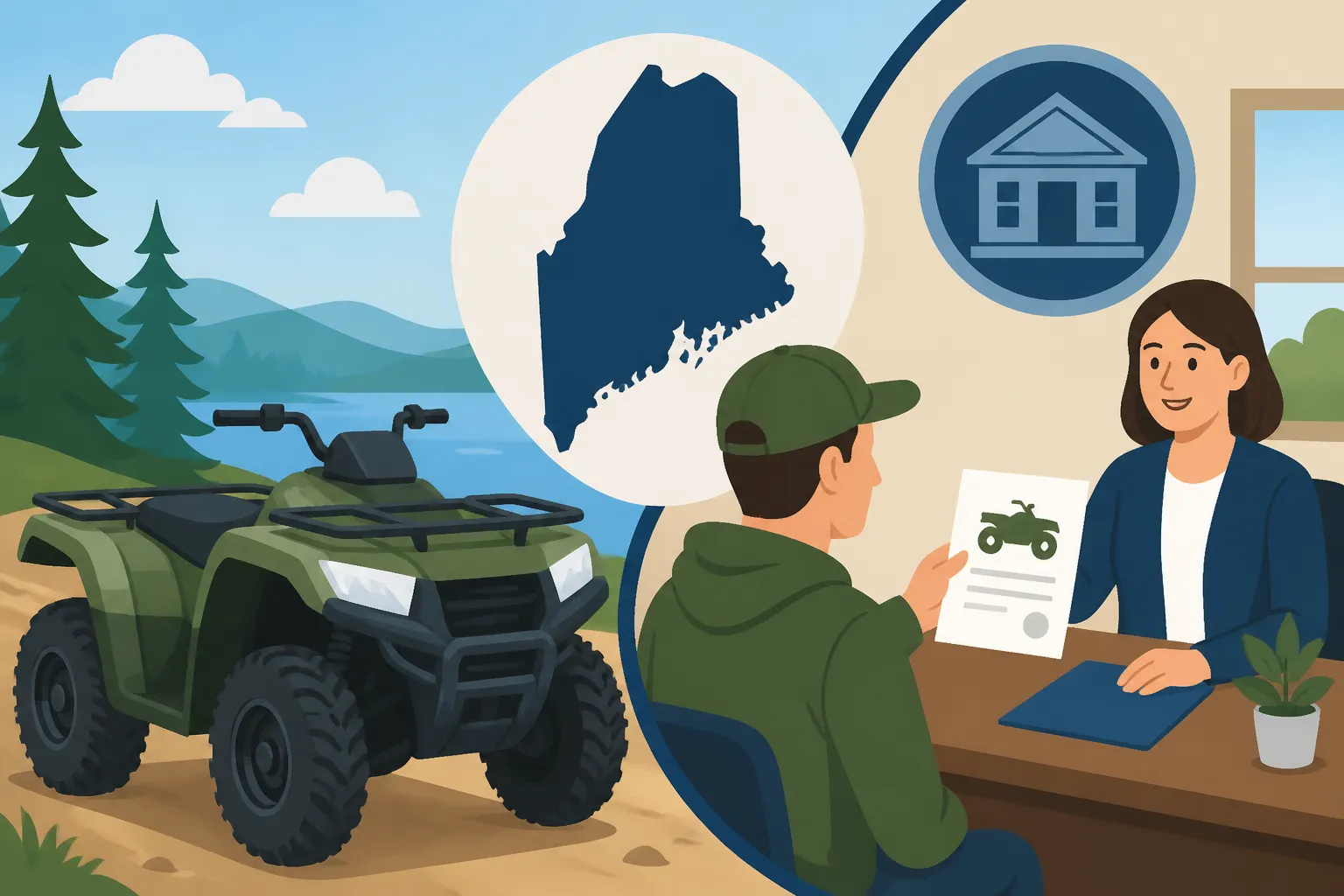
When you arrive, the town clerk will likely hand you a short application form for ATV/UTV registration. This form will ask for basic information about you, the owner, and details about your machine. You'll need to provide your name, address, phone number, and perhaps your date of birth. For the ATV itself, you'll enter the make, model, year, and of course, the VIN. If you have any trouble locating the VIN, the clerk might be able to offer a tip or two, but it's usually stamped on the frame in an easily accessible spot.
Take your time filling this out, double-checking all the details, especially the VIN. A single misplaced digit can lead to issues down the road. If you're unsure about any field, don't hesitate to ask the clerk for clarification. That's why they're there, and it's much better to get it right the first time than to have to correct an error later.
Verification of Documents and Information
After you've completed the application, the town clerk will review it along with your supporting documents. They will scrutinize your bill of sale to ensure it's complete and includes all the necessary information, particularly the VIN and the purchase price. They'll also verify that sales tax has either been paid or needs to be collected at that moment. Your identification will be checked to confirm your identity and residency status.
This verification step is crucial. It’s the town’s way of ensuring that everything is in order, preventing fraud, and making sure the machine is properly registered to you. Don't be surprised if they ask a few questions to confirm details. This is all part of their due diligence to protect both you and the integrity of the registration system. It might feel like a lot of checking, but it's for everyone's benefit to ensure proper ownership and tax collection. These are the kinds of [What Maine Town Clerks Ask For at the Counter].
Paying Your Fees and Receiving Your Temporary Paperwork
Once all your documents are verified and the application is complete, the clerk will calculate the total fees due. This will include the state registration fee for the current season, which can vary based on whether you're a resident or non-resident, and a small local agent fee. They'll also collect any sales tax or use tax if applicable from a private sale. After you make your payment, the clerk will issue you a temporary registration form or receipt.
This temporary document is your immediate proof of registration. It typically includes your registration number, the machine's details, and the expiration date. It's a critical piece of paper because it allows you to legally ride your ATV or UTV immediately while you wait for your official sticker and permanent card to arrive in the mail. Keep this temporary registration in a safe, accessible place, as you'll need to present it if a Maine Warden requests proof of registration while you're out on the trails.
Understanding Fees and Payment at the Town Level
Navigating the costs associated with ATV and UTV registration can sometimes be a point of confusion, especially with different rates for residents and non-residents, and the addition of agent fees. Knowing what to expect financially before you arrive at the town office can save you from any surprises at the counter.
Resident vs. Non-Resident Registration Costs
Maine has distinct registration fee structures for residents and non-residents. Generally, resident fees are lower, reflecting the ongoing tax contributions residents make to the state. Non-residents, however, pay a higher fee. This is a common practice in many states and helps contribute to the upkeep of the trail systems and the services that support recreational riding, which non-residents also enjoy. The specific amounts are set by the state and can change periodically, so it’s always wise to check current figures on the Maine IF&W website or confirm with your town office if you want the most up-to-date information before you go.
For non-residents, there are usually options for annual registrations or shorter-term registrations, such as a seven-day permit, which can be ideal for vacationers or those visiting for a specific event. Your town clerk can walk you through these choices and help you decide which one best fits your riding plans. Don't forget that these fees are non-refundable, so choose carefully! More details can be found in [Maine Non-Resident Annual ATV Registration] and [Maine Non-Resident Seven-Day ATV Registration].
The Role of Town Agent Fees
When you register your ATV at a town office, a small portion of the total fee is retained by the town as an "agent fee." This fee compensates the town for the service they provide in processing the registration on behalf of the state. It helps cover the administrative costs, such as staff time, supplies, and the system access required to complete the transaction. While it might seem like just another small charge, this agent fee is vital for ensuring that town offices can continue to offer this convenient service to the public.
These agent fees are typically a set amount per registration and are added on top of the state-mandated registration fee. It's usually a modest sum, but it's good to be aware of it so you can factor it into your total cost. Most people find that the convenience and personalized service provided by their local town office are well worth this additional small fee. You can inquire about the specific [Maine ATV Registration Agent Fees] at your local office.
Payment Methods Accepted by Town Offices
Most Maine town offices are equipped to handle a variety of payment methods, but it's always a good idea to confirm before you go. The most commonly accepted forms of payment include cash, personal checks, and increasingly, credit or debit cards. However, not all small town offices have the technology or agreements in place to process card payments, or they might charge a small convenience fee for card transactions.
To avoid any last-minute scramble or frustration, a quick phone call to your town office beforehand can clarify their accepted payment methods. Having a backup plan, like bringing enough cash or a check, is always a smart move. This ensures that you can complete your registration without a hitch, regardless of how your specific town office prefers to process transactions.
What Happens After You Register at the Town Office
Congratulations, you’ve done the paperwork! But the process doesn't end when you walk out of the town office. There are a few more steps and things to understand about your registration, especially regarding when you can ride and when your official documents will arrive.
Riding Immediately with Your Temporary Receipt
One of the best parts about registering in person at a town office (or even with the state directly) is that you typically receive a temporary registration receipt right away. This piece of paper is your golden ticket! It proves that your ATV or UTV is legally registered, and you can absolutely head out to the trails immediately. There's no need to wait for the official stickers to arrive in the mail. This is a huge benefit, especially if you're registering just before a planned ride or a beautiful weekend.
Just make sure to keep this temporary receipt with you whenever you're riding, preferably in a waterproof bag or container. If a Maine Warden stops you, this is the document they'll want to see as proof of your current registration. It’s also wise to make a quick mental note of your new registration number, just in case. You'll find more helpful tips in [Riding Before Your Stickers Arrive].
Sticker and Permanent Card Delivery
While you can ride with your temporary receipt, your official registration stickers and a more durable registration card will be mailed to you by the Maine Department of Inland Fisheries and Wildlife (IF&W). This typically happens within a few weeks of your registration. The mailing time can vary depending on the time of year and the volume of registrations being processed, but generally, most people receive their permanent documents within two to four weeks.
Once they arrive, the permanent registration card should be carried with you whenever you ride your ATV or UTV. The stickers, or decals, need to be properly affixed to your machine. Maine law specifies where these stickers should be placed to ensure they are visible for wardens and other trail users. For more information on this, check out [Where Maine ATV Stickers Go and When They Arrive]. Getting them in the right spot and ensuring they are securely attached is important for compliance and longevity.
Common Questions and Troubleshooting at the Town Office
Even with the best preparation, sometimes unexpected questions or hiccups can arise during the registration process. Knowing some of the common issues and how town clerks can help can make your visit even smoother, transforming potential frustrations into quick solutions.
Dealing with Missing or Incomplete Paperwork
It's a common scenario: you bought an ATV from a private seller, maybe a friend of a friend, and the bill of sale is a bit sparse. Or perhaps you've inherited a machine and the paperwork is nowhere to be found. Don't panic! Maine town clerks often encounter these situations and can provide guidance. For instance, if your bill of sale is missing critical information like the VIN or the full name of the seller, they might advise you on what's needed to amend it or to obtain a more complete document.
In cases where a formal bill of sale is truly impossible to get, such as for a very old machine or one acquired under unusual circumstances, the town clerk can explain alternative methods for [Proving Ownership Without a Bill of Sale]. This might involve statutory declarations or other forms of affidavit, though these are typically handled at the state level through IF&W if the town office can't directly resolve it. The key is to be honest about your situation and ask for their expert advice. They want to help you get registered legally.
Registering an Out-of-State Purchase in Maine
Bringing an ATV or UTV into Maine that you purchased in another state can sometimes add a layer of complexity, particularly concerning sales tax. As mentioned, if you haven't paid sales tax in the state of purchase, or if the sales tax rate was lower than Maine's, you'll likely owe Maine's use tax when you register. The town clerk is fully equipped to calculate and collect this for you. They will need to see your bill of sale from the out-of-state purchase to determine the value of the machine and the amount of tax owed.
It's also important to confirm that the ATV was legally obtained and has a clear title history, if the state of purchase used titles. While Maine doesn't title ATVs, they want to ensure you're registering a legitimately owned machine. The town clerk can often help clarify any state-specific nuances, like [Registering an ATV From Massachusetts in Maine] or [Registering a New Hampshire ATV in Maine], depending on your situation.
Correcting Errors or Updating Information
Life happens. Maybe you moved to a new address after you registered your ATV, or perhaps there was a typo in your name on the initial registration form. Town offices are also the place to go for these corrections and updates. If you need to change your address on your registration, simply bring your current registration card and proof of your new address to the clerk. They can process the change and update your records.
For more significant errors, such as a VIN mistake or an incorrect owner name, the process might involve a bit more paperwork and verification, possibly requiring new proof of ownership or a sworn statement. Again, the best course of action is to communicate openly with the town clerk. They are there to assist you in maintaining accurate and legal registration for your machine, ensuring everything aligns with state records. You can also explore options for [Replacing a Lost ATV Registration] if your card goes missing.
When to Consider Other Registration Options
While your town office is an excellent and often preferred method for ATV and UTV registration, it's not the only option available in Maine. There are specific situations where you might find it more convenient or necessary to use an alternative registration avenue.
Online Registration for Renewals
For those who have previously registered their ATV or UTV in Maine, renewing that registration is typically a breeze through the Maine Department of Inland Fisheries and Wildlife (IF&W) online system. This is an incredibly convenient option if your information hasn't changed, and you prefer to handle things from the comfort of your home. You'll usually need your previous registration number and some personal identifying information to access your records and complete the renewal. The online system guides you step-by-step through the process, and you can print a temporary receipt immediately after payment.
However, it's crucial to remember that online registration is generally reserved for renewals. First-time registrations, especially for newly purchased machines where sales tax needs to be collected, often require an in-person visit to a town office or the IF&W headquarters because of the documentation and verification requirements. So, if you're a seasoned rider looking to keep your current machine legal, the online portal is your friend. Check out [Renewing a Maine ATV Registration Online] for a detailed walkthrough.
Registering Directly Through IF&W
If for some reason your local town office isn't available, or you prefer to deal directly with the state agency, you can also register your ATV or UTV through the Maine Department of Inland Fisheries and Wildlife (IF&W) headquarters in Augusta or one of their regional offices. This might be a viable option if you live in an unorganized township where there isn't a local town office to handle registrations, or if you have a particularly complex registration scenario that might benefit from direct state agency review.
While this option is certainly available, many people find the town office route more convenient due to proximity and the often shorter wait times. Going directly to IF&W means you're dealing with the same state-level requirements and forms, but without the local agent processing that many towns offer. This can be a good alternative for those who don't have an easily accessible town office or perhaps have a unique situation that requires specific state-level attention. Find out more at [Maine IF&W Online Registration Walkthrough], which can also give insight into the in-person IF&W process.
| Document / Scenario | Required for Town Office Registration? | Best Place to Address? | Notes |
|---|---|---|---|
| Valid Photo ID | Yes | Town Office | Confirms your identity and residency. |
| Bill of Sale (New Purchase) | Yes | Town Office | Proof of ownership, must include VIN, seller/buyer info, date, price. Templates from LawDepot are helpful. |
| Previous Registration (Renewal) | No (but helpful for ID) | Online / Town Office | Primarily for renewals; helps clerk verify machine details quickly. |
| Proof of Sales Tax Payment | Yes (or pay there) | Town Office | Dealer receipt for tax paid or pay Maine use/sales tax at the counter for private sales/out-of-state purchases. |
| Payment for Fees | Yes | Town Office | Cash, check, or credit/debit (check with town first). |
| Missing Bill of Sale | No (can be issue) | Town Office / IF&W | Clerk can advise on alternatives like affidavits. Might require state-level assistance. |
| Out-of-State Purchase | Yes (to pay use tax) | Town Office | You'll likely pay Maine use tax at registration. Clerk handles calculation. |
| Address Change | Yes | Town Office | Bring current registration and proof of new address. |
| First-Time Registration | Yes | Town Office / IF&W | Best done in person due to document verification and sales tax collection. [First-Time Maine ATV Registration at the Town Office] provides more info. |
| Renewal of Existing Registration | No (can be done online) | Online / Town Office | Online is convenient for renewals if no information has changed. |
| Registering Machine for a Minor | Yes (with adult present) | Town Office | Adult must be present with ID and ownership documents, and often the machine is registered in the adult's name. See [Buying an ATV for a Child: Whose Name Registers It]. |
Disclaimer
This article is for general informational purposes only and does not constitute professional advice. Laws, prices and regulations vary by location and change over time. Consult a qualified professional for guidance on your specific situation.