Maine ATV Registration for Farm and Woodlot Use
It's a common dilemma for folks here in Maine who rely on their ATVs and UTVs for work around the farm or woodlot: do I really need to register this machine? You might think that because it rarely leaves your property, or only goes a few yards down the road to a different field, it's exempt. But the truth is, Maine's regulations can be a bit nuanced, and misunderstanding them can lead to unexpected fines or legal headaches. This guide aims to clear up that confusion, giving you the full picture on when your workhorse ATV needs a sticker and when it truly doesn't.
Understanding Maine's ATV Registration Exemptions for Farm and Woodlot Use
Maine's Bureau of Parks and Lands, which oversees ATV registrations, does offer specific exemptions for ATVs used in agricultural or woodlot operations. This isn't just a courtesy; it's a recognition that these machines are often vital tools for livelihoods, operating in contexts far removed from recreational trail riding. However, it’s crucial to understand the spirit and the letter of these exemptions to ensure you're compliant.
The Letter of the Law: What the Exemption States
The basic premise is that if your ATV or UTV is being used exclusively for certain purposes on private land, it may not require registration. This generally covers activities directly related to farming, forestry, or other legitimate land management tasks. The key word here is "exclusively" – as soon as you step outside these narrow bounds, the exemption often evaporates. This means thinking carefully about every trip your machine makes.
For example, an ATV used solely to haul feed to livestock in a barn, move tools between outbuildings, or inspect fencing on your own acreage would typically fall under this exemption. It's about the machine being an integral part of your operation, not a leisure vehicle. This exemption is designed to reduce the burden on working landowners, recognizing that their ATVs are more akin to tractors or other farm equipment in their day-to-day role. The intent is to differentiate between commercial or private recreational use and the essential functions of farming and forestry.
Defining "Farm and Woodlot" for ATV Use
So, what exactly does Maine consider "farm and woodlot use" in the context of ATV registration? It's more than just owning a piece of land. The activities must be genuinely tied to agricultural production or timber harvesting and management. This isn't about riding around your property for fun after chores are done.
Think about activities like hauling firewood from your back acreage to the woodshed for personal use, pulling a small trailer of sap buckets during maple season, or accessing remote areas of your woodlot to mark trees for selective cutting. For a farm, it could mean spreading fertilizer in fields, transporting small equipment for irrigation, or checking on livestock in far pastures. The common thread is that the ATV is performing a task essential to the farm or woodlot's operation and sustenance. If you're running a commercial logging operation or a significant farming enterprise, the exemption might still apply, but any deviation into non-work-related travel immediately triggers the registration requirement. The state makes a clear distinction here: it's about the purpose and location of the use, not just the ownership.
What Qualifies as "Farm and Woodlot Use" in Maine?
Let's dive a little deeper into the specific types of activities that Maine typically considers legitimate "farm and woodlot use" for an ATV or UTV. It's important to understand these scenarios to confidently claim an exemption, should your machine truly qualify.
Agricultural Operations: Hauling Feed, Tending Livestock, and Field Work
If your ATV or UTV is an indispensable part of your agricultural workflow, there's a good chance it might be exempt from registration. Picture this: you're using your quad to pull a small trailer filled with hay bales out to a distant pasture where your cows are grazing. Or maybe you're driving it slowly across a field to inspect crops for pests or disease, carrying your spray equipment. Hauling tools, fencing supplies, or even small amounts of produce from one part of the farm to another also typically fits the bill.
Consider the daily grind: you need to check on chickens in a coop that's a quarter-mile from the main barn, or you're hauling water to young fruit trees at the edge of your property. These are direct, necessary agricultural tasks. The key here is that the machine is functioning as practical farm equipment, directly contributing to the operation and maintenance of your farm. It's not being used for a joyride or to access a fishing spot, but rather as an extension of your hands and feet for the hard work of farming.
Forestry and Woodlot Management: Timber Stand Improvement, Firewood, and Maple Sugaring
For those managing a woodlot, the ATV can be an invaluable asset, and many of these uses can also fall under the exemption. Imagine using your UTV to pull small logs out of a selectively cut area of your timber stand, moving them to a landing for processing. Or perhaps you're using it to transport chainsaws and fuel deeper into the woods for tree felling, or bringing firewood back to your home for personal heating. These are all direct functions of managing your forest resources.
Think about the spring ritual of maple sugaring: your ATV is perfect for hauling strings of sap buckets through snowy woods, or for collecting filled buckets back to the sugar shack. It's about activities that support the sustainable use or harvesting of wood products, or the maintenance of the forest itself. If you're engaged in Maine ATV Registration for Farm and Woodlot Use, these applications are what the state generally has in mind. However, if that same firewood trip involves riding a mile down a public road to get to a different section of your property, you've likely crossed the line into needing a registration.
The Gray Areas: When Your Farm ATV Does Need Registration
Even if your ATV is primarily a workhorse for your farm or woodlot, there are critical scenarios where Maine law unequivocally requires it to be registered. These are the situations where many Mainers inadvertently run afoul of the regulations, simply because their definition of "farm use" stretches a little too far.
Crossing Public Ways: Roads, Shoulders, and Designated Crossings
This is perhaps the biggest "gotcha" for farm and woodlot owners. Maine law is very clear: if your ATV or UTV is used on any public way—and this includes crossing a paved road, driving on the shoulder, or even using a designated ATV access route within a town—it must be registered. It doesn't matter if you're just going 50 yards to get to another field on the other side of the road, or if you only do it once a year. The moment your tires touch that public right-of-way, the exemption generally ceases to apply.
I've heard stories from folks who got a ticket just for pulling out of their driveway, crossing a town road, and immediately entering another section of their property. They thought, "It's just a few seconds, what's the harm?" But to a warden, that's public way usage. Even if your town has a specific [Maine ATV Road Rules for Young Riders] or allows limited access on certain roads, your machine still needs to be registered. If you need to regularly move your machine from one part of your farm to another that requires traversing or even momentarily riding alongside a public road, registering it is not just a good idea, it's a legal necessity.
Recreational Use, Even on Your Own Land
Here’s another common pitfall: you’ve finished hauling feed for the day, and the kids want to take the quad for a spin around the back forty. Or perhaps you decide to take a leisurely ride through your woods to check out the fall foliage, just for enjoyment. If the primary purpose of the ride changes from work-related to recreational, even if it's on your own private property, the argument for exemption becomes shaky, if not outright invalid.
The exemption is explicitly tied to farm and woodlot use. When that use shifts to leisure, the machine technically should be registered. While a warden isn't likely to be hiding in your woodlot to catch you on an evening joyride, it's important to understand the letter of the law. If an accident were to occur during recreational use on an unregistered machine, it could complicate insurance claims or legal liabilities. It's a small distinction, but an important one for keeping everything above board.
Using Shared Access Roads or Trails
Many Maine farms and woodlots share access roads or abut established ATV trails. If you use your machine on these shared paths, even if they are technically private land, it can still trigger the registration requirement. This is especially true if those shared roads are maintained by a local ATV club, which often relies on registered machines for trail funding.
If you’re riding on land that isn't exclusively yours, or land where others have legal access (like a private camp road that serves multiple landowners, or a section of a formal club trail), then registration is typically required. The intent of the exemption is for use solely on your property for your operations. Once you venture onto commonly used or publicly accessible corridors, even if they aren't paved state roads, the expectation is that your ATV will be registered like any other. This helps ensure that all users contribute to trail maintenance and management.
The Practicalities of Registering a Farm or Woodlot ATV
If you determine that your farm or woodlot ATV needs to be registered, the process is straightforward, much like registering any other ATV in Maine. It's about getting your paperwork in order and paying the necessary fees.
Required Documentation for Registration
Whether you're registering an ATV for recreational use or for farm/woodlot use that falls outside the exemption, the required documentation is generally the same. You'll need proof of ownership, which usually means a bill of sale. If you bought your ATV from a dealer, they'll often provide you with the necessary paperwork. For private sales, it's critical to have a clear and comprehensive [Maine ATV Bill of Sale: What to Include]. A good bill of sale should clearly identify the buyer and seller, the ATV's make, model, year, and most importantly, its Vehicle Identification Number (VIN).
You might also need proof of Maine residency if you're applying for a resident registration. A driver's license or state ID usually suffices. If it’s your first time registering this specific machine, you won't have a previous registration to show, so the bill of sale is paramount. Sometimes, if you're dealing with a very old machine or one where the paperwork has been lost over time, proving ownership can be tricky, but options like a notarized affidavit or a statement from the previous owner might be possible. Using a service like LawDepot can be helpful for creating legally sound bills of sale or other affidavits if you need to formalize your ownership documents, ensuring all necessary details are covered and clauses are clear.
Where and How to Register Your ATV
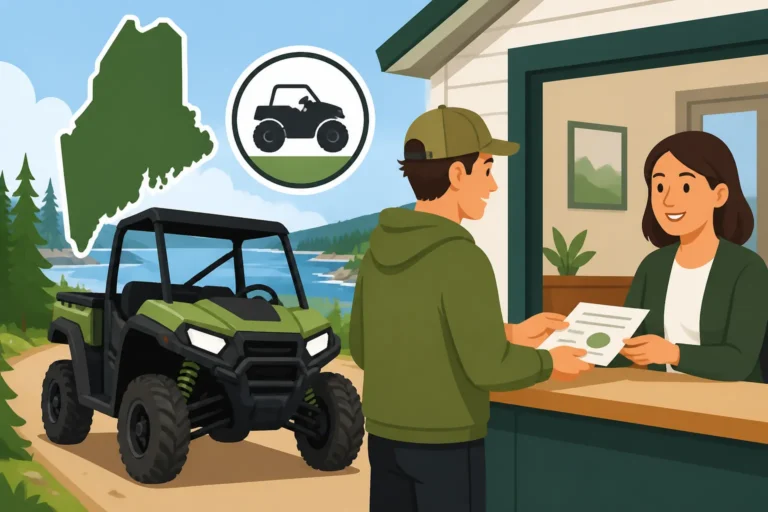
You have a couple of options for registering your ATV in Maine. The most common and often quickest method for many is through your local town office. Most town clerks are authorized agents for the Maine Department of Inland Fisheries & Wildlife (IF&W) and can process your registration right on the spot. This means you walk out with your new registration certificate and often the decals immediately. This is particularly convenient if you need to register quickly to use your machine legally. You can usually find a list of [Maine Town Offices That Register ATVs] on the state's IF&W website.
Alternatively, you can register your ATV online through the Maine IF&W website. This is a convenient option, especially for renewals, but it can also be used for first-time registrations if you have all your digital documents ready. Just be aware that if you register online, your physical stickers and registration card will be mailed to you, which can take some time. However, you often get a printable confirmation page that serves as temporary proof of registration, allowing you to ride legally while waiting for your stickers. [Maine IF&W Online Registration Walkthrough] can guide you through the digital process, step by step.
Costs and Fees for Farm and Woodlot ATV Registration
The cost to register an ATV in Maine is the same whether it's for recreational trail riding or for farm/woodlot use that requires registration. There isn't a special "farm rate." For Maine residents, the annual fee is set by the state, and there may be a small agent fee added by your town office if you register in person. The registration is valid from July 1st through June 30th of the following year, regardless of when you register it. So, if you register in March, it still expires on June 30th.
Non-residents also pay a set fee, which is typically higher than the resident rate. If your farm or woodlot is located in Maine, but you reside out of state, you would fall under the [Maine Non-Resident Annual ATV Registration] fee structure. These fees contribute directly to the maintenance of Maine's extensive ATV trail system, funding trail grants to local clubs, and supporting IF&W's enforcement and safety programs. While it might feel like an added expense for a work machine, your contribution helps ensure the broader infrastructure for ATV use in the state remains viable.
| Registration Type | Key Criteria | Typical Scenario |
|---|---|---|
| Exempt (No Registration) | Exclusively for farm/woodlot tasks | Hauling feed on your own land, managing your private timber stand |
| Only on private land (your own) | Inspecting crops within your property boundaries | |
| No use on public ways or shared trails | Moving tools between adjacent fields without crossing a road | |
| Required Registration | Any use on a public way (even a quick crossing) | Crossing a town road to access another part of your farm |
| Recreational use (even on your own land) | Riding for leisure on your woodlot after work | |
| Use on shared access roads or club trails | Driving down a shared private camp road, or on a signed ATV trail | |
| Commercial operations beyond personal use | Guide service fleet, rental machines (requires specific regs) |
Risks of Not Registering a Machine Used for Farm/Woodlot
Deciding not to register your ATV or UTV when the law actually requires it, even for what you perceive as minor farm or woodlot use, carries several significant risks. These aren't just theoretical; they can hit you right in the wallet and cause substantial headaches.
Fines and Penalties from the Maine Warden Service
The Maine Warden Service is diligent in enforcing ATV laws, and they don't always distinguish between recreational riders and those using their machines for work if the rules are broken. If you're caught operating an unregistered ATV on a public way, shared access road, or during recreational use when registration is required, you will face fines. These penalties can be substantial, often hundreds of dollars for a first offense, and they tend to increase for repeat violations.
Imagine getting pulled over while crossing a dirt road between two of your fields, thinking you're exempt, only to be handed a hefty ticket. Beyond the financial impact, it's simply a hassle, consuming your time and potentially impacting your driving record or future interactions with law enforcement. The [Penalties for Riding an Unregistered ATV in Maine] are clear, and ignorance of the law is rarely an acceptable defense. It's far less expensive and stressful to simply register your machine if there's any doubt about its exemption status.
Insurance Complications in Case of an Accident
This is perhaps one of the most overlooked, yet potentially devastating, risks. If you're involved in an accident while operating an unregistered ATV that should have been registered, your insurance company may deny coverage. Most standard homeowner's policies have exclusions for recreational vehicles, and dedicated ATV insurance often requires the machine to be legally registered for its intended use.
Consider a scenario: you're pulling a small trailer of timber across a shared private road, which unbeknownst to you, counts as a public way requiring registration. You have a minor collision with another vehicle or cause damage to property. If your ATV is unregistered, your liability insurance could be void, leaving you personally responsible for thousands or even tens of thousands of dollars in damages, medical bills, or legal fees. It's a risk that far outweighs the modest cost of annual registration. It's always best to discuss your specific use with your insurance provider to ensure you have adequate [Maine ATV Insurance and When You Need It] and that your policy remains valid regardless of how you use your machine.
Impoundment of Your ATV
In more serious cases, or for repeat offenders, the Maine Warden Service has the authority to impound unregistered ATVs. This means your valuable work machine could be seized, requiring you to pay impoundment fees, storage fees, and potentially additional fines to get it back—assuming it hasn't been permanently forfeited. This scenario can completely disrupt your farm or woodlot operations, leaving you without a critical piece of equipment.
The hassle and expense of retrieving an impounded ATV can be immense, far exceeding the registration fee. It’s a very real consequence of ignoring the regulations. While wardens often prefer to educate and issue warnings for minor infractions, they are fully empowered to take more drastic measures, particularly if they perceive a blatant disregard for the law. Ensuring your machine is properly registered according to its use is a simple step to avoid such severe disruptions to your livelihood.
Disclaimer
This article is for general informational purposes only and does not constitute professional advice. Laws, prices and regulations vary by location and change over time. Consult a qualified professional for guidance on your specific situation.