Youth Machine Size Limits for Maine Riders
As a parent, figuring out the labyrinth of rules for youth ATVs and UTVs in Maine can feel like trying to navigate a moose in thick fog – confusing, a little intimidating, and with serious consequences if you make a wrong turn. You want your kids to enjoy the incredible trails and the freedom of off-road riding, but you also need to make absolutely sure they're safe and that you're staying on the right side of the law. This guide is here to untangle those specific regulations, breaking down Maine's age and engine size limits so you can make informed decisions and get your young riders out there responsibly.
Understanding Maine's Age and Engine Size Restrictions for Youth ATVs
Maine's Bureau of Parks and Lands, in conjunction with the Inland Fisheries & Wildlife, has put clear rules in place for young riders. These aren't just arbitrary numbers; they're designed with safety in mind, recognizing that a smaller, less powerful machine is far more manageable for a developing rider. Ignoring these can not only put your child at risk but also land you in trouble with the Maine Warden Service.
The Foundational Rules for Young Riders
The primary goal of Maine's regulations is to match a child's developmental stage with an appropriately sized and powered machine. This means the rules consider not just physical size and strength, but also judgment, reaction time, and the ability to handle a complex piece of machinery. It's a common misconception that if a child can physically reach the controls, they're ready for any machine. Maine's law says otherwise.
For example, a machine that's too heavy or too powerful for a child can quickly get away from them, leading to rollovers, loss of control, and serious injuries. Imagine a 10-year-old on an adult-sized 400cc quad; even if they can stretch to the handlebars, the weight distribution, the throttle response, and the sheer power would be overwhelming. The law aims to prevent these kinds of mismatches. These rules are particularly important when considering riding on public lands or approved ATV trails, where wardens are actively ensuring compliance.
Specific Cubic Centimeter Limits by Age Group
Maine law establishes specific maximum engine displacements (measured in cubic centimeters, or cc's) for different age brackets. These limits apply universally, whether you're buying a brand new youth machine from a dealer or picking up a used quad from a private seller. It's your responsibility as the parent or guardian to ensure the machine your child operates falls within these guidelines.
Here's a breakdown of the typical age and engine size requirements:
| Age of Operator | Maximum Engine Size (CCs) | Key Requirements |
|---|---|---|
| Under 10 | Up to 90cc (if purpose-built for youth) | Cannot operate on land other than that owned by parent/guardian unless with written permission AND under direct supervision. No public trails. |
| 10 to 15 | Up to 90cc | Must complete a certified ATV safety course. Must be under direct supervision if on land other than parent/guardian's property. |
| 16 and older | No CC Limit | Must possess a valid driver's license or complete a certified ATV safety course. No direct supervision requirement. |
It's crucial to understand that these are maximum limits. A child might be 10, but if they're particularly small or inexperienced, even a 90cc machine might be too much for them. The spirit of the law is safe operation, which goes beyond just meeting the minimum age requirement. For kids in the 10-15 age range, completing the [Maine ATV Safety Course Requirements] is not just a suggestion, it's a legal mandate if they want to operate on public trails or land not owned by their parents. This course reinforces safe riding practices and helps solidify their understanding of the rules.
Beyond Engine Size: Other Factors for Youth Machine Safety and Legality
While engine size is a primary concern, Maine's regulations, and good common sense, extend beyond just the cubic centimeters of the motor. Responsible youth ATV operation involves a holistic approach to safety, legal compliance, and fostering a deep respect for the sport and the environment.
The Importance of the Maine ATV Safety Course
For any rider aged 10 to 15, completing a certified ATV safety course is mandatory if they plan to ride anywhere other than land owned by their parent or guardian. This isn't just a hoop to jump through; it's a vital component of safe riding. These courses cover everything from proper riding techniques, understanding trail etiquette, basic machine maintenance, and most importantly, the laws and responsibilities associated with ATV operation in Maine.
Think of it this way: the course teaches them how to react in emergency situations, how to maintain control on varied terrain, and how to assess risks. It also instills a sense of responsibility. A child who has gone through the course understands the implications of riding on private land without permission, or the importance of staying on marked trails. It's an investment in their safety and enjoyment, and it helps ensure they don't unwittingly violate rules that could lead to [Penalties for Riding an Unregistered ATV in Maine] or other infractions.
Adult Supervision and Accompaniment Rules
The law is very clear that young riders, especially those under 16, need adult supervision. For children under 10, if they are riding on land not owned by their parent or guardian, they must have written permission from the landowner and be under the direct supervision of a parent or legal guardian. This isn't just about watching them; it's about being present and able to intervene if needed.
For riders aged 10 to 15, if they've completed their safety course, they can ride on approved trails. However, they must still be "accompanied" by an adult (18 years or older) who holds a valid driver's license or has completed an ATV safety course. "Accompanied" typically means being in close proximity, able to see and hear the youth rider, and immediately assist if necessary. It’s not about dropping them off at the trailhead and picking them up hours later. This rule acknowledges that even with training, young riders benefit from the experience and judgment of an adult, especially when navigating unfamiliar terrain or encountering other trail users.
The Nuances of Registering a Youth ATV in Maine
While the child is the one riding the machine, the legal framework for ownership and registration usually involves an adult. This is an important distinction that parents need to understand to ensure their youth ATV is legally ready for the trails.
Whose Name Goes on the Registration?
In Maine, an ATV or UTV is typically registered in the name of an adult owner, regardless of who primarily uses it. This means that even if you're buying a small, youth-specific ATV for your 12-year-old, the registration will likely be in your name, or another adult's name, as the legal owner. This makes sense because minors generally cannot enter into contracts or legally own vehicles in the same way adults can.
This practice clarifies responsibility for the machine's registration, insurance (if applicable), and any liabilities that might arise. When it comes to [Buying an ATV for a Child: Whose Name Registers It], the simple answer is, it's usually the parent or legal guardian. They are the ones who sign the paperwork, pay the fees, and are ultimately accountable for the machine's lawful operation. It’s a reflection of the adult's responsibility to ensure the machine is used safely and legally by the child.
Proof of Ownership and Bills of Sale for Youth Machines
Just like with any other ATV purchase, whether it's a brand new behemoth or a small youth quad, having solid proof of ownership is non-negotiable. This is especially true for private sales. A clear, comprehensive bill of sale is your best friend here. It outlines the seller, the buyer, the machine's details (make, model, VIN), the sale price, and the date of transaction. This document is absolutely essential when you head to your town office or the state's online portal for [First-Time Maine ATV Registration at the Town Office].
Even for a youth machine, neglecting a proper bill of sale can lead to headaches down the road. What if the seller suddenly disputes the sale? What if there's a question about previous ownership? A platform like LawDepot can be incredibly helpful here. They offer customizable templates for bills of sale that ensure all the necessary legal information is included, giving you peace of mind that your proof of ownership is ironclad. It helps ensure that when you get to the counter to register, you have all your ducks in a row. For more details on what to include, check out [Maine ATV Bill of Sale: What to Include].
Common Misconceptions and Parental Responsibilities
When it comes to youth ATV riding, there are a few common pitfalls parents sometimes fall into, often with the best intentions. Understanding these can prevent legal issues and, more importantly, keep your child safe.
"They'll Grow Into It": Why Oversizing is Dangerous (and Illegal)
This is perhaps the most dangerous misconception. Many parents are tempted to buy a slightly larger ATV or UTV for their child, reasoning that the child will eventually grow into it, thus saving money in the long run. While financially appealing, this practice is fraught with peril and often illegal under Maine's age/CC guidelines.
An oversized machine is incredibly difficult for a child to control. They might struggle to reach the footrests, grasp the handlebars, or operate the throttle and brakes effectively. The weight of a larger machine makes it much harder to lean into turns or recover from an imbalance, drastically increasing the risk of rollovers or collisions. Even if a child is technically within an age bracket that allows for a certain CC limit, their individual physical development and riding experience should always be the guiding factor. Maine's wardens are vigilant about matching riders to appropriate machines, and if your child is on something too big, you could face fines, even if the machine itself technically meets the maximum CC limit for their age group, but is clearly beyond their physical capability to operate safely. Safety always comes first, and a machine they can comfortably manage today is far better than one they might grow into next season.
Ensuring Proper Gear and Riding Environment
Beyond the machine itself, responsible parenting extends to ensuring your child is properly equipped and riding in appropriate conditions. Maine law mandates helmet use for all ATV and UTV operators and passengers under the age of 18. This isn't negotiable. The helmet must be approved by the Department of Transportation (DOT) and fit correctly. Beyond helmets, eye protection (goggles or a face shield) is crucial to protect against dust, debris, and branches. Long pants, long-sleeved shirts, sturdy over-the-ankle boots, and gloves provide essential protection against scrapes, burns, and impacts.
The riding environment is equally important. Young riders should start in open, flat areas free of obstacles, gradually progressing to more challenging terrain as their skills improve. Always ride on designated trails or private property with explicit permission. Never allow children to ride on public roads or highways, even for short distances, unless it's a specifically designated [Maine ATV-Access Routes and How Towns Post Them] and they meet the age and supervision requirements for such routes. These are rules covered in detail by courses like the [Maine ATV Safety Course for Riders 10 to 15], underscoring their importance.
Navigating Different Types of Youth Machines: ATVs, UTVs, and More
The youth off-road market has expanded beyond just small quads. Now, side-by-sides (UTVs) are also popular options for younger riders, each with their own set of considerations.
Youth ATVs: Quads Designed for Specific Age Groups
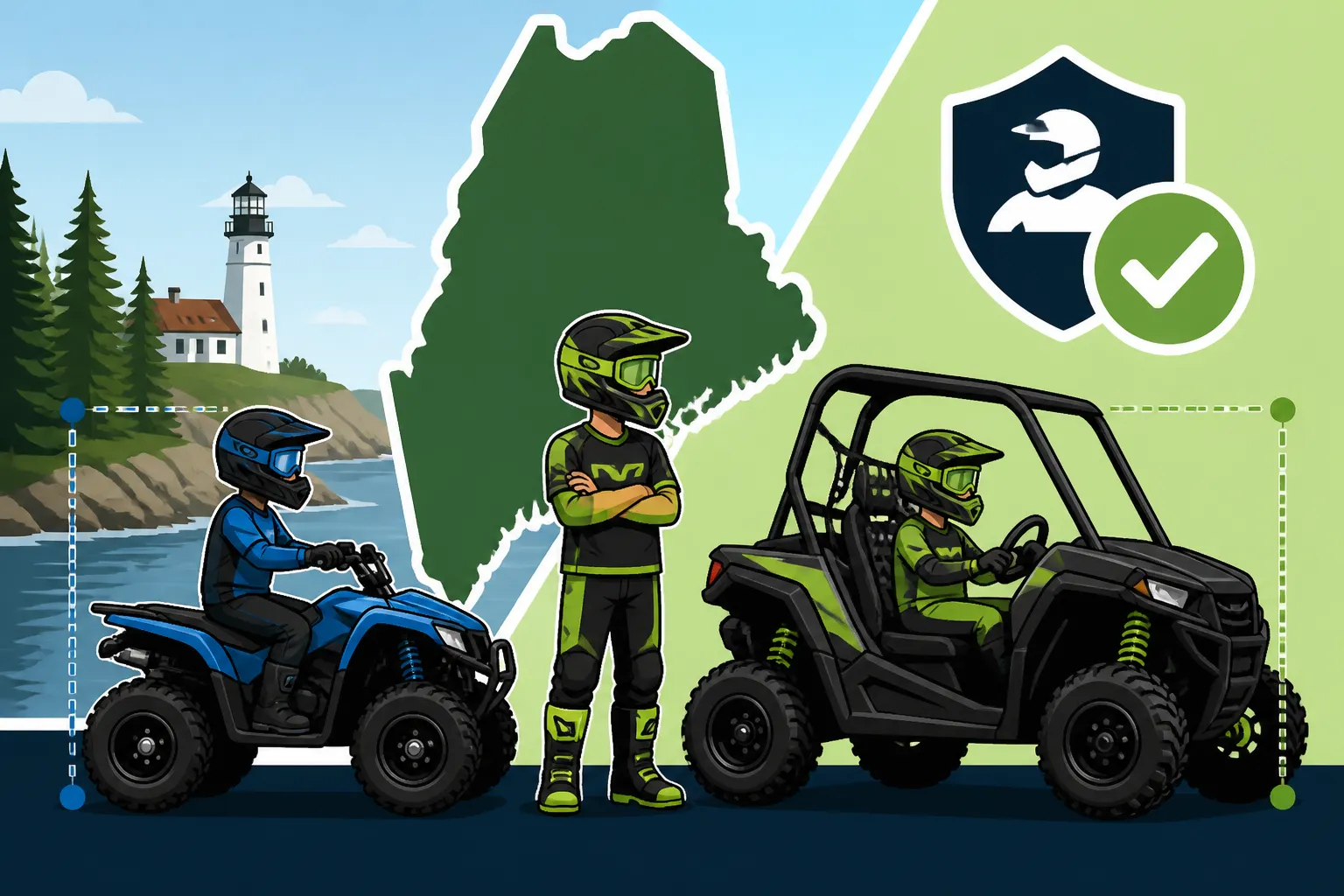
Youth ATVs are purpose-built machines specifically designed to meet the physical and developmental needs of younger riders, often adhering to industry safety standards that align with state regulations. These quads typically feature smaller engine displacements (like 50cc, 90cc, 110cc), reduced weight, lower seat heights, and often have adjustable throttle limiters. The throttle limiter is a fantastic safety feature that allows parents to control the machine's top speed as their child gains experience.
When shopping for a youth ATV, always look for models that are clearly marketed for a specific age range (e.g., "for riders 6 and older" or "for riders 10 and older") and verify that their engine size complies with Maine's regulations. Brands like Polaris, Can-Am, and Honda all offer lines of youth ATVs, designed to be stable, easy to operate, and equipped with safety features like tethers and protective enclosures. Remember, even if a machine is designed for youth, it's still crucial to ensure it fits your child's individual size and skill level.
Youth UTVs: Side-by-Sides for Younger Riders
Youth UTVs, or side-by-sides, offer a different riding experience, often with a more car-like feel, steering wheel, and pedals. They're designed with features like roll cages, seat belts, and sometimes even side nets or doors, which can provide an added sense of security for parents. These machines are increasingly popular for families who want to ride together or for younger siblings who might not be ready for a traditional ATV.
Maine's engine size limits also apply to youth UTVs. While UTVs inherently offer more stability due to their wider stance and lower center of gravity, and the roll cage provides protection in the event of a rollover, seat belts are not just a suggestion – they are a critical safety feature that must be used. Many youth UTVs also come with speed limiters or electronic controls that allow parents to manage performance. Just as with ATVs, ensure the UTV's engine size is appropriate for the age of the primary operator, and that all safety equipment, particularly seat belts, are always used. For specific details on how UTV registration works, including for youth machines, check out [Maine UTV Registration and How It Differs].
Practical Tips for Parents and Guardians
Beyond the letter of the law, there are practical steps you can take to ensure your child has a safe, enjoyable, and responsible ATV or UTV riding experience. It's about combining legal compliance with good judgment and thorough preparation.
Assessing Your Child's Readiness (Beyond Age)
While Maine law provides age and engine size guidelines, these are minimums. True readiness goes far beyond a birthday. You need to honestly assess your child's maturity, coordination, strength, and judgment. Can they follow instructions? Do they understand consequences? Are they strong enough to turn the handlebars, operate the brakes, and shift their weight effectively?
Consider starting them on a very small, low-powered machine, even if their age technically allows for a larger one. Supervise them closely in a controlled environment, teaching them the basics of starting, stopping, turning, and throttle control. Enroll them in a hands-on ATV safety course as soon as they are eligible; this professional instruction is invaluable and can identify areas where your child might need more practice. Some children are naturally more cautious, while others are thrill-seekers. Tailor the machine and the riding environment to your child's individual personality and skill level, not just their age.
Finding the Right Machine and Reputable Sellers
Once you understand the legal limits and your child's readiness, it's time to find the right machine. Research youth models from reputable manufacturers. Consider features like adjustable throttle limiters, automatic transmissions for easier operation, and safety cut-off switches. When buying new from a dealer, they can often guide you toward models that comply with Maine's youth regulations.
If you're buying a used youth ATV or UTV, exercise caution. Thoroughly inspect the machine for damage, maintenance issues, or modifications that might make it unsafe or non-compliant. Always ask for a test ride (if appropriate and safe) and check the Vehicle Identification Number (VIN) to ensure it hasn't been reported stolen. When you finalize the purchase, insist on a clear and comprehensive bill of sale. Using a service like LawDepot to generate a formal [Bill of Sale Wording for an ATV Sale] is highly recommended, as it ensures all legal aspects are covered and provides you with solid proof of ownership for registration purposes. This documentation is crucial whether you're buying from a dealer or directly from a private seller, ensuring a smooth registration process and protecting you from future disputes. For more tips on buying a used machine, look into [Buying a Used ATV Bought From a Dealer].
Disclaimer
This article is for general informational purposes only and does not constitute professional advice. Laws, prices and regulations vary by location and change over time. Consult a qualified professional for guidance on your specific situation.