Scrapping a Dead ATV
There comes a time in every ATV owner's life when their beloved machine, a trusty companion through countless Maine trails and mud pits, simply gives up the ghost. It's a sad moment, often accompanied by a seizing engine, a twisted frame beyond repair, or an electrical issue so baffling it drains your wallet faster than a summer storm drenches a campfire. Figuring out what to do with a truly "dead" ATV can be a real headache, especially when you're staring at a heavy hunk of metal taking up garage space. This guide is here to walk you through the practical steps and considerations for responsibly and legally dealing with a non-functional ATV in the great state of Maine, helping you navigate the options from scrapping to selling for parts.
Understanding "Dead": When Your Maine ATV Reaches the End of the Trail
It’s easy to get sentimental about a machine that has provided so many adventures. You remember that epic trip up to Aroostook County, or the time it pulled you out of a sticky situation on a logging road near Moosehead Lake. But eventually, some ATVs reach a point where they are truly "dead." This isn't just about a flat tire or a dead battery; we're talking about severe, often catastrophic, damage that makes repair impractical or impossible.
What Constitutes a "Dead" ATV?
A "dead" ATV typically refers to a machine with damage so extensive that its value as a functional vehicle is gone, and the cost of repair far outweighs its potential worth. Here are a few common scenarios that might lead you to consider an ATV truly dead:
- Catastrophic Engine Failure: A seized engine, a cracked block, or internal damage that requires a complete engine replacement. While an engine swap is possible, the expense can be prohibitive, especially on an older machine.
- Irreparable Frame Damage: A bent or cracked frame, often the result of a major collision or roll-over. The frame is the backbone of your ATV, and significant damage here can compromise safety and handling, often making the machine unsafe to ride even if other components are functional.
- Beyond Economical Repair (BER): This is a term often used by insurance companies, but it applies to any ATV where the estimated repair costs exceed a certain percentage of its pre-damage value – or even its entire value. If fixing it costs more than buying a comparable used ATV, it's BER.
- Extensive Electrical System Failure: Sometimes, a complex electrical short or widespread wiring harness damage can be incredibly difficult and expensive to diagnose and repair, especially on machines with advanced electronic fuel injection or other computerized systems.
- Prolonged Exposure and Neglect: An ATV left out in the harsh Maine weather for years, rusting away, with seized brakes, rotted tires, and an engine full of critters, might be so far gone that restoration is a monumental, if not impossible, task.
When you're facing one of these situations, it's time to be realistic. The emotional attachment is understandable, but pouring good money after bad won't bring your old friend back to life in a cost-effective way.
The Emotional and Financial Toll of a Broken Machine
It's natural to feel a pang of sadness when your once-mighty quad sits silently in the corner, a monument to past adventures. You might even feel a sense of guilt, wondering if you could have done more to prevent its demise. But beyond the emotional aspect, there's a very real financial burden. A broken ATV ties up funds you might need for a replacement, and its physical presence takes up valuable space in your garage, shed, or yard.
You might be tempted to just let it sit, thinking you'll "get to it someday." But that "someday" often turns into years, and the machine only deteriorates further, becoming even less valuable for parts and harder to dispose of. Realistically assessing the repair costs versus the machine's current value is crucial. Get a quote from a trusted mechanic, but be prepared for sticker shock. Sometimes, the best financial decision, tough as it may be, is to acknowledge that it's time to move on.
Determining if Scrapping is the Most Practical Path Forward
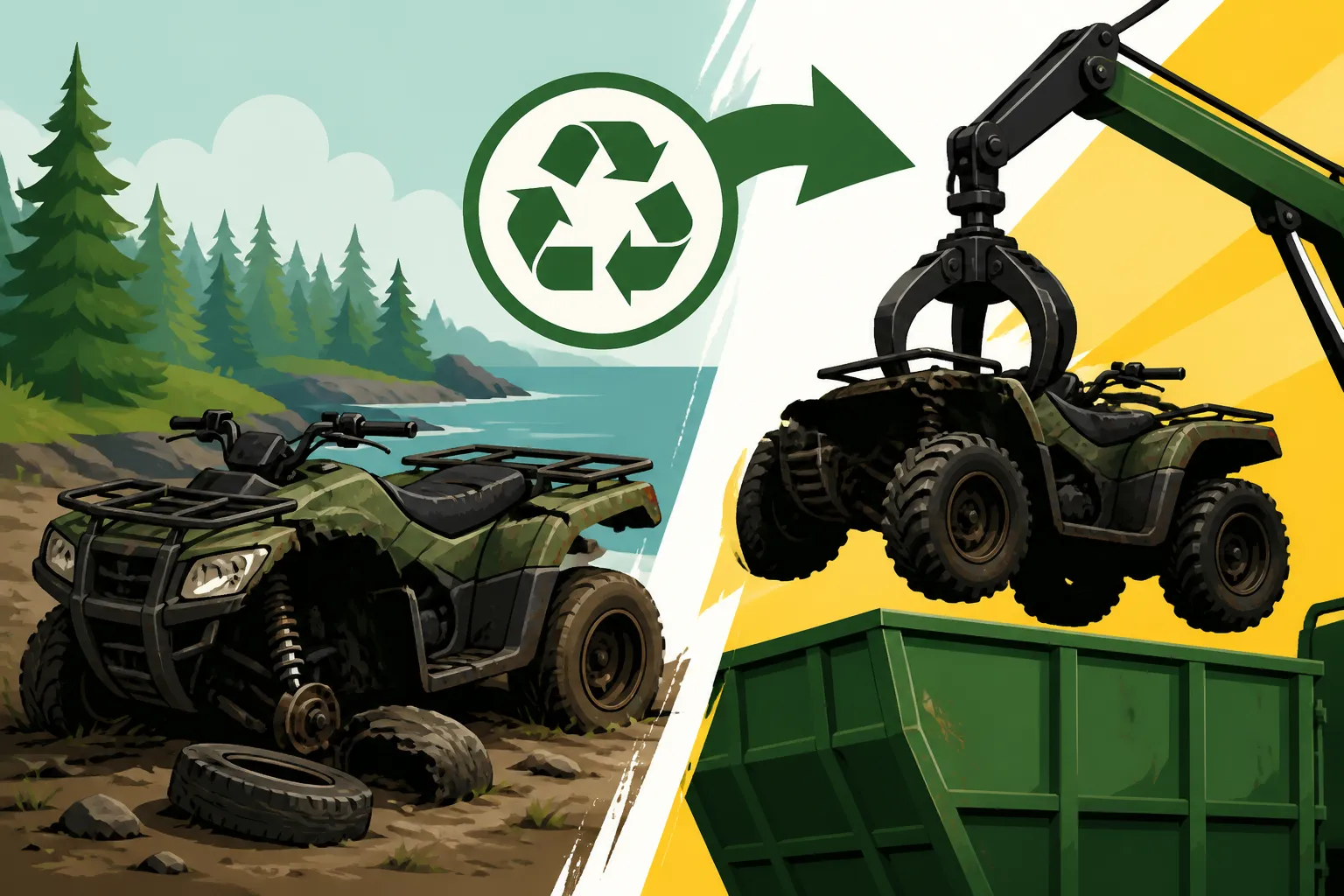
Once you've accepted that your ATV is beyond reasonable repair, you have a few options: sell it for parts, donate it, or scrap it entirely. Scrapping usually means selling the entire machine (or what's left of it) to a metal recycler. This is often the most straightforward path if the machine has little value beyond its raw materials, or if you simply don't have the time or inclination to strip it down for parts yourself.
The practicality of scrapping boils down to convenience and minimal hassle. You might get less money than painstakingly selling individual components, but you also avoid the weeks or months of listing parts, answering questions, and shipping small items. For many Mainers who just want their yard space back and a little cash in their pocket, scrapping is a perfectly sensible and efficient solution. Just make sure you understand the [Proof of Ownership for a Maine ATV Registration] requirements, even for a "dead" machine, to ensure a smooth transaction.
Navigating the Logistics: Paperwork, Ownership, and Maine Regulations
Even a "dead" ATV still has an ownership history, and knowing what paperwork you need is crucial for a smooth and legal disposal. Maine's regulations, while generally more lenient for ATVs than for cars, still require attention to detail, especially when transferring ownership or proving you have the right to scrap something.
Proof of Ownership: What You Need in Maine
Unlike cars, Maine does not title ATVs. This is a common point of confusion for folks used to vehicle titles. So, if you're looking for a "title" for your ATV, you won't find one in Maine. Instead, proof of ownership for an ATV relies on a combination of other documents:
- Bill of Sale: This is hands-down the most important document for proving ownership in Maine. A well-written bill of sale from when you purchased the ATV, clearly stating the VIN, buyer, seller, and purchase price, serves as your primary proof. If you're selling the dead ATV for parts or to a scrap yard, you'll need to provide them with a bill of sale as well. You can find templates online from resources like LawDepot to ensure all necessary information is included, protecting both you and the buyer/scrapper.
- Current or Past Registration: Your Maine ATV registration certificate, even if it's expired, shows that the state recognized you as the owner. While it's not a title, it's strong supporting evidence.
- Original Purchase Documents: If you bought the ATV new from a dealer, the sales contract or invoice would also serve as proof.
It’s helpful to understand [Does Maine Title ATVs?] and why these other documents are so important. Always keep these records in a safe place, even for a non-running machine. You never know when you might need them, especially if you plan to sell it for parts.
Deregistering Your ATV in Maine: Is It Required? What Are the Benefits?
Maine does not have a formal "deregistration" process for ATVs in the same way you might deregister a car and return plates. When your ATV registration expires and you don't renew it, it simply becomes unregistered. You don't need to notify the state that your ATV is no longer operational or that you've scrapped it.
However, there are a couple of practical benefits to knowing your registration status, especially if you're dealing with a dead machine:
- Stopping Renewal Notices: If you decide to scrap or sell your ATV for parts, you won't want to keep receiving those annual renewal reminders from the Maine Department of Inland Fisheries and Wildlife (IF&W). While you can't officially "deregister," simply not renewing will eventually take it off their active mailing list.
- Liability: Once the machine is gone from your possession, any potential liability associated with it transfers (or ceases to exist if it's completely scrapped). Having clear documentation, like a bill of sale to the scrap yard, solidifies this transfer.
- Potential Refunds (Limited): If you just paid for an annual registration and your ATV died shortly thereafter, you might be eligible for a pro-rated refund. This is rare and usually only applies in specific circumstances, but it's worth checking with IF&W. Most often, if you're considering [Maine ATV Registration Refunds], it's for situations where the ATV was stolen or sold very early in the registration year.
In most cases, for a truly dead ATV, the best course of action is simply to let the registration lapse.
What to Do If You Don't Have Perfect Paperwork
This is a common frustration, especially if you inherited an old ATV, bought it years ago from a friend without a formal bill of sale, or just weren't diligent about keeping records. Dealing with a "dead" ATV that lacks clear paperwork can be a challenge, but it's not insurmountable.
- Start with What You Have: Do you have an old registration card? Any correspondence from IF&W? Photos of you with the machine? Any of these can help establish a history of ownership.
- Gather Supporting Evidence: If you bought it privately without a bill of sale, can you get a statement from the person you bought it from? Even a simple handwritten note detailing the sale, signed and dated by them, with their contact information, can be helpful. This is particularly relevant if you're trying to prove [Proof of Ownership Without a Bill of Sale].
- Sworn Affidavit: In some cases, if you genuinely cannot produce a bill of sale or registration, you might need to create a sworn affidavit detailing how you came into possession of the ATV. This is a legal document where you attest under oath to the facts of ownership. While not ideal for a functional ATV, a scrap yard might accept this as proof for a machine with no value beyond scrap. Again, LawDepot can be a good resource for finding affidavit templates or guidance on creating such a document.
- VIN Check: Always locate the Vehicle Identification Number (VIN) on your ATV. This 17-digit number is usually stamped on the frame (often near the front left wheel or under the seat). Knowing the VIN allows you to check if the machine has ever been reported stolen. [Where the VIN Is Stamped on a Quad] can help you find it. Even without formal paperwork, knowing the VIN is critical.
- Contact the Scrap Yard/Buyer First: Before you haul your ATV anywhere, explain your situation to the potential scrap yard or parts buyer. They deal with these situations often and can tell you exactly what forms of proof they will accept for a non-running, low-value machine. Some might be more lenient for scrap value items than for a working ATV.
Attempting to dispose of an ATV without any proof of ownership can lead to complications, as no reputable scrap yard wants to be involved with potentially stolen property. Be honest and proactive about your situation.
Releasing Liability When Selling for Parts or Scrapping
Whether you sell your "dead" ATV for parts or take it to a scrap yard, you'll want to ensure you've properly released yourself from any future liability. This is where a clear transaction record becomes vital.
When selling to a scrap yard:
- Get a Receipt: Ensure the scrap yard provides you with a dated receipt that clearly states your name, their business name, the ATV's VIN, and confirms that they are taking possession of the vehicle for salvage or scrap. This receipt acts as your proof that the ATV is no longer your responsibility.
- Bill of Sale: Even if you're just scrapping, a simple bill of sale (even for $1 or "as scrap metal") can be beneficial. It formally transfers ownership. You can find free templates for a [Maine ATV Bill of Sale: What to Include] online or use a service like LawDepot to create a legally sound document.
When selling for parts:
- Detailed Bill of Sale for Parts: If you strip the ATV and sell off components, you don't need to worry about transferring the entire vehicle. However, if you sell the rolling chassis or major components like the engine, always provide a detailed bill of sale for those specific parts. This protects you by documenting what was sold and when.
The goal here is to create a paper trail that clearly shows when and to whom you relinquished control of the ATV, or its major components. This way, if anything happens with the machine in the future (unlikely for a scrapped unit, but possible for parts), you have proof that it was no longer yours. This is similar to the care you'd take when [Selling an ATV in Maine: What You Sign] for a working machine.
The Scrapping Process: From Parts to the Pound in Maine
Once you've made the tough decision to scrap your ATV, the next steps involve preparing it and finding a suitable recycler or buyer in Maine. This process isn't just about hauling it away; it involves some responsible considerations.
Preparing Your ATV for Scrap: Fluids, Hazardous Materials, and Salvageable Components
Before you call a scrap yard or haul your ATV to one, there are a few important steps to take. This not only makes the process smoother but also ensures you're being environmentally responsible and potentially maximizing your return.
- Remove Hazardous Fluids: This is crucial. Scrap yards typically do not want vehicles full of oil, gasoline, coolant, or brake fluid. These are hazardous materials and need to be disposed of properly.
- Drain the Gas Tank: Siphon out any remaining gasoline. You can use it in another vehicle (if fresh) or dispose of it at a local hazardous waste collection event in your Maine town.
- Drain Engine Oil: Drain the engine oil into a suitable container. Many auto parts stores in Maine (like O'Reilly Auto Parts, AutoZone, or NAPA Auto Parts) accept used motor oil for recycling.
- Drain Coolant: If your ATV is liquid-cooled, drain the antifreeze. Antifreeze is toxic and should never be poured down a drain or onto the ground. Again, check with local hazardous waste facilities or garages for proper disposal.
- Remove Battery: ATV batteries contain lead and acid and need special disposal. Most places that sell new batteries will accept old ones for recycling, or you can take it to a hazardous waste collection site.
- Remove Tires: Many scrap yards prefer or require you to remove the tires from the rims. Tires are not metal and add weight without value to a scrap metal load, and they incur separate disposal fees for the scrap yard. You might be able to find places that accept old tires for recycling (sometimes for a small fee).
- Salvageable Components: Before it's completely scrapped, consider if there are any valuable parts you could sell separately. Even on a "dead" ATV, components like:
- Good tires (if removed from rims)
- Headlights, taillights, or turn signals (if unbroken)
- Working electronics (speedometer, switches, CDI box)
- Good seats
- A-arms, shocks, or other suspension components (if undamaged)
- Plastic body panels (if not too cracked or faded)
- Wheels (if not bent)
- Fuel tank (if clean and undamaged)
Selling these individually, as outlined in [Selling an ATV for Parts], could potentially net you more cash than selling the entire machine for scrap. Keep in mind, however, that selling parts requires time and effort.
Make sure you take photos of your ATV before it's scrapped. This provides visual proof of its condition and that it left your possession.
Finding Local Scrap Yards and Parts Buyers in Maine
Maine has various options for disposing of an old ATV, ranging from dedicated scrap metal recyclers to salvage yards that specialize in parts.
- Scrap Metal Yards: These businesses pay for metal by weight. They'll typically accept your entire ATV (once fluids are drained and possibly tires removed) and pay you based on the current market rate for scrap steel and aluminum. Look for local scrap yards in larger towns like Bangor, Augusta, Portland, or even smaller regional centers like Presque Isle or Waterville. A quick online search for "scrap metal Maine" or "junk car removal Maine" will usually yield results.
- ATV/Powersports Salvage Yards: These are less common than general scrap metal yards but might exist. They're more interested in salvageable components rather than just the raw metal. They might pay a bit more if there are several good parts left on your machine.
- Used Parts Dealers/Online Listings: If you decide to strip the ATV for parts, you'll be listing items on online marketplaces (like Facebook Marketplace, Craigslist, or specific ATV forums) or reaching out to local ATV repair shops that might be looking for used parts.
When contacting any potential buyer, be upfront about the ATV's condition, what's been removed, and any paperwork you have or lack.
Getting Quotes and Comparing Options: Maximizing Your Return
Don't just go with the first scrap yard you find. A little research can help you get the best return, even on a dead machine.
- Call Around: Get quotes from at least two or three scrap yards. Rates for scrap metal can fluctuate, and different yards might have different pricing structures or even offer pickup services (though often for a fee that eats into your profit).
- Be Specific: When asking for a quote, describe your ATV accurately. Mention its make, model, and year, and whether it's mostly steel or has significant aluminum components (which can fetch a higher price). State that fluids have been drained and if tires are still on or off.
- Consider Transport Costs: If you have to rent a trailer or pay for gas to haul the ATV a long distance, factor that into your net return. Sometimes, a slightly lower offer from a closer yard makes more sense than a higher offer far away.
Here's a simple comparison table to help you think through the options:
| Option | Pros | Cons | Required Effort | Typical Return |
|---|---|---|---|---|
| Full Scrap (to Yard) | Quickest disposal, less hassle, immediate cash | Lowest overall financial return | Drain fluids, remove battery/tires, transport to yard | Varies by metal weight & market rates (often minimal) |
| Selling for Parts | Potentially highest financial return | Time-consuming, requires mechanical knowledge, storage | Strip machine, list parts, communicate with buyers, ship | Can be significantly more than full scrap, but no guarantee |
| Donation | Tax deduction (if to qualified charity), good karma | No direct cash, finding suitable charity can be tricky | Clean machine, arrange pickup/drop-off, get donation receipt | Non-cash (tax deduction value) |
| Storing for "Someday" | Keeps options open, no immediate cost | Takes up space, machine deteriorates, no immediate return | None (initial), potential future costs/effort | None (initial) |
Environmental Considerations and Responsible Disposal
As responsible outdoor enthusiasts, we care about Maine's environment. Scrapping your ATV correctly is part of that.
- Proper Fluid Disposal: As mentioned, never dump oil, gas, or coolant down drains or on the ground. This pollutes our precious waterways and soil. Utilize certified recycling centers or hazardous waste collection days.
- Battery Recycling: Always recycle your ATV battery. Lead-acid batteries are toxic but highly recyclable.
- Tire Disposal: Tires are notoriously difficult to dispose of. Some transfer stations in Maine accept them for a fee. If your scrap yard won't take them, find a local tire shop or recycling facility that does.
- Reputable Scrappers: Choose a scrap yard that is licensed and has a good reputation. This ensures they follow environmental regulations for dismantling and recycling vehicles, including proper handling of any remaining hazardous materials.
By taking these steps, you're not only freeing up space and getting a bit of cash but also doing your part to protect Maine's natural beauty.
Alternative Paths: When Scrapping Isn't the Only Answer
While scrapping is a common and often necessary option for a truly dead ATV, it's worth exploring if there are other avenues that might better suit your situation, especially if some components still hold value.
Selling for Parts: Maximizing Value for Specific Components
Even a machine with a catastrophic engine or frame can have a surprising amount of good, usable parts. If you have some mechanical aptitude, the tools, and the time, stripping your ATV for parts can often yield more money than selling the entire unit to a scrap yard. This is particularly true for popular models where parts are in demand.
Think about things like good suspension components, intact plastic bodywork, a working transmission (if the engine is the only issue), wheels, tires, lights, and electrical components. These can be gold for someone else trying to repair their own ATV without buying brand new, expensive dealer parts.
- Inventory and Assess: Take an honest look at what's still good. A bent A-arm isn't worth much, but a perfectly fine headlight assembly might fetch a decent price.
- Document: Take clear photos of each part you plan to sell. Note any imperfections.
- Pricing: Research what similar used parts are selling for online. Don't overprice, but don't undervalue your time and effort either.
- List Widely: Use platforms like Facebook Marketplace, Craigslist, or dedicated ATV forums. Specify that you're selling parts from a particular make, model, and year. For example, "Parts for 2010 Polaris Sportsman 500."
- Shipping: Be prepared to box and ship smaller items. Factor shipping costs into your pricing or clearly state that the buyer pays shipping.
This option involves more effort on your part, but it can be rewarding. Just remember that once you start disassembling, the option of scrapping the whole unit becomes less viable. For releasing liability on sold parts, having a clear [Maine ATV Bill of Sale: What to Include] for significant items is always a good idea.
Donation Options in Maine: A Different Kind of Value
If getting cash isn't your primary concern, or if your ATV is simply too far gone even for parts, donating it might be an option. While specific charities accepting non-running ATVs can be rare, it's worth looking into.
- Charitable Organizations: Some charities accept vehicle donations, even non-running ones, which they then sell for scrap or salvage to fund their programs. The key is finding a legitimate 501(c)(3) organization. You'll need to confirm with them if they accept ATVs specifically.
- Educational Programs: Sometimes, vocational schools or trade programs with automotive or small engine repair curricula might be interested in a non-running ATV for students to practice on. This gives the machine a new purpose, even if it's not on the trails.
- Tax Deduction: If you donate to a qualified charity, you might be eligible for a tax deduction. The value of the deduction will depend on what the charity does with the vehicle (e.g., sells it at auction, strips for parts). Always get a formal receipt from the charity for your records.
This route focuses on giving back and avoiding disposal costs, rather than receiving direct payment. It can provide a satisfying sense of purpose for a machine that otherwise might just sit and rust.
Storing for a Future Project: The "Maybe Someday" Pile
We've all been there – that lingering hope that "someday" you'll have the time, money, and motivation to revive your old ATV. If you have the space and don't desperately need the cash or the immediate disposal, storing the machine for a future project is a valid, if often long-shot, alternative.
- Pros: It keeps the door open for a full rebuild, a custom project, or simply as a parts donor for another machine you might acquire later. No immediate disposal costs.
- Cons: Takes up valuable space, the machine will continue to deteriorate (especially if stored improperly outdoors), and the likelihood of "someday" actually arriving often diminishes over time. The cost of parts and labor for an older machine might also increase, making the future project even less viable.
If you choose this path, make sure to store it smartly. Drain all fluids to prevent corrosion and leakage, remove the battery, and cover it to protect it from the elements. Ideally, store it indoors or under a sturdy roof to minimize further damage. Just be honest with yourself about the realistic chances of that project ever starting. Otherwise, it just becomes an expensive and frustrating lawn ornament.
Ultimately, deciding what to do with a dead ATV in Maine is a personal choice that balances financial, practical, and emotional considerations. By understanding your options and the necessary steps, you can make an informed decision and ensure your once-beloved trail companion is dealt with responsibly.
Disclaimer
This article is for general informational purposes only and does not constitute professional advice. Laws, prices and regulations vary by location and change over time. Consult a qualified professional for guidance on your specific situation.