Registering an ATV in a Maine Unorganized Township
Living in Maine's beautiful, sprawling unorganized townships offers a unique kind of freedom and connection to the wilderness. But when it comes to something as seemingly straightforward as registering your ATV, you might find yourself scratching your head, wondering where exactly to go without a town office. This guide is here to cut through that confusion, giving you a clear, actionable path to get your quad legally registered and ready for the trails, even without a local clerk.
Understanding Unorganized Townships in Maine
Maine is quite distinctive in how it's organized, and part of that charm (or sometimes, a slight bureaucratic headache) comes from its unorganized townships. These vast areas cover a significant portion of the state, particularly in the northern and western reaches, offering incredible recreational opportunities and a quieter way of life. But what exactly does "unorganized" mean for you, the ATV owner?
What Exactly is an Unorganized Territory?
An unorganized territory, often referred to as a "UT" or "unorganized township," is essentially a piece of land that isn't incorporated into a municipality. This means it doesn't have its own local government – no mayor, no town council, no local planning board, and critically for our discussion, no town clerk's office. Instead, these areas are administered directly by the State of Maine, typically through the Bureau of Parks and Lands and other state agencies. Think of places like the vast North Maine Woods, remote lake regions, or vast tracts of forestland; these are often unorganized. Residents here still pay property taxes, but those taxes go directly to the county and state for services, rather than to a local town budget. It's a different rhythm of life, one that often attracts those seeking solitude and self-reliance, but it does mean a few administrative differences for things like vehicle registration.
Living in an unorganized territory means relying more on state-level services for things that might be handled locally in an incorporated town. For many daily needs, this isn't a huge deal. You still get your mail, and emergency services are typically managed by county sheriff's departments and state agencies. However, for certain tasks, like vehicle registration, the usual assumption of a town office visit doesn't apply. This can be a point of frustration for new residents or those used to the convenience of a local clerk. It's not that the process is harder; it's just different, requiring you to understand which state agency is responsible.
Why ATV Registration is Different Here
In an organized Maine town, you'd typically head down to your town office, chat with the clerk, and walk out with your ATV registration and sticker in hand. It’s a convenient, face-to-face process that many of us are accustomed to. However, when you reside in an unorganized township, that local option simply doesn't exist. There's no town hall, no clerk, and no municipal counter where you can process your registration paperwork. This isn't just about convenience; it's a fundamental difference in how government services are delivered.
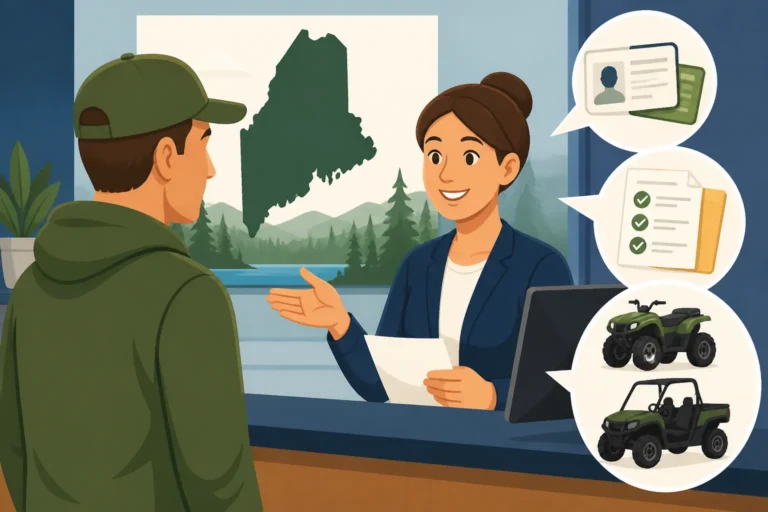
This distinction means you can't just drive to the next closest organized town and expect their clerk to register your ATV as if you were a resident. While some towns do offer non-resident registrations, they generally cannot process registrations for residents of unorganized townships, because your residency ties you directly to the state's administration for those areas. Instead, you need to go directly to the source that handles registrations for all residents, regardless of where they live within Maine's complex administrative map: the Maine Department of Inland Fisheries & Wildlife (IF&W). This state agency is the primary authority for all ATV registrations in Maine, and for those in unorganized townships, it's often the only direct route. It’s important to understand this from the outset so you don’t waste time trying to find a local solution that doesn’t exist.
The Maine IF&W: Your Registration Hub
For residents of Maine's unorganized townships, the Maine Department of Inland Fisheries & Wildlife (IF&W) is your go-to for all things ATV registration. They are the state agency tasked with managing all registrations for snowmobiles, ATVs, and watercraft, ensuring that everyone operating these machines on Maine's trails and waterways is properly accounted for. Their system is designed to handle registrations for all Maine residents, including those without a local town office to turn to.
Registering Online Through IF&W
For many, the quickest and most convenient way to register an ATV when you live in an unorganized township is directly through the Maine IF&W's online registration system. This digital portal is accessible 24/7, allowing you to complete the process from the comfort of your home, without needing to visit an office or wait for mail. The system is pretty user-friendly, guiding you through the steps to ensure you provide all the necessary information. It’s designed to be efficient, and for a first-time registration, it's certainly a popular choice.
To register your ATV online, you'll need several key pieces of information and potentially some documents. First and foremost, you'll need your ATV's Vehicle Identification Number (VIN). This 17-character code is unique to your machine and is critical for identification. You'll also need proof of ownership, such as a bill of sale or the previous registration certificate if you bought it used. If you're buying a brand-new ATV, the dealer will often provide you with the necessary paperwork, sometimes even handling the initial registration for you. For used machines, ensure you have a clear, signed bill of sale. Some people even use online services like LawDepot to generate a formal bill of sale, which can be helpful if you're dealing with a private sale and want to ensure all bases are covered. You'll also need to be prepared to pay the applicable registration fees via credit or debit card. The IF&W system will prompt you for all the details. For a deeper dive into this process, check out [Maine IF&W Online Registration Walkthrough].
Once you've successfully completed the online registration and payment, you'll typically receive an immediate confirmation page that you can print out. This confirmation acts as your temporary registration and is usually valid for a short period, allowing you to legally operate your ATV while you wait for your official stickers and physical registration card to arrive in the mail. It's a lifesaver for those eager to hit the trails right away. Make sure to carry this printed confirmation with you whenever you ride until your physical documents arrive. The official stickers and registration card will then be mailed to the address you provided, usually within a week or two. For details on how long this might take, you might want to read [How Long Maine ATV Stickers Take to Arrive].
Registering by Mail with IF&W
While the online system is convenient, some people prefer or need to register their ATV by mail. This could be due to limited internet access in remote unorganized townships, a preference for traditional methods, or specific circumstances that make an online registration difficult. Registering by mail is a perfectly valid option and is handled directly by the Maine IF&W. It simply requires a bit more foresight and patience compared to the instant gratification of online registration.
To register by mail, you'll need to obtain the correct registration form. These forms are usually available for download on the Maine IF&W website or can sometimes be picked up at authorized registration agents or even some sporting goods stores that also act as agents (though for residents of unorganized townships, direct mailing to IF&W is often best for the initial registration). On this form, you'll fill out all the necessary details about your ATV, including the VIN, make, model, and year, as well as your personal information as the owner. You'll also need to include photocopies of your proof of ownership, such as a bill of sale or previous registration. Remember that if you don't have a formal bill of sale, generating one using a template from a site like LawDepot can add legitimacy to your submission, especially if you're dealing with an older machine or a private sale.
Once you’ve filled out the form completely and attached all required documentation, you'll need to include a check or money order for the correct registration fee. Be sure to double-check the current fee schedule on the IF&W website to avoid any delays due to incorrect payment. Mail all of these items to the address provided on the registration form, usually the IF&W headquarters in Augusta. The processing time for mail-in registrations can vary, but generally, you can expect it to take a few weeks to receive your stickers and registration card. Remember, you won't have a temporary registration like you would with the online system, so plan your riding accordingly.
Essential Documents and Proof of Ownership
One of the most critical aspects of registering an ATV, regardless of whether you're in an organized town or an unorganized township, is having the correct documentation to prove ownership. Without this, the Maine Department of Inland Fisheries & Wildlife (IF&W) simply can't process your registration. It's their way of ensuring the machine is legally yours and that there's a clear chain of custody.
Gathering Your Paperwork
Before you even think about hitting that "submit" button online or dropping an envelope in the mail, take a moment to gather all the necessary paperwork. This is where many people encounter hiccups, so being prepared can save you a lot of time and frustration. The most important document is proof of ownership. For a brand-new ATV purchased from a dealer, this will typically be a dealer's invoice or a manufacturer's statement of origin (MSO). The dealer usually handles much of the initial paperwork anyway, sometimes even the first registration for you. They understand what Maine IF&W requires and will ensure you leave with the correct forms.
If you're registering a used ATV, especially one bought from a private seller, the primary document you'll need is a comprehensive bill of sale. This document should clearly identify both the buyer and seller, include the ATV's make, model, year, and VIN, and state the purchase price and date of sale. A well-drafted bill of sale acts as your legal proof that the machine now belongs to you. If the previous owner had the ATV registered in Maine, you should also try to get a copy of their most recent registration certificate, as this can further substantiate the ownership transfer. The VIN (Vehicle Identification Number) is paramount; ensure it's clearly legible on your documentation and matches the physical VIN on the ATV itself. For a detailed guide on what to include in this vital document, refer to [Maine ATV Bill of Sale: What to Include]. Remember, thoroughness now prevents headaches later. For a more general overview of what's required, you can also look at [What It Takes to Register an ATV in Maine].
What if I Don't Have a Bill of Sale?
This is a common scenario, especially when dealing with older ATVs that have changed hands multiple times, machines inherited from a family member, or quads purchased years ago where the original paperwork has been lost to time. It can feel like a dead end, leaving you wondering if you'll ever be able to legally register your machine. But don't despair; Maine IF&W does have procedures in place for these situations, though it might require a bit more effort on your part. You might not have the "perfect" paperwork, but often, alternative forms of evidence can be accepted.
One of the most straightforward alternatives, if possible, is to track down the previous owner and ask them to complete a current bill of sale for you. Even if the sale happened years ago, a dated bill of sale reflecting the actual transaction date can often suffice. If that's not possible, you might need to provide a sworn affidavit detailing how you came into possession of the ATV. This is a legal document where you attest under oath to the facts of ownership. Sometimes, a combination of other documents like old insurance policies, repair receipts, or even photographic evidence with dates can help build a case for ownership. The key is to provide as much verifiable information as possible to establish your claim. In situations where you need to formalize a document, a resource like LawDepot can be useful for drafting a generic bill of sale or even an affidavit template, which you can then customize with your specific details and have notarized if required. For more specific guidance on this challenging situation, be sure to consult [Maine ATV Registration for a Machine Without Paperwork]. It's crucial to be honest and provide all information accurately to the IF&W; attempting to falsify documents can lead to serious penalties.
After You Register: Stickers, Rules, and Riding
Once you’ve navigated the registration process, whether online or by mail, and received that much-anticipated confirmation, you're almost ready to hit the trails! But there are still a few important details to cover to ensure you’re fully compliant and riding safely. For residents of unorganized townships, these post-registration steps are the same as for anyone else in Maine, but it’s always good to refresh your memory.
Receiving and Displaying Your Stickers
After your registration is processed, the Maine IF&W will mail you your official registration stickers and a physical registration card. These stickers are more than just decorative; they are your visible proof that your ATV is legally registered to operate on Maine's trails. When you receive them, you'll notice they come with specific instructions on where to place them on your machine. Generally, the two stickers should be affixed to each side of the ATV, usually on the cowling or fenders, in a clearly visible location. The registration card should be kept with you when you ride, as it contains important information that wardens may ask to see during a trail stop.
It’s exciting to get those stickers, but what if you've registered online, received your temporary confirmation, and are just itching to ride while you wait for the physical stickers to arrive? Good news! Maine law generally allows you to operate your ATV with the printed temporary registration confirmation. This means you don’t have to wait weeks for the mail to arrive to enjoy the trails. Just make sure that printed confirmation is readily accessible and legible. However, once those physical stickers and card arrive, you must affix the stickers to your ATV and carry the card. For precise details on placement and arrival times, check out [Where Maine ATV Stickers Go and When They Arrive] and [Riding Before Your Stickers Arrive]. Properly displaying your stickers and carrying your card makes it easy for wardens to verify your compliance, saving you potential delays or fines during routine checks.
Key Rules for Unorganized Townships and Beyond
While your registration takes care of the legal authorization to operate your ATV, remember that Maine has a comprehensive set of rules and regulations governing ATV operation that apply equally across all parts of the state, including unorganized townships. These rules are designed for safety, environmental protection, and ensuring harmonious trail use. Knowing and following them is crucial for a safe and enjoyable riding experience and for maintaining access to the vast trail networks we all enjoy.
One of the most important rules, especially for younger riders, concerns safety education. If you or someone under the age of 16 will be operating the ATV, they are required to complete an approved ATV safety course. This course covers everything from safe operating practices to landowner relations and environmental stewardship. For details, see [Maine ATV Safety Course Requirements]. Additionally, helmet laws are strictly enforced for younger riders; anyone under 18 operating or riding as a passenger on an ATV must wear an approved helmet. Even if you're over 18, wearing a helmet is always a wise decision for your safety. Learn more about these requirements at [Maine Helmet Rules for Riders Under 18]. Beyond these, always remember the cardinal rule of Maine ATV riding: respect for private land. While many trails crisscross private property thanks to generous landowners, that access is a privilege, not a right. Always stay on marked trails and never trespass. Familiarize yourself with basic operating rules, speed limits, and environmental guidelines, as wardens actively patrol both organized and unorganized territories to ensure compliance. Maine has a sales tax on ATV purchases, so be sure you've accounted for that during your purchase, as it might be checked during registration; [Maine Sales Tax on an ATV Purchase] has more information.
Disclaimer
This article is for general informational purposes only and does not constitute professional advice. Laws, prices and regulations vary by location and change over time. Consult a qualified professional for guidance on your specific situation.